Category Archives: baptism

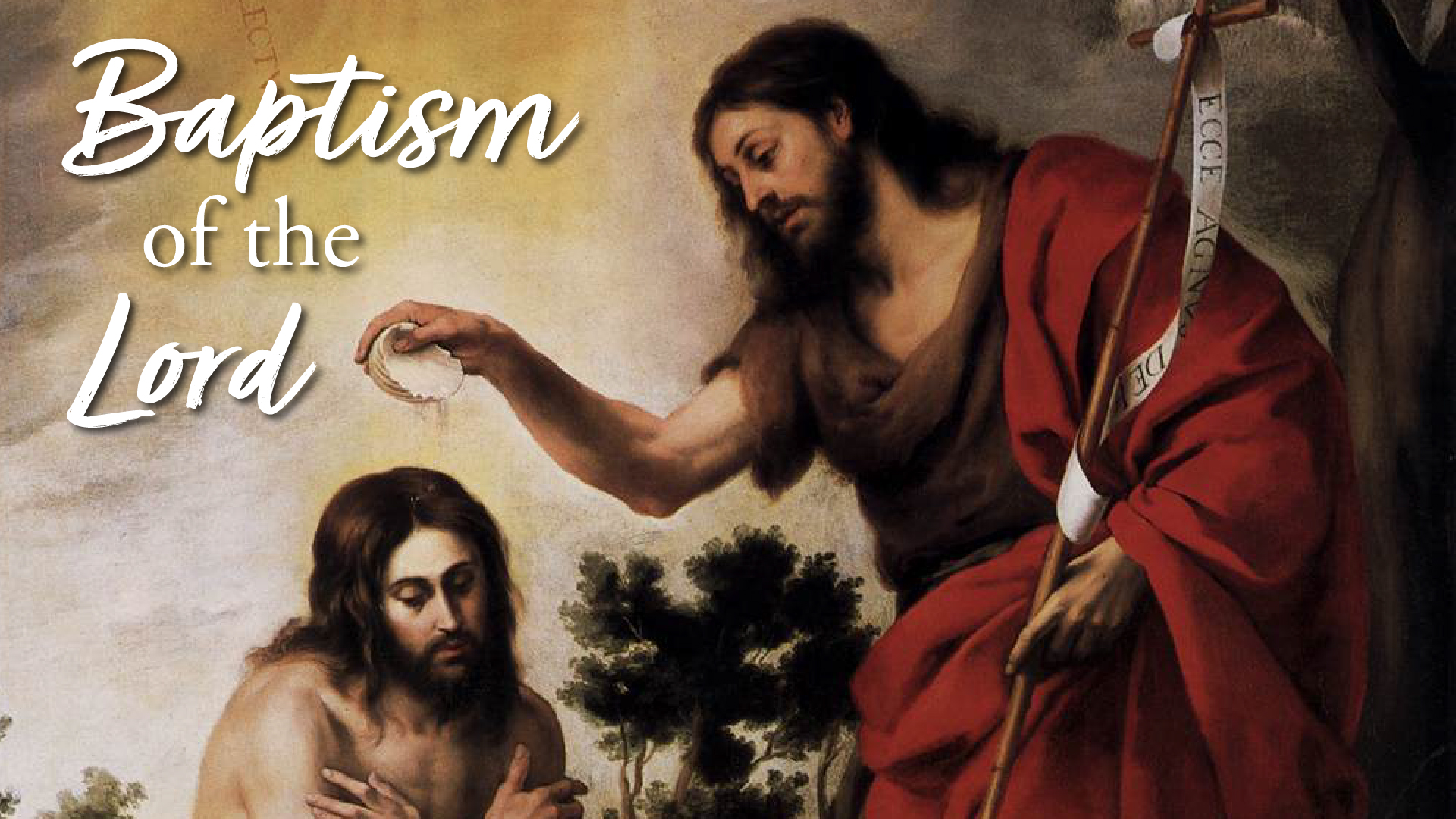
Baptism of the Lord: New Beginning

Dear Folks,
This is the feast of the Baptism of the Lord, the final day of the Christmas season. I believe that Epiphany was the end of the season, and celebrated the coming of the Magi, the miracle at Cana, and the baptism of the Lord, butsomeone decided that the Baptism should have its own feast day.
I challenge everyone to read Luke chapter 3 and get a sense of John’s call to renewal. Notice his images of the axe and the tree, then the wheat and the chaff. Now if you read Psalm 1, then Luke
13:1-9. We see how the Bible reinforces lessons by the repeated use and development of imagery.
The Gospel of John does some interesting teaching on baptism.
“Amen, amen, I say to you, no one can see the kingdom of God without being born* from above.” Nicodemus said to him, “How can a person once grown old be born again? Surely he cannot
reenter his mother’s womb and be born again, can he?” Jesus answered, “Amen, amen, I say to you, no one can enter the kingdom of God without being born of water and Spirit. What is born of flesh is flesh and what is born of spirit is spirit.e 7 Do not be amazed that I told you, ‘You must be born from above.’ 8 The wind* blows where it wills, and you can hear the sound it makes, but
you do not know where it comes from or where it goes; so it is with everyone who is born of the Spirit (John 3:3-8).”
The word “born” can also be translated “begotten,” as in “Abraham begat Isaac. Isaac begat Jacob…”. In Biblical times, the seed of the father determined what you were and was the key to your
identity. We see Jesus talking about this in John 8:39-44, who your father really is makes all the difference.
It is in this light, we see that baptism changes who we are, and now we are children of God.
Jesus, of course, was already the begotten Son of God, so His baptism did not transform Him. He who was without sin, took on the mantle of sinner to suffer for our sins. “But he was pierced for
our sins, crushed for our iniquity (Isaiah 53:5).” He reversed our journey to perdition so that we could be saved. We remember when people were created, they were first tested in a garden and
failed. Then with Moses, they were tested in a desert and failed. Jesus, right after His baptism, went to the desert to be tested, and passed. His journey would lead him to the garden of Gethsemane and He would pass again. Then he would be crucified to save us.
Jesus’ baptism marked the beginning of His mission, and our baptism marks the beginning of our journey as disciples, children of God. Everything follows from that. How is God calling us to renewal? What form might that take in our journey of 2025?
Blessings,
Fr Jim

Power of Baptism

Dear Folks,

At the priest conference, Dr. Timothy O’Malley said that if there is going to be Eucharistic revival, we must deepen our sense of the Baptismal priesthood. He reminded us that when we got ordained, we had a different role in the Church and the world, and the presence we bring is different, but it doesn’t immediately “attune” our thinking and our behavior to our new reality. That is a task we take up from then on, to be who we have become. I gradually

got used to the fact that people looked at me differently because I was a priest, and there were different sets of expectations (that is several conversations right there). When he got married, there was a similar process. Our faith tells us our baptism changes us. We

remember from the rite that we are anointed “priest, prophet and king,” a participation in the anointing of Christ (we remember that “Christ” means “anointed.” We are then called to attune our view of ourselves, and how we approach the world, according to that reality.

The Second Vatican Council called for renewal of awareness of the Baptismal priesthood, but what was often done was to erase the distinction between the baptismal and ordained priesthood. People started saying priests’ parts at Mass, and there wasn’t room to talk about the unique gifts that the ordained priesthood brought to the Church. When I was in the seminary, it was pretty rare to talk positively about the ordained priesthood, except when they were talking about ordaining women (the dropout rate was very high). The mistake was thinking it was a zero-sum game, that for one to shine, the other had to be in the shadow. We can celebrate both vigorously.

The council said that the two priesthoods differed in kind, rather than degree. Think about how love relationships can differ in kind: the love between husband and wife, the love between siblings, the love between parent and their children are different kinds of

relationships, each with some different qualities and proper ways of expressing themselves. We do not start by ranking them according to intensity but appreciating their uniqueness.

The baptismal priesthood is exercised in sanctifying the world. The Constitution on the Church (Lumen Gentium) says, “Though they differ essentially and not only in degree, the common priesthood of the faithful and the ministerial or hierarchical priesthood are none

the less ordered one to another; each in its own proper way shares in the one priesthood of Christ. The ministerial priest, by the sacred power that he has, forms and rules the priestly people; in the person of Christ, he effects the eucharistic sacrifice and offers it to God in the name of all the people. The faithful indeed, by virtue of their royal priesthood, participate in the offering of the Eucharist. They exercise that priesthood, too, by the reception of the

sacraments, prayer and thanksgiving, the witness of a holy life, abnegation, and active charity (LG 10).” People help sanctify the world through their worship, through their seeking to grow in holiness, through their family life, through their work, and through their enduring suffering and trials with patience and faith. Again, the council says, “For all their works, prayers and apostolic undertakings, family and married life, daily work, relaxation

of mind and body, if they are accomplished in the Spirit –indeed even the hardships of life if patiently borne—all of these become spiritual sacrifices acceptable to God through Jesus Christ (cf. 1 Pet 2:5) in the celebration of the Eucharist these may most fittingly be offered to the Father along with the body of the Lord. And so, worshipping everywhere by their holy actions, the laity consecrate the world itself to God (LG 34).”

Let’s face it; the world needs lots and lots of sanctifying.

Blessings,

Fr. Jim