Category Archives: Catholic

Are We Going to Talk about Love Again?

Dear Folks,

The central challenge: to love God and our neighbor. One of the easiest things to say. One of the hardest things to do.

Love is to seek the good of the other. This requires first, figuring out what is the good. Second, how to accomplish it.

We cannot benefit God, but we can please Him. We please Him by being in a good relationship with Him and by helping other people.

The good begins with life, even if it is a difficult life. We are called to serve the life and dignity of everyone from conception to natural death. This includes the rich and the poor. This includes those who came here from other countries, including those who came here illegally. The question becomes what this the most loving thing to do with them. We find a lot of attacking what others are doing, but what should we do? It includes criminals, including those on death row. It includes the victims of crimes. It includes struggling families. It includes people all over the world. It includes human trafficking victims. It includes people victimized by the pornography industry.  In includes the pre-born. It includes those which terminal illnesses. It includes those who hurt us. It includes everybody that I didn’t mention.

This does not always mean doing what people want. Sometimes, it means doing the opposite. Sometimes it means speaking a truth that people don’t want to hear. It does not always make us feel good.

There is a lot of disagreement about how to accomplish the good. What we want to avoid is “You don’t believe in doing good the way I believe in doing good, therefore you don’t care about doing good.” I see a long of that around. There are some contradictory narratives about what will accomplish the good, and it is important to get underneath them and get some more agreement on what is going to be helpful. Trading insults is not helpful. Presuming that the conversation has been had and that what we believe is obviously true doesn’t seem to be working either.

Of course, it is no good to be concerned about political issues if we do not treat the people around us well. Once again, this does not always mean doing what people want. Every time we encounter someone, we can look for an opportunity to give some positive energy. Being aware of others and seeing things from their point of view is a skill that we can work on throughout our lives.

We won’t get it completely right in this life. We will make mistakes, and sometimes that will put us on the wrong side of various issues. Sometimes we will try to bring good to a situation and wind up making it worse. I’ve done that countless times. The question is, when God judges us, have we done the very best we can to love our neighbor?

Blessings,

Fr. Jim
Church in Dialog

Dear Folks,

This Sunday we consider that God is God over all the earth, not just those who believe in Him. We see King Cyrus (no relation to Billy Ray Cyrus) who was king of Persia and allowed the Israelites to go back to their homeland and rebuild Jerusalem, healing their achy-breaky hearts.

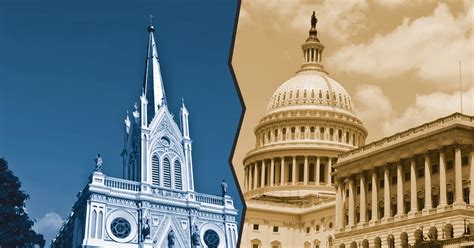
The Second Vatican Council produced sixteen documents, the most important of those being the four constitutions. One of them is about the Church in the Modern world (known to its friends as Gaudium et Spes). It talks about the relationship between the Church and the world. It is said that before Vatican II we had more of a fortress mentality, and the less we dealt with it the better. Now there is more of a sense of engaging the world. The challenge is to be faithful to the truth while we do that and not compromise with the world.

In the early Church, Christians were good citizens. They obeyed civil law, unless following the law meant doing something contrary to the faith. Then they would stand fast, even if it was over something as small as putting a pinch of incense on the charcoal and saying “Kaiser Kurios.” They would accept torture and death rather than do that.

Bishop Barron has said that every culture is “evangelically ambiguous,” meaning that there are some values in society that are in keeping with Christian principles, and some values that are contrary to those principles. We are called to affirm what is good and challenge what is wrong. We are called to be leaven in society (Matthew 13:33), to be light to the world and salt of the earth (Matthew 5:13-16).

We are called to participate in our society, using our Chrisitan consciences, but never hitching our star to a particular politician or party. I have been given to understand that a great many Catholics believe in the principles of the world more than the teaching of the Catholic Church. We do not seek a theocrasy, in which the Catholic faith would be mandatory for everyone, and Catholic teaching would be mandatory. As Pope Paul VI said, “We are to propose, not impose.” But we are called to hold fast to the truths of our faith, with sometimes mandates us being active in society. We need to be careful that our ideas are shaped more by our Catholic faith than by the world.

In America that means participating as good citizens and standing up for the sanctity and dignity of life from conception to natural death. It means being concerned for everyone, and right now (I expect always) there is disagreement about how to best do that. That is part of the challenge. Of we bring Christian love to the conversation, and treat everyone with dignity, that will often be as important as the position we take. I must say that my own experience has, much of the time, been unhelpful in developing the skill of having dialog with those with other points of view. I’ve been working on it steadily, however, and I believe I have come a long way.  May we as Church, continue to develop the skill of dialog.

Blessings,

Fr. Jim

We’ve Been Invited

Dear Folks,

Wedding feast (Matthew 22:1-14) challenges us in the Sunday reading. There is a vision of banquet in Isaiah, and Jesus builds on it.

The challenge is two-fold: The importance of showing up and the importance of showing up correctly. We are so busy it can be a challenge to show up to God’s invitation. It can take various forms but include Sunday worship but is not limited to that. There can be many conversations about that, but what might you do if you had more time?  How might we respond to God’s challenge?

What does it mean to show up correctly? What does it mean to have a wedding garment when one wants to come to the banquet? I’m guessing that the “wailing and gnashing of teeth” may give us a hint. This phrase is used other times in the Gospel of Matthew. 

In Matthew 8:12 Jesus contrasts the faith of the centurion with the “heirs of the kingdom” who one expects took for granted they would be among the rewarded, but are in for a surprise (See, for example Matthew 7:21-23)

In Matthew 13:42 compares the Last Judgement with separating wheat from weeds. The weeds are called “the children of the evil one” and “all who cause sin and all whose deeds are evil.”  

In Matthew 13:50 we see an image of separating good fish from “those that were worthless” and “the wicked.”

In Matthew 24:51 a master goes away and puts a faithful and wise (phronimos) servant, in charge of giving his fellow servants their food at the proper time. The quality of being wise (phronimos) is the quality that causes men to build their houses on rock (Matthew 7:24) and causes bridesmaids to bring extra oil for their oil lamps (Matthew 25:4, although now they would bring extra batteries for their smart phones).  

In Matthew 25:30 talks of a worthless servant who buries his master’s talent for fear of losing it, and gets called a “wicked and lazy servant.” Those who put their gift to work were told, “Well done, good and faithful servant.”

While it is good to meditate on these stories, going over the four Gospels again and again can give us a better sense of what Jesus is calling to do and to be. God has given us all various gifts, and we shall be held accountable for how we use them. This is not earning our salvation but responding to God’s challenge with a strong enough faith to respond according to his teaching.

How might God be calling you?

Blessings,

Fr. Jim

More on the Liturgy of the Hours

Dear Folks,

A new edition of The Liturgy of the Hours is coming out. It is being put out by Ascensionpress.com and Wordonfire.org. I am so fond of both organizations so I can’t really tell you which one to choose. The full set is four volumes, but I’m told that there will be some shorter versions for those who want to get their feet wet. You can pre-order the four volume set now, but you can’t see any of it until January.  

The older (current) edition used the Grail Psalms, but tweaked the translation a bit, so there were small differences. The new edition uses the Revised Grail Psalms and also tweaks the translation a bit.  “The Abbey Psalms and Canticle” put out by Ascension press has (I’m told) the version that will be used. 

Word on Fire has come out with a monthly paperback subscription of the Liturgy of the Hours.  If you want to start now, and have no one to teach you, it is a good tool. 

The most pivotal “hours” are morning prayer and evening prayer.  Their basic structure (the wording might change with the new edition, but the structure shouldn’t):

Opening: God, come to my assistance. Lord make haste to help me. Glory to the Father, to the Son, and to the Holy Spirit: as it was in the beginning, is now, and will be forever, Amen. Alleluia. 

There will be a hymn.

Then comes the Psalmody: an antiphon, the Psalm itself, Glory to the Father, to the Son, and to the Holy Spirit, as it was in the beginning, is now, and will be forever, Amen. Then the antiphon is repeated. There come two Psalms or portions of Psalms, then a canticle prayed the same way. 

Then there is a short Scripture reading, then a responsory.

There is a Gospel Canticle (Canticle of Zechariah in morning prayer, Canticle of Mary in evening prayer). 

Then there will be intercessions, the Our Father, and a closing prayer. 

There will be exceptions, but that can come later. 

I’m currently going through the book “The Psalms: Songs of Faith and Praise” which gives each Psalm with commentary and a short prayer after.  If you want to know more about the Psalms, this is a good tool. (It uses the Revised Grail Psalter, but doesn’t have the final changes, so it won’t match the new Breviary exactly, but I is close). 

Blessings,

Fr. Jim

Failing God

Dear Folks,

We have another parable about a vineyard (Matthew 21:33-43) in which the tenants were given a lot to work with but didn’t give the owner his share of the grapes. It is good to look at that alongside the first reading (Isaiah 5:1-7) and we see how, the more things change, the more they stay the same.

Jesus was clearly talking about the treatment of the prophets of the Old Testament, and also the behavior of the religious leaders at the time.  We can, of course see ourselves in the role of the tenants. 

The other text we want to look at is John 15:1-6, the part of the farewell discourse in which Jesus says that he is the vine, and we are the branches. We work by our own power, we will always fail, if not immediately, eventually. We need to emphasize this. 

Some say that Christianity is basically a call to be a good person. These people have been badly catechized.  Some say it centers around feeling close to God. I’ve heard stories of people being told in the 1970’s, “You don’t have to go to church. If you feel closer to God out in the woods, that’s where you should go.” Sadly, many Catholics have been badly catechized, so we have a lot of work to do. I’m told the notion that Christianity is basically a matter of morality started with Immanuel Kant. The notion that it centers around feeling close to God probably started in the 1960’s. 

Christianity is about a relationship with God. God wants intimacy with us and seeks to give Himself to us, and teaches us how to love Him and our neighbor. Sadly, our sins drive close ourselves to Him. Ever since the fruit incident in Genesis chapter 3, have been failing. The Scriptures (including our readings for this Sunday) show how badly God’s people have failed Him. I know I have failed many times, sometimes from my lack of skill; sometimes by my sinfulness. Because God gives us responsibility, a believe that each sin makes the world less than what God wanted. We cannot change the past (which I find really annoying, but clearly God doesn’t want me to spend all my time rewriting what has happened. That means I focus on the decisions now for the best possible future. That means how we can love God, and how we can love our neighbor. 

What we learn is that we can only bear good fruit if we are united to Him. If you want to help build a better world, the first step is to fall more deeply in love with Jesus. 

Blessing,

Fr. Jim

Continuing Discussion of the Liturgy of the Hours

Dear Folks,

I have talked about the Liturgy of the Hours. The new edition will come out in January of next year. 

There are five “hours.”  There is morning prayer, daytime prayer, evening prayer, office of readings, and night prayer. They don’t take an hour to do, but are called hours because they are geared toward certain times of day. There is morning prayer (lauds), mid-day prayer (terce, sext, or none, depending on whether you pray it mid-morning, mid-day, mid-afternoon), evening prayer (vespers), night prayer (compline), and the office of readings (whatever time works best). 

Before Vatican II, the breviary would get through all the Psalms every week. It was pretty much exclusively the work of priests and religious. The Second Vatican council called for it to be more widely available and to make it less burdensome. It was revised to do almost all the Psalms in four weeks (Psalms 58, 83, and 109 have been completely omitted, as well as several verses that were seen as doing more harm than good, like Psalm 137:7-9). There was a call then and by popes since that it be prayed more by lay people. 

Because this is liturgy, not a devotion, it is a way in which we are united all around the world and speaking with the voice of Christ giving worship to the Father. The liturgical year has a certain rhythm, with various seasons and feasts. Every Friday should have a little bit of Good Friday, and every Sunday should have a little bit of Easter Sunday. The Liturgy of the Hours puts us more in contact with that rhythm and helps each day have more of that rhythm throughout the day. 

There was a mini-series that came out in 2015 called A.D. (a remake of an earlier version). In episode 5 there is an example of Roman cruelty in the temple courtyard. Peter was there and spontaneously started reciting Psalm 69. Caiaphas was there and joined him.  I’m pretty sure they weren’t friends, but they could recite the Psalm together. I don’t know if that actually happened (probably not), but it could have. Imagine people from all over the diocese being able to do that.

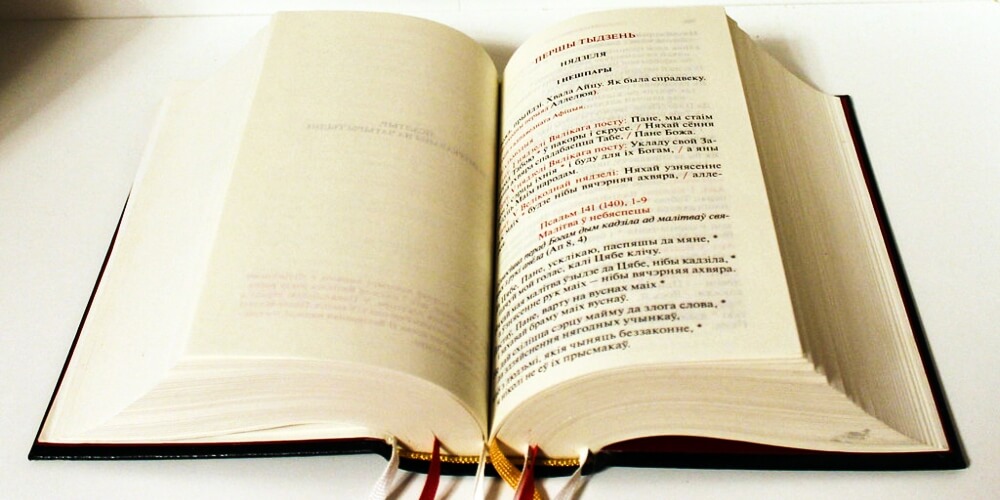
The book that is used is called the Breviary, and the Liturgy of the Hours is also called the Divine Office. The full breviary has four volumes, but there is a one volume that gives less to the office of readings, and a Shorter Christian Prayer that is basically morning and evening prayer and night prayer.  The are also internet options. I have used iBreviary and some use divineoffice.org. This uses your phone, tablet or computer and it works but is not ideal. There is something powerful in having a sacred book set aside for a holy purpose. This is why the Missal in used as a book, but we are called not to use a tablet.

This is a way that Catholics can get together and pray as Catholics without a priest present. It is one way we can be a stronger Church with fewer priests. It is a part of opening the treasury of Catholic prayer more widely for more people. 

More Later.

Blessings,

Fr. Jim

Not Fair II

Dear Folks,

Continuing on the theme of God seeming unfair.

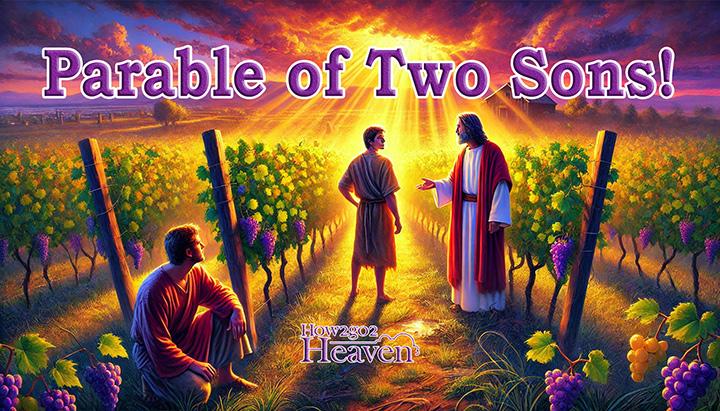
The Gospel reading for this Sunday, Matthew 21:28-32 talks about two brothers.

The essence of the Gospel is the gift of self. The Lord gave Himself out of love, not withholding the last drop of his blood. It is by the power of this gift that we are called and enabled to receive His gift and give ourselves in return.

There is danger that we will refuse to give ourselves as gift, or the more insidious danger is that we give a false gift of self. Jesus is warning the chief priests and elders of the people that their false gift was not going to get them into participation with the Kingdom of God. They wanted the perks of the job: the glory, the privilege, the income, but their hearts were not with God.

God gave us sexuality as a vehicle to give ourselves in a very special way. To use our sexuality in a lesser way than God intends is a false gift of self. Things like pornography are seeking the thrill without any gift of self at all, the opposite of what God calls us to be.

Have we ever had someone who calls themselves our friend but its always about them?

If we go to church and are more focused on how it makes us feel rather than how we are giving ourselves in worship, are we not offering a false gift? Or are we focused on God, on serving him, and on repenting of our sins? Do we have faith to reject sinful behavior?

Do we have the faith to tell Jesus to take our lives and do what He wants with them? In my experience, if we give our lives to Him, He will take it.

Blessings,

Fr. Jim

It’s Just Not Fair

Dear Folks,

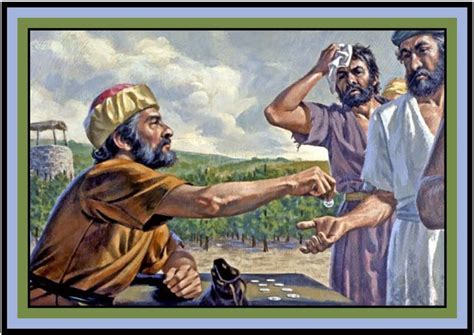
When we are kids, one of the first principles we learn is to play fair. Everyone gets a turn. Everyone gets the same number of cookies. When we hear this Gospel reading (Matthew 20:1-16a, the workers in the vineyard) the first reaction I had was this isn’t fair.  

So, what’s the deal? We get told that “life isn’t fair.” I, of course had trouble with this for a long time because when people said it, it usually meant that I was going to get the dirty end of the stick. 

However, when we get a larger perspective, we learn ways it is good that life isn’t fair. Different people are given different challenges and different gifts. This enables people to bring different strengths to the table. 

Returning to our Gospel reading, consider: If you are hiring people to do a job, and there is a large pool to choose from, who would you pick? I expect the ones who get hired look the strongest and most capable of working. Imagine you were one of the candidates, and you didn’t get hired yesterday. That might mean that you didn’t eat yesterday. What if you didn’t get hired for several day? You might not look very capable and wouldn’t be the first hired. You stay around the marketplace hoping to get hired to do something so maybe you could get something to eat. Perhaps the owner of the vineyard wanted to give these people a chance. We may feel a bit hurt when someone is getting an extra chance and we are not, but there are larger issues. I’ve known families where one of the children has a long-term disease and so gets more attention. The other children, even if they understand, still feel it.

Some had said that this verse refers to people going to the last judgement and everyone who is saved gets the same reward whether they have done a lot or a little. There are a couple of problems with this interpretation. First, it would be the only text I know of in scripture that teaches us how to cope with going to heaven. Second, Jesus makes reference some greater and some lesser in the Kingdom of Heaven (Matthew 5:19, 11:11). 

This story could certainly be understood as referring to the Gentiles becoming Christian, and their Jewish colleagues that, having followed the Torah for generations, they should get some special consideration in the Church compared to those who, for generations, practiced some pagan religion (which would often sound like more fun). If we hear the stories of some who had a time of seeking their own desires before becoming Christian (St. Augustine comes to mind) they often wish they had come to the faith sooner because that is better than what they had before. We have no cause to envy them.

God is at work. He wants everyone to be saved (1 Timothy 2:4) and will lead us through paths we might not understand at the time, but all will be made clear in the end. In the meantime, we keep going.

Blessings,

Fr. Jim

Praying the Psalms

Dear Folks,

You have perhaps learned that the Catholic Church is putting out a new edition of the Liturgy of the Hours. This is a practice older than the rosary and rooted in Jewish practice, and being liturgy, not a devotion, it is a way we can be one with Jesus, and He is speaking though us to the Father. As a Catholic practice it started at the cathedrals and became common at the monasteries. During the Middle Ages it became the practice of clergy and religious only. The Second Vatican Council called for lay people to once again get involved in the practice. I think this is a good opportunity to get more lay people involved in the practice. It centers around the Psalms, and most Catholics haven’t been taught much about the Psalms. We pray a Psalm, or part of a Psalm at every single Mass, but how much do we really know about the Psalms? 

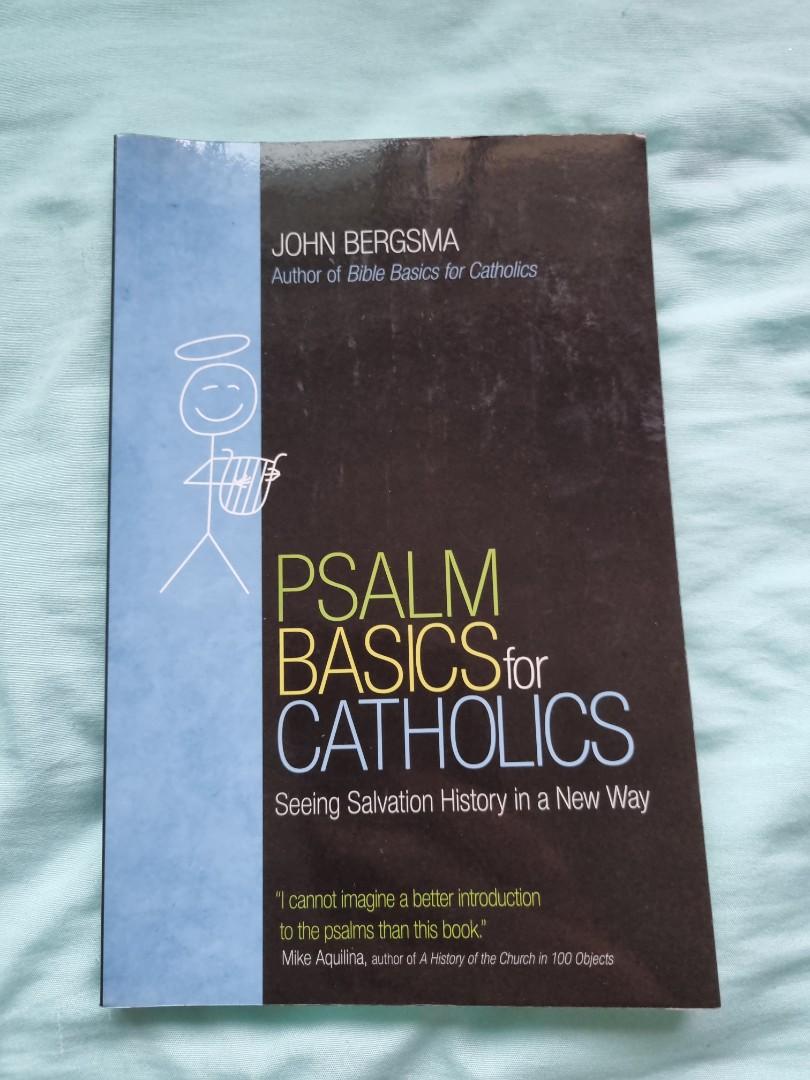
I just finished reading “Psalm Basics for Catholics” by Dr. John Bergsma. It is an easy read, I would think for high school students or ever upper elementary (Not my area of expertise) but it has a lot of information in it, and I learned a lot of things that I didn’t know. 

There are 5 “books” in the book of Psalms, and most of the Psalms in each book move in a certain direction. Psalms 1 and 2 are an introduction to the thought of the Psalter, first from a wisdom perspective and then from a royal perspective. 

The “books” of psalms are: Book 1: Psalms 1-41; Book 2: Psalms 42-72; Book 3: Psalms 73-89, Book 4: Psalms 90-106; and Book 5: Psalms107-150. We will learn from Dr. Bergsma how the “books” fit into salvation history. 

Jesus certainly knew and prayed the Psalms. We see he quoted Psalm 82 “you are gods” in John 10:34; Psalm 22 “My God, My God, why have you forsaken me (Matthew 27:46), Psalm 31 “Father, into your hands I commend my spirit (Luke 23:46).” If you read Psalm 24 you know that “Blessed are the clean of heart, for they will see God” is not a new teaching. If you read Psalm 37 you will see that “Blessed are the meek, for they will inherit the land” is not a new teaching. 

The Psalms give us ways to pray whether we are happy or sad, on top of the world or having our lowest day. They give us words to bring all of ourselves to God.

There are various books on how to pray the Liturgy of the. Hours (I was surprised how many are available) and I’m going through them, hoping to share some recommendations. In the meantime, this introduction to the Psalms is a good place to start.

More soon.

Blessings,

Fr. Jim

Forgiveness is Hard

Dear Folks,

Today’s readings are tough ones: we talk about forgiveness. Everyone knows that forgiveness is a part of Christianity. We know that if we are not willing to forgive, we are not really doing Christianity. Jesus spoke in very strong terms, but it is hard in practice.  I believe it was C. S. Lewis who said, “Everyone thinks that forgives is a lovely idea until they have something to forgive.”

I personally had a very hard time learning forgiveness because I thought it meant that others could torment me without limit and without consequence, and I was supposed to pretend that it didn’t matter (when you were the kid that didn’t fit in, that would be an easy trap to fall into).

I have since learned some important things.

!. Forgiveness is a form of healing.

2. I takes time to heal deep wounds.

3. It can exist alongside protecting yourself. 

4. Sometimes forgiveness includes cutting off a relationship. 

When Jesus said if you do not forgive others’ sins you will not be forgiven, I first thought that meant that if we didn’t forgive others’ sins then out of spite God would not forgive us. I later learned that there was a deeper reasoning. God wants to forgive us because even though he really cares about sin, He loves us even more. He really wants to get all of us in heaven, even the worst of us. God hates sin more than we do, even though it doesn’t affect Him personally. He knows that sin can destroy us, and He loves us more deeply than we can imagine. Opening our hearts to forgiving is opening our hearts to being forgiven. Believing that God wants all people to be forgiven enables us to look at our own sins honestly, and perhaps realize that they were more serious than we are in the habit of thinking.

Some books I have found useful are:

“No Future Without Forgiveness” by Desmond Tutu. This tells the story of the Truth and Reconciliation Commission in South Africa. It tells the horrors of apartheid (I knew it was bad but I didn’t know it was that back) and the good things that come from the hard decision to grant amnesty.

“The Book of Forgiving” by Desmond and Mpho Tutu. Talks about how to forgive: Telling the story, naming the pain, granting forgiveness, renewing or releasing the relationship.

“Don’t Forgive Too Soon” by  Matthew Linn, Sheila Fabricant Linn, and Dennis Linn. This talks about practicalities of various situations and practical responses.

“Remembering God’s Mercy” by Dawn Eden. This tells the story of one woman’s journey from terrible abuse to Catholicism and healing. Her relationship with Jesus is central.

Now think of the goal. No more pain, no more anger, no more resentment. Only God can get us there.

Blessings,

Fr. Jim