
Dear Folks,
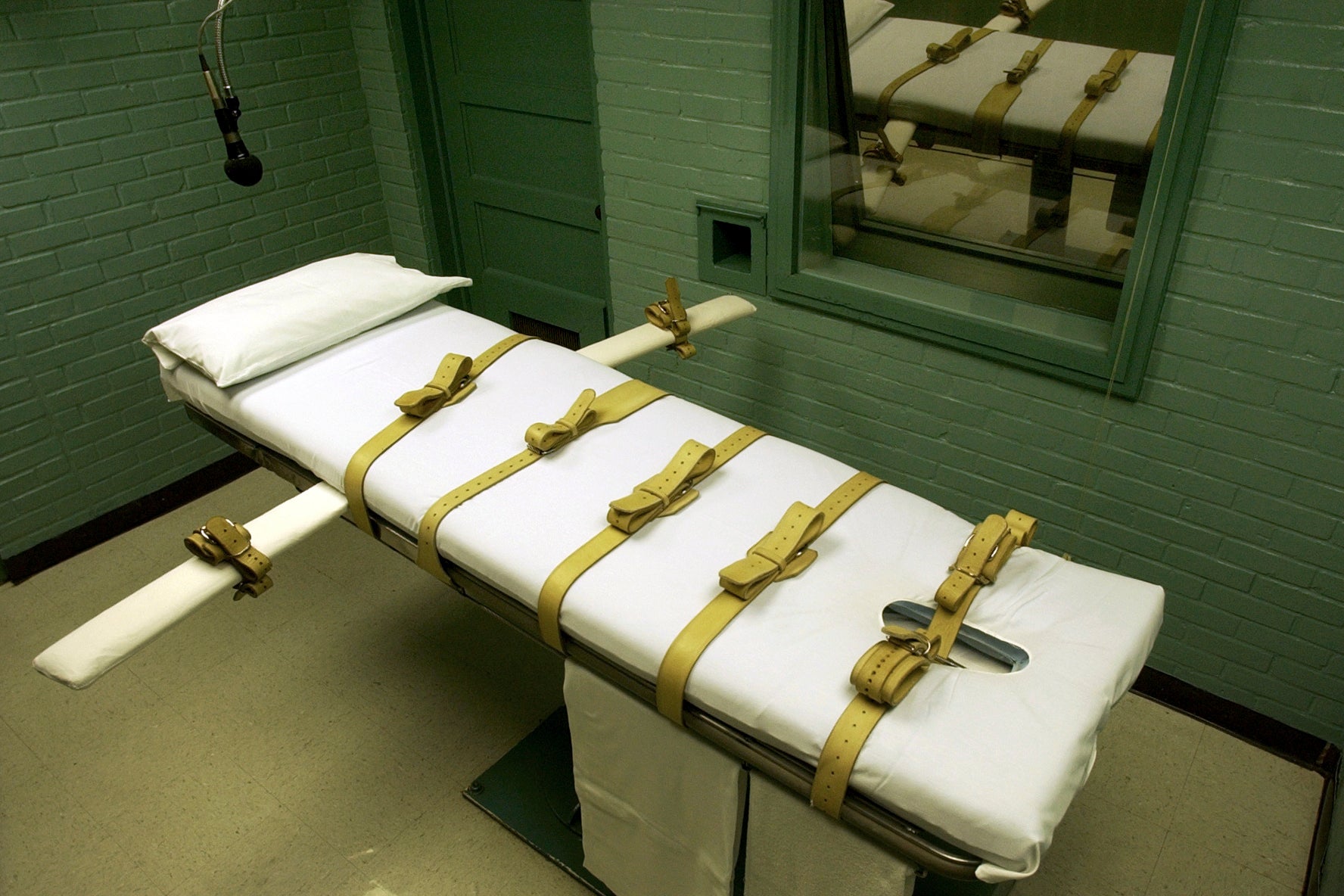
Recently, Pope Leo mentioned that those who favor capital punishment are not pro-life. This has confused many people, and I would like to offer some reflections.
First, remember that the term “pro-life” is not rigorously defined. In math, science, and philosophy they taught us to define our terms clearly so we know what they really meant so that everyone using them could understand them the same way. When we use terms that carry much emotional weight but are not rigorously defined, let us remember what is and what is not being accomplished.
Now let us consider capital punishment and respect for human life.
In the Old Testament, God mandated capital punishment, beginning with the covenant of Noah: “Whoever spills human blood, that person’s blood will be shed; for in the image of God has God made man (Gen 9:6).” This taught that all human life was sacred, whether an aristocrat or a peasant, man or woman, little baby, vigorous adult, or infirm senior citizen, their lives had a value that could not be compared with any other value. There was no amount of money, nothing on earth that could compare to the value of human life.
Remember, though, that was not the response to Cain when he killed his brother Abel (Gen 4). More on that later.
As we go through the Bible, we see that God teaches some things gradually, not because He is learning as He goes, but because people can only be brought along so fast. Our kindergarteners are bright and enthusiastic, but they are not learning calculus. They are not ready.
When some Pharisees asked Jesus about divorce and He said they should not be separated they were surprised. “They said to him, ‘Why did Moses command that a man give his wife a certificate of divorce and send her away?’ He replied, ‘It was because you were so hard-hearted that Moses allowed you to divorce your wives, but it was not like this from the beginning (Matthew 19:7-8).’” This suggests that God led His people along gradually, and some things they were not yet ready to receive, but that God wanted from the beginning. This may explain His treatment of Cain.
Around the time of the exile, there was more reflection on the individual, personal rights, and personal responsibilities. In Ezekiel 18 we see God reveals what He really wants.
“Do I derive any pleasure from the death of the wicked? Asks the Lord God. Would. I not rather rejoice to see them turn away from their wickedness and live (Ezekiel 18:23).”I would encourage reading the whole chapter. A very nasty Saul of Tarsus was responsible for the deaths of many Christians, but God did not strike him down but called him to repentance and sainthood. God wants everyone to be saved (1 Timothy 2:4).
We remember the one time when Jesus was presented with a question about capital crime, He didn’t want her killed; He wanted her to “go and sin no more (John 8:1-11).” This does not by itself resolve the issue, but it is worth considering in the discussion.
For many centuries, the Catholic Church held that capital punishment was a proper way to enforce the law and deter crime. Things started to shift starting with Pope Saint John Paul. As I remember it, he started by appealing to authorities not to execute particular criminals. He taught extensively about the culture of death, (which considered killing a way to solve problems) and how that contrasted with a culture of life. Toward the end of his papacy, after laying the groundwork, he taught that we can do better than capital punishment in most cases. Pope Francis pushed it farther. Now it appears that Pope Leo is
moving in that direction.
There are some arguments against capital punishment that I find unpersuasive to the point of being irritating. I saw a t-shirt that said, “Why do we kill people who kill people to show that killing people is wrong?”. I believe it is common to imprison kidnappers,
but I never saw a t-shirt that said, “Why do we lock up people who lock up people to show that locking up people is wrong?” When people claim it is inconsistent to be antiabortion and pro-capital punishment, that tells me that they have not taken the effort to understand the other point of view, and that is irritating. I’m reminded of the 5th amendment that says that no one can be “deprived of life, liberty, or property without due process of law.” Punishing convicted criminals calls for some things that we shouldn’t do to innocent people.
Do some people deserve to be put to death? I think so. In fact, one could make a case that there are some awful people who might deserve to die slowly and tortuously. Imagine, though, what it would do to our souls to inflict such a thing? What would it do to our society? Imagine having that job. I would be concerned about someone who is not repulsed at the thought.
Someone said, “if he took someone’s life should he be able to keep enjoying his life?” I say, “Who said he’ll get to enjoy it?” I’m not arguing this out of niceness. If I had my way a vicious murderer would be put in twenty-three hour a day lockdown, with Mother Angelica, Bishop Robert Barron, Trent Horn, and other such videos pumped into his room. I also have a recipe for brown rice and tofu. Let’s see how he does with fifty years of that. He might beg for a lethal injection. I recognize this idea would have to be adjusted by others who know more about this stuff, but you get the idea. If a few of those souls could be redeemed, that would be a good thing.
If we treat every human life from conception to natural death as sacred in a way that is deeper than human choice, deeper than our personal merits, and transcending all other categories, I suggest that we will be a better society and better people, and will put us in a better position to fight abortion, euthanasia, eugenics, and other manifestations of the culture of death.
Blessings,
Fr. Jim
 Fr. Jim Wyse