Category Archives: family

St. John Lateran and the Body of Christ

Dear Folks,

Today we celebrate the Feast of the Dedication of the Basilica of St. John Lateran. You may be asking why the Catholic Church is making such whoop-de-do about the dedication of some old church building? I’m glad you asked.

First, we remember that the church building is a symbol of the real Church, who is us.

St. John Lateran is the cathedral of the Catholic Church. The word “cathedral” is from the Greek for “Cathedra” meaning “chair” Jesus said in Matthew 23:2-3 that the scribes and Pharisees sat in the chair of Moses, so their authority should be respected, even though their conduct was abominable. (If you know your history, you know that Catholics have had a good deal of opportunity to apply this teaching through the years).

Some people have said that they believe in Jesus but not the Church. This leads me to wonder where they get their Jesus, because it can’t be from the Bible. In the Gospels Jesus begins by calling people together, and He says that He will build His Church (Matthew 16:18) and expected that the Church would be there to help keep us working together.

The Scriptures compare the Church to a body (1 Corinthians 12, Romans 12, and Ephesians 1:22-23 and Ephesians 4:11-16), and to a temple (Ephesians 2:19-22 and 1 Peter 2:4-5).

I find the image of the body especially interesting. The various parts are very different, but have compatible genetic structure, and if my rudimentary biology is correct, they agree on certain antigen proteins so they recognize each other as belonging. This can break down when there is an autoimmune disease that causes the body to attack itself. 1 Corinthians 1:10-16 talks about factions in the early Church, and how dangerous that was. Some say diversity is our strength, and others say that unity is our strength. I say they are both half right. Having diverse points of view, styles of thinking, and backgrounds but being united in purpose and agreeing on essential teachings while cooperat-

ing with each other under the guidance of leadership makes us strong. I have put a lot of energy into teaching and encouraging people to deal with their differences in a charitable

and productive way, and I think it is one of the most important tasks for this generation of the Church.

I believe God calls us to be Church so that we are forced to deal with each other. We have to deal with other people’s ideas, concerns, needs, and perspectives. This draws us beyond ourselves and demands giving of ourselves in a deep way. It also means a lot of times things won’t be done the way we want or the way we think they should be. That is part of the cost of discipleship.

Let us pray that we may work together so that we can be strong against our common enemy (Ephesians 6:10-17).

Blessings,

Fr. Jim

The Bride and the Lamb

Dear Folks,
This year most of the Gospel readings on Sunday will be from Luke, but today we slip into John to talk about the wedding of Cana. The Bible regularly uses the image of marriage for
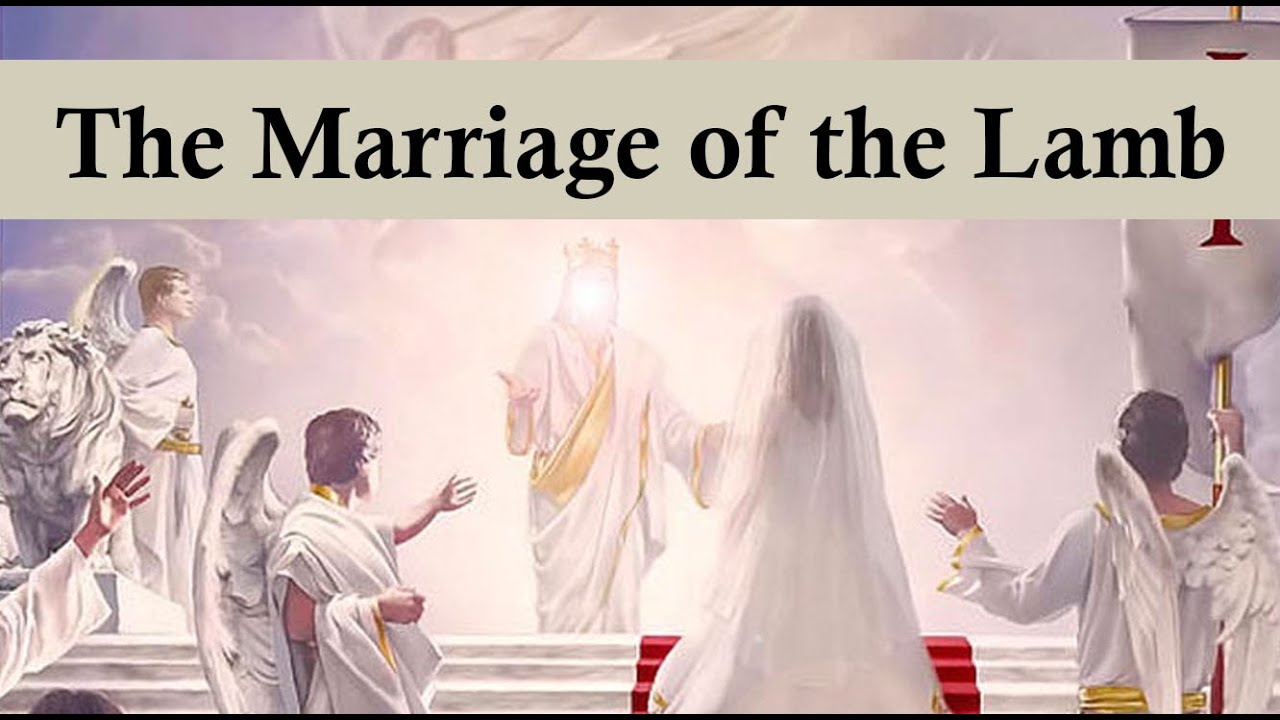
God’s relationship with His people. We can see for instance Isaiah 62:4-5; book of Hosea, book Song of Songs, Psalm 45; Ephesians 5:29-32; Luke 5:33-35; John 3:29; Revelation 19:6-9, and Revelation 21:9-14. At the wedding at Cana, we see Mary coming to Jesus with
the problem of running out of wine. If you read Brant Pitre’s excellent book “Jesus the Bridegroom” he will explain that the responsibility for providing the wine falls to the bridegroom, so Jesus is being revealed as the bridegroom. John the Baptist will make this point in John 3:29, and then in the wedding of the bride (the Church) and the Lamb (Rev. 19:6-9; Rev. 21:9-14).
Someone once said, “If you treated your friends the way you treat God, would you have any friends?” We could ask if you treat your spouse the way you treat God, how good a marriage would you have?
I’ve recommended John Gottman’s book “Seven Principles for making Marriage Work” before. He has empirical data to back up his ideas, and they are very interesting. I wonder how some of them could be applied to our relationship with God.
Enhance your love maps. Your love map is what you know about your partner, their likes, dislikes, favorite food, favorite TV show, etc. Are we curious to know more about how God has revealed Himself and interacted with His people. This would include stories from the Bible and the lives of saints, how God calls us to worship, and what He teaches. It starts with being curious.
Nurture your fondness and admiration. What do you appreciate about your spouse? How did you first fall in love? What were good times and what attracted you to each other in the early days? How did we first come to know God? What have we found good about
Him? What have been good experiences of His work in your life?
Turn toward each other instead of away. Gottman uses the example: if your beloved calls you to the window to see a cardinal (I presume the bird) in the back yard, do you come and look, or do you roll your eyes and move on? Those experiences make a difference. How do you connect in little ways with God throughout the day? Do we let Him have a bit of attention and interest in little ways? How do we connect Him to our world?
Let your partner influence you. Have you let your partner change the way you do something, look at something, approach something? How has our relationship with God changed the way we do things?
Build shared meaning. Take the two separate life stories and weave them into one story. What is your life story? God’s story, the story of salvation, the Bible story and the story of the Church is one big tapestry. How do we see ourselves woven into it? Love relationships can be nurtured. God loves with infinite love, and we have a lot of room to grow. How might we let God have more of ourselves?
Blessings,
Fr. Jim

How Deep is our Faith?

Dear Folks,
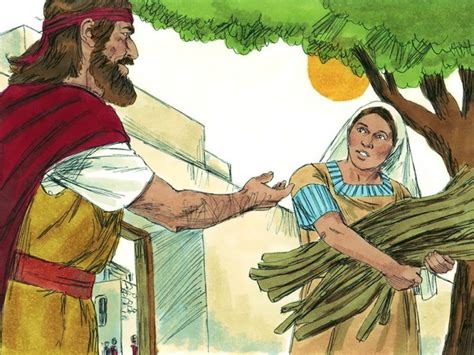
There are some people in the Bible who deserve more recognition than they usually get. Our first reading this Sunday; 1Kings 17:10-16, tell the story of the Widow of Zarephath, and I consider her one of the great heroes of the Bible.
Consider her situation. She had gotten married and had a son (I’m guessing recently, since the son was apparently still too young to help collect sticks). Her husband died. Widows didn’t have a lot of options financially, but she did the best she could. Then came the drought, and therefore the famine. She now had no one who would hire her, nothing left to sell, no one from whom she could beg anymore, and now her food was almost gone. She was getting ready for her and her son to have one last taste of food before they starved to death. Imagine the heaviness of her heart as she ponders all her hopes and dreams being crushed, the horrible fate that
was looming.
Then this scruffy looking strange man comes and asks for a drink of water. Immediately she goes to get it. Even in her current situation, her hospitality goes so deep that she doesn’t hesitate. The he calls after her asking for some food.
Oh.
Any other time it would not have been a question, of course she would feed a stranger. Not so easy today. She explains the situation, and the reasonable expectation was that he would respond, “I’m so sorry. I’ll go ask someone else.” Instead, he has the nerve to say okay fine but first feed me. I don’t imagine she put much stock in his promise “The jar of flour shall not go empty, nor the jug of oil run dry, until the day that the LORD sends rain upon the earth.” There was nothing about him to tell her he could work miracles, and it would be more likely he would say anything to get what he wanted, even scamming a starving widow. I expect she figured she and her son were going to starve to death and nothing could change that. She had one last decision to make in her life, and that was to be generous to a stranger. She chose to be generous. She had so little to give, but gave with great love. God rewarded her, and I consider her one of the underappreciated heroes of the Bible.
I would also mention Shiphrah and Puah (Exodus 1:15-21). They were Israelite midwives who were being oppressed in Egypt. They defied the mightiest king in the world to save the babies
from slaughter. They succeeded because they were clever and had tremendous courage. They had a terrible situation and responded in faith. Their faith went that deep.
In our Gospel this Sunday, we see the contrast between the Scribes and Pharisees, whose faith was just on the surface and the widow giving her small coins whose faith was deep enough to give when she had so little.
Challenge for us: how deep does our faith go? Will it still work when we are at the end of our rope, worn down to nothing, crushed by life? May God grant us the grace.
Blessings,
Fr. Jim 

Marriage: What is it and Why is it?

Dear Folks,
For the last three weeks in our Sunday Gospels Jesus talks about children. When the disciples want to know who is most important, Jesus brings forth a child (Mark 9:30-37). When the disciples act out of jealousy toward someone not in their group, Jesus speaks in very strong terms about the seriousness of their example affecting children (Mark 9:36-48). When Jesus is asked about marriage, the next thing He talks about is receiving children and how “the kingdom of God belongs to such as these” and how we need to learn from them (Mark 10:2-16). I think He’s trying to get our attention.
I have just finished a book called “Pro-Child Politics” by Kathy Faust. It is a series of chapters on various issues in which our society is sacrificing the well-being of children for the desires of adults. The chapters are written by experts in the field, and they are well written and heavily footnoted, so even if you don’t wind up agreeing with all the things that are said, this is a very
important addition to the conversation, and it will be worthwhile wrestling with the ideas. This week Jesus brings together the question of marriage and welcoming children.
There are currently two views of marriage available in conversation. There is the relational view, that sees marriage as affirming the relationship of the couple (or thruple?) based on their romantic feelings for each other that they label love. In this view, marriage can be anything you want. This is the commonly held view today, and often assumed to be the only one. The other is the conjugal view of marriage, which unites men and women to one another, and to any children they might create, which was the foundation of most of human civilization. It understands marriage as recognized by the government, ideally life long, sexual in nature, exclusive in nature, only two people.
There is a presentation on Formed.org “How to Talk about Marriage and Same Sex Unions” by Trent Horn. There are the books “Getting the Marriage Conversation Right” by William B. May and “What is Marriage?” by Sherif Girgis, Ryan T. Anderson, and Robert P George that make the case for the conjugal view of marriage, and give evidence that this is the best possible situation for a child to grow up in.
I would also suggest reading “Brave New World” by Aldous Huxley (written in 1931, eerily prophetic). It describes a dystopian future in which family has been replaced by government, and children are a manufactured commodity. Also see “The Anxious Generation” by Jonathan Haidt, about the effects of smart phone use on childhood.
How often are children seen as a commodity to be produced, and accessory to one’s lifestyle?
It is important to prioritize the well-being of children not only because they are so vulnerable, but because they are going to be running things someday when we are in the nursing home.
The more they are able to learn virtue, empathy, emotional regulation, deferral of gratification, a sense of right and wrong and similar things, the less violent and more flourishing our society
will be. Notice this is not ruled by their feelings and desires, but a deeper sense of the good.
Where do we go from here?
Blessings,
Fr. Jim

Families Building Civilization

Dear Folks,

If we are serious about building a less violent world, we need to take a look at fatherless families. According to everything I’ve read (see fatherhood.org for some data), children who grow up without their fathers are significantly more likely to live in poverty, have

behavioral problems, become drug addicts, commit crimes, and many other things. I’ve been told that boys learn from their fathers how to be men and how to treat women, while daughters learn from their fathers what to expect from men.

There are many single parent families that are doing great things, and there are some fathers that are not doing a good job, but it can still be true that encouraging families with both the father and mother present and engaged can build a better world.

Someone told me that her observation was that some parents see their children more as accessories than as their central life vocation. Such parents drop off their kids at school, and maybe at church, and act as the primary teachers of their children. However, many parents are taking their responsibility very seriously and see themselves as the first mentors, protectors, and advocates for their children. How can we help and encourage them?

I’ve heard some voices that suggested that parents shouldn’t have a say in (or even know) what their children are getting taught because they weren’t trained like teachers are. However, I’ve heard some teachers saying please, please, please would parents be

more involved in their children’s education. How can we help and encourage them?

For many years it was clique that in movies and TV shows the father of the family was either a doofus or a jerk, and everyone knew better than him. How might that have helped form the notion that fathers were not that important to have around. I’ve been told by a

number of sources that the way the welfare system is structured, it is actually encouraging the mother to raise children without the presence of the father. If that is true, how can that be changed? How can it be structured to encourage active presence and participation of both parents? I have been told it will never be changed because keeping people poor and dependent is big business. I figure systematic change can only happen when enough people rise up and decide not to stand for it. I don’t know where to start, but I refuse to believe it is impossible.

It has been said that “Love is love.” It is a true statement, but not all love relationships are the same. The relationship between husband and wife is different from father and son, from mother and daughter, between cousins, between brothers, between brother and sister, between two good friends, and so on. Each has a different nature, makes a different contribution to society, and is expressed differently. I would suggest that the relationship

between a man and a woman, committed to a permanent exclusive relationship of love that is ordered toward the generation and nurturing of children makes a unique contribution. If

that is true, how can society privilege this relationship, encourage it, strengthen it, and value it? Our future, and our hope for a better world, may depend on it.

Blessings,

Fr. Jim

Leading in Our World

Dear Folks,

What does it mean to be part of the royal family of God? Last week I wrote about Jesus as prophet, priest, and king, and how we are to participate in those three roles as well, or perhaps, how Jesus exercises those roles through us. I think in these days we need to think more about the royal role, in which we are called to be leaders in this world.

In the book “Leadership Without Easy Answers” by Ronald Heifetz, he says that a leader points to the reality that calls for adaptive change and keeps the conversation focused on the

relevant issues.

We can tell the story of the Gospel, and also the story of how the world looks through the Gospel lens. This involves a vision of what it is to be human, and what makes for a good life. How many people think it’s important to have a good life? What does that even mean?

Have we thought about it? I would suggest that many (most?) people presume the question has been answered and charge ahead focused on immediate issues without regard to the

larger picture.

There are always tensions between Christian belief and the accepted beliefs of society. Right now, there is tremendous, fierce tension on the understanding of being male and female, on the meaning of sex, on the meaning of family, and the sanctity of

life. These are all connected, and the Catholic understanding shows to live that leads to human flourishing.

Mary Eberstadt in her book “Adam and Eve After the Pill” tells about how the sexual revolution has done great harm, but even though there are mountains of data, people refuse to recognize it. She compares it to the days of the Soviet Union, when there was a huge amount of evidence that their system caused tremendous human suffering, but so many refused to acknowledge it. There is a great “will to disbelieve.” I would also recommend “The Truth Overruled” by Ryan T. Anderson, which goes into more detail about the fierce resistance that meets any dissent.

As long as people look at their identity being all about their feelings, people will not be able to develop a solid sense of self, and a profound and stable vision for life becomes harder and harder. As long as people look at sex as a toy, it will facilitate treating other people as toys, easy to use and discard. Conceiving children becomes an inconvenience rather than a vocation, and life without abortion become unthinkable. If marriage is whatever we feel like it being, it will not have a solid foundation, and we lose the central crucible for forming people to be part of civilization. Our society has so much violence, so much anger, so much loneliness, so much misery. I’m reminded of Mahatma Ghandhi being asked what he thought of western civilization, and he said, “I think it would be a good idea.”

If we share the beautiful truth about how God made us for love, and what love really is (as in not a feeling but a decision) how the way we share ourselves is central to the good life.

This leads to an understanding of the authentic gift of self and the fullness of human life. We can recognize our feelings and know that they are important, but they can come and go and can mislead us. We can present a vision of what marriage is that will lead to a

society that flourishes. The conversation might start with some questions, like “Why does human life matter?” “What is marriage and why does it matter?” “Is loving a person different from loving ice cream?” Who knows what will follow from that?

By developing our ability to present the Catholic faith, the Catholic vision of how Jesus reveals to us what it means to be human and being able to do it in a compelling and inspiring way, we can be leader in the world.

Blessings,

Fr. Jim

The Catholic Understanding of Mary

Dear Folks,

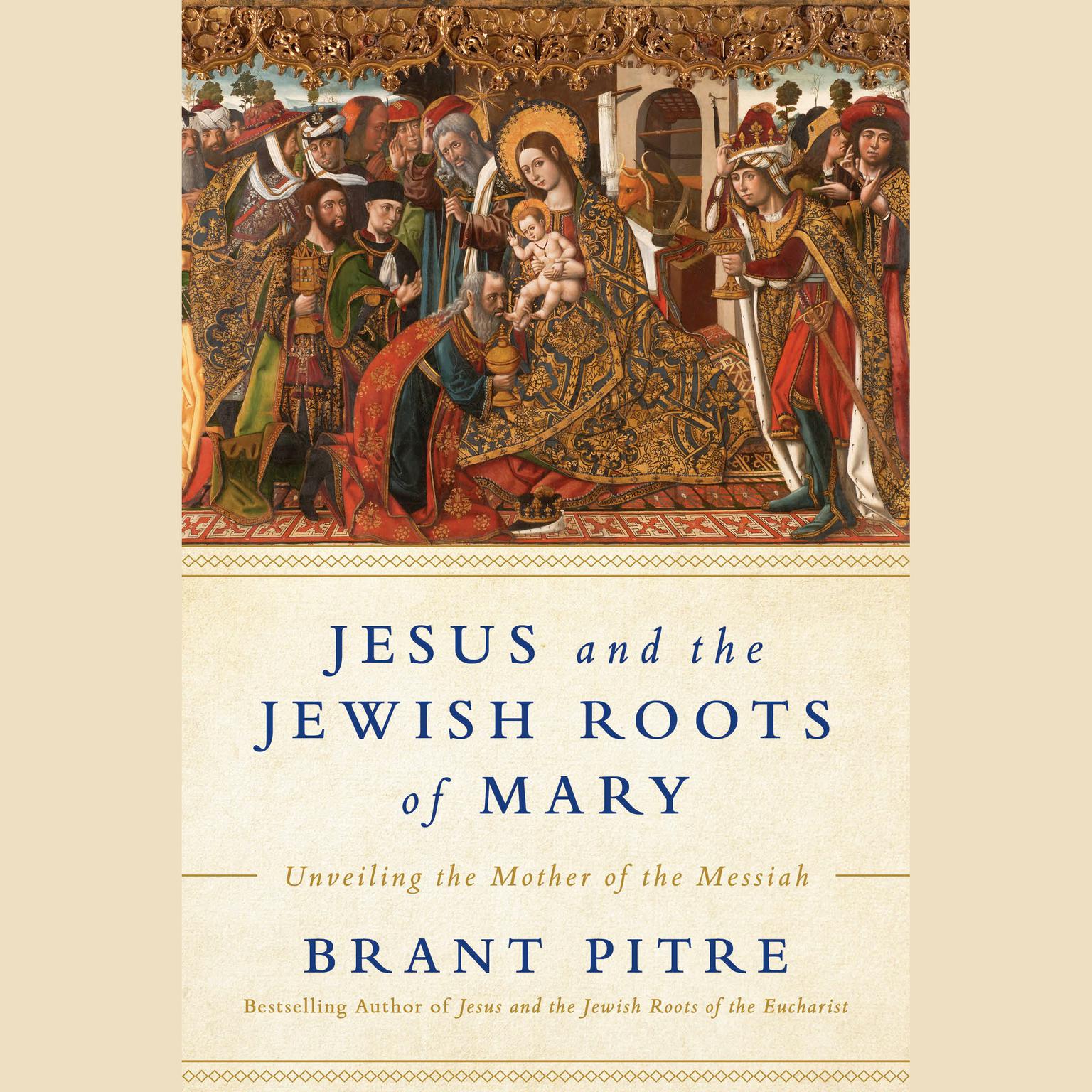
Mary is a key figure for Advent. Brant Pitre’s book “Jesus and the Jewish Roots of Mary” is not only for those who love Mary and love the Bible, but for anyone who wonders if there is Biblical basis for all the Catholic teaching on Mary (spoiler alert: yes). He shows very powerfully how the Old Testament and the New Testament are woven together into one large story of salvation. We have (I hope) all been taught that the New Testament is foreshadowed in the Old and the Old is revealed in the New. The foreshadowing is called a “type” and the reality fore-shadowed is called the “antitype.” We see Noah’s flood and the passage through the Red Sea are types of baptism. We read in the blessing of water in the baptismal rite, “The waters of the great flood you made a sign of the waters of Baptism, that make an end of sin and a new beginning of goodness. Through the waters of the Red Sea, you led Israel out of slavery, to be an image of God’s holy people, set free from sin by Baptism. ”“Therefore, just as through one person sin entered the world, and through sin, death, and thus death came to all, inasmuch as all sinned – for up to the time of the law, sin was in the world, though sin is not accounted when there is no law. But death reigned from Adam to Moses, even over those who did not sin after the pattern of the trespass of Adam, who in the type of the one who was to come (Rom 5:12-14).” St. Paul will go on to contrast the sin of Adam (type) and the gift of Jesus (antitype).We also see that Moses, David and even Joseph were types of Jesus. Eve is a type of Mary. This explains why Jesus called His mother “woman,” which otherwise makes no sense. Eve was called “the woman” in Genesis and didn’t get the name Eve until after the fall. Pitre will explain that Mary is not only the new Eve, but the new ark of the covenant and the new Rachel. He will explain how all this was recognized by the Fathers of the Church in the early centuries. This is not new. He also suggests reading what the Second Vatican Council said about Mary in the Constitution on the Church (See Lumen Gentium 52-68).This, of course, is not just for apologetics or for interesting Bible study. First, it helps us see how God’s big plan of salvation is all woven together. Next, if you read Edward Sri’s “Biblical Walk Through the Mass” you can see that the Bible and the liturgy are woven together in one large reality. Having done that, we will have the practice to be able to see how our story is woven into that very story of salvation history and understand our lives as a journey with God. Second, it helps us appreciate the person of Mary of Nazareth. She is not just a theological football or doctrine of the Church. She is a person, and lives in heaven, enveloped in God’s love. She loves us with a mother’s love and prays for us. This is part of the rich gift that God gives us, drawing us into His family. If there is one thing we should understand in our day and age, it is that family matters. A lot. I remember as an undergraduate talking to someone from the Reformed Bible College about the saints. She said that she didn’t see the need for this because Jesus is enough. I am pleased that even then I thought to say that would be a compelling argument if we believed that God would give us the minimum necessary. I believe He gives us the maximum possible because His love is infinite. This season we see to sharpen our attentiveness to the gifts that God gives. This a place to start. Blessings, Fr. Jim

Marriage and the Cross

Dear Folks,Our Gospel talks about marriage, divorce, and natural law. Why would Mark put this in the section of his gospel that deals with the cross? At Jesus’ time, there was a strong belief that aman could divorce his wife for a number of causes, and I’m told some rabbis taught that if a wife burns her husband’s dinner that was cause for divorce. Clearly, practice like this wouldencourage many men to come to marriage thinking about how it was going to benefit them.Jesus’ is calling people to see marriage more in terms of gift of self. There may be great benefits and joys in marriage as in many forms of giving oneself, but it doesn’t work if our central focus is on what I’m going to get out of this. This is true of many ways we give ofourselves, like priesthood and friendship. Marriage is unique, however, and plays a unique role in the story of salvation.Consider how our relationship with God is compared to marriage. “I will rejoice heartily in the Lord, my being exults in my God; For he has clothed me with garments of salvation, and wrapped me in a robe of justice, like a bridegroom adorned with a diadem, as a bride adorns herself with her jewels (Isaiah 61:10-11).” The book of Hosea is all about comparing God’s relationship with Israel to a husband’s relationship to an unfaithful wife. Psalm 45 is essentially a wedding song. Song of Songs is essentially a wedding song, and many people have found in it a deep sense of God’s tender love. Ephesians 5:21-33 compares marriage to the love between Christ and His Church and calls it “a great mystery.”If anyone is thinking that this is just a nice metaphor, why would it be called a great mystery?What if God deliberately made people male and female, that they be suited to give themselves to one another in a unique way, that would teach us about how God is calling us to union withHim? Our union with God is meant to be free, total, faithful, and fruitful, and so is marriage.Mark chapter 10, Jesus is asked about divorce, and at that time, there was discussion about what was required for divorce. He goes back to the beginning, the very beginning, and locatesthis discussion in the core of how we were created.Matthew will give some more detail in Matthew 19:1-15. Remember, the Gospel writers don’t tell all they know (See John 21:25), so they must be selective. There is a clarification about ifthe marriage is unlawful (v. 9, and that leads to a discussion beyond what I can do here). The apostles are shocked and think Jesus’ high standards means it is better not to get married.Jesus tells them that not everyone is made for marriage.In the Gospel of John, we see that John the Baptist’s job was to introduce Jesus. The Baptist will use two images for Jesus: The Passover Lamb (John 1:29) and the Bridegroom (John 3:22-30). We will see these two images brought together in the wedding feast of the Lamb in Revelation 19:7-9. See also Revelation 21:2 and 9. Both are images of total gift of self.When people get married, they are holding their whole lives in their hands, and making a decision that cannot be undone. I’ve dealt with a number of people who have been divorced or are going through divorce, and I’ve seen clearly that divorce does not make it go away (no one has contradicted me on that).This is a huge topic, but if there is one takeaway from what I’m saying, it is there is more to marriage than most people think, and we who think Jesus’ teaching is important have a challenge of expanding the conversation in society for the good of all.Blessings,Fr. Jim

From His Family to Us All

Dear Folks,
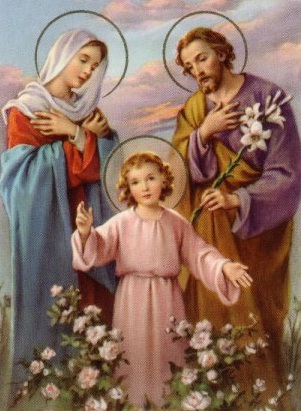
In these two weeks we celebrate the Holy Family and the Epiphany, and they touch on the
root of God’s whole work. We see a pattern where God makes family, and when it falls
apart, to bring things together.
It begins in Genesis, with the story of Adam and Eve. In this story, God makes Adam and
Eve and calls them to be the beginning of family. Then things fall apart. The story of the
Tower of Babel is a story of God’s people being dispersed and alienated from each other
because they tried to do things their way instead of God’s way. Noah and the ark is a story
about trying again. God picks a family, not a village, not a nation, but a family. From there
comes the new beginning.
God’s plan to gather His people together as one reaches a new phase with the beginning of
the nation of Israel. When God begins the nation of Israel, he starts with a family, the
family of Abram and Sarai (later Abraham and Sarah). From them will come a people from
whom the plan will unfold. Everything is laying the groundwork for the Gospel. The
people of Israel get scattered, and Isaiah prophecies God gathering them together (see, for
example Isaiah 60:4), and also starts talking about the gathering of all the nations (see
Isaiah 2:2-5). The Gospel Story begins with a family: Jesus, Mary, and Joseph, the Holy
Family.
The Magi represent the nations, those beyond the nation of Israel, who are called to be part
of God’s people. They were drawn by the star because they were open to goodness, beauty
and truth. (Herod wasn’t.) We the Church, God’s family, are meant to be light to draw the
nations. If we do our job right, those who are open to goodness, beauty and truth will be
drawn to Jesus by our light. In short, we are called to be stars.
Family is key. It is in family we are meant to learn empathy, responsibility, and what it
means to be part of something larger than ourselves. That is where we need to learn to
manage our emotions and be aware of how we affect one another. We are meant to learn
the difference between right and wrong and taught in practice to put our own will in second
place for a greater good. These are the sorts of virtues that enable a civilization to thrive.
Everything I’m hearing and reading says that we as a society are experiencing a decline in
all these things, and an increase in violence. If we want to turn that around, one place to
start, perhaps the place to start, is to strengthen the family.
For several generations in the western world, the understanding of family has diminished
until it is seen as just a lifestyle choice based on personal desires. The current arguments
about what is marriage and what is family are just the latest symptoms. How to begin to
rebuild it? There are three resources that I’ve encountered this year:
“The First Society,” a book by Scott Hahn unpacks what this is about and what it is
not about (for example, it is not about nostalgia for “Leave it to Beaver”).
“Defending Marriage” is a book by Anthony Esolen. His approach is more literary,
and rather than making rock-solid arguments for each of his positions, he weaves
together a vision for us to imbibe, and lets us consider if this speaks to us. He is not
concerned at all with using politically correct language, so let the reader beware.
For those who have access to Formed.org there is a very good one hour talk by Trent Horn
called “How to Talk about Marriage and Same-Sex Unions.” He lays out what would be
the basis of any productive discussion on the issue.
The human project is filled with striving for ideals that we cannot completely fulfill in this
life. If we lose sight of those ideals and we are left to follow our feelings and preferences,
then civilization crumbles. If we strengthen our sense of our highest ideals and strive to live
up to them as best as we can, we will be a light to all who seek.
Blessings,
Fr. Jim