During Holy week, one can imagine the disciples not knowing what is going to happen. As we read through the Gospel of Matthew and the Gospel if John, we consider that people did not know what they were participating in.
Reflecting on the mysteries of the rosary, Mary and the disciples did not know what was going to happen, or even what things meant until the unfolding of the Glorious mysteries.
Going through “The Screwtape Letters” imagine the reality that the “patient” wouldn’t see until the end.
As we walk along our journey, consider how little we understand of what God is doing, but are called to trust Him on the way. The more we realize what we do not see, how much we do not know, the more we must trust.
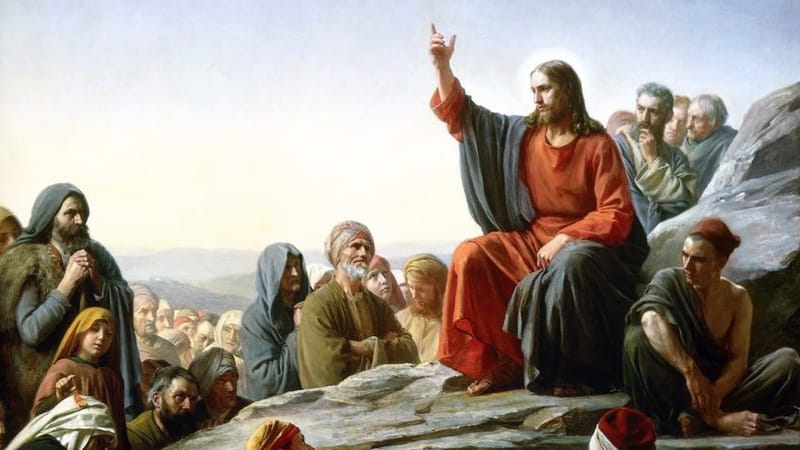
Dear Folks, February 1 the Sunday readings begin the Sermon on the Mount. We only get three weeks of it before It is superseded by the early beginning of Lent. However, I suggest that a good way to strengthen one’s Lenten Journey would be ongoing reflection on this Sermon. It is too easy to hear this text read, recognize that it sounds good, or maybe a bit confusing, and then move on untouched. That is a terrible waste. Matthew 5-7 opens Jesus’ public teaching in the Gospel of Matthew. Prior to that, it mentions he was teaching in the synagogue, and that He was saying “Repent, for the Kingdom of heaven is at hand,” but this is where we start going into what the Christian is called to be. Matthew 23-25 gives us His final public teaching in Matthew, and it centers around judgment on how one has answered that call. In between, one may want to see some principles from the Sermon applied. To understand how Matthew presents the Sermon on the Mount, it is essential to understand the giving of the Torah to Israel and the role of the Torah in the life of Israel. It is the first five books of the Bible, and is central to their relationship with God, and held in great reverence. It is usually translated “Law” though it could be better called “instruction.” When the Bible makes reference to “statutes,” “precepts,” ”decrees,” or “the law of Moses” that refers to the Torah. Psalm 1, and Psalm 119 for those who want to read more deeply, are hymns to the Torah. They both start with “Blessed,” living the fullness of life. Matthew’s readers would have immediately seen the connection between these psalms and Jesus’ beatitudes. Psalm 1 describes this fullness of life as being “like a tree planted beside flowing water whose leaves will never fade and all that he does shall prosper.” The Bible has repeatedly used the image of flowing water as a sign of God’s abundant life (Genesis 2:10; Jeremiah 17:5-8; Ezekiel 47:1-12; John 4:10-14; John 7:37-38; Revelation 22:1-2). I would suggest continued reflection on Psalm 1 during one’s continuing reflection on the Sermon on the Mount. The classic presentation of the giving of the Law is Exodus 20 and following. It shows Moses going up a mountain and receiving the law, first the ten commandments (pocket sized version), and then more elaborate rules. Jesus goes up the mountain and gives the beatitudes (pocket sized version) and then more elaborate principles. This echoes the giving of the Torah, but Christians would not say that the Sermon on the Mount is the new Torah, but Jesus Himself is the new Torah (“I am the way, and the truth, and the life” [John 14:6], but this is a vision of living according to that Way. We notice that Jesus does not give us rules, a set of dos and don’ts, but a vision of what sort of person we are to be. In our union with Jesus, we become more and more able to live according to this vision. We cannot simply choose to “hunger and thirst for righteousness”, but the closer we grow to Jesus, the more He transforms us into people who do. I’ll be going deeper into this, if you want to come with me. Blessings, Fr. Jim
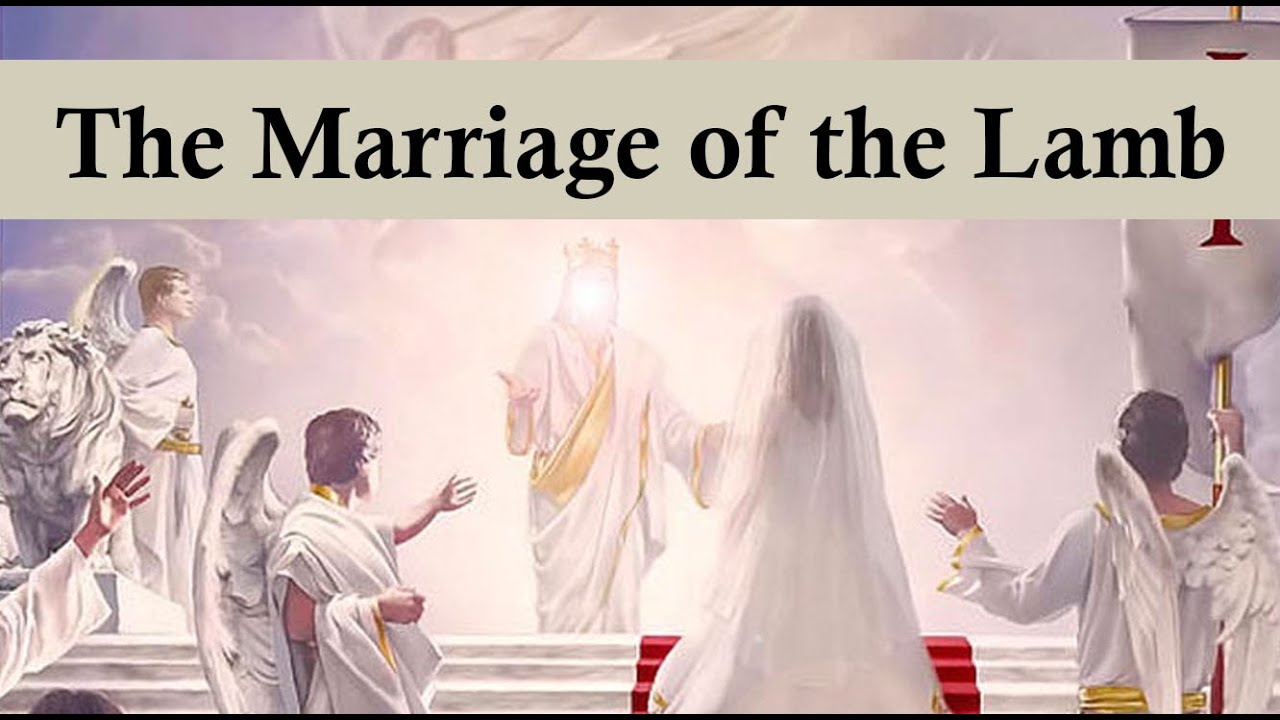
Dear Folks, In our readings this Sunday, God tells Isaiah, “I will make you a light to the nations, that my salvation may reach to the ends of the earth.” John the Baptist says, “Behold the Lamb of God who takes away the sins of the world.” In the Gospel of John, it is emphasized that John the Baptist’s major function was to introduce Jesus. John uses two main images to describe Him: The Lamb (of sacrifice) in John 1:36 and the bridegroom in Jn 3:26-30. These two images will be brought together at the end of the story in the wedding of the bride and the Lamb (Revelation 19:6-10, 21:9). We remember these truths at every Mass as the priest says, “Behold the Lamb of God, behold Him who takes away the sins of the world. Blessed are those called to the supper of the Lamb.” They teach us that Jesus gave Himself to us completely, holding nothing back, out of pure love for us. The image of the lamb emphasizes Jesus’ suffering and dying to save us. He faced overwhelming agony- mental, physical, emotional- enduring the full brunt of the evil in the world to undo the power of evil in us. The image of bridegroom emphasizes Jesus being faithful day in and day out, during good times and bad, never wavering in His love. We are called to be a light to the nations, drawing people to Jesus. What is our message? Our atheist, materialist friends will tell us that core reality is matter and energy, that personhood is a blip in the unfolding of matter and energy, and that love is a byproduct of the mating instinct. In this view, we are nothing but collections of chemical reactions in temporarily self-sustaining systems. Some may object to my description, but I don’t see how they can logically escape it. I don’t find that very inspiring. In the Christian view, Divine Personhood is the core reality, and His essence is love. The Father is eternally giving Himself in love to the Son, who is eternally receiving and returning that love, and the love that passes between them is the Holy Spirit. Love is by nature fruitful, so He created us to receive His love and love Him in return, thus knowing the fullness of Joy, and created matter and energy. The universe is the stage of salvation history. The whole universe is a love story. The essence of the Gospel is the gift of self in love. The Lord gives Himself to us and invites and enables us to receive that love and give ourselves. God gave His people marriage and taught His people to offer sacrifice so that we could learn to become gift. This, of course means following Jesus and the path He laid out. We are to be willing to suffer and to lay down our lives when the situation calls for it (John 15:12-13). We are called to love our neighbor in good times and in bad, in sickness and in health, faithfully day by day, year by year. Jesus’ gift of Himself is at work in us as we seek to give the gift of ourselves to Him and one another. Blessings, Fr. Jim
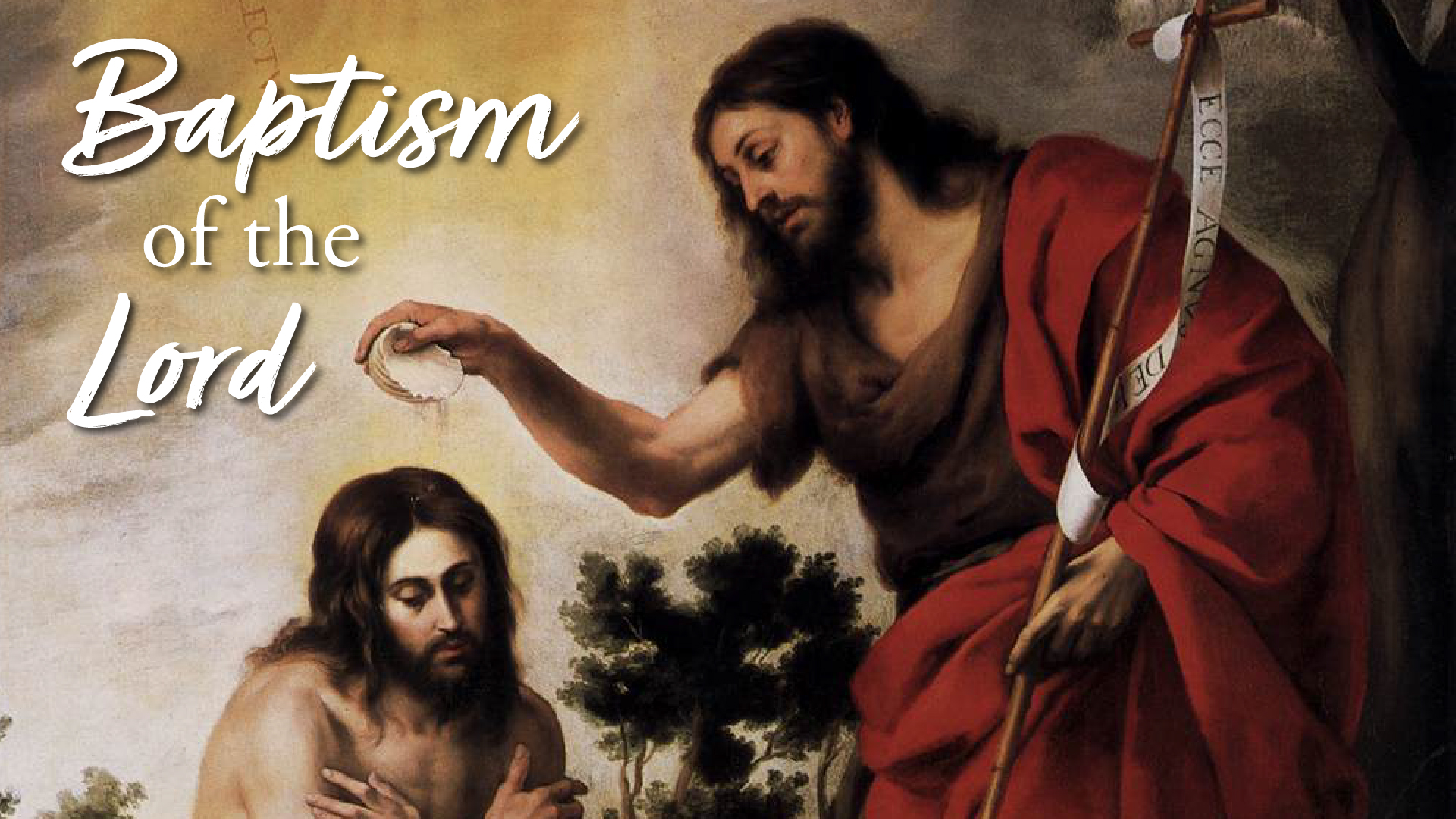
Dear folks, Now we come to the Baptism of the Lord, the end of the Christmas season. Isaiah speaks of a servant who is working quietly, “to open the eyes of the blind and bring out prisoners from confinement…”. We remember that our sins blind us and imprison us, and the grace of God enables us to see the truth and be free. Our Enemy has convinced a lot of people that to be Christian is to live a cramped, diminished life in the hopes of a reward from God. Our job is to show that living according to the Gospel is a freer, more abundant way to live. In our Gospel John the Baptist knows something is out of place with Jesus requesting Baptism. We, of course, know that Jesus had no sin and so did not need a baptism of repentance for Himself. However, this is the beginning of His taking on the mantle of sinner that we might be freed from our sins. When Jesus says, “Allow it now, for thus is it fitting for us to fulfill all righteousness” He is talking about putting everything into right relationship. Our relationship with God, with each other, and with the earth itself were thrown into chaos by sin (See Genesis 3), and this diminished the flourishing of life. Bringing order out of chaos so that life could flourish is going to take sacrifice, and we shall see it again and again in the Gospel of Matthew. We the baptized are united with Jesus in His mission. We will often face situations that are unfair. We shall have to help clean up messes that we didn’t make, fix things we didn’t break, and be blamed for things that are not our fault. As we go through the Gospel this year, we see how Jesus faced that. He always stood for what was true and right and often suffered unjustly for it. He never let it stop Him. After His baptism, He would go to the desert to face temptation and then started proclaiming the Kingdom of heaven. As the Christmas season ends, we get to ordinary time, the time in which most of the work gets done. There was an article in Wordonfire.org called “Catholic Call to be the Soul of the World” by Tim Glemkowski. He quotes the 2nd century “Letter to Diognetus”: To sum up all in one word—what the soul is in the body, Christians are in the world. The soul is dispersed through all the members of the body, and Christians are scattered through all the cities of the world. The soul dwells in the body, yet is not of the body; and Christians dwell in the world, yet are not of the world.” This is similar to Jesus’ call to be salt of the earth and light of the world (Matthew 5:13-16). We, the baptized Christians, are called to seek union with Jesus to be transformed so that we can transform the world. It’s a tall order but let us not underestimate the power of the Gospel. We may not see all the results but let us trust that God is at work. May we have a fruitful year. Blessings, Fr. Jim
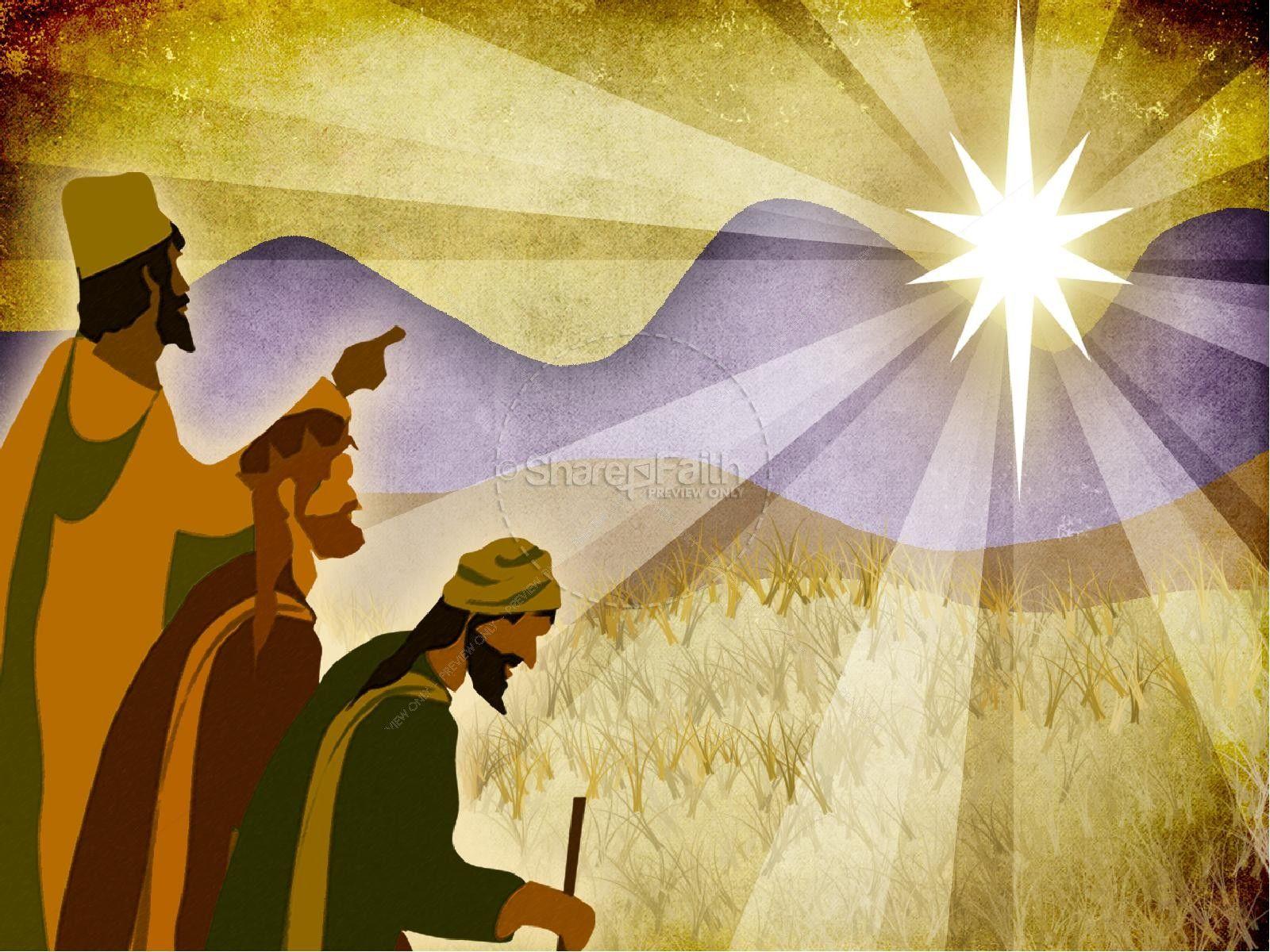
As we continue to celebrate the Christmas season, we now come to Epiphany. The word epiphany means “appearance” or “manifestation.” The coming of the Magi tells us that Jesus is meant for the whole world, not just His family, town, or nation. The Magi were not of the nation of Israel but were seekers of mysteries. We have a natural hunger for mystery, but many lose track of it chasing after superficial things. The human exploration of mystery lead to many who explored new territory, studied natural phenomena, or asked ultimate questions. Like many hungers, it can be awakened by the right stimulus. Imagine being so focused on tasks that you don’t notice dinner time, but suddenly you smell (insert favorite food here) and then you have hunger pangs.
As the star drew the Magi, so we are meant to be stars to other people. That means we are to draw people to the mystery of Jesus. While we are called to be good examples so that seeing what we do people will praise God (Matthew 5:16), our central message is not that we are such wonderful people. It is about a mystery infinitely greater than we are.
Many have learned about church in a way that loses the great sense of mystery. Some think that Christianity is basically a collection of belief statements to repeat and commandments to follow. Some people have said that Christianity is basically about being a good person. This breaks my heart. They have been robbed. They have been cheated. They have been deprived of an enormous treasure and given a superficial substitute. Then the Mass would be seen as just a community gathering that gives us a good experience and a good feeling. It is a doorway to the Infinite and the ultimate. The celebrant is a failure if he is about drawing attention to himself. Liturgical musicians fail if they draw attention to the music for its own sake. The celebrant, the music and all the ritual are to draw people into the mystery that is beyond what we see. Our faith is an infinite mystery into which we enter. We encounter the central truths of reality and of life, and they can transform us to the core of our being. Imagine someone having a nuclear power plant and only using it to reheat their coffee.
When I was a young priest, an older priest told me he was “bored” with the Gospel of John. When I looked shocked, he said, “When you’ve been a priest for 35 years, you might be bored with it too.” Well, now I’ve been a priest for thirty-eight years, and have never gotten bored with the Gospel of John. In fact, the more I learn, the deeper I go, the more I study it the more amazing, the more fascinating it is. Of course, the reading that was available at that time was more about deconstructing the text than seeing deep connections. We didn’t have authors like Brant Pitre, Scott Hahn, John Bergsma and Jeff Cavins. I learned a lot of wonderful stuff in the seminary, and I will be forever grateful for my teachers and what they taught me, but there is so much more.
We are called to be seekers of mystery, and the more deeply we seek, the more we can make sense out of life, the universe, and everything.
The star beckons. If we follow, we can be a beacon to others.
Dear Folks, Today is Gaudete Sunday, and Gaudete means rejoice! We rejoice, not because everything is great now (I expect we all have our list) but because Jesus is coming, and we are confident that what we are doing is worth doing and pain will turn to glory. We live with an “already” and a “not yet.” Jesus is here and Jesus is coming. We are participating in eternal life now but not experiencing it in fullness. “Amen, amen, I say to you, the hour is coming and is now here when the dead will hear the voice of the Son of God, and those who hear will live (John 5:25).” When Jesus comes in glory His followers will recognize Him as one they have known, but never known as fully, as gloriously, or as wonderfully as they will then. “Love never fails. Prophecies will eventually cease, tongues will become silent, and knowledge will pass away, for our knowledge is partial and our prophesying is partial; but when we encounter what is perfect, that which is imperfect will pass away. When I was a child, I used to talk like a child, think like a child, and reason like a child. However, when I became a man, I put all childish ways aside. At the present time we see indistinctly, as in a mirror; then we shall see face to face. My knowledge is only partial now; then I shall know fully, even as I am known. Thus, there are three things that endure, faith, hope and love, and the greatest of these is love (1 Corinthians 13:8-13).” Jesus came that we might “have life and have it more abundantly (see John 10:10).” To live for eternal values, to live in union with God, to give of ourselves in love is a much more abundant way to live than living for gratifying immediate desires. Such a life can be very hard, discouraging, frustrating, even agonizing. But during the worst times, we know that for the faithful sorrow is not the last word, that we do not face it alone, and that even our pain can have meaning in the kingdom. During the most joyous times, of course, we recognize that the joy is a foretaste of the ultimate joy, and that makes it more powerful even as it passes for now. “See what love the Father has bestowed on us that we may be called the children of God. Yet so we are. The reason the world does not know us is that it does not know Him. Beloved, we are God’s children now; what we shall be has not yet been revealed. We know that when it is revealed we shall be like Him, for we shall see Him as He is. Everyone who has this hope based on him makes himself pure, as He is pure (1 John 3:1-3).” David Goggins wrote a book called “Can’t Hurt Me.” (warning: language is rough!) He went through navy seal training three times and then decided that he wasn’t pushing himself hard enough (!) He did things like run ultramarathons (100 miles in twenty-four hours). He said that a lot of people plan great things while they are comfortable, sitting on their couches drinking iced tea. But when the pain and the exhaustion hit, they start asking, “Why am I doing this?” Many then drop out, because they are not deeply enough rooted in their why. The promises of the world fail us sooner or later. Christmas has a special way of teaching that lesson. Sometimes toys are not nearly as much fun as they seemed in the store. Sometimes they break and can’t be fixed. Sometimes they are fun for a while, but the thrill fades. Over time, we notice that toys pass away, but love endures. But the toys are so enticing, we have to have a good grip on our “why” to keep going. If you’ve read the New Testament (which I highly recommend) it is surprising how often they talk about the importance of endurance. Let us focus on our goal, sharpen our desire for the Kingdom, and not let distractions loosen our grip on our hope. Blessings, Fr. Jim
Dear Folks, In this second Sunday of Advent, we encounter John the Baptist, and his fierce preaching. We also meet the Pharisees and Sadducees, whom we will encounter later. They were very smart, did a lot of studying, and did a lot of religious devotion. They did a lot of listening to each other, and despising those who were not a part of their group. Of course, if they all agreed on their basic beliefs and just talked to each other, they would never be challenged serious. They would reinforce each other In C.S. Lewis’ book “The Screwtape Letters” we see a senior devil (Screwtape) giving advice to his nephew (Wormwood) about how to lead a soul to hell. In letter 3 we see, “You must bring him to a condition in which he can practice self-examination for an hour without discovering any of those facts about himself which are perfectly clear to anyone who has ever lived in the same house with him or worked in the same office.” He’s talking about blind spots, and if we listen to those who think like us and discount those who don’t before really hearing them (because they are evil/stupid/lying) we protect ourselves from having our ideas challenged and our blind spots discovered. In the book “Unlocking Leadership Mindtraps: How to Thrive in Complexity” by Jennifer Garvey Berger, Margaret Wakeley, et al. they talk about the trap of agreement: if our entire group agrees, we tend not to seek further input, and become trapped in our bubble. I have recommended Monica Guzman’s book “I Never Thought of it That Way” to understand how this works and how to counter it. In the book “Radical Inclusion” by Martin Dempsey and Ori Brafman they mention that modern discourse tends not to be about logical argument but competing narratives. People hear a narrative, find it compelling, believe it and proclaim it as if it were the truth, the whole truth, and nothing but the truth. They often do not consider if the premises are true, if he reasoning is valid, or if it is missing something. Then, when they hear something contrary to that narrative, they dismiss it, ridicule it, and attack it, without asking, “Might there be something here to learn?” What if our Pharisee and Sadducee friends were so rooted in the narrative that their approach was the correct one, they were the good guys, and that no one else had anything to teach them. They reinforced each other in their beliefs and were quite sure they didn’t need to change anything in their thinking or actions. John gave them a severe talking to (I don’t think his methods would work today. We are too good at dismissing people we see as cranks. In the book “The Practice of Adaptive Leadership” by Ron Heifetz et.al. they talk about protecting minority voices. Too often, minority voices get steamrolled and ignored by the majority, but they may have some wisdom to share. Even if we don’t accept all of their position, they may have insight that can help us refine our ideas. We remember that in 1905 Albert Einstein turned the physics world upside down with three groundbreaking papers, including one on relativity. Over time, however, the revolution became the establishment, and when the time came for the next step, quantum mechanics, Einstein was fiercely opposed. He came up with every argument he could to discredit it (and he was very good at that. Even though he was eventually proven wrong, arguing with Einstein helped the innovators refine their position, and it made the science better. Those who disagree with us are challenges, not enemies. Heifetz also talks about getting on the balcony. Taking some distance to see the big picture, the picture that we can’t see when we are in the midst of the dance. If we can find a way to take a step back this Advent to see things from a different perspective, that could bear some fruit. May we all have a fruitful Advent. Blessings, Fr. Jim
This is the feast of Christ the King, the celebration of Jesus’ great victory over evil, over sin and death, and now He reigns supreme forever. Alleluia! And yet, our Gospel is of Jesus on the cross. He is being ridiculed, and He makes no reply. He cannot move His hands or His feet. He has to fight to breathe. This is not what humans think when we think about a great king in his triumphant moment. This cuts to the heart of the Christian paradox that the world cannot understand. Jesus’ mighty power is expressed most powerfully not in His amazing miracles or brilliant teaching, but His faithful suffering and death.
St. Paul understood this, saying “If I must boast, I will boast of the things that exhibit my weakness (2 Corinthians 11:30; see 11:16-30)” and “Hence, I will boast most gladly of my weaknesses, in order that the power of Christ may dwell within me. For this reason, I rejoice when I endure weaknesses, insults, hardships, persecutions, and distress for the sake of Christ. For it is when I am weak that I am strong (2 Corinthians 12:9b-10; see 7-10).”
Some resist admitting a mistake or failing for fear it will make them look weak, but whom do we trust more: someone who admits when they fail or someone who always, always finds a reason why it is not their fault and not their failing?
Not only have I had to deal with the fact at my age that my biceps aren’t what they used to be, but I have had some particularly powerful lessons in weakness lately, with more on the way. I
have found that times of weakness can be great times of love, and God values love more than biceps.
We look at all the evil in the world, and it is overwhelming. We feel helpless. I find that is often when God does His best work.
Christians are never helpless. Even if we can only do a teeny, tiny bit, if we do that bit with everything we have, that is huge in God’s eyes (see the story of the widow’s mite (Mark 12:41-44 and Luke 21:1-4). Even if we are completely immobile, we can pray, though this will put our faith in the power of prayer to the test. I find that God is quite willing to let our faith be stretched. If our minds go so that we cannot form a coherent prayer, God can still touch us on a deep level, as Psalm 8 tells us, “From the mouths of children and babes you fashioned praise to foil your enemy, to silence the foe and the rebel.”
The basic message of the book of Revelation, as well as Matthew 24, Mark 13 and Luke 21, is that the world may fall apart and go horribly wrong, but Jesus is victorious, and if we remain faithful to Him, we will share in the victory (for example Matthew 24:13).
Bottom line: The more the world goes wrong, the more tightly we need to cling to Jesus. If we stay faithful to Him and do not give up, we can contribute to making things better, but He has the victory. He reigns supreme.
Today we celebrate the Feast of the Dedication of the Basilica of St. John Lateran. You may be asking why the Catholic Church is making such whoop-de-do about the dedication of some old church building? I’m glad you asked.
First, we remember that the church building is a symbol of the real Church, who is us.
St. John Lateran is the cathedral of the Catholic Church. The word “cathedral” is from the Greek for “Cathedra” meaning “chair” Jesus said in Matthew 23:2-3 that the scribes and Pharisees sat in the chair of Moses, so their authority should be respected, even though their conduct was abominable. (If you know your history, you know that Catholics have had a good deal of opportunity to apply this teaching through the years).
Some people have said that they believe in Jesus but not the Church. This leads me to wonder where they get their Jesus, because it can’t be from the Bible. In the Gospels Jesus begins by calling people together, and He says that He will build His Church (Matthew 16:18) and expected that the Church would be there to help keep us working together.
The Scriptures compare the Church to a body (1 Corinthians 12, Romans 12, and Ephesians 1:22-23 and Ephesians 4:11-16), and to a temple (Ephesians 2:19-22 and 1 Peter 2:4-5).
I find the image of the body especially interesting. The various parts are very different, but have compatible genetic structure, and if my rudimentary biology is correct, they agree on certain antigen proteins so they recognize each other as belonging. This can break down when there is an autoimmune disease that causes the body to attack itself. 1 Corinthians 1:10-16 talks about factions in the early Church, and how dangerous that was. Some say diversity is our strength, and others say that unity is our strength. I say they are both half right. Having diverse points of view, styles of thinking, and backgrounds but being united in purpose and agreeing on essential teachings while cooperat-
ing with each other under the guidance of leadership makes us strong. I have put a lot of energy into teaching and encouraging people to deal with their differences in a charitable
and productive way, and I think it is one of the most important tasks for this generation of the Church.
I believe God calls us to be Church so that we are forced to deal with each other. We have to deal with other people’s ideas, concerns, needs, and perspectives. This draws us beyond ourselves and demands giving of ourselves in a deep way. It also means a lot of times things won’t be done the way we want or the way we think they should be. That is part of the cost of discipleship.
Let us pray that we may work together so that we can be strong against our common enemy (Ephesians 6:10-17).
There is serious concern that many things that are meant to help the poor are actually keeping them trapped in poverty. I’ve been told that these are hard to change because many people make money helping the poor to stay poor.
The books “Toxic Charity” by Robert D. Lupton and “When Helping Hurts” by Steve Corbett and Brian Fikkert and the documentaries at Povertycure.org and Povertyinc.org can shed some light on the disparity between good intentions and good results.
In the Greenville and Belding area we have programs that are worth looking at. IM Kids Third Meal makes portable meals for children in food insecure situations to have something
to eat in the evening. I’m not an educator, but even I know that children go through different stages of development, including their brains, at certain ages, and if they don’t have adequate nutrition during those times that development does not happen and can’t be made up for later.
Children must never go unfed. Some will say that the parents should be doing this and I agree, but I don’t know all their situations, and I’m not sure how to make it happen. One thing I’m not willing to do is let children go unfed to incentivize the parents to solve the problem.
Have Mercy helps the homeless to look for work and to find a stable home. They celebrate every time someone “graduates.”
Alpha Family Center and the Walking with Moms in Need ministry help families during pregnancy and when their children are little. This is a pivotal and especially vulnerable time for them, and so what they do is valuable beyond imagining.
Habitat for Humanity engages people and gives an assist as they work to better their own situation. It is known to make a lasting and profound difference in people’s lives, so they can move from squalor to flourishing.
Many churches have food pantries and make meals for people in the community, and these can help people through difficult times (eating has become an expensive hobby).
All these and other programs could use support, including financial and volunteers. Might God be calling us to reexamine how we could participate?
For us to answer this challenge, we the Church must grow stronger and sharpen our focus on caring for those in need. The more we do that, the more people may believe the Gospel that we preach with our words. We cannot do it by our own power, of course. Without God’s grace we are helpless; with God’s grace nothing is impossible. If we want a better world, thefirst step is falling more deeply in love with Jesus.






 Fr. Jim Wyse