Category Archives: jesus

The Torah and the Gospel

Dear Folks,
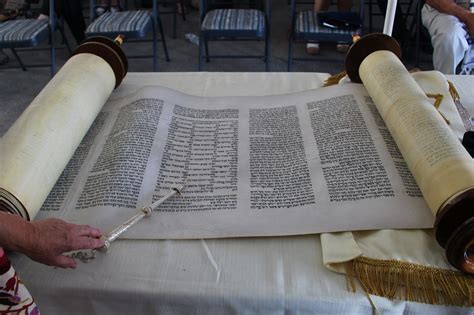
Our first reading this Sunday is from Nehemiah and describes when the Israelites came back from exile and had to rebuild the city of Jerusalem and the temple. In the wreckage of the temple, they found a copy of the law. When the Bible talks about the law, it’s talking about the Torah. A rabbi told me that translating “Torah” as “law” does not really convey the meaning. He said that sin is missing the target and Torah is hitting the target. The Torah
is the first five books of the Bible (also called the Pentateuch) and is a central reference point in the Bible. Whenever it speaks of God’s precepts, statutes, and decrees, this is what they mean. When Mary and Joseph bring Jesus to the Temple in obedience to the Law of
the Lord (Luke 2:22-38), it is this law, which Mary and Joseph faithfully followed. When Jesus disputes with the Pharisees over picking grain on the Sabbath, they are arguing about the proper interpretation of the Torah (which is suspect is a longstanding rabbinic tradition). In the Old Testament, one was considered righteous (in right relationship with God) if one followed the Torah.
Psalm 1 (quite short) and Psalm 119 (somewhat longer, the longest chapter in the Bible) are hymns to the Torah. They both teach that the Torah is the way to blessedness in a way that Jesus invokes when He says, “Blessed are the poor in spirit…” This blessedness is the fullness of life to which God calls us.
For Christians, Jesus is the new Torah. He is the Way, the Truth, and the Life (John 14:6). The Sermon on the Mount (Matthew 5-7) is modeled after the presentation of the Law of Moses Compare with Exodus 20: up on a mountain, starting with the Ten Commandment
(pocket sized version) then longer elaboration. Jesus goes up a mountain, gives the Beatitudes (pocket sized version) and then elaborates on them. St. Paul will argue that righteousness comes not from following the Law of Moses, but from faithfulness to Jesus.
We come to the fullness of life and right relationship with God through a love relationship with Jesus. This includes learning Jesus’ teaching, which is not just the four Gospels (John 21:25), but I would claim that the whole of the Catholic faith is the truth about Jesus (explanation and defense of that position is for another day). It would include spending time with Jesus, sharing ourselves. It would include encountering Him in the sacraments. It would include putting our lives into His hands, continually inviting Him to transform us however He wants and sending us to serve Him however He wants. This gives us the fullness of freedom (John 8:32), the fullness of life (John 10:10), and the fullness of joy (John
15:11; 16:22; 17:13).
Blessings,
Fr. Jim

The Bride and the Lamb

Dear Folks,
This year most of the Gospel readings on Sunday will be from Luke, but today we slip into John to talk about the wedding of Cana. The Bible regularly uses the image of marriage for
God’s relationship with His people. We can see for instance Isaiah 62:4-5; book of Hosea, book Song of Songs, Psalm 45; Ephesians 5:29-32; Luke 5:33-35; John 3:29; Revelation 19:6-9, and Revelation 21:9-14. At the wedding at Cana, we see Mary coming to Jesus with
the problem of running out of wine. If you read Brant Pitre’s excellent book “Jesus the Bridegroom” he will explain that the responsibility for providing the wine falls to the bridegroom, so Jesus is being revealed as the bridegroom. John the Baptist will make this point in John 3:29, and then in the wedding of the bride (the Church) and the Lamb (Rev. 19:6-9; Rev. 21:9-14).
Someone once said, “If you treated your friends the way you treat God, would you have any friends?” We could ask if you treat your spouse the way you treat God, how good a marriage would you have?
I’ve recommended John Gottman’s book “Seven Principles for making Marriage Work” before. He has empirical data to back up his ideas, and they are very interesting. I wonder how some of them could be applied to our relationship with God.
Enhance your love maps. Your love map is what you know about your partner, their likes, dislikes, favorite food, favorite TV show, etc. Are we curious to know more about how God has revealed Himself and interacted with His people. This would include stories from the Bible and the lives of saints, how God calls us to worship, and what He teaches. It starts with being curious.
Nurture your fondness and admiration. What do you appreciate about your spouse? How did you first fall in love? What were good times and what attracted you to each other in the early days? How did we first come to know God? What have we found good about
Him? What have been good experiences of His work in your life?
Turn toward each other instead of away. Gottman uses the example: if your beloved calls you to the window to see a cardinal (I presume the bird) in the back yard, do you come and look, or do you roll your eyes and move on? Those experiences make a difference. How do you connect in little ways with God throughout the day? Do we let Him have a bit of attention and interest in little ways? How do we connect Him to our world?
Let your partner influence you. Have you let your partner change the way you do something, look at something, approach something? How has our relationship with God changed the way we do things?
Build shared meaning. Take the two separate life stories and weave them into one story. What is your life story? God’s story, the story of salvation, the Bible story and the story of the Church is one big tapestry. How do we see ourselves woven into it? Love relationships can be nurtured. God loves with infinite love, and we have a lot of room to grow. How might we let God have more of ourselves?
Blessings,
Fr. Jim

Baptism of the Lord: New Beginning

Dear Folks,
This is the feast of the Baptism of the Lord, the final day of the Christmas season. I believe that Epiphany was the end of the season, and celebrated the coming of the Magi, the miracle at Cana, and the baptism of the Lord, butsomeone decided that the Baptism should have its own feast day.
I challenge everyone to read Luke chapter 3 and get a sense of John’s call to renewal. Notice his images of the axe and the tree, then the wheat and the chaff. Now if you read Psalm 1, then Luke
13:1-9. We see how the Bible reinforces lessons by the repeated use and development of imagery.
The Gospel of John does some interesting teaching on baptism.
“Amen, amen, I say to you, no one can see the kingdom of God without being born* from above.” Nicodemus said to him, “How can a person once grown old be born again? Surely he cannot
reenter his mother’s womb and be born again, can he?” Jesus answered, “Amen, amen, I say to you, no one can enter the kingdom of God without being born of water and Spirit. What is born of flesh is flesh and what is born of spirit is spirit.e 7 Do not be amazed that I told you, ‘You must be born from above.’ 8 The wind* blows where it wills, and you can hear the sound it makes, but
you do not know where it comes from or where it goes; so it is with everyone who is born of the Spirit (John 3:3-8).”
The word “born” can also be translated “begotten,” as in “Abraham begat Isaac. Isaac begat Jacob…”. In Biblical times, the seed of the father determined what you were and was the key to your
identity. We see Jesus talking about this in John 8:39-44, who your father really is makes all the difference.
It is in this light, we see that baptism changes who we are, and now we are children of God.
Jesus, of course, was already the begotten Son of God, so His baptism did not transform Him. He who was without sin, took on the mantle of sinner to suffer for our sins. “But he was pierced for
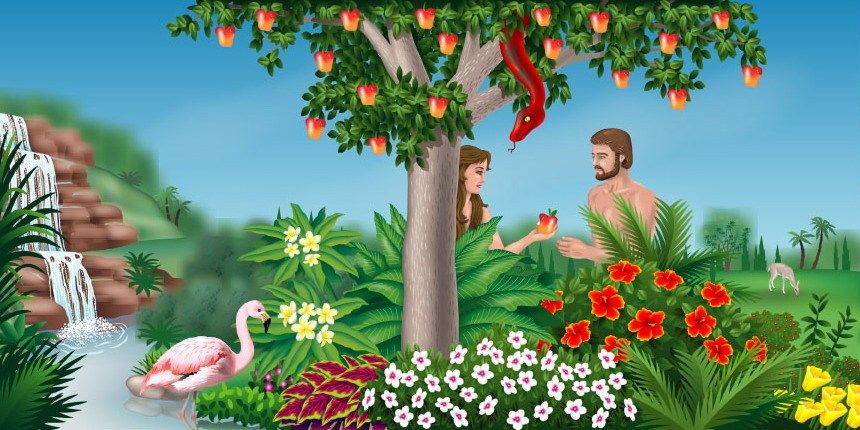
our sins, crushed for our iniquity (Isaiah 53:5).” He reversed our journey to perdition so that we could be saved. We remember when people were created, they were first tested in a garden and
failed. Then with Moses, they were tested in a desert and failed. Jesus, right after His baptism, went to the desert to be tested, and passed. His journey would lead him to the garden of Gethsemane and He would pass again. Then he would be crucified to save us.
Jesus’ baptism marked the beginning of His mission, and our baptism marks the beginning of our journey as disciples, children of God. Everything follows from that. How is God calling us to renewal? What form might that take in our journey of 2025?
Blessings,
Fr Jim

Gaudete Means Rejoice!

Dear Folks,
This is Gaudete Sunday, and Gaudete means rejoice! In the midst of our dark season of anticipation and recognizing our need for a savior, we rejoice that He is coming.
Some people, of course, will not feel like rejoicing. They are going through a very hard time, and they are focusing on coping and surviving. Even in the midst of struggles, there is a meaning and a hope that cannot be taken away. “We do not want you to be unaware, brothers, of those who have fallen asleep, so that you may not grieve like the rest who have no hope (1 Thess 4:13).” When we suffer loss, we still grieve, but along with grief we have
hope, and the hope keeps us from getting crushed. When grief is intense, it can be hard to feel hope, but we know it is there. Our suffering is real, but not the final word.
I’ve mentioned before how St. Paul wrote a very joyful letter to the Philippians when he was living under harsh conditions. He did also have his crabby days (we see this in the letter to the Galatians). It is clear he had a full range of emotions and was quite honest about
them, but his disposition, his general approach to life was joyful. I suggest that this had to do with a deep awareness that both the good and the bad he faced were parts of a journey to his ultimate destination, which would be infinitely worth all the trials (Therefore, we are not discouraged; rather, although our outer self is wasting away, our inner self is being renewed day by day. For this momentary light affliction is producing for us an eternal weight
of glory beyond all comparison, as we look not to what is seen but what is unseen; for what is seen is transitory, but what is unseen is eternal (2 Corinthians 4:16-18).” We remember that what he called “momentary light affliction” was years and years of trials that would
crush many people.
We remember joy is a fruit of the Holy Spirit (Galatians 5:22). The Holy Spirit helps us attend to the bigger picture, in which God is doing wonderful things, and that what we are enduring is worth the journey.
If we exude joy that is authentic, even in difficult times, that bears witness that the power of the Gospel is greater than the evils of the world.
So today is a day to rejoice for all those who can, and there is much to rejoice about. For those who are overwhelmed with pain, grief, stress or other troubles so they cannot feel good about anything right now, they can know (even if they can’t feel) that the pain is
walking with Jesus, and this walking with Jesus is noble and fruitful in growing treasure in heaven. It is a gift that can be offered to Jesus, and one that He holds precious.
Whatever the situation, today we remember especially that what holds us down is no match for the One who is coming.
Blessings,
Fr. Jim 

Edit

All reactions:

19Thomas Ketchum, Angie Terry and 17 others

Christ the King

Dear Folks,
This is the Feast of Christ the King! This is the culmination of the Liturgical year, and the happy ending to the great story of life, the universe and everything! Next week we begin the Year of Grace 2025. We will read a lot of the Gospel of Luke, and that has some powerful stories on hope for the sinner.
Pope Francis has said that it is time to strengthen and share hope, so the Jubilee year 2025 will be themed Pilgrims of Hope. Pilgrims are, by definition, on a journey, and so they focus in on a hoped-for destination. Our hope is in the Kingdom of God. We can hope for
good events happening now, but the goods of the earth all pass away. Civilizations rise and fall. We can build things and see them destroyed. The Kingdom is forever.
Our ultimate hope is for Jesus being seen by all as King of Kings, Lord of Lords. “Every knee shall bend, of those in heaven and on earth and under the earth, and every tongue confess that Jesus Christ is Lord, to the glory of God the Father (See Philippians 2:10-11).” At this time, all evil will be vanquished, all lies exposed, and justice will reign forever. If we ever get discouraged by world events, and how evil seems to be prospering, we remember
that it will lose in the end and goodness will win.
This is not, by the way, an excuse to be lackadaisical about building a better world now. First, our work to help those in need, defend the helpless, and lift up the lowly is part of our witness to the Gospel. We cannot evangelize if we are not reflecting God’s love with our actions. Second, if we are not doing this work, we are rejecting Christ and will be counted among those who do not know Him (if you doubt this, I challenge you to read Matthew 25
very carefully!).
Those who truly believe in the victory of Jesus can be an unstoppable force for good, because nothing in the world will discourage them. We might not live to see the fruit of our
labors, but Jesus said “One sows and another reaps (John 4:37).” If we try our best ten thousand times and fail ten thousand times, we are still doing the work of the Kingdom, and when the time comes, we will rejoice. Not only that, but we can rejoice now, in good times
and in bad, because the King is coming.
Blessings,
Fr. Jim 

S

Jesus is Coming

Dear Folks,

Today we get into the Apocalyptic chapter of the Gospel of Mark. Matthew (chapter 24), Mark (14) and Luke (21) all have a chapter that starts with the destruction of the Temple, and winds up talking about the Second Coming of Jesus.

The destruction of the Temple would have been a horrible thought for Israelites. It was the center of their national identity and their relationship with God. Going to the temple was a sacred act, and there were hymns celebrating the trip (See Psalm 122). I saw a video of the tearing down of St. Jean’s church in Muskegon, a church that had been there since 1885.

Those who were attached to it were surely grieving. The destruction of the Temple would have been a far worse trauma. It had been destroyed by the Babylonians in 587 B. C., and Israel had ceased to be a nation for over a generation, being slaves in exile. The destruction of the Temple in A. D. 70 was also a huge trauma, and the letter to the Hebrews

spends a lot of time helping Jewish Christians on how to understand the faith in light of the destruction of the temple. The Gospel of John will teach powerfully, that Jesus is the new Temple, and we have everything we need.

A critical apocalyptic text is Daniel chapter 7. It speaks of “coming on the clouds of heaven one like a Son of Man.” Jesus frequently referred to Himself as the Son of Man, and when interrogated by the high priest if He was the Messiah He said, “I am, and you will see the Son of Man seated at the right hand of the Power and coming with the clouds of heaven

(Mark 14:62).” The closer He got to the cross, the more open He was about His identity.

“Apocalypse” is from the Greek word for “removal of the veil.” “Revelation” is from the Latin equivalent. Apocalyptic literature will use strange images, and sometimes numbers to show the meaning of what is happening at the time. It is often written in times of persecution, and the basic message is that it may appear that God’s plan is failing, but if you could see past the veil of appearances, that plan is unrolling and on the path to success.

Therefore, however discouraging things are, don’t give up. However bad things get, don’t get slack. However corrupt other people become and how horribly they behave, we are called to be faithful. Remember that what we see is not all of reality, and not the best part. Our story is part of a much larger story. Even if civilization collapses, God will be able to do great things, and the kingdom will still be winning. Jesus said, “heaven and earth

will pass away, but my words will not pass away.” (Mark 13:31). Nothing of the earth is guaranteed. The truth of the Gospel is. Our job is to grow strong in our faith such that whatever happens, our faith in God will rule our lives.

Blessings,

Fr. Jim

Going the Second Step

Dear Folks,

This weekend we see a man asking what to do to inherit eternal life (Mark 10:17-30). It’s a great question and Jesus gives him a two-part answer: first, let go of sins, second, let go of things that would be good in their place, but are holding him back from the kingdom.

This is part of the section of Mark between the stories of the healing of the two blind men (8:22-10). The first man was just called the blind man of Bethsaida; it takes Jesus two steps to heal him, and afterward he goes his way. The second story is about blind Bartimaeus, son of Timaeus; Jesus does it in one step, and ends with him following Jesus on His way. In between we see that to understand Jesus as Son of God centers around the cross. He came to serve, not be served, to suffer and die, not achieve worldly status through worldly means. Following Him does not guarantee worldly power, pleasure, wealth, and honor, but may actually require giving up those things, and even our lives, for the sake of treasure in heaven (See Mark 10:21). To see that is to see clearly, like blind Bartimaeus after he was healed. We see the disciples still don’t get it, as we see by their responses to Jesus’ prediction of the passion (Mark 8:32-33; 9:33-37; 10:35-37). They do not see clearly, like the blind man of Bethsaida after the first healing.

After this section of Mark, we go directly to the entry into Jerusalem and begin with Holy Week. Jesus is very close to His passion now, and that will color the dialog. When He is asked what is the greatest commandment of the law, His answer to love God and neighbor is understood in light of the cross. We remember that for Christians, love is not a feeling, but a gift of self, even to death. We read in John’s farewell discourse: “This is my commandment: love one another as I love you. No one has greater love than this, to lay down one’s life for one’s friends (John 15:12-13).” And then we are to follow in His footsteps.

“So be imitators of God, as beloved children, and live in love, as Christ loved us and handed himself over for us as a sacrificial offering to God for a fragrant aroma (Ephesians 5:1-2).” “I urge you, therefore, brothers, by the mercies of God, to offer your bodies as a living sacrifice, holy and pleasing to God, your spiritual worship (Romans 12:1).”

Learning this in the abstract is challenging enough. Learning it in practice is orders of magnitude harder. That is the challenge of the Christian life. As we go down that journey, reflecting on this section of Mark may help us to see more clearly how God is working in our lives.

Blessings,

Fr. Jim

Marriage: What is it and Why is it?

Dear Folks,
For the last three weeks in our Sunday Gospels Jesus talks about children. When the disciples want to know who is most important, Jesus brings forth a child (Mark 9:30-37). When the disciples act out of jealousy toward someone not in their group, Jesus speaks in very strong terms about the seriousness of their example affecting children (Mark 9:36-48). When Jesus is asked about marriage, the next thing He talks about is receiving children and how “the kingdom of God belongs to such as these” and how we need to learn from them (Mark 10:2-16). I think He’s trying to get our attention.
I have just finished a book called “Pro-Child Politics” by Kathy Faust. It is a series of chapters on various issues in which our society is sacrificing the well-being of children for the desires of adults. The chapters are written by experts in the field, and they are well written and heavily footnoted, so even if you don’t wind up agreeing with all the things that are said, this is a very
important addition to the conversation, and it will be worthwhile wrestling with the ideas. This week Jesus brings together the question of marriage and welcoming children.
There are currently two views of marriage available in conversation. There is the relational view, that sees marriage as affirming the relationship of the couple (or thruple?) based on their romantic feelings for each other that they label love. In this view, marriage can be anything you want. This is the commonly held view today, and often assumed to be the only one. The other is the conjugal view of marriage, which unites men and women to one another, and to any children they might create, which was the foundation of most of human civilization. It understands marriage as recognized by the government, ideally life long, sexual in nature, exclusive in nature, only two people.
There is a presentation on Formed.org “How to Talk about Marriage and Same Sex Unions” by Trent Horn. There are the books “Getting the Marriage Conversation Right” by William B. May and “What is Marriage?” by Sherif Girgis, Ryan T. Anderson, and Robert P George that make the case for the conjugal view of marriage, and give evidence that this is the best possible situation for a child to grow up in.
I would also suggest reading “Brave New World” by Aldous Huxley (written in 1931, eerily prophetic). It describes a dystopian future in which family has been replaced by government, and children are a manufactured commodity. Also see “The Anxious Generation” by Jonathan Haidt, about the effects of smart phone use on childhood.
How often are children seen as a commodity to be produced, and accessory to one’s lifestyle?
It is important to prioritize the well-being of children not only because they are so vulnerable, but because they are going to be running things someday when we are in the nursing home.
The more they are able to learn virtue, empathy, emotional regulation, deferral of gratification, a sense of right and wrong and similar things, the less violent and more flourishing our society
will be. Notice this is not ruled by their feelings and desires, but a deeper sense of the good.
Where do we go from here?
Blessings,
Fr. Jim

It Begins With Listening

Dear Folks,

The New Testament teaches us a few Aramaic words, including “Ephphatha,” meaning “be opened.” Jesus heals a deaf man with a speech impediment (Mark 7:31-37). When Jesus does a miracle, we first rejoice, and then we ask, “what is He trying to teach us?

When most people could not read or write, being unable to hear or speak would severely isolate people. Hearing and speaking connect us to the world beyond ourselves. Sin also isolates people from one another and tends to close us in on ourselves. Big Question: Is the focus of attention on ourselves or beyond ourselves?

Most of us don’t listen as well as we think we do. If I’m focused on myself, I’m filled with: How does this affect me? What does it make me feel? How do I respond to it?

In Ann Garrido’s book “Redeeming Conflict” we find habit #2 is “be curious” and habit #3 is “Listen to understand.” We have a tendency to listen to find the flaws and respond. But in the other person’s head, what they are thinking makes sense to them. The challenge is to figure out how it makes sense, how do their ideas fit together, and why do they find them compelling? What are the concerns and motivations that drive them? This allows us to speak to their concerns. I know some people have said some things that were true, but did not speak to my premises and concerns, so I found them completely unpersuasive. I found, for example, that since I think there are some problems with the way liturgy has often been celebrated after Vatican II, they assume that I idealize the time before Vatican II, and so they give me a lecture on all the problems of that time. Since they are arguing with a position that I do not believe, it doesn’t matter if what they say is true, it accomplishes nothing except get on my nerves and waste my time.

Sometimes I have found myself, to my regret, doing that to someone else. A response bursts out of me before I even think about it instead of hearing them out and maybe asking

some questions to draw their thoughts out. This suggests that I was focused more on myself than the other person, and that my need to tell my story had become desperate. It also makes it unlikely that what I say is going to be effective. To become a better listener, I try

to quiet myself and focus carefully on the other person. I also work on telling my story. If I don’t have another venue, it helps to write, even if I don’t share it with anyone. That helps me tell my story in a more controlled manner.

Redeeming conflict habit #5 is welcome emotion, and #6 is tell your story. Once I have listened to the other person, seeking to understand deeply why they think they way they do, I can look at myself and see what I have to tell of what I’m thinking and feeling. I’m more likely to be able to speak in a way that connects. Being a better listener increases my power of speech. I don’t claim to be great at it, but I know I’m better than I used to be, and I’ve connected better with others. I ask Jesus to continue to do for me what He did for the man in the Gospel.

Blessings,

Fr. Jim