Category Archives: Religion

Jesus is Coming

Dear Folks,

Today we get into the Apocalyptic chapter of the Gospel of Mark. Matthew (chapter 24), Mark (14) and Luke (21) all have a chapter that starts with the destruction of the Temple, and winds up talking about the Second Coming of Jesus.

The destruction of the Temple would have been a horrible thought for Israelites. It was the center of their national identity and their relationship with God. Going to the temple was a sacred act, and there were hymns celebrating the trip (See Psalm 122). I saw a video of the tearing down of St. Jean’s church in Muskegon, a church that had been there since 1885.

Those who were attached to it were surely grieving. The destruction of the Temple would have been a far worse trauma. It had been destroyed by the Babylonians in 587 B. C., and Israel had ceased to be a nation for over a generation, being slaves in exile. The destruction of the Temple in A. D. 70 was also a huge trauma, and the letter to the Hebrews

spends a lot of time helping Jewish Christians on how to understand the faith in light of the destruction of the temple. The Gospel of John will teach powerfully, that Jesus is the new Temple, and we have everything we need.

A critical apocalyptic text is Daniel chapter 7. It speaks of “coming on the clouds of heaven one like a Son of Man.” Jesus frequently referred to Himself as the Son of Man, and when interrogated by the high priest if He was the Messiah He said, “I am, and you will see the Son of Man seated at the right hand of the Power and coming with the clouds of heaven

(Mark 14:62).” The closer He got to the cross, the more open He was about His identity.

“Apocalypse” is from the Greek word for “removal of the veil.” “Revelation” is from the Latin equivalent. Apocalyptic literature will use strange images, and sometimes numbers to show the meaning of what is happening at the time. It is often written in times of persecution, and the basic message is that it may appear that God’s plan is failing, but if you could see past the veil of appearances, that plan is unrolling and on the path to success.

Therefore, however discouraging things are, don’t give up. However bad things get, don’t get slack. However corrupt other people become and how horribly they behave, we are called to be faithful. Remember that what we see is not all of reality, and not the best part. Our story is part of a much larger story. Even if civilization collapses, God will be able to do great things, and the kingdom will still be winning. Jesus said, “heaven and earth

will pass away, but my words will not pass away.” (Mark 13:31). Nothing of the earth is guaranteed. The truth of the Gospel is. Our job is to grow strong in our faith such that whatever happens, our faith in God will rule our lives.

Blessings,

Fr. Jim

How Deep is our Faith?

Dear Folks,
There are some people in the Bible who deserve more recognition than they usually get. Our first reading this Sunday; 1Kings 17:10-16, tell the story of the Widow of Zarephath, and I consider her one of the great heroes of the Bible.
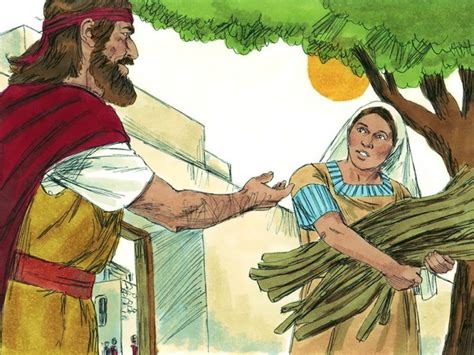
Consider her situation. She had gotten married and had a son (I’m guessing recently, since the son was apparently still too young to help collect sticks). Her husband died. Widows didn’t have a lot of options financially, but she did the best she could. Then came the drought, and therefore the famine. She now had no one who would hire her, nothing left to sell, no one from whom she could beg anymore, and now her food was almost gone. She was getting ready for her and her son to have one last taste of food before they starved to death. Imagine the heaviness of her heart as she ponders all her hopes and dreams being crushed, the horrible fate that
was looming.
Then this scruffy looking strange man comes and asks for a drink of water. Immediately she goes to get it. Even in her current situation, her hospitality goes so deep that she doesn’t hesitate. The he calls after her asking for some food.
Oh.
Any other time it would not have been a question, of course she would feed a stranger. Not so easy today. She explains the situation, and the reasonable expectation was that he would respond, “I’m so sorry. I’ll go ask someone else.” Instead, he has the nerve to say okay fine but first feed me. I don’t imagine she put much stock in his promise “The jar of flour shall not go empty, nor the jug of oil run dry, until the day that the LORD sends rain upon the earth.” There was nothing about him to tell her he could work miracles, and it would be more likely he would say anything to get what he wanted, even scamming a starving widow. I expect she figured she and her son were going to starve to death and nothing could change that. She had one last decision to make in her life, and that was to be generous to a stranger. She chose to be generous. She had so little to give, but gave with great love. God rewarded her, and I consider her one of the underappreciated heroes of the Bible.
I would also mention Shiphrah and Puah (Exodus 1:15-21). They were Israelite midwives who were being oppressed in Egypt. They defied the mightiest king in the world to save the babies
from slaughter. They succeeded because they were clever and had tremendous courage. They had a terrible situation and responded in faith. Their faith went that deep.
In our Gospel this Sunday, we see the contrast between the Scribes and Pharisees, whose faith was just on the surface and the widow giving her small coins whose faith was deep enough to give when she had so little.
Challenge for us: how deep does our faith go? Will it still work when we are at the end of our rope, worn down to nothing, crushed by life? May God grant us the grace.
Blessings,
Fr. Jim 

Going the Second Step

Dear Folks,

This weekend we see a man asking what to do to inherit eternal life (Mark 10:17-30). It’s a great question and Jesus gives him a two-part answer: first, let go of sins, second, let go of things that would be good in their place, but are holding him back from the kingdom.

This is part of the section of Mark between the stories of the healing of the two blind men (8:22-10). The first man was just called the blind man of Bethsaida; it takes Jesus two steps to heal him, and afterward he goes his way. The second story is about blind Bartimaeus, son of Timaeus; Jesus does it in one step, and ends with him following Jesus on His way. In between we see that to understand Jesus as Son of God centers around the cross. He came to serve, not be served, to suffer and die, not achieve worldly status through worldly means. Following Him does not guarantee worldly power, pleasure, wealth, and honor, but may actually require giving up those things, and even our lives, for the sake of treasure in heaven (See Mark 10:21). To see that is to see clearly, like blind Bartimaeus after he was healed. We see the disciples still don’t get it, as we see by their responses to Jesus’ prediction of the passion (Mark 8:32-33; 9:33-37; 10:35-37). They do not see clearly, like the blind man of Bethsaida after the first healing.

After this section of Mark, we go directly to the entry into Jerusalem and begin with Holy Week. Jesus is very close to His passion now, and that will color the dialog. When He is asked what is the greatest commandment of the law, His answer to love God and neighbor is understood in light of the cross. We remember that for Christians, love is not a feeling, but a gift of self, even to death. We read in John’s farewell discourse: “This is my commandment: love one another as I love you. No one has greater love than this, to lay down one’s life for one’s friends (John 15:12-13).” And then we are to follow in His footsteps.

“So be imitators of God, as beloved children, and live in love, as Christ loved us and handed himself over for us as a sacrificial offering to God for a fragrant aroma (Ephesians 5:1-2).” “I urge you, therefore, brothers, by the mercies of God, to offer your bodies as a living sacrifice, holy and pleasing to God, your spiritual worship (Romans 12:1).”

Learning this in the abstract is challenging enough. Learning it in practice is orders of magnitude harder. That is the challenge of the Christian life. As we go down that journey, reflecting on this section of Mark may help us to see more clearly how God is working in our lives.

Blessings,

Fr. Jim

Marriage: What is it and Why is it?

Dear Folks,
For the last three weeks in our Sunday Gospels Jesus talks about children. When the disciples want to know who is most important, Jesus brings forth a child (Mark 9:30-37). When the disciples act out of jealousy toward someone not in their group, Jesus speaks in very strong terms about the seriousness of their example affecting children (Mark 9:36-48). When Jesus is asked about marriage, the next thing He talks about is receiving children and how “the kingdom of God belongs to such as these” and how we need to learn from them (Mark 10:2-16). I think He’s trying to get our attention.
I have just finished a book called “Pro-Child Politics” by Kathy Faust. It is a series of chapters on various issues in which our society is sacrificing the well-being of children for the desires of adults. The chapters are written by experts in the field, and they are well written and heavily footnoted, so even if you don’t wind up agreeing with all the things that are said, this is a very
important addition to the conversation, and it will be worthwhile wrestling with the ideas. This week Jesus brings together the question of marriage and welcoming children.
There are currently two views of marriage available in conversation. There is the relational view, that sees marriage as affirming the relationship of the couple (or thruple?) based on their romantic feelings for each other that they label love. In this view, marriage can be anything you want. This is the commonly held view today, and often assumed to be the only one. The other is the conjugal view of marriage, which unites men and women to one another, and to any children they might create, which was the foundation of most of human civilization. It understands marriage as recognized by the government, ideally life long, sexual in nature, exclusive in nature, only two people.
There is a presentation on Formed.org “How to Talk about Marriage and Same Sex Unions” by Trent Horn. There are the books “Getting the Marriage Conversation Right” by William B. May and “What is Marriage?” by Sherif Girgis, Ryan T. Anderson, and Robert P George that make the case for the conjugal view of marriage, and give evidence that this is the best possible situation for a child to grow up in.
I would also suggest reading “Brave New World” by Aldous Huxley (written in 1931, eerily prophetic). It describes a dystopian future in which family has been replaced by government, and children are a manufactured commodity. Also see “The Anxious Generation” by Jonathan Haidt, about the effects of smart phone use on childhood.
How often are children seen as a commodity to be produced, and accessory to one’s lifestyle?
It is important to prioritize the well-being of children not only because they are so vulnerable, but because they are going to be running things someday when we are in the nursing home.
The more they are able to learn virtue, empathy, emotional regulation, deferral of gratification, a sense of right and wrong and similar things, the less violent and more flourishing our society
will be. Notice this is not ruled by their feelings and desires, but a deeper sense of the good.
Where do we go from here?
Blessings,
Fr. Jim

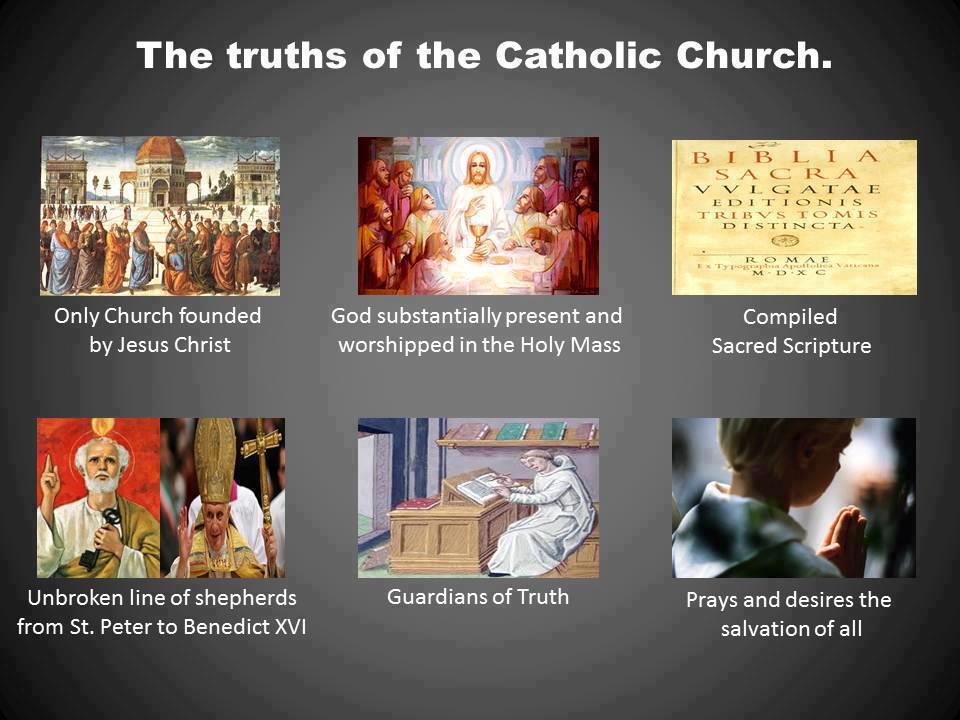
Catholic Truth

Dear Folks,

How to think about people who seek God but are not Catholic? First, there is the question of Christians who are not Catholic, and the Second Vatican Council’s Decree on Ecumenism (Unitatis redintegratio) talks about our relationship with them. Second, there are nonChristian religions and Vatican II deals with that in Declaration on the relations of the Church to non-Christian Religions (Nostra aetate). They are both worth a read.

The Catholic faith is the fullness of truth about Jesus, but there is much that is true that our Protestant brothers and sisters teach, and some things that are true as taught by other religions. God gives everyone the light of natural reason, and so it is not surprising that some true things are taught by groups like Hindus, Buddhists, and Muslims. Christians and Jews have received special revelation in addition, and it is completed by the Jesus event.

All who are saved, all who get to heaven, do so by the power of the Sacrifice of Jesus, whether they understand it explicitly or not. “And this is the verdict, that the light came into the world, but people preferred darkness to light, because their works were evil (John

3:19).” Our salvation is God’s work, not ours. Those who understand who Jesus is and what He is about and choose not to follow Him will be condemned. Those who had not heard about Him, or were taught the Gospel so badly that they could not recognize Him as

the light are another story (and I suggest that latter group is huge). That said, we must not get complacent. We don’t get to sit back and relax. If you read the Gospels (which I highly recommend!) and take them seriously (which I very highly recommend!!) we are warned that we don’t just coast into heaven (See, for example Matt 5:29-30; 7:13-14; 1 Corinthians 9:27).

Jesus wanted His people to be one (John 17:22). I think Satan laughs himself silly every day that Christians are divided and teaching contradictory things. We speak of God’s ordaining will, and God’s permissive will. His ordaining will is that everything and everyone be all good, but He permits us to do evil, and He will bring good from it.

Other religions can be a gift in certain ways: they can help people whom we have not yet reached (though we need to get on that); they provide a challenge for us to better witness to the goodness, beauty and truth of the faith (easy to get complacent when everyone agrees); they can remind us of aspects of our faith that perhaps we have been neglecting.

For example, a few generations back, people told me the Catholic Church did not encourage them to read the Bible. Our Protestant brothers and sisters reminded us of the importance and benefits of reading and being familiar with the Scriptures (and, if you look at

Church documents and history, it is a strong part of the Catholic faith).

Having all of these gifts of the Catholic Church is not a privilege that occasions pride, but a responsibility. “Much will be required of a person entrusted with much, and still more will be demanded of the person entrusted with more (Luke 12:48).” Think of all the gifts

we have been given. What will God expect from us?

Blessings,

Fr. Jim

Our Thinking and God’s Thinking

Dear Folks,

The Synoptic Gospels (Matthew, Mark, and Luke) all relate Jesus giving three predictions of His passion. Today we read in Mark Jesus giving the second prediction of the passion,

and the apostles are clueless. After the first prediction and Peter’s pushback, Jesus says “You are thinking not as God does, but as human beings do (Mark 8:33c).”

After the second prediction, the next concern of the Twelve is which one of them is the greatest. Jesus says, “whoever wishes to be first must be the last of all and the servant of all.” Jesus puts His arms around a child and says, “Whoever receives one such child in

my name receives me; and whoever receives me receives not me but the one who sent me (see Mark 10:35-37).”

After the third prediction, James and John start lobbying for the best spots in the kingdom. Jesus teaches that “whoever wishes to be great among you must be your servant and whoever wishes to be first among you must be the servant of all. For even the Son of Man did not come to be served but to serve and to give his life as a ransom for many (Mark 10:43b-45).

We notice that all the apostles are seen not to understand, but Peter, James, and John are especially highlighted. They were in inner circle, the ones who got to witness the extra special things. They witness the little girl getting raised (Mark 5:47), the Transfiguration (Mark 9:2), and the agony in the garden (Mark 14:33). St. Paul said they were considered “pillars” of the faith community (Galatian 2:9). It appears the closer one gets to Jesus and the higher one gets in the Church the more one gets humbled.

Consider the contrast between God’s way of thinking and human ways of thinking. “For my thoughts are not your thoughts, nor are your ways my ways—oracle of the Lord. For as the heavens are higher than the earth, so are my ways higher than your ways, my

thoughts higher than your thoughts (Isaiah 55:8-9).”

I would connect this to living according to the Spirit and living according to the flesh. “It is the spirit that gives life, while the flesh is of no avail. The words I have spoken to you are spirit and life (John 6:63).” See Romans 8 and Galatians 5 for some expanded treatment. We see that the way of the world is seeking one’s own advantage and centering one’s life on power, pleasure wealth and honor. The way of God is focused on giving oneself in love. A leader is a servant leader. The one’s who should get our greatest concern are the powerless and most helpless. Those trapped in poverty, the disabled, those incapacitated by age and infirmity, children, especially unborn children (whose rights and dignity are

currently under attack), and others like them must never be forgotten.

But what we are talking about is not just a collection of activities, but a completely different way of thinking. As we reflect on these teachings, how do they challenge how we approach life?

Blessings

Fr Jim

Warning: a Cross

Dear Folks,
Saturday, we celebrate the Exaltation of The Cross, and Sunday, we read of Jesus predicting His passion. This section of Mark (8:22-10) is all about the cross, about Jesus preparing to carry it and teaching that His followers will have to follow with a cross as well. People are very slow to get it. Three times He will explain that He will be rejected and put to death, and Mark emphasizes that immediately afterward, the apostles show they don’t get it. We are accustomed to talking about the cross in theory, but it is harder to accept in practice. Jesus had just cured a blind man, but it took two tries. After the first try, the blind man could see, but not clearly (people looked like walking trees). After the second try, he could see clearly. Those who thought Jesus was just a teacher and wonder worker are people who can see, but not clearly. I’ve found some who seem to see themselves as customers in the Church rather than coworkers in mission, and they cooperate (maybe) if they get things the way they want them. They can see, but not clearly. I’ve asked practicing Catholics, “why is it a good thing to be a practicing Catholic Christian?” and would get some answers like, “I get a good feeling on Sunday morning,” or “It is good to get together with the people,” or “it gives moral guidance.” These are people who see, but not clearly.
In 1776, Thomas Paine wrote an essay called “The Crisis.” It began, “THESE are the times that try men’s souls. The summer soldier and the sunshine patriot will, in this crisis, shrink from the service of their country; but he that stands by it now, deserves the love and thanks of man and woman. Tyranny, like hell, is not easily conquered; yet we have this consolation with us, that the harder the conflict, the more glorious the triumph. What we obtain too cheap, we esteem too lightly: it is dearness only that gives every thing its value.”
Given what is happening in the world and what is happening in the Church, I think it is a safe bet that being Church is not going to get easier any time soon. It fact, it will likely get less convenient, more challenging, and require more people to step up beyond what they are accustomed to. Those whose faith is shallow shall very possibly wander away, as have so many before. Those who remain, however, will be more prepared than ever to rise to the level of heroism to which God calls His saints. I see my job as preparing people so that more will endure, and then they will be more prepared for the rebuild.
If following Jesus becomes harder, will you still follow? If it becomes a lot harder?
If being Church becomes harder, will you still do it? If it becomes much harder?
God is calling us to greatness.
Blessings,
Fr. Jim

It Begins With Listening

Dear Folks,

The New Testament teaches us a few Aramaic words, including “Ephphatha,” meaning “be opened.” Jesus heals a deaf man with a speech impediment (Mark 7:31-37). When Jesus does a miracle, we first rejoice, and then we ask, “what is He trying to teach us?

When most people could not read or write, being unable to hear or speak would severely isolate people. Hearing and speaking connect us to the world beyond ourselves. Sin also isolates people from one another and tends to close us in on ourselves. Big Question: Is the focus of attention on ourselves or beyond ourselves?

Most of us don’t listen as well as we think we do. If I’m focused on myself, I’m filled with: How does this affect me? What does it make me feel? How do I respond to it?

In Ann Garrido’s book “Redeeming Conflict” we find habit #2 is “be curious” and habit #3 is “Listen to understand.” We have a tendency to listen to find the flaws and respond. But in the other person’s head, what they are thinking makes sense to them. The challenge is to figure out how it makes sense, how do their ideas fit together, and why do they find them compelling? What are the concerns and motivations that drive them? This allows us to speak to their concerns. I know some people have said some things that were true, but did not speak to my premises and concerns, so I found them completely unpersuasive. I found, for example, that since I think there are some problems with the way liturgy has often been celebrated after Vatican II, they assume that I idealize the time before Vatican II, and so they give me a lecture on all the problems of that time. Since they are arguing with a position that I do not believe, it doesn’t matter if what they say is true, it accomplishes nothing except get on my nerves and waste my time.

Sometimes I have found myself, to my regret, doing that to someone else. A response bursts out of me before I even think about it instead of hearing them out and maybe asking

some questions to draw their thoughts out. This suggests that I was focused more on myself than the other person, and that my need to tell my story had become desperate. It also makes it unlikely that what I say is going to be effective. To become a better listener, I try

to quiet myself and focus carefully on the other person. I also work on telling my story. If I don’t have another venue, it helps to write, even if I don’t share it with anyone. That helps me tell my story in a more controlled manner.

Redeeming conflict habit #5 is welcome emotion, and #6 is tell your story. Once I have listened to the other person, seeking to understand deeply why they think they way they do, I can look at myself and see what I have to tell of what I’m thinking and feeling. I’m more likely to be able to speak in a way that connects. Being a better listener increases my power of speech. I don’t claim to be great at it, but I know I’m better than I used to be, and I’ve connected better with others. I ask Jesus to continue to do for me what He did for the man in the Gospel.

Blessings,

Fr. Jim

Tradition of the Faith

ear Folks,

Our Gospel for today from Mark 7 tells of Jesus clashing with the Pharisees about God’s teach- ing and their traditions (See vv. 1-23 for the whole story). We see, “In vain do they worship me, teaching as doctrines human precepts… You disregard God’s commandment but cling to human tradition (see Mark 7:7-8).”

The Second Vatican Council’s Constitution on Divine Revelation (Dei Verbum) says: “[T]here exists a close connection and communication between sacred tradition and Sacred Scripture. For both of them, flowing from the same divine wellspring, in a certain way merge into a unity and tend toward the same end. … Consequently, it is not from Sacred Scripture alone that the Church draws her certainty about everything which has been revealed. Therefore, both sacred tradition and Sacred Scripture are to be accepted and venerated with the same sense of loyalty and reverence. … Sacred tradition and Sacred Scripture form one sacred deposit of the word of God, committed to the Church (DV 9,10).”

Some have claimed that the Catholic Church is doing what the Pharisees were doing with re- gard to tradition. We want to look deeper into the issue. Both Catholics and Protestants have the tradition of calling the Bible “The Word of God” but the Bible tells us the first meaning of the term is Jesus Himself (John 1:1). Jesus is condemning corrupt tradition, and the word “tradition” means “something handed down (Greek paradosis, verb form paradidomi).” We see, for example St. Paul tells people to hold to the traditions they received (1 Corinthians 11:2; 2 Thess 2:15; verb form 1 Corinthians 15:3).

To understand the Catholic Church’s thoughts about tradition, consider: it doesn’t make sense to us that God would reveal the fullness of truth and then let it get lost. It doesn’t make sense to us that God would protect and preserve the truth in the Church up to a certain point in history and then stop. Hence, we have trouble with the notion that after the Bible was written, the Church as a whole misunderstood it for centuries and centuries until fifteen hundred years later someone got it right. What the Church has taught, under the guidance of the Holy Spirit, for many generations carries great weight. We must be aware that we can be manipulated by the world around us, and the testimony of generations of Christians is a vital counterweight.

Some people claim all they need is the Bible, however, many groups who make that claim teach contradictory things, and I don’t see any limit to those contradictions. When I was in col- lege, I met a group called Students for New Testament Restoration. They held that God has given us the Bible to teach us the truth, so we should be able to read the Bible and reliably find and know the truth, otherwise we are saying that God did a poor job writing it. Therefore, after they read the Bible and understood what it meant, everyone who disagreed with them was just being dishonest. They didn’t make a lot of friends, but I admired the consistency of their logic.

God clearly allows messy disagreements, but when it threatens to tear the Church apart and have the Gospel get lost the leaders of the Church, appointed by Christ, or their successors, resolve it (see Acts 15).

It is a constant task to stay faithful to the Gospel revealed in Jesus, passed down in the Church under the protection of the Holy Spirit. As usual, God’s grace does not make it easy but makes it possible.

Blessings, Fr.Jim

We Are Being Tested

Dear Folks,This Sunday we finish chapter 6 of the Gospel of John, and we see many of Jesus’ followers leaving Him and going back to their former ways of life. Imagine Jesus’ heartbreak watching them go. Imagine what He is feeling as He asks the twelve if they want to leave also. Peter gives a less than enthusiastic response, but they stay. They probably had as much trouble with what He had said as the others did and had as much reason to leave, but their reason to stay was stronger. We have been reading, and hearing, and talking for many years about people leaving the practice of the Catholic faith. Many people immediately talk about bad experiences that spark their leaving. I think this is the wrong focus. There have always been bad experiences of Church, and while we want to try to minimize them, they will always be a part of life in any community. The Church is full of sinners. It has been from the beginning. When He called the first disciples, He knew they were flawed. He warned us that it would be an issue until the end of time (See the parable of the wheat and the weeds Matthew 13:24-30).I suggest so many have been leaving because they haven’t been taught enough about the faith to give them enough reason to stay, so it doesn’t take much to get them to leave. I have talked to lots (and lots) of Catholics, and a great many of them were taught a very feeble understanding about the Catholic faith. I’ve thought many times, “If that’s what I thought the faith was, I would have left too.” Some believed that it’s basically a general encouragement to be a nice person. I’ve asked people, “Why is it a good thing to be a practicing Catholic Christian?” and some have no answer. Some say they get a good feeling on Sunday morning. Some people were actually taught they didn’t need to go to church, and if they felt closer to God in the woods, that’s where they should go instead (as if closeness to God were a feeling. Where did that idea come from?).I have witnessed and experienced many kinds of toxic church. I’m still here because I believe that the Catholic faith is the truth, and that living that faith is the core purpose of life. As long as I believe that, you folks are stuck with me. This is why I’m such a fanatic about people continuing to learn about the faith. I have calmed down enough not to be as obnoxious about it as I used to be, but I’m still just as determined. Our Church is being tested and will be tested further (Can anyone look at what is happening in the world and what is happening in the Church and not believe that?).I suggest we shall have many occasions to say, “this is a hard saying,” and “this is a hard situation,” and feel tempted to leave. If God is testing us, are we prepared? Is our faith deep enough, wide enough and strong enough to endure? I propose two things: First, spend time with God (always a good thing). Second, explore more about the great treasure of our faith. The more I learn the more amazing I find it.God will give us what we need if we are willing to receive it. Blessings,

Fr. Jim