Dear Folks,As we continue with the season of hope, I need to point out a very special kind of hope that we all need: the hope that we can make a difference in the world. There was a time when it was believed that history is shaped by large forces way beyond us, and the average person can do nothing to affect the outcome. This has been debunked, and we know that history can be changed by the smallest thing. During the 1960’s there was a naïve hope that we could fix the world easily, because it isn’t hard, and the previous generations weren’t trying. “All you need is love,” was the mantra, and there wasa very superficial understanding of what love meant. Alas, it didn’t work, and by the 1970’s there was a cynicism that the system was deeply corrupt, that heroes were not really heroic, and it was never going to get better. Then “Star Wars” and “Raiders of the Lost Ark” burst in on the scene. Whatever critics may have to say about the movies, the feeling of the daring, old-fashioned hero was a breath of fresh air. For our hope to be realistic, I suggest considering these issues: We need focus on being productive. There are some who put a good deal of time into complaining without moving at all toward productive action. As we expel energy, we want to consider the question: how is this helpful? Are we focusing on our own desires or a higher purpose? If we want God to bless our efforts, it is good to be about something larger than ourselves. We see in James 4:1-3 “Where do the wars and where do the conflicts among you come from? Is it not your passions that make war within your members? You covet but do not possess. You kill and envy, but you cannot obtain; you fight andwage war. You do not possess because you do not ask. You ask but do not receive, because you ask wrongly, to spend it on your passions.” In my years of church work, it have heard a lot of conversation about how people want things in the church according to their preferences, but I haven’t heard nearly as much about how we can do church in a way that would be more pleasing to God and more effective in fulfilling our mission. How high are we setting our sights? A big issue is perseverance. If you go through the New Testament looking for how many times it encourages perseverance, you might be surprised how often it comes up. Many start with enthusiasm, but give up when they don’t get results as quickly as they expected. The prize belongs to those who keep going. Critical is learning from our mistakes. In Bill Bennett’s book “Last Best Hope” he describes the decision to make George Washington the head of the continental army. His record was mixed, and there were a number of objections. One of the points mentioned in his favor was that “he was good at learning from his mistakes.” That hit me. I had often thought about the importance of being willing to learn from our mistakes, but this was the first time that I thought about it as a skill that one can get good at. To learn from our mistakes, we need more than a general good intention. Weneed to be able to look at things that go wrong, identify the problems, and strategize a way to do better in the future. This is an art to be acquired. Who me? We read in the Bible many stories of God choosing the most unlikely people. We see Moses asked, “Who am I that I should go to Pharoah and bring the Israelites out of Egypt?(Exodus 3:11).” See also the call of Gideon (Judges 6:15) and Jeremiah (Jeremiah 1:6).”God is calling you to greatness. Yes, you. You might not be able to imagine how, but God has bigger ideas than we do. Blessings, Fr. Jim

Invincible Hope

Dear Folks,Now we begin Advent, the great season of hope, and the world could very much use hope right now. Starting with hope is key. If you don’t have hope that your struggle is worth it, why would you struggle? Would you not just give up? If you don’t have hope that things will make sense, why would you learn? Why would you ponder? Would you not just give up and let the video screen tell you what to think? Without hope, what will move us forward?There are some important things about Christian hope. First, it is based on truth. Many poor people buy lottery tickets because that is the only hope they can find of a better life. That is not a very realistic hope for almost everybody who plays. Many people put their hope on circumstances in the world that we cannot predict or control. “If only my stock would take off;” “If only the next boss does what needs to be done;” “If only I could draw an inside straight this once.” When things don’t happen as they hope, they sometimes give up hope.Christian hope is based on God’s love at work, and that is for everyone. Second, it does not make cheap promises. It does not promise that all our troubles will vanish any time soon. In fact, the New Testament is brimming with warnings that disciples face great difficulties. We are also taught that the cross is the way to glory, so our hope does not depend on world events. Because of that, by God’s grace, nothing that the world can do to us can destroy our hope.During Advent we seek to hone and sharpen our sense of hope through prayer, some reflection, some silence and stillness when we can find it, and remembering the long wait for the coming ofthe Messiah. We are also called to project hope to the world. We can do that with our attitudes:We all know people who can always find something to complain about but are not willing to help change things. Other people are always looking for what is good that is happening, and when bad things happen, they are quick to look for opportunities to make things better, however incrementally. The latter are better at projecting hope. We all fall short, but how can we use this time to get a bit better?It also marks the end of the liturgical year 2021 and begins the year of grace 2022. Last year most of our Sunday Gospels were from the Gospel of Mark, but now we switch to Luke. The Gospel of Luke has several things special about it, and I’ll be talking more about them later. The Gospel of Luke is the only one with the Annunciation, the visitation, the birth in the manger because of no room at the inn, and the visiting shepherds at Christmas. Luke also emphasizesmercy for the repentant sinner, care for the lowly and the needy, and the work of the Holy Spirit. To get the full Lucan experience, one needs to read the Gospel and the Acts of the Apostles. More later.I hope you have a fruitful Advent.Blessings,Fr. Jim

Subjects of Christ the King

Dear Folks,
This is the Feast of Christ the King. Jesus reigns over all, and His authority is greater than any nation or any government. What does that mean for us?
We are not in the business of imposing our religion on others, even though some may accuse us of it. We are, however, in the business of helping other people, especially those that are most vulnerable and most hurting. This must sometimes include advocacy when human rights and human dignity are under attack. Some say that when we refuse to participate in things that we think are wrong or refuse to support wrong behavior, we are forcing their beliefs on others.
Some say that when we are speaking up for human rights, we are imposing Catholic beliefs. No, we are being good citizens. The conscience formed by Christianity has as much right to be in the public discussion as any other kind of conscience.
The letter to Titus is advice to a bishop, and says, “Remind them to be under control of
magistrates and authorities, to be obedient, to be open to every good enterprise (Titus 3:1).” Historically, the early Christians were good citizens of the countries in which they lived and were careful to obey the laws until the laws required them to be disobedient to God in the slightest way, and then they would refuse even under threat of death. St. Thomas More, when about to be beheaded, said, “I die the king’s good servant, but God’s first.” He followed the law of England to the letter, until it meant disobeying God, and then he would not budge.
Many point to the bad things done by Church leaders in the present and the past. Most of those are done contrary to the teaching of the faith, and that just calls for holding more closely to the faith now.
There have been times when official Catholic practice has involved bad things. This is often because our understanding of what is good and right has been getting refined over time. There was a time it would have been unheard of to suggest that someone has a right to express wrong ideas on matters of importance. The maxim was, “error has no rights” and it seemed intuitively obvious. Only after centuries of reflection did people start to say that even if error has no rights, people who err have rights, and we should counter bad ideas with more good ideas, not legal sanction or punishment. Ironically, the Catholic Church has gone from being accused of stifling
free thought to people clamoring for censorship of many Catholic beliefs for being “hateful” and “(fill-in-the-blank) phobia.”
Some say that, on balance, the Catholic Church has done more harm than good. I would suggest that narrative has been a prejudice that has led to some slanted history. Now we are starting to see that narrative challenged. I would recommend “How the Catholic Church Built Western Civilization” to get started.
We are very glad to learn about when the Church stood up for human rights and human dignity in the past, and sad for those who did not speak up when there was need. Let us live so that people can say of us that we were good American citizens, and servants of God first.
Blessings,
Fr. Jim

The End

Dear Folks,In the movie, “Avengers: Endgame” Tony Stark states a very simple but profound truth that “part of a journey is the end.” Our reading this Sunday is from the apocalyptic chapter of Mark. Quick review: apocalypse is from the Greek for “removal of the veil,” and revelation is from the Latin. That is why in older Catholic Bibles the Book of Revelation is called Apocalypse. Removal of the veil is what happened in ancient weddings, so the image refers to the wedding of the Bride and the Lamb at the end of Revelation. It also points to removing the veil from the meaning of word events: it may look like evil is winning, but God is at work, and this is leading us to a glorious end. Matthew, Mark, and Luke all have apocalyptic chapters (Chapters 24, 13, and 21, respectively). John doesn’t, but he has the Book or Revelation. Mark 13 starts with the prediction of the destruction of the temple (the temple would be destroyed by the Romans in A.D. 70), moves into descriptions of tribulations of various kinds, and leads to “’the Son of Man coming in the clouds’ with great power and glory (Mark 13:26).” This refers to the Second Coming at the end of time.When Jesus refers to “the Son of Man” we must remember it is a reference to Daniel 7. Daniel is having a dream, and there is a succession of beasts that rule great kingdoms, and then “As the visions during the night continued, I saw coming with the clouds of heaven One like a son of man. When he reached the Ancient of Days and was presented before him, He received dominion, splendor, and kingship; all nations, peoples and tongues will serve him. His dominion is an everlasting dominion that shall not pass away, his kingship, on that shall not be destroyed (Daniel 7:13-14).” Whenever Jesus refers to Himself as the Son of Man (Math 9:6; 26:64; Mark 2:10; 8:31; 14:62; Luke 5:24; 9:22; 22;69), He is referencing this text from Daniel, a text that His audience would have known very well. Referring to Himself as the Son of Man was a bold statement from the beginning, and the closer He comes to the cross, the more open He is about His glory. We see at His trial before the Sanhedrin, “the high priest asked him and said to him, ‘Are you the Messiah, the son of the Blessed One?’ Then Jesus answered, ‘I am, and “you will see the Son of Man seated at the right hand of the power and coming with the clouds of heaven (Mark 14:61-62).”’”When Stephen was being martyred, he said that he saw, “the Son of Man standing at the right hand of God (Acts 7:55).” The second coming happens to us personally when we reach the end of our earthly life. The early martyrs would often go to the arena singing hymns of praise to God. When the cross gets more up close and personal in our lives, we can witness in a special way to the glory of Christ the King.Many people over the years have attempted to take the apocalyptic literature of the Bible and crack it like a code to figure out when the end of the world will come. This is especially puzzling given how the Scriptures repeatedly tell us we won’t know when (for example,Matthew 24:36-44; Mark 13:32-36, Luke 12:40). The challenge is to be ready, to hold the things of this earth (including our earthly lives) in a loose grip and be ready to face whatever happens.We do not know what the future will bring, but Jesus calls us to be ready, with our eyes on the goal.Blessings,Fr. Jim

Feeding Our Minds

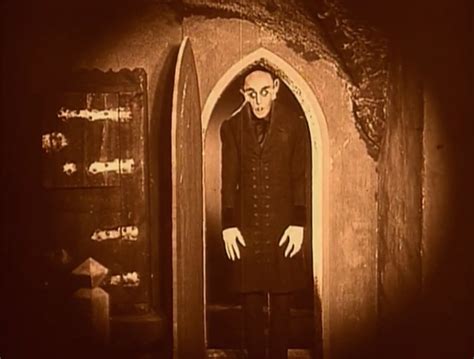
Dear Folks,I had a great vacation, quite low key but wonderful in many ways. Part of my October preparation for Halloween is watching old horror movies. Most of the best ones are from the 1920’s and 1930’s, though there are exceptions, like the 1953 “House of Wax” with Vincent Price.Storytelling is a powerful part of being human. It helps express and form cultures, provides common imagery, captures and forms imaginations, and expresses and shapes our values. Some stories I find especially interesting as delving into the realm of mystery, the edges of our understanding. Horror stories can give us the feeling of being transported into the realm of mystery. Good science fiction can do the same.Bram Stoker published “Dracula” in 1897, and in 1922 there was a German movie “Nosferatu” based on the book. It portrayed the vampire as rat-like, a form of vermin, a plague. Since the memory of the Spanish flu was still fresh, this would have resonated with a lot of people. Many people have not heard of it because Bram Stoker’s widow would not give permission for the movie to be made, and she sued and confiscated copies of the film. It was many years later that a copy was discovered. In the meantime, “Dracula” with Bela Lugosi came out in 1931. When most people think “vampire” the image that pops into their heads is some version of BelaLugosi’s Dracula, and so he has become a cultural icon. This time the vampire was presented as suave, charming, even seductive. This resonates with our understanding that evil is seductiveand that makes it especially dangerous.During the 1970’s there came a trend of “slasher” movies, with less artistry, less ponderingmystery, and a lot more graphic violence. It is in our nature to recoil from violence and greatbodily harm, but with persistent conditioning we can lose that, and that’s not a good thing. Iremember in college, I was once waiting at a bus stop, and three high school kids joined. As wechatted, I mentioned I was going to see a movie.“What’re you going to see?”“I haven’t decided yet.”“You should see Friday the 13th, part three!”“Oh, you’re the ones who keep going to these movies, so they keep making them. I’m notinterested.”“But this is the best one; it’s really funny.”“Funny?”“There’s this one scene where three guys get their head chopped off at the same time!”“And that’s funny?”“You have to be there.”“No, I don’t.” I wound up seeing “The Great Mouse Detective” (with Vincent Price) and it was very good.I remember when the movie “The Passion of the Christ” came out, many voices were decrying how bloody and violent it was. I didn’t notice those particular voices decrying the other hundred gazillion movies that were really bloody and violent, but this one caught their ire. There was also criticism of Christians who have been concerned about violence in film but approved of “The Passion of the Christ.” Were they hypocrites? There is a critical point: During the Passion movie, I think people identify with the sufferer, and it sharpens our horror of violence and cruelty. Many other movies present violence as thrilling, empowering and satisfying, with no sympathy for those who suffer.As we think of the stories we take in, we may ask, what are we feeding our minds? How might they shift our perspective, our sympathies, our values, our thoughts?Blessings,Fr. Jim

Marriage and the Cross

Dear Folks,Our Gospel talks about marriage, divorce, and natural law. Why would Mark put this in the section of his gospel that deals with the cross? At Jesus’ time, there was a strong belief that aman could divorce his wife for a number of causes, and I’m told some rabbis taught that if a wife burns her husband’s dinner that was cause for divorce. Clearly, practice like this wouldencourage many men to come to marriage thinking about how it was going to benefit them.Jesus’ is calling people to see marriage more in terms of gift of self. There may be great benefits and joys in marriage as in many forms of giving oneself, but it doesn’t work if our central focus is on what I’m going to get out of this. This is true of many ways we give ofourselves, like priesthood and friendship. Marriage is unique, however, and plays a unique role in the story of salvation.Consider how our relationship with God is compared to marriage. “I will rejoice heartily in the Lord, my being exults in my God; For he has clothed me with garments of salvation, and wrapped me in a robe of justice, like a bridegroom adorned with a diadem, as a bride adorns herself with her jewels (Isaiah 61:10-11).” The book of Hosea is all about comparing God’s relationship with Israel to a husband’s relationship to an unfaithful wife. Psalm 45 is essentially a wedding song. Song of Songs is essentially a wedding song, and many people have found in it a deep sense of God’s tender love. Ephesians 5:21-33 compares marriage to the love between Christ and His Church and calls it “a great mystery.”If anyone is thinking that this is just a nice metaphor, why would it be called a great mystery?What if God deliberately made people male and female, that they be suited to give themselves to one another in a unique way, that would teach us about how God is calling us to union withHim? Our union with God is meant to be free, total, faithful, and fruitful, and so is marriage.Mark chapter 10, Jesus is asked about divorce, and at that time, there was discussion about what was required for divorce. He goes back to the beginning, the very beginning, and locatesthis discussion in the core of how we were created.Matthew will give some more detail in Matthew 19:1-15. Remember, the Gospel writers don’t tell all they know (See John 21:25), so they must be selective. There is a clarification about ifthe marriage is unlawful (v. 9, and that leads to a discussion beyond what I can do here). The apostles are shocked and think Jesus’ high standards means it is better not to get married.Jesus tells them that not everyone is made for marriage.In the Gospel of John, we see that John the Baptist’s job was to introduce Jesus. The Baptist will use two images for Jesus: The Passover Lamb (John 1:29) and the Bridegroom (John 3:22-30). We will see these two images brought together in the wedding feast of the Lamb in Revelation 19:7-9. See also Revelation 21:2 and 9. Both are images of total gift of self.When people get married, they are holding their whole lives in their hands, and making a decision that cannot be undone. I’ve dealt with a number of people who have been divorced or are going through divorce, and I’ve seen clearly that divorce does not make it go away (no one has contradicted me on that).This is a huge topic, but if there is one takeaway from what I’m saying, it is there is more to marriage than most people think, and we who think Jesus’ teaching is important have a challenge of expanding the conversation in society for the good of all.Blessings,Fr. Jim

Peacemaking from the inside

Dear Folks,
I’ve been talking about peacemaking, and peacemaking starts in our own hearts. As
Christians, we are commanded to forgive, but often we are not taught how.
I had trouble learning forgiveness because it seemed to me to mean that other people could
torment me without limit and without consequence and I was supposed to accept it
passively and pretend that it was okay. It took a long time to understand that it was
something very different. Forgiveness is a form of healing and involves taking seriously
how we were hurt and how we were wronged.
“Don’t Forgive Too Soon” by Dennis Linn, Sheila Fabricant Linn, and Matthew Linn, gives
a lot of practical thought about what to do and what stages one might go through in the
process of forgiveness. They talk about “denial, anger, bargaining, depression, and
acceptance.” They also talk about taking steps to prevent future hurt from those who have
hurt you.
“No Future Without Forgiveness” by Desmond Tutu talks about the experience of apartheid
and the Truth and Reconciliation committee. I had known that apartheid was bad, but I was
amazed just how horrible things were, the magnitude of the evil and cruelty. Then the new
government came, and the challenge of dealing with the past and all those who had
committed crimes in the previous regime, many of them heinous beyond belief. The
decision was made that the people who had committed crimes in the past could come before
the committee, admit what they had done, and receive immediate amnesty. Obviously, this
was highly controversial, but he explains how they decided it was the better way to go and
would leave them with a better outcome. It is mightily inspiring.
“The Book of Forgiving” by Desmond and Mpho Tutu continues with practical advice on
how to forgive, giving four steps:

  1. Tell your story
  2. Name the pain
  3. Grant forgiveness
  4. Renew or release (end) the relationship.
    They emphasize that it “takes as long as it takes.” Consider that granting forgiveness may
    begin with desire to forgive, and only later comes the ability to forgive from the heart. It
    may not ever start there; we may first have to decide to seek the desire to forgive, being
    currently full of desire to destroy the other person. The process may or may not involve the
    other person, having no guarantee they will even agree they did anything wrong.
    Sometimes forgiveness is not something that happens between people, but within oneself. If
    we have no one else to tell our story to, we can always tell it to God.
    “Remembering God’s Mercy” by Dawn Eden describes her journey from being abused to
    being healed, and how her journey to Catholicism had helped her. She talks a lot about
    memory, and says that we don’t ask God to take away painful memories, but to help us
    remember them in a new way, as part of our journey with him.
    Once again, as we seek to be peacemakers, we start with our own hearts.
    Blessings
    Fr Jim

More Peacemaking

Dear Folks,
Last week I talked a bit about peacemaking, and I mentioned Dale Carnegie’s book “How to
Win Friends and Influence People” and Ann Garrido’s “Redeeming Conflict.”
George Thompson’s book “Verbal Judo.” is about deescalating tense situations, and many
police and other first responders are trained in this method. When someone gets belligerent to
us, the temptation is to respond in kind. As the anger wells up in is, we can be like a pressure
cooker without a safety valve until it bursts out. If we have an alternate response at the ready,
we can treat this as another task to be done, and approach it deliberately. The difficult
question is how to deescalate. It involves receiving the other persons energy and directing the
conversation toward a more useful direction. One important feature of this approach is that it
does not require the other person to have the same good intentions. A lot of Christianity is
treating people better than they treat us (See, for example Romans 12:9-21).
“Thanks for the Feedback” by Douglas Stone and Sheila Heen involves the dynamics of
getting and giving feedback, whether it is “affirmation, coaching, or evaluation.” It tried to do
a one paged summary of the book but failed miserably because there are so many facets to
this. I think the central takeaway is that how we see and hear ourselves is very often quite
different from the way that other people see and hear us. What we intend and what the other
perceives can be very different, and that disparity can doom a conversation if we are not
attentive to it.
One fascinating point they make is that there is a part of the brain “dedicated to taking in
language and reading tone and meaning (called the ‘superior temporal sulcus’ for those who
are curious).” Then this is critical: “When we ourselves speak, the STS turns off.” We don’t
hear our tone like we hear other’s tones. We do not naturally hear how angry we sound, or
how condescending, or how harsh. We hear it in the other person though, hear it very
clearly. C. S. Lewis noticed this tendency and included it in his “Screwtape Letters (Letter 3.).” Screwtape, a senior devil, is giving advice to his nephew Wormwood about how to lead a soul to hell. He shared a trick for encouraging his “patient” to quarrel with his mother:
“Your patient must demand that all his own utterances are to be taken at their face value and
judged simply on the actual words, while at the same time judging all his mother’s utterances
with the fullest and most over-sensitive interpretation of the tone and the context and the
suspected intention. She must be encouraged to do the same to him.”
It is my observation that communicating well is harder than we think. That means first that
we tend (strongly tend) to overestimate how well we are communicating based on how hard
we are trying. It also means that we underestimate how hard the other person is trying to
communicate based on the results of their efforts. It has been a common observation that we
tend to judge ourselves by our best intentions, and other people by the consequences of their
actions.
I would emphasize once again that I do not speak as someone who has all this mastered, but
as one who has made significant progress from where I used to be. It has made a huge
difference in my life, and I believe I am better able to serve God because of it. I plan to
continue to work on this until I die. I believe that striving to interact with others more
peacefully and more productively will help the world get better, and it is desperately needed. I
believe it will also please Jesus.
Blessings,
Fr. Jim

Breaking Down Barriers

Dear Folks,In our Gospel today (Mark 7:31-37) Jesus heals a man who is deaf and has a speech impediment, thus enabling him to connect to other people. I would suggest that the biggest barrier to people connecting nowadays is not a problem with the ears but a problem between the ears. We have people talking at each other but not making sense to each other, and the more they talk the more alienated they become. This is a huge problem for the world, and it seems to be getting worse.As someone who has spent a large part of his life talking to people without connecting, I have worked very hard on this problem for a long time. While I have a long way to go, I can state confidently that I have made a great deal of progress from where I used to be (trust me, you are lucky you don’t have to deal with who I was in my teens and twenties). Things can get better if we want them to.I started with Dale Carnegie’s book “How to Win Friends and Influence People.” It was eye opening, for the first time introducing me to the idea of focusing on what the other person wants and what the other person is thinking instead of just what I want and what I’m thinking. This alone would be a huge improvement in a lot of conversations we are seeing today.If I could recommend one book for people, I would emphasize “Redeeming Conflict” by Ann Garrido. I have mentioned it before, but it is time to mention it again. It is about twelve habits that can transform conflict and make it a spiritual journey. The twelve habits are 1. Sidestep the triangle (go directly to the person with which you have the problem). 2. Be curious (what is happening with the other person? What is that person thinking? What is that person seeking? What might this person see that I don’t? Is there more to the situation than either of us sees?) That is related to 3. Listen to understand (We usually listen to refute their point of view, but remember their beliefs make sense to them, so how do they fit together in their mind?). 4. Undo the knot of intention (we tend to judge ourselves on our intentions and others on their results, but good intentions don’t guarantee good consequences, and we need to keep that in mind for both parties). 5 Welcome emotion (our emotions give us clues to what is really happening inside us, and what this situation means to us). 6. Speak your voice (while we emphasize hearing and understanding the other, the situation cannot truly be resolved without your side of the story being articulated). 7. Know and steady thyself (some issues trip our triggers, and we can go off and say things we will regret. It is good to know and compensate for such tendencies). 8. Pray to forgive (Forgiveness is essential to dealing with conflict, and the ability to do so is a gift from God, so we need to pray for it). 9. Repent (very often, both sides have contributed to the problem, at least somewhat, and we need to own our part). 10. Problem solve (It really helps to develop creative solutions where both sides win).11. Be trustworthy, not necessarily trusting (not everyone is trustworthy, but we need to be, and Christians are called to do right no matter how much others do wrong). 12. Practice prudence (knowing which of these habits to exercise and when is more art than science). It is a very Catholic book, but I don’t think there is anything there to offend our non-Catholic brothers and sisters.Jesus said, “Blessed are the peacemakers, for they will be called children of God (Matthew 5:9). Jesus took a whole beatitude to emphasize this point (I have a lot to say about how important the beatitudes are in the teaching of Jesus). If we want to follow Jesus’ teaching (we do, don’t we?) and we want to be called “children of God” (we do, don’t we), would we not be intentional about increasing our ability to be peacemakers?Blessings,Fr. Jim

Handing on the Faith

Dear Folks,
Our Gospel talks about the Pharisees who would undermine God’s teaching by replacing it
with their own corrupt traditions. It is a temptation we all have to rewrite the Gospel
according to our preferences.
The Greek word translated “tradition” is “paradosis,” and it means “that which is handed
on.” St. Paul will use it to describe the faith that he has passed on to people in 1
Corinthians 11:2; 2 Thess 2:15, 3:6. The verb form in paradidomi, to hand on, and we see it
in Luke 1:2 and 1 Cor 15:3. Also, he warns about being taken in by “empty, seductive
philosophy according to human tradition (Gal 2:8).” Distinguishing human tradition with
divine tradition is key.
Acts of the Apostles 15 describes the Council of Jerusalem and gives an example of how
the Church is to deal with such questions when they can’t be solved just by dialog. The
Church was being torn apart by the question whether being in right relationship to God
came through works of the law of Moses or by faithfulness to Jesus. The next great
example is the Council of Nicea about the identity of Jesus. There was a group following
Arius that said Jesus is not God, but more of a super angel. The Catholic belief about the
divinity of Christ was upheld. This shows us how the Holy Spirit can work in the
development of doctrine that is faithful to the revelation given in the person of Jesus.
The Second Vatican Council’s Constitution on Divine Revelation (Dei Verbum) talks about
the nature of divine revelation and how the truth of the faith is preserved in the Church.
Chapter 2 (sections 7-10) talks about how Divine Revelation is preserved in the Church. I
haven’t the space to quote it extensively here, but it is worth looking up.
Catholic thought has trouble with the idea that right after the Bible was finished, the Church
as a whole, completely misread it for fifteen hundred years until someone finally figured
out what it really meant. So, part of what we talk about in Sacred Tradition is how the faith
has been understood for centuries and recognizing continuity of thought. We also have
trouble with the idea that God would reveal the fullness of truth in Jesus and allow it to be
lost over the years: if it is worth revealing it is worth preserving.
We also recognize that every era has its own prejudices and biases, and we would be
foolish to think we are unaffected by them. When something has been taught for centuries,
that helps us step back from our own perspective to a broader perspective.
One danger is that many people seem to assume that those who came before us were not as
smart as we are and not as good as we are. This leads to the habit of whenever something is
believed or practiced does not make immediate sense to us, we reject it without much
thought or hesitation. G.K. Chesterton said, “Don’t ever take down a fence until you know
the reason it was put up.” I was never one to do things just because that was the way we
always did them, but often it is worth looking a little deeper before dismissing something.
These days, I think our society could benefit from a bit more reflection and broader
perspective before we react. The Catholic Church is famous for moving slowly. That’s not
always a bad thing.
Blessings,
Fr. Jim