Tag Archives: God

Battle of All Time

Dear Folks,

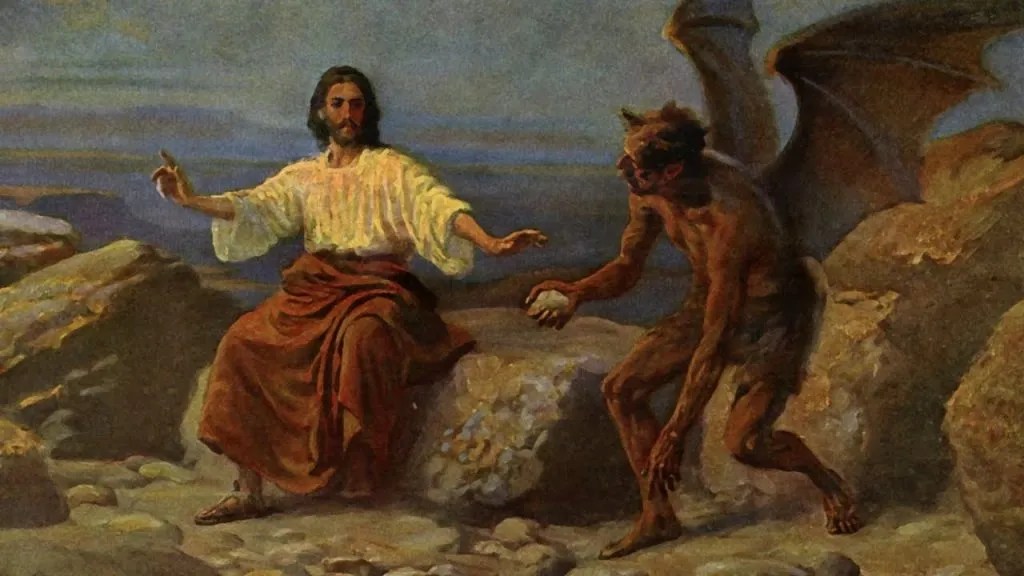
The First Sunday of Lent we deal with Jesus in the desert getting tempted. It is worth noting that our first reading is about offering one’s gift to God. Let’s look at temptation as interfering with our giving ourselves to God as gift.

The first temptation, “If you are the Son of God command these stones become bread.” He was so hungry. It would have been so easy. No one would have known. The test was being able to say no to basic appetites. If we can’t say no to our appetites, they will rule us. Think of His ministry. How many times would He have been hungry, thirsty, tired, or stressed? Being completely faithful to His

mission, His gift to the Father would mean saying no to those desires. If, every time I feel a bit hungry I immediately grab something to eat. If, every time I eat, to keep eating until I’m full, how do I know this desire doesn’t rule me? Why would I expect that I would be able to refuse my stomach? If I can’t say no to it, what is really my god? Did Jesus experience sexual temptation? Our faith tells us He was fully human, so how could we believe He did not? That would certainly have interfered with the course He was on. Of course, there is meant to be great joy in giving oneself as gift in a full, free, faithful, and fruitful relationship. Things like pornography and hookup culture are ways of seeking the thrill without giving ourselves as gift. How much destruction has the pursuit of these appetites caused in our world? How this Lent should I practice saying no to my appetites?

“I shall give you all this power and glory…if you worship me.” Matthew’s Gospel makes this the last temptation, and I figure that it is to emphasize it because of his emphasis on right worship and Jesus as Davidic King. Luke puts it second. But imagine simply being handed over power and glory without having to work or suffer for it. This is the temptation to have power without giving the gift. Jesus would work incredibly hard and suffer incredibly much so that He could transform people and the world by the power of the Pascal mystery. Imagine Him just saying “Scribes and Pharisees, you’ve done a bad job. I’m putting you in prison.” That would have been so much easier than what He dealt with, but it would have only made superficial change. As a pastor, I know that anything I do with just my formal authority is going to be superficial and can be undone just as easily. If I’m going to make profound and lasting change, It requires informal authority, which cannot be given, only earned. It requires more work, enduring more frustration, and being more patient. I long ago learned that if we want to do good, we will need to work harder than we thought for longer than we expected to achieve less than we hoped. The prize belongs to those who do not then give up. We see those who try to force change by coercion. That does not require them giving themselves as gift. We are called to make change with service, witness and sacrifice. We see in our Gospels that is what Jesus did, and he had to face much frustration, and it required everything from Him. How might we give ourselves as gift for the work of the Kingdom.

“Throw yourself down from here” (the parapet of the temple). Luke portrays this as the final temptation, emphasizing that Jesus was facing the full pain of the human condition. The desire to be protected from harm is primal, and Jesus knew He was going to have to face horrific suffering. How do we avoid pain? Do we shy away from painful conversations that we need to face? Do we use drugs or alcohol to numb ourselves? Do we keep ourselves distracted to hide from the pain in our hearts? Do we refuse to leave our comfort zones for the sake of doing God’s work? How might we be called to face things we don’t want to face, but need to?

Have a fruitful Lent,

Fr. Jim

Self Awareness

Dear Folks,

This Sunday we continue Jesus’ Sermon on the Plain (Luke 6:39-45). Jesus gives His famous “Why do you notice the splinter in your brother’s eye, but do not perceive the wooden beam in your own (6:41)?” Jesus touches on the very human reality that it is easier to see others’ faults than our own, and we tend to underestimate how serious our faults are compared to others. This is a tendency for which we must compensate to avoid constant frustration and anger.

Living alone and living with other people, I noticed that my mess was easier to deal with than other people’s messes. Language that sounds fine to me when it’s coming out of my mouth can sound offensive when someone else says it.

There are some books that can help us reflect. “Thinking Fast and Slow” by Daniel Kahneman tells us we prefer a quicker and easier style of thinking that tends to believe that what I see is all there is. In the book “I Never Thought of It That Way” by Monica Guzman she asks a question worth asking on a regular basis: “What am I missing?” “Think Again” by Adam Grant talks about the need to unlearn and relearn.

In the Gilbert and Sullivan play “Princess Ida” we meet a character, King Gama, who introduces himself singing, “If you give me your attention, I will tell you what I am. I’m a genuine philanthropist all other kinds are sham. Each little fault of temper and each social

defect in my erring fellow creatures I endeavor to correct…” He goes on to explain how he tells everyone just what is wrong with them. Then he goes, “I love my fellow creatures I do all the good I can, and yet everybody says I’m such a disagreeable man, and I can’t think why.” If we want to be an effective voice in the world, we don’t want to be like him.

Our faith has many treasures that would benefit the world, but we must be able to share them in a compelling way. For example, Thomas Jefferson thought it was self-evident that we were all created equal, but in the ancient world that was un-thought of outside the Judeo Christian tradition. Christianity was instrumental in bringing such notions to the western world. There is much more to be done in the areas of care for the poor and the outcast,

human sexuality, the meaning of being human, of being man or woman, of marriage and family, of the sanctity of life and other areas. If we can propose a vision and show by our actions that we mean it, there is hope of shifting the conversation. There will always be those voices that try to silence us by claiming we are trying to force our religion on others, even when we are simply proclaiming our vision as they are proclaiming their vision. We seek to participate in dialog in such a way that reasonable people may reject their narrative and actually hear what we have to say.

It begins with serious, deep, honest, and humble self-examination.

Blessings,

Fr. Jim

What Do You Mean by “Love”?

Dear Folks,

This is hard. If Christianity is easy for you, you’re doing it wrong. We are called to help others, and we do not ask if they are worthy of help, but rather we ask what is the most helpful.

We must never forget that having good intentions does not guarantee good actions. We may intend to do good but ultimately do harm instead. Deciding to love our neighbors, including the people we most dislike, is just the first step.

We need union with God to transform us into people who can overcome our sinfulness to love God and others. We know that in Christianity love is not a feeling, but a decision to seek the good of the other. This means understanding what is truly good. We are not the best measure of what is good for us. An alcoholic may believe that the most loving thing for someone to do is give him an endless supply of liquor, but that would not serve his flourishing. His perception is distorted by his addiction. We, because of our sinfulness, have a distorted notion of good, and so we need God’s teaching to help us understand true human flourishing. This connects everything. The Christian understanding of the human person, marriage, sexuality, family, the meaning of work, the meaning of human dignity and human rights, and other issues all connect to the command to love one another. That is why love requires we continue to learn more about our faith.

A number of issues can make loving one another very difficult and controversial. Forgiveness is not an optional part of Christianity, but in the words of C. S. Lewis, “Everyone thinks forgiveness is a lovely idea until he has something to forgive.” Forgiveness is a form of healing, and that takes time.

We must have boundaries, or we will not be able to help for long. Many learn this the hard way. That will often mean refusing to enable bad behavior, even though that can get us accused of being hateful. Loving enough to tell the truth can have the same response. If people are enjoying regular sin, it is not loving to say that sin is not sin.

Self (and other) defense, just war, and law enforcement sometimes require force and even violence. We surround these issues with strict requirements, but there continues to be challenges.

We have the challenge of stewarding limited resources. If I think of a billion people in need, and I give each one of them a billionth of my resources (if it were even possible), that would not be terribly helpful. How do we best respond?

Liturgy needs to be done in a way that best presents the mysteries at work, and not necessarily the way people prefer or are used to.

We need as much of God’s help as we can get to respond to this call.

Blessings,

Fr. Jim

Calling Sinners to Action

Dear Folks,
Our readings this Sunday show two people getting called by God (see Isaiah 6 and Luke 5). We think Isaiah was a priest, and we know Peter was a fisherman. They encountered God and His call while at work and gets their attention in a way that they would be sensitive to. Both have an experience of the divine, and it makes them powerfully aware of their shortcomings. God reassures them so they can answer the call. Notice especially they are not promised reward but given a task.
In fact, they both suffered much for their service. According to the ancient stories, Isaiah was put in a hollow tree and was sawed in half. St. Peter was crucified upside down. He said that he wasn’t worthy to die the way that Jesus died, and so the soldiers (who I presume thought they were funny) did it that way. They certainly knew that answering God’s call didn’t lead to an easy path, but I suspect they didn’t know how hard it was going to be. God strengthened them on their journeys so that they could be faithful even to their extreme endings.
I would suggest that God is testing our Church now, and our future as Church will pivot around our response to His call. Are we accepting the challenge to be coworkers in mission. We may get frustrated with the Church sometimes (I speak from experience), but rather than focus on what the Pope, various bishops and various priests should be doing (or not doing), we can focus on what we can do to further the mission in our little corner. There will always be things going on that we don’t like, that we think should be done differently. Coworkers in mission focus on how the Church can best respond to Jesus’ command to make disciples of all nations, and how we can help make that happen.
We seek to grow in holiness not just for our sake, but so that God’s light might shine more brightly through us (Mat 5:13-15). If we want a better world, the first step is always to fall more deeply in love with Jesus.
Next, we consider how we tell the Gospel story. If you take a look at this Sunday’s second reading from 1 Corinthians 15 St. Paul relates the basic message of Jesus (called “the kerygma”). How would you sum up the Christian message? Christopher West says it’s “God wants to marry you.” Another way would be, Jesus brought perfect love into the world, and by the power of that love He can conquer evil in us.
How do we work together as community? Are we inviting and welcoming? How well and how lovingly do we resolve conflict in our midst? Does it show that Jesus is at work here?
How do we worship? Do our presence and our participation show that we are doing the most important work of our week? If we are focused on giving ourselves completely to God in worship it will show. How do we help those in need? Do we amaze the surrounding community with our love in action? Jesus invites us to come and fish for His people. How do we answer?
Blessings,
Fr. Jim

The Torah and the Gospel

Dear Folks,
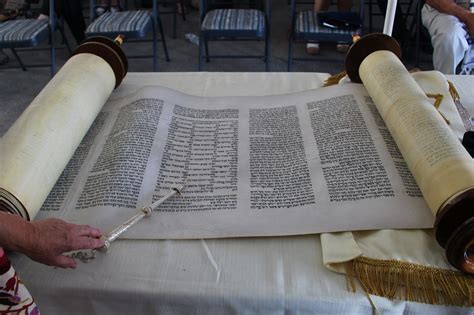
Our first reading this Sunday is from Nehemiah and describes when the Israelites came back from exile and had to rebuild the city of Jerusalem and the temple. In the wreckage of the temple, they found a copy of the law. When the Bible talks about the law, it’s talking about the Torah. A rabbi told me that translating “Torah” as “law” does not really convey the meaning. He said that sin is missing the target and Torah is hitting the target. The Torah
is the first five books of the Bible (also called the Pentateuch) and is a central reference point in the Bible. Whenever it speaks of God’s precepts, statutes, and decrees, this is what they mean. When Mary and Joseph bring Jesus to the Temple in obedience to the Law of
the Lord (Luke 2:22-38), it is this law, which Mary and Joseph faithfully followed. When Jesus disputes with the Pharisees over picking grain on the Sabbath, they are arguing about the proper interpretation of the Torah (which is suspect is a longstanding rabbinic tradition). In the Old Testament, one was considered righteous (in right relationship with God) if one followed the Torah.
Psalm 1 (quite short) and Psalm 119 (somewhat longer, the longest chapter in the Bible) are hymns to the Torah. They both teach that the Torah is the way to blessedness in a way that Jesus invokes when He says, “Blessed are the poor in spirit…” This blessedness is the fullness of life to which God calls us.
For Christians, Jesus is the new Torah. He is the Way, the Truth, and the Life (John 14:6). The Sermon on the Mount (Matthew 5-7) is modeled after the presentation of the Law of Moses Compare with Exodus 20: up on a mountain, starting with the Ten Commandment
(pocket sized version) then longer elaboration. Jesus goes up a mountain, gives the Beatitudes (pocket sized version) and then elaborates on them. St. Paul will argue that righteousness comes not from following the Law of Moses, but from faithfulness to Jesus.
We come to the fullness of life and right relationship with God through a love relationship with Jesus. This includes learning Jesus’ teaching, which is not just the four Gospels (John 21:25), but I would claim that the whole of the Catholic faith is the truth about Jesus (explanation and defense of that position is for another day). It would include spending time with Jesus, sharing ourselves. It would include encountering Him in the sacraments. It would include putting our lives into His hands, continually inviting Him to transform us however He wants and sending us to serve Him however He wants. This gives us the fullness of freedom (John 8:32), the fullness of life (John 10:10), and the fullness of joy (John
15:11; 16:22; 17:13).
Blessings,
Fr. Jim

The Bride and the Lamb

Dear Folks,
This year most of the Gospel readings on Sunday will be from Luke, but today we slip into John to talk about the wedding of Cana. The Bible regularly uses the image of marriage for
God’s relationship with His people. We can see for instance Isaiah 62:4-5; book of Hosea, book Song of Songs, Psalm 45; Ephesians 5:29-32; Luke 5:33-35; John 3:29; Revelation 19:6-9, and Revelation 21:9-14. At the wedding at Cana, we see Mary coming to Jesus with
the problem of running out of wine. If you read Brant Pitre’s excellent book “Jesus the Bridegroom” he will explain that the responsibility for providing the wine falls to the bridegroom, so Jesus is being revealed as the bridegroom. John the Baptist will make this point in John 3:29, and then in the wedding of the bride (the Church) and the Lamb (Rev. 19:6-9; Rev. 21:9-14).
Someone once said, “If you treated your friends the way you treat God, would you have any friends?” We could ask if you treat your spouse the way you treat God, how good a marriage would you have?
I’ve recommended John Gottman’s book “Seven Principles for making Marriage Work” before. He has empirical data to back up his ideas, and they are very interesting. I wonder how some of them could be applied to our relationship with God.
Enhance your love maps. Your love map is what you know about your partner, their likes, dislikes, favorite food, favorite TV show, etc. Are we curious to know more about how God has revealed Himself and interacted with His people. This would include stories from the Bible and the lives of saints, how God calls us to worship, and what He teaches. It starts with being curious.
Nurture your fondness and admiration. What do you appreciate about your spouse? How did you first fall in love? What were good times and what attracted you to each other in the early days? How did we first come to know God? What have we found good about
Him? What have been good experiences of His work in your life?
Turn toward each other instead of away. Gottman uses the example: if your beloved calls you to the window to see a cardinal (I presume the bird) in the back yard, do you come and look, or do you roll your eyes and move on? Those experiences make a difference. How do you connect in little ways with God throughout the day? Do we let Him have a bit of attention and interest in little ways? How do we connect Him to our world?
Let your partner influence you. Have you let your partner change the way you do something, look at something, approach something? How has our relationship with God changed the way we do things?
Build shared meaning. Take the two separate life stories and weave them into one story. What is your life story? God’s story, the story of salvation, the Bible story and the story of the Church is one big tapestry. How do we see ourselves woven into it? Love relationships can be nurtured. God loves with infinite love, and we have a lot of room to grow. How might we let God have more of ourselves?
Blessings,
Fr. Jim

Road Construction for the Soul

Dear Folks,

Our first reading for the Second Sunday of Advent is from Baruch talking to Israelites in exile. He talks about smoothing the roads “For God has commanded that every lofty mountain be made low, and that the age-old depths and gorges be filled to level ground that Israel may advance secure in the glory of God (Baruch 5:7).” This is about Israel coming back from exile and doing so in safety.

Our sins exile us from God and from each other. They close our minds and hearts to His goodness, and we need Jesus to bring us back. In our Gospel in Luke 3 we see a text similar to Isaiah 40:3-4 being repurposed to the work of John the Baptist preparing for the coming of Jesus.

During the season of Advent, we are called to prepare the way of the Lord, first Jesus coming to us and then smoothing the path of Jesus to others, removing obstacles.

Critical point: we need a lot of clearing of obstacles. We tend to underestimate how seriously our obstacles are holding us back.

Jesus warns us not to be complacent. It is so easy to let our trust in the promises of God fade and trust more and more the promises of the world. “He passed through towns and villages, teaching as he went and making his way to Jerusalem. Someone asked him, ‘Lord, will only a few be saved?’ He answered them, ‘Strive to enter through the narrow door, for many, I tell you, will attempt to enter, but not be strong enough (Luke 13:22-24).’” We notice some things. First Jesus is on His way to Jerusalem, which is on His way to the Cross. Luke 9:51 references His going to Jerusalem and tells us He is on His way to His death, the terrible price He will pay for our salvation. If you keep reading, Jesus tells a very sad story of someone who doesn’t make it and is surprised. Can anyone read this teaching, take it seriously, and still believe that their salvation can be taken for granted and that we can coast into heaven? I suggest He is telling us the opposite, and we need to be payingfull attention, for heaven’s sake (yes, for heaven’s sake).

This suggests to me that we need all the help we can get. I would say it does not mean we are to be in a constant state of fear, but to a love that drives out fear (1 John 4:18). However, St. Paul gives us a different model of attentive focus. 1 Corinthians 9 compares discipleship to training as an Olympic athlete. Serious athletes, it

seems to me, don’t live in fear (that burns energy uselessly) but drive themselves because they are determined, and seek everything that can give them the fullest advantage possible. Everything that holds them back has got to go, because that can make the difference between winning and losing.

During this Advent, how can we find some time to reflect? What sinful habits are holding us back? What are not themselves sins but set us up to commit sin? What are distractions that lead us to lose focus? How can we smooth the highway for Jesus to come into our

hearts?

Blessings,

Fr. Jim

Hope

Dear Folks,

We have begun the season of Advent, and that is the season of hope. Pope Francis has designated 2025 as a Jubilee year, and the theme is Pilgrims of Hope. It will begin December 24 with the opening of the holy doors at St. Peter’s Basilica.

If we are going through bad times, we need to believe there is something on the other side that will make it worth it. Otherwise we will likely be crushed. I suggest there are many people today who are crushed, depressed, and despairing because they found no

reason for hope. Sharing the Gospel brings the gift of hope to a world in despair.

At the priests’ conference, we were reminded that Christian hope is different from worldly hope. Worldly hope is basically a wish, like “I hope there will be good weather this weekend.” It might happen, or it might not, and it is always temporary. We might have good weather this weekend but bad weather the next. When “our” side wins the election, we know, if we understand the history, that our side will almost certainly lose an election in the future. Christian hope is based on the faithful promise of God. Of course, God did

not promise a life free of troubles, but called is to carry the cross, and promised to be with us. God’s promise involves salvation and a more abundant life. Even in hard times, if our lives have deep meaning and we have strong hope, we can find joy.

Our first reading is from Jeremiah, and he had a very hard life, but did not give up hope. St. Paul knew a great deal of hardship because if his service to the Gospel, but he was able to teach hope and joy with great confidence.

“Therefore, since we have been justified by faith, we have peace with God through our Lord Jesus Christ, through whom we have gained access [by faith] to this grace in which we stand, and we boast in hope of the glory of God. Not only that, but we even boast of our afflictions, knowing that affliction produces endurance, and endurance proven character, and proven character, hope, and hope does not disappoint, for the love of God has been poured out into our hearts through the holy Spirit that has been given to us (Romans 5:1-5).”

The letter to the Philippians can teach us much. He wrote it in prison (a very nasty place), but this letter exudes a powerful joy because his relationship with God was stronger than his circumstances: “I am confident of this, that the one who began the good work in you will continue to complete it until the day of Christ Jesus (Philippians 1:6).” And also: “It is not that I have already taken hold of it or have already attained perfect maturity, but I continue my pursuit in hope that I may possess it, since I have indeed been taken possession of by Christ [Jesus]. Brothers, I for my part do not consider myself to have taken possession. Just one thing: forgetting what lies behind but straining forward to what lies ahead, I continue my pursuit toward the goal, the prize of God’s upward calling, in Christ Jesus (Philippians 3:12-14).”

This letter is a good resource during Advent, and is worth getting to know.

Our hope is part of how we prepare the way of the Lord.

Blessings,

Fr. Jim

Christ the King

Dear Folks,
This is the Feast of Christ the King! This is the culmination of the Liturgical year, and the happy ending to the great story of life, the universe and everything! Next week we begin the Year of Grace 2025. We will read a lot of the Gospel of Luke, and that has some powerful stories on hope for the sinner.
Pope Francis has said that it is time to strengthen and share hope, so the Jubilee year 2025 will be themed Pilgrims of Hope. Pilgrims are, by definition, on a journey, and so they focus in on a hoped-for destination. Our hope is in the Kingdom of God. We can hope for
good events happening now, but the goods of the earth all pass away. Civilizations rise and fall. We can build things and see them destroyed. The Kingdom is forever.
Our ultimate hope is for Jesus being seen by all as King of Kings, Lord of Lords. “Every knee shall bend, of those in heaven and on earth and under the earth, and every tongue confess that Jesus Christ is Lord, to the glory of God the Father (See Philippians 2:10-11).” At this time, all evil will be vanquished, all lies exposed, and justice will reign forever. If we ever get discouraged by world events, and how evil seems to be prospering, we remember
that it will lose in the end and goodness will win.
This is not, by the way, an excuse to be lackadaisical about building a better world now. First, our work to help those in need, defend the helpless, and lift up the lowly is part of our witness to the Gospel. We cannot evangelize if we are not reflecting God’s love with our actions. Second, if we are not doing this work, we are rejecting Christ and will be counted among those who do not know Him (if you doubt this, I challenge you to read Matthew 25
very carefully!).
Those who truly believe in the victory of Jesus can be an unstoppable force for good, because nothing in the world will discourage them. We might not live to see the fruit of our
labors, but Jesus said “One sows and another reaps (John 4:37).” If we try our best ten thousand times and fail ten thousand times, we are still doing the work of the Kingdom, and when the time comes, we will rejoice. Not only that, but we can rejoice now, in good times
and in bad, because the King is coming.
Blessings,
Fr. Jim 

S

Jesus is Coming

Dear Folks,

Today we get into the Apocalyptic chapter of the Gospel of Mark. Matthew (chapter 24), Mark (14) and Luke (21) all have a chapter that starts with the destruction of the Temple, and winds up talking about the Second Coming of Jesus.

The destruction of the Temple would have been a horrible thought for Israelites. It was the center of their national identity and their relationship with God. Going to the temple was a sacred act, and there were hymns celebrating the trip (See Psalm 122). I saw a video of the tearing down of St. Jean’s church in Muskegon, a church that had been there since 1885.

Those who were attached to it were surely grieving. The destruction of the Temple would have been a far worse trauma. It had been destroyed by the Babylonians in 587 B. C., and Israel had ceased to be a nation for over a generation, being slaves in exile. The destruction of the Temple in A. D. 70 was also a huge trauma, and the letter to the Hebrews

spends a lot of time helping Jewish Christians on how to understand the faith in light of the destruction of the temple. The Gospel of John will teach powerfully, that Jesus is the new Temple, and we have everything we need.

A critical apocalyptic text is Daniel chapter 7. It speaks of “coming on the clouds of heaven one like a Son of Man.” Jesus frequently referred to Himself as the Son of Man, and when interrogated by the high priest if He was the Messiah He said, “I am, and you will see the Son of Man seated at the right hand of the Power and coming with the clouds of heaven

(Mark 14:62).” The closer He got to the cross, the more open He was about His identity.

“Apocalypse” is from the Greek word for “removal of the veil.” “Revelation” is from the Latin equivalent. Apocalyptic literature will use strange images, and sometimes numbers to show the meaning of what is happening at the time. It is often written in times of persecution, and the basic message is that it may appear that God’s plan is failing, but if you could see past the veil of appearances, that plan is unrolling and on the path to success.

Therefore, however discouraging things are, don’t give up. However bad things get, don’t get slack. However corrupt other people become and how horribly they behave, we are called to be faithful. Remember that what we see is not all of reality, and not the best part. Our story is part of a much larger story. Even if civilization collapses, God will be able to do great things, and the kingdom will still be winning. Jesus said, “heaven and earth

will pass away, but my words will not pass away.” (Mark 13:31). Nothing of the earth is guaranteed. The truth of the Gospel is. Our job is to grow strong in our faith such that whatever happens, our faith in God will rule our lives.

Blessings,

Fr. Jim