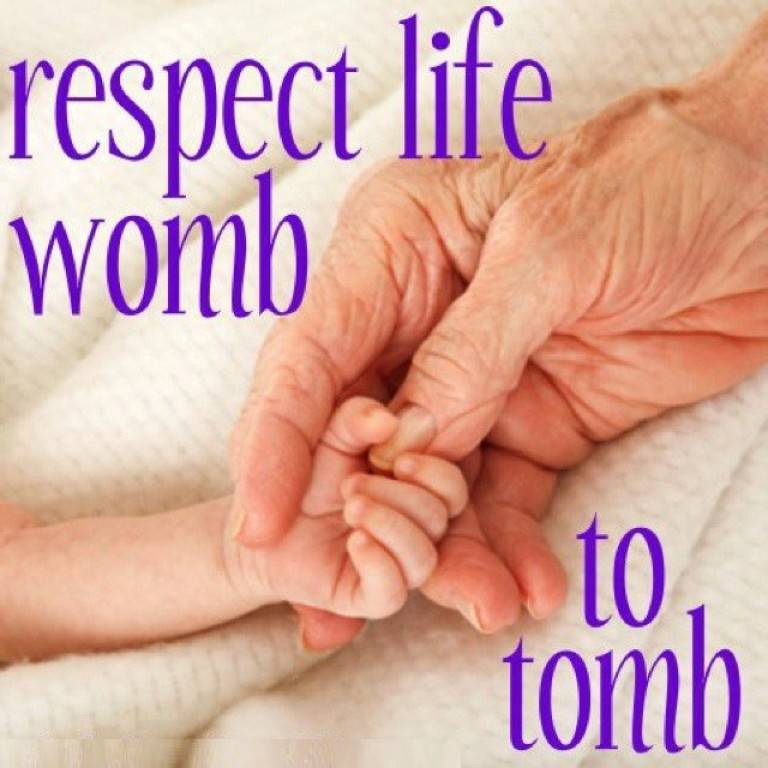
Tag Archives: life

The Storms of Life

Dear Folks,

We all know the story of Jesus calming the storm, and when we know a story that seems so simple, it is good to slow down and take a deeper look. Peter, Andrew, James, and John were

expert fishermen, and they knew how to handle a boat. They had gone out on that lake every day for years and years without giving it a thought. The storm that came was so fierce that their

skills were useless, and the boat was filling up. They were so used to being in control, and now they were helpless. While they were accustomed to things having a certain order, now they were overwhelmed by the forces of chaos, and that can be terrifying.

From the beginning people have sought to get some order and control in a world full of chaos. By moving into caves and building fires at the entrance, they could gain some control over the

impact of the wind and the rain and deter some of the animal attacks. As clans developed social order, there could be less chaos in their interactions. As technology progressed and social

orders developed, there could be larger realms of order and not quite as much chaos (though still quite a bit). Chaos would still reassert itself. When the Roman Empire fell, the western

world was overrun with barbarians and the social order collapsed. When the Black Plague killed a third of the population of Europe, there was much more chaos. When the Soviet Union

collapsed, some people were talking about the end of history with nothing but stability and peace. Sadly, that did not happen. I don’t need to remind you of 2020.

If we have things working according to plan for a while, we can have the illusion that we are in control and know what will happen next. If we get too used to things being this way, it can throw us into a panic when something unexpected comes. It is good to remember that tomorrow is not guaranteed. “You have no idea what your life will be tomorrow. You are a puff of smoke that appears briefly and then disappears (James 4:14).”

As I write this, my car won’t start, and so many things that were so simple about my day are much more difficult. It is also an occasion to be grateful I am blessed with so many people who can help me. This is a minor setback, but a reminder that something can shatter our plans, small or large, without any warning.

Whatever happens, whether we are faced with momentous decisions or swept helplessly by circumstance, that is the situation in which we are called to serve God, and if we are faithful,

we will emerge victorious in the end.

Blessings,

Fr. Jim
The Word of God and the Sanctity of Human Life

Dear Folks,

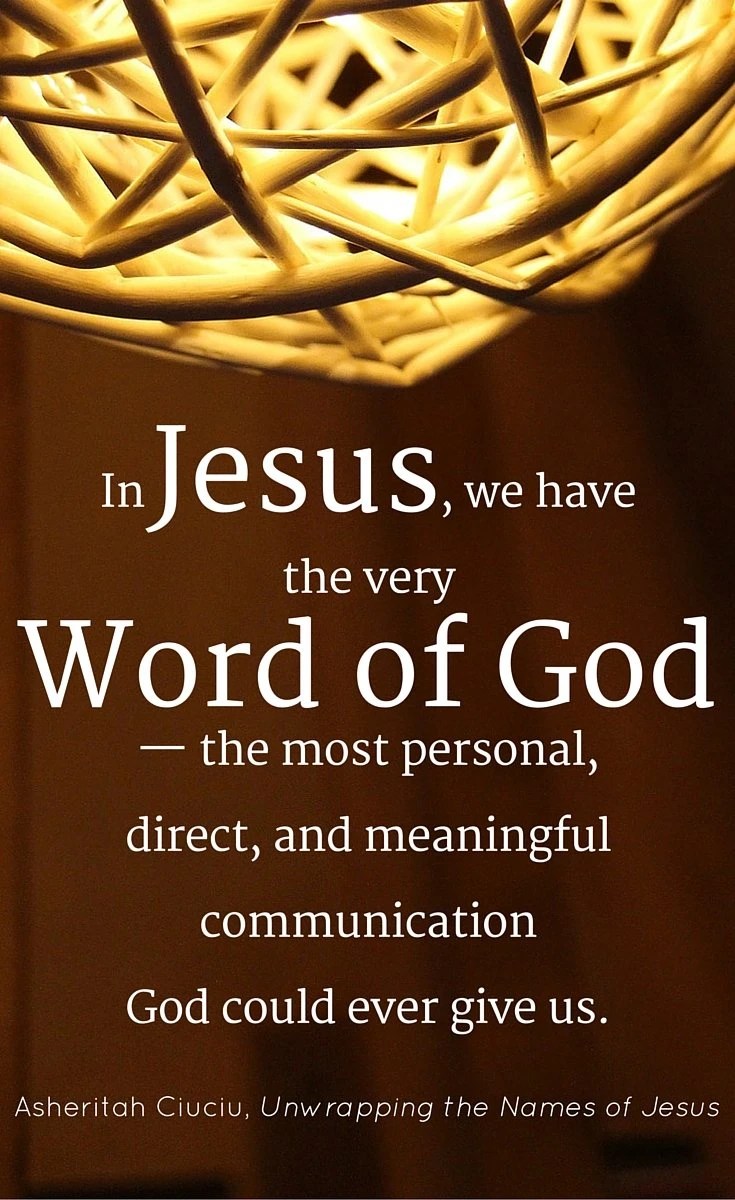
This is Sanctity of Life Sunday, and it is also Word of God Sunday. The first meaning of “Word of God” is Jesus Himself. He not only speaks the truth but is the Truth, the fullness of truth. The totality of what Jesus conveyed has been passed down in the faith of the Church under the guidance of the Holy Spirit. Christians have the tradition of calling the Bible “the Word of God.” There is no text or writing that is as sacred, that is authoritative in the same way as the Scriptures, and it has a unique role in the lives of Christians. Jesus is present to us and teaches us in a unique way when the Scriptures are read, especially at Mass. In Catholicism, we have trouble with the idea that God would reveal the fullness of truth and then let it get lost over the ages. We also have a problem with the idea that the first generations completely misread the Scriptures, and only several centuries later did someone get it right. Catholics look at how the Church has taught over the centuries, with confidence that the Holy Spirit is at work. This is the power of Sacred Tradition. However, there is also advancement of thought. We read in the Second Vatican Council’s Constitution on Divine Revelation (Dei Verbum): “This tradition which comes from the Apostles develops in the Church with the help of the Holy Spirit. For there is a growth in the understanding of the realities and the words which have been handed down. This happens through the contemplation and study made by believers, who treasure these things in their hearts (see Luke, 2:19, 51) through a penetrating understanding of the spiritual realities which they experience, and through the preaching of those who have received through Episcopal succession the sure gift of truth. For as the centuries succeed one another, the Church constantly moves forward toward the fullness of divine truth until the words of God reach their complete fulfillment in her (See Dei Verbum #8).” Sometimes I think Church leaders’ failures in respecting human rights are because the implications of human rights had not been developed yet. Other times, it came from Church leaders being more influenced by the world than by the Word of God. However bad the Church leadership has been, I suggest the world has been worse. God’s message brought something that was considered strange in the ancient world: the notion that every human life was sacred. It was common for people to respect the life of someone from their tribe or clan, people like them, but others’ lives were not seen as sacred. Then, as society got more organized, it became common to value the lives of the powerful, but not the lives of the peasants. The Judeo-Christian tradition, from the beginning, has worked to teach that all human lives are sacred. This, of course, required growth from where they were. It takes a while to integrate new concepts. It is hard to see everyone’s life as sacred, no matter how we dislike them, no matter how inconvenient they are. The human race is always tending away from this, and when disconnected to faith, it can happen very fast. When the French revolution happened, they cast aside Christianity and decided their reasoning ability was superior. It very quickly dissolved into a violent reign of terror. The rights of the individual were subordinated to the perceived good of the state. Without the inherent dignity of the human being created in God’s image, the notions of good and evil become redefined, and often fit the agendas of the powerful. Maximilian Robespierre famously said, “One can’t expect to make an omelet without breaking eggs.” We have the challenge of promoting the sanctity of the life and dignity of every human being. I suggest a good first step is attending more and more to the Word of God.

Blessings,

Fr. Jim

Behold the Lamb of God

Dear Folks,
This is Sanctity of Life Sunday.
The biggest life issue now is, of course, the killing of unborn children. This stands out for
three reasons:

  1. The huge number of victims, tens of millions, many times that of any genocide that I
    know of.
  2. It is direct killing of the innocent. That is different in kind from capital punishment,
    from killing in a just war, or from the indirect killing that accompanies many activities
    (driving carelessly is wrong, and has resulted in deaths, but it is not the same as directly
    intending to kill).
  3. Proponents have set apart a group they classify as untermenchen (a term used in
    Germany in the early 20
    th century, it referred to humans they consider lesser, and therefore
    not as entitled to protection). This has been done in the past to Native Americans, to Jews,
    to African Americans, and other groups. It is a tool used for the greatest human atrocities.
    Some have even referred to unborn children as “non-living fetal tissue.” Where is the
    science behind that?
    That said, it is essential that we not neglect other areas where the sanctity of life needs to be
    affirmed. Many see the lives of the elderly, the disabled and the infirm to be of less value,
    and advocate for euthanasia. We must recognize that their lives are precious, and not only
    protect them from being killed, but make sure they are not marginalized or forgotten.
    We have a constant need to care for the hungry, the homeless, and those trapped in
    poverty. There is room to disagree about how, but no room to say that it is not our
    problem.
    We must do something about human trafficking. I don’t know what, but we must do
    something.
    The Catholic Church has long accepted capital punishment as a proper tool of law
    enforcement, but, starting with Pope Saint John Paul II and continuing with Pope Francis,
    there has been a movement away. There is a strong body of thought that suggests it does not
    help deter crime, and with proper incarceration, it would not be necessary to protect
    people. I suggest we can be a better society if we hold precious even the lives of vicious
    murderers. That said, I have a very hard time being patient with those who say it is
    contradictory to oppose abortion and favor capital punishment. How come I never hear
    people saying that if we favor incarcerating criminals, we must therefore favor the
    legalization of kidnapping? Honestly.
    I recently listened to Daniel Goleman’s book Social Intelligence. He speaks of the
    “thingification” of other people, in which they are considered not in terms of their dignity,
    their needs, their thoughts or their feelings, but only how they affect us. They are seen not
    as people, but as things, as objects. Celeste Headlee in her excellent book We Need to Talk:
    How to Have Conversations that Matter, mentions that studies show that empathy is on the
    decline. It is easy to figure that the widespread use of social media rather than personal
    contact makes things worse. The enormous use of pornography has to be a huge factor. I
    see a lot of conversation showing contempt for people who disagree. That can’t help. How
    do we build empathy in our society?
    Final thought: “Nobody made a greater mistake than he who did nothing because he could
    do only a little.” -Edmund Burke
    Blessings,
    Fr. Jim