
Dear Folks,
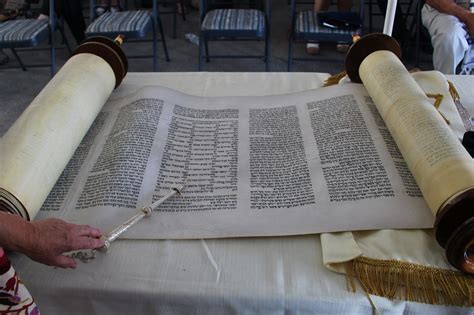
Our first reading this Sunday is from Nehemiah and describes when the Israelites came back from exile and had to rebuild the city of Jerusalem and the temple. In the wreckage of the temple, they found a copy of the law. When the Bible talks about the law, it’s talking about the Torah. A rabbi told me that translating “Torah” as “law” does not really convey the meaning. He said that sin is missing the target and Torah is hitting the target. The Torah
is the first five books of the Bible (also called the Pentateuch) and is a central reference point in the Bible. Whenever it speaks of God’s precepts, statutes, and decrees, this is what they mean. When Mary and Joseph bring Jesus to the Temple in obedience to the Law of
the Lord (Luke 2:22-38), it is this law, which Mary and Joseph faithfully followed. When Jesus disputes with the Pharisees over picking grain on the Sabbath, they are arguing about the proper interpretation of the Torah (which is suspect is a longstanding rabbinic tradition). In the Old Testament, one was considered righteous (in right relationship with God) if one followed the Torah.
Psalm 1 (quite short) and Psalm 119 (somewhat longer, the longest chapter in the Bible) are hymns to the Torah. They both teach that the Torah is the way to blessedness in a way that Jesus invokes when He says, “Blessed are the poor in spirit…” This blessedness is the fullness of life to which God calls us.
For Christians, Jesus is the new Torah. He is the Way, the Truth, and the Life (John 14:6). The Sermon on the Mount (Matthew 5-7) is modeled after the presentation of the Law of Moses Compare with Exodus 20: up on a mountain, starting with the Ten Commandment
(pocket sized version) then longer elaboration. Jesus goes up a mountain, gives the Beatitudes (pocket sized version) and then elaborates on them. St. Paul will argue that righteousness comes not from following the Law of Moses, but from faithfulness to Jesus.
We come to the fullness of life and right relationship with God through a love relationship with Jesus. This includes learning Jesus’ teaching, which is not just the four Gospels (John 21:25), but I would claim that the whole of the Catholic faith is the truth about Jesus (explanation and defense of that position is for another day). It would include spending time with Jesus, sharing ourselves. It would include encountering Him in the sacraments. It would include putting our lives into His hands, continually inviting Him to transform us however He wants and sending us to serve Him however He wants. This gives us the fullness of freedom (John 8:32), the fullness of life (John 10:10), and the fullness of joy (John
15:11; 16:22; 17:13).
Blessings,
Fr. Jim
 Fr. Jim Wyse