Monthly Archives: April 2025

What Do People See?

Dear Folks,

As we continue to celebrate the Easter season, we read a good deal from Acts of the Apostles, Revelation, and the Gospel resurrection accounts. In this week’s reading from John, there are two key concepts: the forgiveness of sins and believing without seeing.

The reading from Acts shows people not seeing the risen Jesus but seeing the Church.

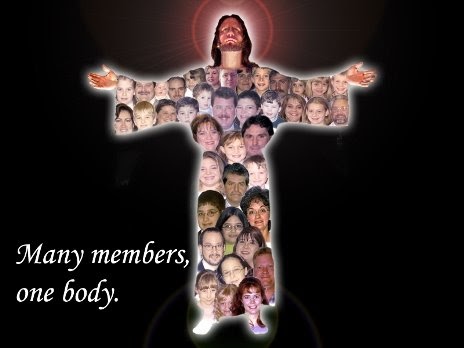
When we look at people, we don’t see their personhood, their personalities, their character, their souls. We see the surfaces of their bodies and their clothes, and our brains put together a sense of who they are. We are the Body of Christ, and many people will encounter Christ in us.

Acts describes a healing Church. There were lots of miraculous healings, and that was good for making an opening to evangelize. I thought that it was unfair that we didn’t have them as often, so we were working at a disadvantage. I realized that we can be a healing

Church in a different way. The world is torn by hatred and division. If we could work on healing the divides, reconciling opponents, and building forgiveness we can be a mighty force for healing.

I won’t suggest that I’m an expert on this, but I will tell you I have grown enormously from where I used to be. If enough people do that, it could make the world a significantly better place. If enough people in the Church do it, it can help people see Jesus in us and

come to faith.

My journey started with “How to Win Friends and Influence People” by Dale Carnegie. It was eye opening. It taught me to focus on what was important to other people, a concept new to me. Now there are many good resources. I would suggest; “No Future Without Forgiveness” by Desmond Tutu, “The Book of Forgiving” by Desmond and Mpho Tutu, “Don’t Forgive Too Soon” by Dennis Linn, Sheila Fabricant Linn and Matthew Linn, “God Help Me! These People are Driving me Nuts! By Gregory Popcak, and “I Never

Thought of it That Way” by Monica Guzman (specifically about bridging the political divide in our country). If you read only one, I recommend it be “Redeeming Conflict” by Ann Garrido. It has twelve habits for transforming conflict into a spiritual journey. If

enough people read and understand it, we can have a common set of principles and a common vocabulary for working together.

“Remembering God’s Mercy” by Dawn Eden is about healing wounds in our own hearts. John Gottman’s “Seven Principles for Making Marriage Work” talks about building relationships that can endure conflict, and it occurred to me that many of these ideas could apply to any human relationship, not just marriages. “How to Know a Person” talks about some general ideas for building better relationships, something not well taught in our society. “The Anxious Generation” by Jonathan Haidt is about how phone based childhoods are seriously hampering (if not destroying) the next generation’s ability to connect in a human way.

Much work to do. I challenge everyone: what are we willing to do it make the Church more effective in witnessing to Jesus, sharing this most wonderful gift of the Gospel?

Might this help? I would ask everyone to pray on this.

Blessings,

Fr. Jim
Easter Changes Everything

Dear Folks,
Happy Easter! Easter changes everything.
Without Easter, Jesus was a total failure. As Bishop Barron said, there was not more certain proof that someone was not the Messiah than getting crucified by his enemies. Without Easter, the apostles were the most lost people ever. Following Jesus was clearly the worst decision they had ever made. Now there would be nothing left to do but try to put together some semblance of a life and put this humiliating business behind them.
But that’s not what happened, is it?
They encountered Jesus, and His body had been glorified. We are only given hints of what His glorified body was like, and it is not surprising it would be beyond description, but encountering him completely changed their lives. Instead of slinking off into obscurity, they moved forward together with incredible boldness. The world was baffled, because their behavior made no sense to them. Indeed, their behavior made no sense at all – unless they had encountered the risen Jesus.
Are we an Easter people? Are we living for eternity? We may not have seen the risen Jesus like the apostles did, but we can still follow their lead. (“Blessed are those who have not seen but believe [John 20:29]).” The more we believe in the Resurrection, the more we see our life on earth is just the beginning and death is a transition; we are looking forward to something greater. The things of the earth are useful for a time, but we will lose them all sooner or later. That which is love lasts forever. Growing in love for God and for one another is building an eternal treasure.
Toddlers want everything immediately and have a very hard time coping with disappointment. I think that is partly because they see the present moment being huge, and don’t see the bigger picture. As we mature, we can cope with failures, setbacks, and disappointments better because we are more aware that this is a small part of a large story, and that perspective helps us take it in stride. The deeper our sense that the big picture is eternity, the more we can deal with temporary setbacks for the sake of permanent treasure. As St. Paul told the Corinthians: “Therefore, we are not discouraged, although our outer self is wasting away, our inner self is being renewed day by day. For this momentary light affliction is producing for us an eternal weight of glory, beyond all comparison, as we look not to what is seen but what is unseen; for what is seen is transitory, but what is unseen is eternal (2 Corinthian 4:16-18).”
If you read the Acts of the Apostles (which I highly recommend) you know that St. Paul did not have an easy journey. The fact that he can call it a light affliction tells us about the depth of his faith. He meant what he said.
We celebrate the Easter season through the feast of Pentecost, which this year is June 8. During this season it is appropriate to have extra festiveness as we look forward to the ultimate celebration that lasts forever.
Alleluia!
Blessings,
Fr. Jim

Holy Week and the Gift of Self

Dear Folks,
Now, we begin Holy Week.
The essence of the Gospel is the gift of self. During Holy Week we recall two events of infinite power: the Last Supper and the Cross.
In the Last Supper Jesus gives Himself sacramentally, and on the Cross Jesus gives Himself in practice.
Consider a couple getting married. In the wedding celebration, they give themselves to each other sacramentally, and in their living out married life, they give themselves to each other in practice. In the sacramental celebration, the couple consecrates their future together, infusing it with God’s grace so that it will have sacred meaning. Without the sacrament, there is just a couple of people living together. Without the intention of living out their marriage in practice, the wedding is just a party.
When the bread and wine are presented, the priest places them on the altar saying, “Blessed are you, Lord God of all creation, for through your goodness we have received the bread we offer you, fruit of the earth and work of human hands. It will become for us the bread of life.” And “Blessed are you, Lord God of all creation, for through your goodness we have received the wine we offer you, fruit of the vine and work of human hands. It will become our spiritual drink.” This is a symbol of what we have done with what God has given us. When the basket is brought forward, it is a symbol of all that we give to God from what he has given to us, and includes the donations online, donations of time and talent, and anything else we give. (Diocesan best practices call for bringing forward an empty basket because occasionally people have gotten sticky fingers. It does not destroy the symbolic value). In doing this, we place ourselves on the altar to be consecrated along with the bread and wine. We become ever more the Body of Christ, a body offered forever to the Father, incorporated into the one sacrifice offered once for all but eternally effective.
On Palm Sunday, we read the passion from the Gospel of the year, this year being Luke. He emphasizes the mercy Jesus shows even in His agony. Holy Thursday we read the washing of the feet at the Last Supper. This emphasizes that Eucharist is bound to service. The authenticity of our praying the Mass is inextricable from our dedication to giving ourselves in service to others. On Good Friday, we read the passion from the Gospel of John. This Gospel emphasizes that Jesus gave Himself freely, every step of the way. He is in charge from beginning to end. When we hear how completely, lovingly, compassionately, and freely Jesus gave Himself, let us consider how He calls us to give ourselves as gift. That sets our course for the rest of the year.
Blessings,
Fr. Jim

Life Where There Was Only Death

Dear Folks,
Today, the fifth Sunday of Lent, where there was once only death, there is now life.
Those reading the cycle C readings will hear the story of the woman caught in adultery (John 

😎

, and those reading the cycle A readings will hear the raising of Lazarus (John 11). Both are about bringing life where there is only death. Sin brings death, and Jesus brings eternal life. The woman caught in adultery was facing certain death as a result of her own sin. Jesus saves her and challenges her to “go and sin no more.” Jesus tells Martha He is the resurrection, and it is not just in the future.
We see in Romans 6:23: “For the wages of sin is death, but the gift of God is eternal life in Jesus Christ our Lord.” And in John 17:3 “Now this is eternal life, that they should know you, the only true God, and the one whom you sent, Jesus Christ.”
When we talk about knowing Jesus, we remember that in the Bible knowing is a more powerful thing than having a tidbit of knowledge. It is a matter of having a lifegiving relationship. Consider these texts:
Genesis 4:1 “Adam knew his wife Eve and she conceived and bore a son Cain…”
Psalm 1:6 “For the Lord knows the way of the righteous, but the way of the wicked will perish.” Psalm 95:10 “For forty years I abhorred that generation, and I said, ‘Their heart goes astray; this people does not know my ways.’” Matthew 25:12 “But the master will say, ‘Amen, I say to you, I do not know you.’”
To understand “know” as “have a life-giving relationship with” these texts make sense.
To have a life-giving relationship with Jesus is to give ourselves in love as He gave Himself in love. John 15:13 “No one has greater love than this: to lay down one’s life for one’s friends.”
To love is to live for someone beyond ourselves, that puts the focus outside of ourselves. The word “ecstasy” literally means “to stand outside.” The more focused we are on good beyond ourselves, the more we are living the love of God. Our lives are no longer about
us, but about Him. Whatever else happens, that is abundant life (John 10:10).
To live for our own desires is to close in on ourselves, to be dying. Our desires will not satisfy us permanently, and the fight against mortality is always lost if we live according to the wisdom of the world.
When we have a life-giving relationship with God and are living for eternity, we are already living eternal life. The joy that comes with our relationship with Jesus and being about something greater than the world is just the tiniest taste of the reality of heaven.
Blessings,
Fr. Jim