Category Archives: Catholic

Receiving the Call, Giving Oneself

annunciation

March 25

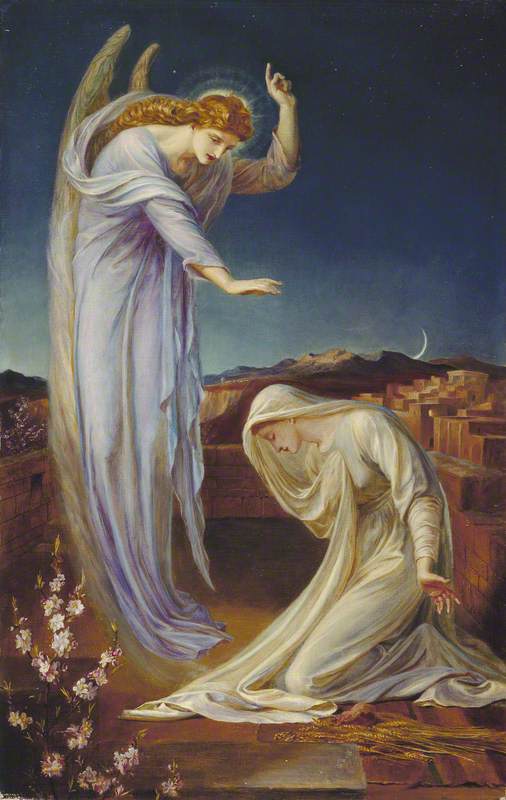
Today we celebrate the Solemnity of the Annunciation.
We find it in Luke 1:26-38 (Luke’s Christmas story is from Mary’s point of view; Matthew is from Joseph’s).
As we read the story, there are some points especially worth noting. When the greeting first comes, Mary is troubled and confused. How many times does God’s call first announce itself in a way that makes us troubled and confused?
Mary’s response is precious beyond gold, “Behold, I am the handmaid of the Lord. May it be done to me according to your word.”
This took tremendous courage. She knew she was not yet living with Joseph, and everyone was going to think bad things about her and her life would be in danger. Also, she knew the stories of the Old Testament. Being called by God often leads to hardship. Moses, Isaiah, Jeremiah, and many others had some very difficult paths. Mary responded in faith, and put herself at God’s service. By the second century, Mary was being referred to as the new Eve by fathers of the Church. They would say things like as the first Eve listened to a fallen anger and wrought our destruction, so the second Eve listened to a holy angel and opened the door for our salvation. We will also see contrasts between the fruit of the tree of knowledge and the Fruit of Mary’s womb. This points to how our saying yes to God can have much more significance in the big picture than it appears. Mary was a peasant girl from a family of no prominence in a tiny town that was not well thought of (“But Nathaniel said to him, ‘Could anything good come out of Nazareth? (John 1:46).’” There was not a person in the world that looked at Mary and thought she would be remembered and celebrated for thousands of years.
Mary is always about Jesus, always, always, always. Whenever we are talking about Mary, we are pointing to Jesus. When the council of Ephesus in 431 defined Mary as the Mother of God, this was because a Heretic named Nestorius was attacking Catholic belief about Jesus. He taught that Jesus Christ was two people: the human Jesus and the divine Christ, and the Christ came into Jesus at the baptism, and skipped out just before the agony in the garden.
From the second to about the seventh centuries (or so) the big arguments in the Church were about the nature of the Trinity and about who and what is Jesus Christ. There were various heresies that tried to substitute Catholic belief about our Savior for inferior ideas. Arius said that Jesus was not God, but like a super angel. The Docetists said the He is God, but not actually human, just appearing to be human. Each of these ideas is trying to get away from the central point of Christianity, the point that makes it so powerful, so frightening, so beautiful, so amazing, so unique.
Remember how Mary put herself at risk saying yes to the Gospel delivered by the angel? This points to a much greater truth: The Lord Himself, with nothing to gain for Himself (already perfect and infinitely great) became a human being like us in all things but sin. He made Himself vulnerable to hunger, thirst, pain, loneliness, exhaustion, heat, cold, illness, rejection, ridicule, confusion, doubt, temptation, and all the other things that come from being human. He made himself vulnerable for us. He gave Himself completely as gift, paying the most terrible price, out of perfectly pure, unselfish love.
“I give you a new commandment: love one another. As I have loved you, so you also should love one another (John 13:34).” He calls it a new commandment even though the command to love our neighbor as ourselves goes back to Leviticus: “Take no revenge and cherish no grudge against your own people. You shall love your neighbor as yourself. I am the Lord (Leviticus 19:18).” What is new is to love as Jesus loves, which is beyond anything that has happened before or since. Like the command to be perfect (Matthew 5: 48) it is a goal to which we are called to keep growing for the rest of our earthly lives. Let us never think that we have it mastered; let us never think we completely understand it. St. Paul compares discipleship with the training of an Olympic athlete (I Corinthians 9). Such athletes never say, “I’m good enough now; I can just coast.” Neither does a disciple of Jesus. Is there a more daunting challenge? We can consider that as we reflect on an obscure peasant girl in Nazareth getting the surprise of her life.
Blessings
Our Super Power

Supermanbullets

March 24

I would like to share some more words from St. Paul:
“What then shall we say to this? If God is for us, who can be against us? He who did not spare his own Son but handed him over for us all, how will he not also give us everything else along with him? Who will bring a charge against God’s chosen ones? It is God who acquits us. Who will condemn? It is Christ Jesus who died, rather, was raised, who also is at the right hand of God, who indeed intercedes for us. What will separate us from the love of Christ? Will anguish, or distress, or persecution, or famine, or nakedness, or peril, or the sword? As it is written: “For your sake we are being slain all the day; we are looked upon as sheep to be slaughtered.” No, in all these things we conquer overwhelmingly through him who loved us. For I am convinced that neither death, nor life, nor angels, nor principalities, nor present things, nor future things, nor powers, nor height, no depth, nor any other creature will be able to separate us from the love of God In Christ Jesus our Lord (Romans 8:31-39).”
“My eager expectation and hope is that I shall not be put to shame in any way, but that with all boldness, now as always, Christ will be magnified in my body, whether by life or by death. For to me life is Christ, and death is gain. If I go on living in the flesh, that means fruitful labor for me. And I do not know which I shall choose. I am caught between the two. I long to depart from this life and be with Christ, for that is far better. Yet that I remain in the flesh is more necessary for your benefit. And this I know with confidence, that I shall remain and continue in the service of all of you for your progress and joy in the faith, so that your boasting in Christ Jesus may abound on account of me when I come to you again (Philippians 1:20-26).”
St. Paul moved forward boldly in an uncertain and dangerous world. He was relentless. He did have some advantages. One, he was very smart, very, very smart. Two, he was a Roman citizen, and that gave him some advantages in the empire (we see this described in Acts of the Apostles). Many people had a lot more than that going for them, and didn’t do nearly as much. He had a confidence that was not based on himself. We see that he gets through a lot of really tense situations and survives with God’s protection. Of, course, he is eventually executed. It isn’t about how long our earthly life lasts, but how we serve the Kingdom while we are here.
We don’t have a lot of hard data on what it’s like in heaven, but I’m pretty sure there’s no one there saying, “OOOOOOOOOOH, I wish I’d lived longer on earth! I wish I’d been able to get to Disneyland!” I think whatever happened or did not happen here, we’ll be perfectly happy. We were made to love life, to seek to revere life, and to try to preserve life, but love the Kingdom more.
We read in the Book of Revelation “Now have salvation and power come, and the kingdom of our God and the authority of his Anointed. For the accuser of our brothers is cast out, who accuses them before our God day and night. They conquered him by the blood of the Lamb and by the word of their testimony; love for life did not deter them from death. Therefore, rejoice, you heavens, and you who dwell in them Rev 12: 10-12).”
This requires focusing on what is truly important. Again we see St. Paul: “Therefore we are not discouraged, rather, although our outer self is wasting away, our inner self is being renewed day by day. For this momentary light affliction is producing for us an eternal weight of glory beyond all comparison, as we look not to what is seen but to what is unseen; for what is seen is transitory, but what is unseen is eternal (2 Corinthians 16-18).”
And also: “[B]ut he said to me, ‘My grace is sufficient for you, for power is made perfect in weakness.’ I will rather boast most gladly of my weaknesses, in order that the power of Christ may dwell with me. Therefore, I am content with weaknesses, insults, hardship, persecutions, and constraints, for the sake of Christ; for when I am weak, then I am strong (2 Corinthians 12: 9-10).”
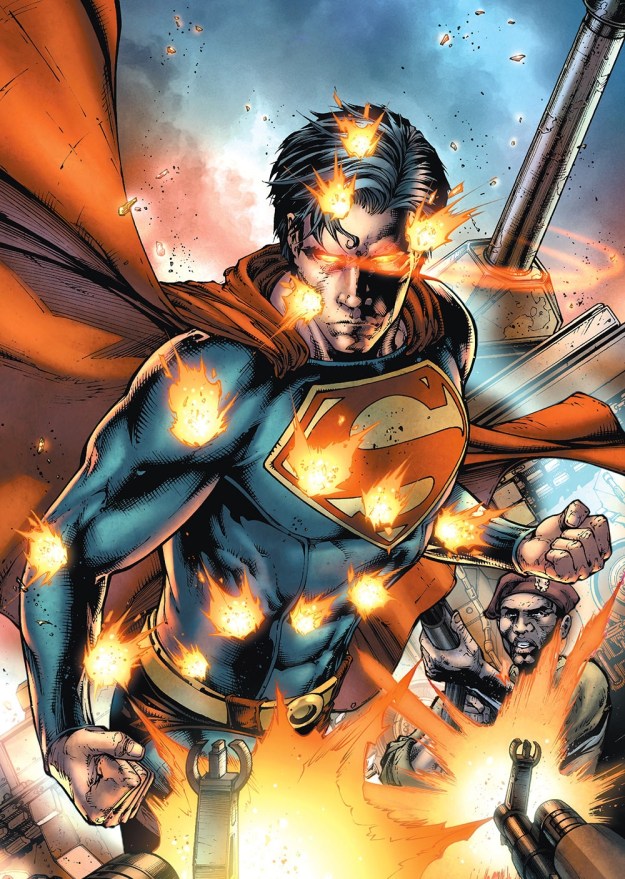
The more we grow in faith, the more we are focused on that which is eternal, and can appreciate and deal with the things of this world in their proper perspective. It is not that we are indifferent, in fact, we become more involved because we see the eternal significance of what we do in the moment. Our faith is imperfect, but the stronger it grows, the more powerful we become. We still get frustrated and upset, but we cannot be stopped. Our superpower is our relationship with Jesus Christ. We cannot be destroyed because we give our lives as gift. We do not have X-ray vision, but we look to that which is invisible and eternal.

Jesus Heals the Blind Man

jesushealsblind

March 22

Dear Folks,

This Sunday’s readings (1Sam 16:1b, 6-7, 10-13a; Psalm 23; Ephesians 5:8-14; John 9:1-41) talk about light and darkness, seeing and not seeing, appearances and reality. We know that things are not always as they seem, but sometimes we have trouble considering what is beyond our sight. Louis Pasteur had a terrible hard time convincing people that there were tiny animals that they couldn’t see that were making them sick. There was a terrible struggle to get some surgeons to wash their hands before doing surgery. Now, a virus that we cannot see, and that only a tiny percentage of people have experienced, has turned our world upside down. Three weeks ago we did not see it coming.

This helps us look at things from a different angle. How many things do we not usually see because they are so easy to take for granted? One thing is how interdependent we are. Obviously, we depend on those who work in the healthcare profession, and we would be in bad shape without them. This has been a special hardship for them, and a hazard. This is a good time to remember how important they are. When many people are staying home, people who work in grocery stores are working harder than ever, cleaning the site and restocking shelves as fast as merchandise comes in. They can’t control who comes in, how clean patrons are, and often can’t prevent customers from violating their personal space. Someone said, “if grocery stores shut down, we will have to hunt for our own food. I don’t even know where Doritos live.” Speaking of merchandise coming in, we get a reminder how important truck drivers are. Anything that doesn’t grow right here has to be shipped in, and most of that is by truck. What would our lives be like if that stopped? Then there are those who make sure that water comes into our homes and sewage comes out, those who pick up the garbage. Those who clean places we expect to be clean. What extra challenges do law enforcement personnel have now? We can also think of those who are laid off and do not get a paycheck. We can also think of those who still have to go to work and have to deal with co-workers and others who do not take precautions seriously.

This is also a time in which we can reflect on how our actions affect others. Both of my parents worked in surgery, so I was raised with strong feelings about washing my hands and sanitation in general. I have found that many people have not been taking it seriously. Someone said that if we get good at taking proper precautions, we can have fewer people die during the flu season every year (the power of stewardship of our hands).

As we are unable to gather as a community, this calls us to greater focus on prayer as individuals and as families. When all this is over, I think it would be a great thing to get groups to be learning the Liturgy of the Hours. That is a good way for the Church to pray together even when we are apart.

If we get through this with a deeper prayer life and more attentiveness to each other, good things can come of this. There will be challenges to face, the results of what is happening now. There will be a need for some economic rebuilding for those whose income was interrupted but whose bills were not. We should remember that the church must continue to pay bills, and as we value the work that the church does, we want to consider what it takes to keep it going.

We remember that God is still in charge, and whatever happens, He is here, He is at work, and He loves to bring good things out of bad situations.

Blessings,

Fr. Jim

Parable of Two Armies

flint ak47

Imagine if you will two armies meeting in battle.  One is armed with flintlock rifles and swords and they are highly skilled with them.  They have had extensive training and practice.  The other army is armed with M-16’s, AK-47’s and rocket propelled grenade launchers, but haven’t a clue how to use them. They don’t know how to load or cock them, never mind how to clean them.  Which army is going to win?  I suggest the Catholic faith and its principles are not doing better in the marketplace of ideas is similar: we have the better message, but the world is marketing theirs better. Many people have a very negative understanding of Catholicism, and of Christianity in general, because those who say only the negative, and often distort the reality, are so much more effective that we have been getting the word out.

When the Church began, a small handful of people with no resources but the Gospel story and the grace of God were able to change the world forever.  The surrounding culture was extremely hostile; they thought following someone who had been crucified was the dumbest thing they had ever heard, and they held to highly decadent values.  Nonetheless, the mightiest empire that the world had ever seen was helpless to stop the Church from growing.  We have all the resources that the early Church had and more.

When most Catholics are taught the faith, we not been taught to be evangelists.  We have been prepared to be customers in the Church.  Even in the seminary, we were not really taught how to spread the faith to others, but rather how to deal with people who already believed. Much of the way we are taught to talk about the faith only makes sense to those who already accept its basic premises.  Furthermore, many, many Catholics stop learning about the faith after twelfth, eighth or even second grade, so they never learn the faith on an adult level.  But, they keep learning in other areas, so that faith falls behind.

We know that Jesus, the Son of God, became man and died on the cross to save us from our sins.  Okay, but what does it mean that He is the “Son of God”?  What does dying on a cross have to do with saving us from our sins?  Why do we need saving? What does it mean to save us? What is “sin” anyway and why does it matter?  When if we can’t explain that in language that they can understand, it is not going to make sense to them.  We are so used to our religious language, we have not learned to talk about this stuff without it.

Many people were raised Catholic and have left because they think it doesn’t make a lot of sense, or doesn’t make a lot of difference.  I’ve talked to a lot of them, and if I understood Catholicism the way they did, I wouldn’t be Catholic either. I wouldn’t be Christian at all.  They can have some strange ideas, and say terrible things about the faith (like, “so you believe that God put us here to guess the right religion, and if we guess wrong he will burn us in fire forever and ever, but he loves us.”). Whatever they were taught growing up, this is what they absorbed. It is futile to get mad at them for saying such things.  We need to focus our energy on getting the faith out more effectively.

We have work to do.  We need to understand our faith story better, and we need to learn to express it in ways that the world can find compelling.  If what we claim to believe is true, the Gospel of Jesus Christ is the most powerful transformative force in the universe.  We just need the will and the skill to do it, and the world can be transformed.  Our weapons are the Word of Truth and loving action. God wants us to succeed.

Love and Baloney

Baloney.jpg[1]

Love and Baloney

Imagine a young man and a young woman.  They have very little money, but he goes out into the fields and collects some flowers.  He makes them baloney sandwiches and puts them in a paper bag.  He spreads out the picnic on newspaper, and says to her, “I love you more than the sun, the moon, the stars, brook trout and the Green Bay Packers. Will you be with me for the rest of our lives?”  She melts.

Now, it is their fiftieth anniversary.  Even though they live in an upscale condo in the center of a large city, he drives to the country and picks wild flowers.  He makes baloney sandwiches, and puts them in a paper bag.  He spreads newspaper on the table, and says to her, “I love you more than the sun, the moon, the stars, brook trout and the Green Bay Packers. Will you be with me for the rest of our lives?”  She melts.

Someone who didn’t know the history might say to him, “Are you crazy? Your fiftieth anniversary, you could easily afford roses and catering, and you do this?”  It is the connection to the history of the relationship that gives it meaning that it would not otherwyse have. In relationships, rituals, signs and symbols can have a power beyond what they are because of what they mean. (I suspect he also took her out to a nice restaurant, but that is another story.)

In religion, there are a lot of signs, symbols and rituals. Many who don’t know their meaning will disparage them and say they have nothing to do with God.  Many times they are practiced by those who don’t know or don’t care about their meaning, and then they fail in their purpose, and can even do harm (see I Corinthians 11).

There are many who say that a personal relationship with God is something separate from religion, and that they love God but have no use for religion.  I suggest that they either do not understand how ritual, structure, sign and symbol can be a key part of a relationship, have never been taught the meaning of these activities, or experienced people who went through the motions without attending to what they meant.  A kiss is meant to be a sign of affection and caring.  If someone gives you a kiss and then treats you like garbage, that sign is worse than useless.  It even does harm.

Many have left the Catholic Church or are minimally connected because they have not experienced it as a powerful encounter with the love of God. However, if they could only understand that every aspect of the Catholic faith is about encountering, walking with, and loving God.

A next step is with the book A Biblical Walk through the Mass by Dr. Edward Sri, or even his video study program:

http://ascensionpress.com/t/category/study-programs/the-mass/biblical-walk-through-the-mass

And that’s no baloney.