Category Archives: Church

The Catholic Understanding of Mary

Dear Folks,

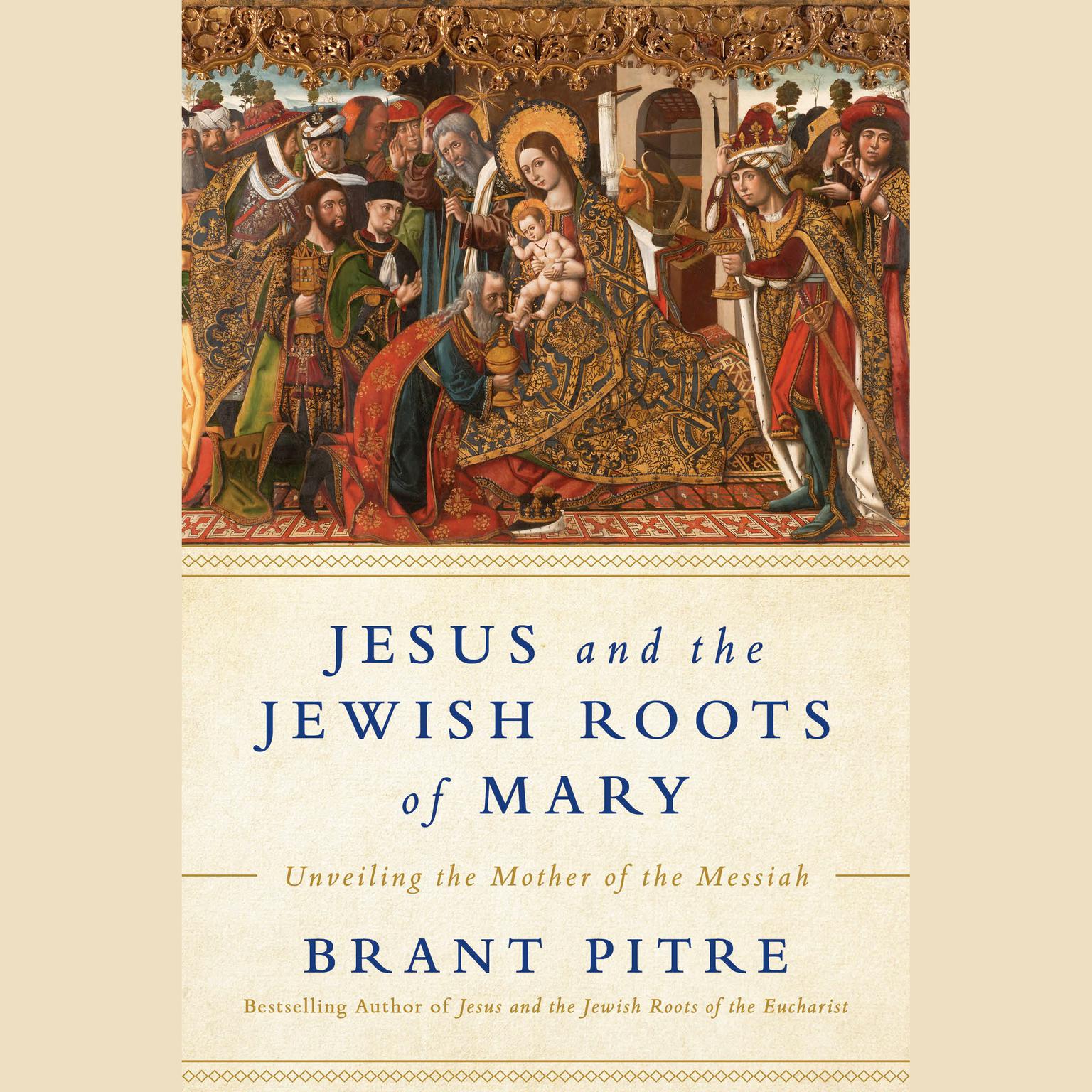
Mary is a key figure for Advent. Brant Pitre’s book “Jesus and the Jewish Roots of Mary” is not only for those who love Mary and love the Bible, but for anyone who wonders if there is Biblical basis for all the Catholic teaching on Mary (spoiler alert: yes). He shows very powerfully how the Old Testament and the New Testament are woven together into one large story of salvation. We have (I hope) all been taught that the New Testament is foreshadowed in the Old and the Old is revealed in the New. The foreshadowing is called a “type” and the reality fore-shadowed is called the “antitype.” We see Noah’s flood and the passage through the Red Sea are types of baptism. We read in the blessing of water in the baptismal rite, “The waters of the great flood you made a sign of the waters of Baptism, that make an end of sin and a new beginning of goodness. Through the waters of the Red Sea, you led Israel out of slavery, to be an image of God’s holy people, set free from sin by Baptism. ”“Therefore, just as through one person sin entered the world, and through sin, death, and thus death came to all, inasmuch as all sinned – for up to the time of the law, sin was in the world, though sin is not accounted when there is no law. But death reigned from Adam to Moses, even over those who did not sin after the pattern of the trespass of Adam, who in the type of the one who was to come (Rom 5:12-14).” St. Paul will go on to contrast the sin of Adam (type) and the gift of Jesus (antitype).We also see that Moses, David and even Joseph were types of Jesus. Eve is a type of Mary. This explains why Jesus called His mother “woman,” which otherwise makes no sense. Eve was called “the woman” in Genesis and didn’t get the name Eve until after the fall. Pitre will explain that Mary is not only the new Eve, but the new ark of the covenant and the new Rachel. He will explain how all this was recognized by the Fathers of the Church in the early centuries. This is not new. He also suggests reading what the Second Vatican Council said about Mary in the Constitution on the Church (See Lumen Gentium 52-68).This, of course, is not just for apologetics or for interesting Bible study. First, it helps us see how God’s big plan of salvation is all woven together. Next, if you read Edward Sri’s “Biblical Walk Through the Mass” you can see that the Bible and the liturgy are woven together in one large reality. Having done that, we will have the practice to be able to see how our story is woven into that very story of salvation history and understand our lives as a journey with God. Second, it helps us appreciate the person of Mary of Nazareth. She is not just a theological football or doctrine of the Church. She is a person, and lives in heaven, enveloped in God’s love. She loves us with a mother’s love and prays for us. This is part of the rich gift that God gives us, drawing us into His family. If there is one thing we should understand in our day and age, it is that family matters. A lot. I remember as an undergraduate talking to someone from the Reformed Bible College about the saints. She said that she didn’t see the need for this because Jesus is enough. I am pleased that even then I thought to say that would be a compelling argument if we believed that God would give us the minimum necessary. I believe He gives us the maximum possible because His love is infinite. This season we see to sharpen our attentiveness to the gifts that God gives. This a place to start. Blessings, Fr. Jim
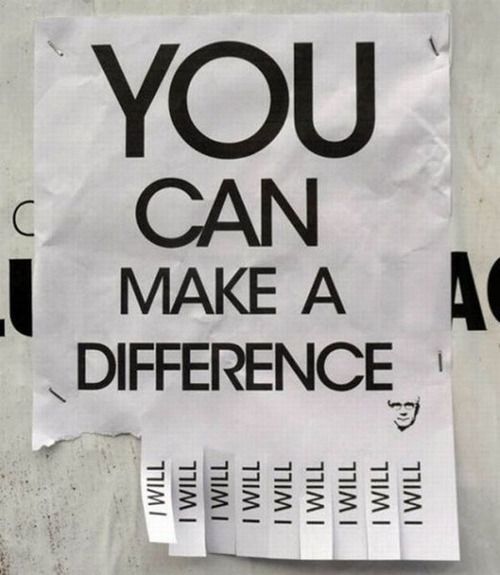
Dear Folks,As we continue with the season of hope, I need to point out a very special kind of hope that we all need: the hope that we can make a difference in the world. There was a time when it was believed that history is shaped by large forces way beyond us, and the average person can do nothing to affect the outcome. This has been debunked, and we know that history can be changed by the smallest thing. During the 1960’s there was a naïve hope that we could fix the world easily, because it isn’t hard, and the previous generations weren’t trying. “All you need is love,” was the mantra, and there wasa very superficial understanding of what love meant. Alas, it didn’t work, and by the 1970’s there was a cynicism that the system was deeply corrupt, that heroes were not really heroic, and it was never going to get better. Then “Star Wars” and “Raiders of the Lost Ark” burst in on the scene. Whatever critics may have to say about the movies, the feeling of the daring, old-fashioned hero was a breath of fresh air. For our hope to be realistic, I suggest considering these issues: We need focus on being productive. There are some who put a good deal of time into complaining without moving at all toward productive action. As we expel energy, we want to consider the question: how is this helpful? Are we focusing on our own desires or a higher purpose? If we want God to bless our efforts, it is good to be about something larger than ourselves. We see in James 4:1-3 “Where do the wars and where do the conflicts among you come from? Is it not your passions that make war within your members? You covet but do not possess. You kill and envy, but you cannot obtain; you fight andwage war. You do not possess because you do not ask. You ask but do not receive, because you ask wrongly, to spend it on your passions.” In my years of church work, it have heard a lot of conversation about how people want things in the church according to their preferences, but I haven’t heard nearly as much about how we can do church in a way that would be more pleasing to God and more effective in fulfilling our mission. How high are we setting our sights? A big issue is perseverance. If you go through the New Testament looking for how many times it encourages perseverance, you might be surprised how often it comes up. Many start with enthusiasm, but give up when they don’t get results as quickly as they expected. The prize belongs to those who keep going. Critical is learning from our mistakes. In Bill Bennett’s book “Last Best Hope” he describes the decision to make George Washington the head of the continental army. His record was mixed, and there were a number of objections. One of the points mentioned in his favor was that “he was good at learning from his mistakes.” That hit me. I had often thought about the importance of being willing to learn from our mistakes, but this was the first time that I thought about it as a skill that one can get good at. To learn from our mistakes, we need more than a general good intention. Weneed to be able to look at things that go wrong, identify the problems, and strategize a way to do better in the future. This is an art to be acquired. Who me? We read in the Bible many stories of God choosing the most unlikely people. We see Moses asked, “Who am I that I should go to Pharoah and bring the Israelites out of Egypt?(Exodus 3:11).” See also the call of Gideon (Judges 6:15) and Jeremiah (Jeremiah 1:6).”God is calling you to greatness. Yes, you. You might not be able to imagine how, but God has bigger ideas than we do. Blessings, Fr. Jim

Subjects of Christ the King

Dear Folks,
This is the Feast of Christ the King. Jesus reigns over all, and His authority is greater than any nation or any government. What does that mean for us?
We are not in the business of imposing our religion on others, even though some may accuse us of it. We are, however, in the business of helping other people, especially those that are most vulnerable and most hurting. This must sometimes include advocacy when human rights and human dignity are under attack. Some say that when we refuse to participate in things that we think are wrong or refuse to support wrong behavior, we are forcing their beliefs on others.
Some say that when we are speaking up for human rights, we are imposing Catholic beliefs. No, we are being good citizens. The conscience formed by Christianity has as much right to be in the public discussion as any other kind of conscience.
The letter to Titus is advice to a bishop, and says, “Remind them to be under control of
magistrates and authorities, to be obedient, to be open to every good enterprise (Titus 3:1).” Historically, the early Christians were good citizens of the countries in which they lived and were careful to obey the laws until the laws required them to be disobedient to God in the slightest way, and then they would refuse even under threat of death. St. Thomas More, when about to be beheaded, said, “I die the king’s good servant, but God’s first.” He followed the law of England to the letter, until it meant disobeying God, and then he would not budge.
Many point to the bad things done by Church leaders in the present and the past. Most of those are done contrary to the teaching of the faith, and that just calls for holding more closely to the faith now.
There have been times when official Catholic practice has involved bad things. This is often because our understanding of what is good and right has been getting refined over time. There was a time it would have been unheard of to suggest that someone has a right to express wrong ideas on matters of importance. The maxim was, “error has no rights” and it seemed intuitively obvious. Only after centuries of reflection did people start to say that even if error has no rights, people who err have rights, and we should counter bad ideas with more good ideas, not legal sanction or punishment. Ironically, the Catholic Church has gone from being accused of stifling
free thought to people clamoring for censorship of many Catholic beliefs for being “hateful” and “(fill-in-the-blank) phobia.”
Some say that, on balance, the Catholic Church has done more harm than good. I would suggest that narrative has been a prejudice that has led to some slanted history. Now we are starting to see that narrative challenged. I would recommend “How the Catholic Church Built Western Civilization” to get started.
We are very glad to learn about when the Church stood up for human rights and human dignity in the past, and sad for those who did not speak up when there was need. Let us live so that people can say of us that we were good American citizens, and servants of God first.
Blessings,
Fr. Jim

Peacemaking from the inside

Dear Folks,
I’ve been talking about peacemaking, and peacemaking starts in our own hearts. As
Christians, we are commanded to forgive, but often we are not taught how.
I had trouble learning forgiveness because it seemed to me to mean that other people could
torment me without limit and without consequence and I was supposed to accept it
passively and pretend that it was okay. It took a long time to understand that it was
something very different. Forgiveness is a form of healing and involves taking seriously
how we were hurt and how we were wronged.
“Don’t Forgive Too Soon” by Dennis Linn, Sheila Fabricant Linn, and Matthew Linn, gives
a lot of practical thought about what to do and what stages one might go through in the
process of forgiveness. They talk about “denial, anger, bargaining, depression, and
acceptance.” They also talk about taking steps to prevent future hurt from those who have
hurt you.
“No Future Without Forgiveness” by Desmond Tutu talks about the experience of apartheid
and the Truth and Reconciliation committee. I had known that apartheid was bad, but I was
amazed just how horrible things were, the magnitude of the evil and cruelty. Then the new
government came, and the challenge of dealing with the past and all those who had
committed crimes in the previous regime, many of them heinous beyond belief. The
decision was made that the people who had committed crimes in the past could come before
the committee, admit what they had done, and receive immediate amnesty. Obviously, this
was highly controversial, but he explains how they decided it was the better way to go and
would leave them with a better outcome. It is mightily inspiring.
“The Book of Forgiving” by Desmond and Mpho Tutu continues with practical advice on
how to forgive, giving four steps:

  1. Tell your story
  2. Name the pain
  3. Grant forgiveness
  4. Renew or release (end) the relationship.
    They emphasize that it “takes as long as it takes.” Consider that granting forgiveness may
    begin with desire to forgive, and only later comes the ability to forgive from the heart. It
    may not ever start there; we may first have to decide to seek the desire to forgive, being
    currently full of desire to destroy the other person. The process may or may not involve the
    other person, having no guarantee they will even agree they did anything wrong.
    Sometimes forgiveness is not something that happens between people, but within oneself. If
    we have no one else to tell our story to, we can always tell it to God.
    “Remembering God’s Mercy” by Dawn Eden describes her journey from being abused to
    being healed, and how her journey to Catholicism had helped her. She talks a lot about
    memory, and says that we don’t ask God to take away painful memories, but to help us
    remember them in a new way, as part of our journey with him.
    Once again, as we seek to be peacemakers, we start with our own hearts.
    Blessings
    Fr Jim

Breaking Down Barriers

Dear Folks,In our Gospel today (Mark 7:31-37) Jesus heals a man who is deaf and has a speech impediment, thus enabling him to connect to other people. I would suggest that the biggest barrier to people connecting nowadays is not a problem with the ears but a problem between the ears. We have people talking at each other but not making sense to each other, and the more they talk the more alienated they become. This is a huge problem for the world, and it seems to be getting worse.As someone who has spent a large part of his life talking to people without connecting, I have worked very hard on this problem for a long time. While I have a long way to go, I can state confidently that I have made a great deal of progress from where I used to be (trust me, you are lucky you don’t have to deal with who I was in my teens and twenties). Things can get better if we want them to.I started with Dale Carnegie’s book “How to Win Friends and Influence People.” It was eye opening, for the first time introducing me to the idea of focusing on what the other person wants and what the other person is thinking instead of just what I want and what I’m thinking. This alone would be a huge improvement in a lot of conversations we are seeing today.If I could recommend one book for people, I would emphasize “Redeeming Conflict” by Ann Garrido. I have mentioned it before, but it is time to mention it again. It is about twelve habits that can transform conflict and make it a spiritual journey. The twelve habits are 1. Sidestep the triangle (go directly to the person with which you have the problem). 2. Be curious (what is happening with the other person? What is that person thinking? What is that person seeking? What might this person see that I don’t? Is there more to the situation than either of us sees?) That is related to 3. Listen to understand (We usually listen to refute their point of view, but remember their beliefs make sense to them, so how do they fit together in their mind?). 4. Undo the knot of intention (we tend to judge ourselves on our intentions and others on their results, but good intentions don’t guarantee good consequences, and we need to keep that in mind for both parties). 5 Welcome emotion (our emotions give us clues to what is really happening inside us, and what this situation means to us). 6. Speak your voice (while we emphasize hearing and understanding the other, the situation cannot truly be resolved without your side of the story being articulated). 7. Know and steady thyself (some issues trip our triggers, and we can go off and say things we will regret. It is good to know and compensate for such tendencies). 8. Pray to forgive (Forgiveness is essential to dealing with conflict, and the ability to do so is a gift from God, so we need to pray for it). 9. Repent (very often, both sides have contributed to the problem, at least somewhat, and we need to own our part). 10. Problem solve (It really helps to develop creative solutions where both sides win).11. Be trustworthy, not necessarily trusting (not everyone is trustworthy, but we need to be, and Christians are called to do right no matter how much others do wrong). 12. Practice prudence (knowing which of these habits to exercise and when is more art than science). It is a very Catholic book, but I don’t think there is anything there to offend our non-Catholic brothers and sisters.Jesus said, “Blessed are the peacemakers, for they will be called children of God (Matthew 5:9). Jesus took a whole beatitude to emphasize this point (I have a lot to say about how important the beatitudes are in the teaching of Jesus). If we want to follow Jesus’ teaching (we do, don’t we?) and we want to be called “children of God” (we do, don’t we), would we not be intentional about increasing our ability to be peacemakers?Blessings,Fr. Jim

Handing on the Faith

Dear Folks,
Our Gospel talks about the Pharisees who would undermine God’s teaching by replacing it
with their own corrupt traditions. It is a temptation we all have to rewrite the Gospel
according to our preferences.
The Greek word translated “tradition” is “paradosis,” and it means “that which is handed
on.” St. Paul will use it to describe the faith that he has passed on to people in 1
Corinthians 11:2; 2 Thess 2:15, 3:6. The verb form in paradidomi, to hand on, and we see it
in Luke 1:2 and 1 Cor 15:3. Also, he warns about being taken in by “empty, seductive
philosophy according to human tradition (Gal 2:8).” Distinguishing human tradition with
divine tradition is key.
Acts of the Apostles 15 describes the Council of Jerusalem and gives an example of how
the Church is to deal with such questions when they can’t be solved just by dialog. The
Church was being torn apart by the question whether being in right relationship to God
came through works of the law of Moses or by faithfulness to Jesus. The next great
example is the Council of Nicea about the identity of Jesus. There was a group following
Arius that said Jesus is not God, but more of a super angel. The Catholic belief about the
divinity of Christ was upheld. This shows us how the Holy Spirit can work in the
development of doctrine that is faithful to the revelation given in the person of Jesus.
The Second Vatican Council’s Constitution on Divine Revelation (Dei Verbum) talks about
the nature of divine revelation and how the truth of the faith is preserved in the Church.
Chapter 2 (sections 7-10) talks about how Divine Revelation is preserved in the Church. I
haven’t the space to quote it extensively here, but it is worth looking up.
Catholic thought has trouble with the idea that right after the Bible was finished, the Church
as a whole, completely misread it for fifteen hundred years until someone finally figured
out what it really meant. So, part of what we talk about in Sacred Tradition is how the faith
has been understood for centuries and recognizing continuity of thought. We also have
trouble with the idea that God would reveal the fullness of truth in Jesus and allow it to be
lost over the years: if it is worth revealing it is worth preserving.
We also recognize that every era has its own prejudices and biases, and we would be
foolish to think we are unaffected by them. When something has been taught for centuries,
that helps us step back from our own perspective to a broader perspective.
One danger is that many people seem to assume that those who came before us were not as
smart as we are and not as good as we are. This leads to the habit of whenever something is
believed or practiced does not make immediate sense to us, we reject it without much
thought or hesitation. G.K. Chesterton said, “Don’t ever take down a fence until you know
the reason it was put up.” I was never one to do things just because that was the way we
always did them, but often it is worth looking a little deeper before dismissing something.
These days, I think our society could benefit from a bit more reflection and broader
perspective before we react. The Catholic Church is famous for moving slowly. That’s not
always a bad thing.
Blessings,
Fr. Jim

Blessed Father Michael McGivney’s work

Dear Folks,

This Friday, August 13, we celebrate the feast day of Blessed Michael McGivney, parish
priest. He lived from 1852 to 1890, and those were difficult days to be Catholic. Many
were poor immigrants, and in those days, there were signs on businesses that said, “Irish
need not apply.” Italians were discriminated against as well. Many had to take the most
dangerous jobs in mines, railroads, and factories, and if a man who was husband, father and
breadwinner died on the job, there was no provision for the widow and children. It is easy
to imagine many families in dire straits.

The Ku Klux Klan was very powerful in the south, though it had reach up north as well
(we remember that they burned a cross on St. Charles’ lawn in 1924). There were various
other secret organizations, not necessarily violent, but many had beliefs and practices
contrary to Catholic principles. Many Catholic men, feeling hemmed in, were sorely
tempted to join one.

During these years, alcohol consumption was at its historical peak. Many, working in soulcrushingly tedious, meaningless, and stressful jobs in factories, would go to the taverns on
Friday, spend the rent and grocery money, and come home and beat up their wives. This is
how the temperance movement began. There was a great need for men to gather to
encourage each other in virtue and support each other emotionally and spiritually. There
was a great need to promote a positive vision of Catholic manhood.

To make a (very) long story (very) short, Fr. McGivney met with 24 Catholic men in the
basement of St. Mary’s Church in New Haven, Connecticut, and founded the Knights of
Columbus. In 2016, there were almost 2 million members who contributed more than 177
million dollars in charity and more than 75 million hours of charity.

Fr. McGivney died at age 38, having been a priest for only 13 years. I remember what I was
like after 13 years of priesthood, and with the skill level I had then, I could no more have
formed a such an organization than I could have jumped to Jupiter. What Fr. McGivney
had accomplished in such a short time leaves me awestruck. Not only that, he was also
known for his great compassion in helping those in need, and wonderful dealing with
troubled souls. He was beatified in 2020, and many are praying for his canonization.

If you want to learn more, there is an interesting book called: “Parish Priest: Father
Michael McGivney and American Catholicism” by Douglas Brinkley and Julie Fenster.
Don’t forget the prayer service Friday August 13 at 6:30 pm at St. Charles.

Blessings,
Fr. Jim

Rediscovering the Mystery

Dear Folks,
In our Gospel today, people ask Jesus a seemingly simple question, “Rabbi, when did you
get here? (John 6:25).” This points to something much more mysterious. John had just
mentioned that, on the other side of the lake, there was only one boat, and Jesus did not get
in with the apostles. When other boats came, they got in and crossed, and were surprised to
find Jesus there. That lead them to wonder how He got there. We, of course, know because
we have read the Gospel and understand that Jesus walked on the water. He doesn’t tell
them, and so they are left to wonder. This should prime them to be open to mystery, to be
sensitive to the idea that there is more going on than they can see. This should have made
them more open to the Bread of Life discourse which is to follow (unfortunately, they will
still not be open enough).
Jesus prayed that His Church would be one (John 17:20-23) and so that people would
believe the Father sent Him. Unity is an essential part of our work as Church, and I suggest
that we have room to grow in that area. Recent events got me thinking.
You may have heard about Pope Francis putting out a document, Traditionis Custodes,
which severely restricts the celebration of the extraordinary form of the Mass (that is, the
way it was celebrated just before Vatican II, using the Missal of 1962). Some people are
angry and hurt, while some people are saying “good riddance.” Many, of course, don’t see
what the big deal is. It will not directly affect most of us. I’ve attended two such liturgies
as a priest, and I don’t remember when I attended it as a child.
The Pope’s stated goal is unity, moving us toward common worship, and I think that is a
good goal. The question is what is needed to accomplish it. Looking at the divide can shine
some light on essential issues with our worship.
Whatever else is needed, unity requires understanding both sides’ concerns, and that is what
is often not happening.
Pope Benedict says in The Spirit of the Liturgy, “In the liturgy the curtain between heaven
and earth is torn open, and we are taken up into a liturgy that spans the whole
cosmos.” Now I ask you, how well does the way we celebrate liturgy convey that that is
happening? People will point to the extraordinary form and say that it better led them to
mystery. The Latin language conveyed that this was different from usual conversation. The
priest facing the same way as the congregation (called celebrating ad orientum, literally, to
the east) showed that he was representing the people to God, not just chatting with the
people. They find the modern liturgy friendly, but fails to point to mystery beyond what we
see.
On the other hand, many have had bad experiences of the Pre-Vatican II liturgy. I’m told
many have had bad catechesis and had very little understanding of what was going on.
Some would pray the rosary. Someone said it was like a magic show. They were not able
to learn Latin well enough to experience what was happening, and often the priest mumbled
anyway. The revised liturgy enabled them to connect like never before, and they thought it
was wonderful. Many of them have a really hard time with the thought of going back.
So, how do we get the best of both worlds? The way many just stop going to Mass tells us
that what we are doing now is not connecting (this is not just our little community, but
nationwide). How do we connect with people and at the same time draw people to the
infinite mystery? I suggest that to answer this well will take serious brain effort.
Blessings,

Praying More Powerfully at Mass

Dear Folks,
Ancient Greek mythology talks about a wicked innkeeper named Procrustes. If you were
unfortunate enough to stay at his inn, he had only one bed. If you were too short for it, he
would stretch you until you fit. If you were too tall for it, he would chop ends off you until
you were the right length. The Procrustean bed is a classic image for trying to force
everyone into a single way of doing things whether it works for them or not.
In church, I find that many people have a good experience with a certain practice, a certain
prayer, a certain devotion, perhaps associating it with a better time or place, and decide that
everyone should be doing that particular thing. Many people say that that doesn’t work for
them, and so they rebel. It is most frustrating. An alternative approach is to have many
options, and people pick out the ones that work for them.
One of the ways we strengthen our community is by strengthening our worship. There are
many ways to do that.
Preparation:
From the moment of waking up, look at the path ahead and remember that each step is
a step toward the altar.
Extend Eucharistic fast to more than an hour before receiving communion. Two
hours? Three? More?
Fast from social media/videos/games.
Dress one step up from usual (how do you dress for something really important?).
Review the readings for the day, perhaps making a note of an idea to ponder.
Read Psalm 63:2-9, Psalm 100, or Psalm 122.
Make an examination of conscience for a more effective penitential rite.
If you have access to the hymns that will be sung, go over them and prepare to offer
them as gift to God.
Make a list of gifts from the previous week: Apostolic undertakings, family and
married life, daily work, relaxation of mind and body, and hardships to be offered to
the Father along with the Body of the Lord (See constitution on the Church #34 and
Constitution on the Liturgy #48).
Approach the church building, be aware of approaching the altar of God.
Entering the narthex, be aware of transition between the realm of the world and the
realm of liturgy.
Outside the church and in the narthex, we connect with other worshippers, being
aware we are the Body of Christ.
Entering the nave, have a Spirit of quiet.
Silence upon entering worship space. Shift from focusing on other people to being
united with them in focusing on the presence of God.
Pause. Recognize we are someplace special. Stand tall.
Speak softly, so as not to interfere with those trying to pray. Do that even when no
one else is there.
Walk deliberately so that simply coming to your pew is a ceremony.
Later I’ll have some ideas on how to strengthen the time during Mass and after Mass. In the
meantime, what if you tried one or more of these? Many people have success starting small
and being consistent, and then having something on which to build?
These are small things that can strengthen how we bring ourselves to God in worship, and
therefore strengthen our faith community. What do you think?
Blessings
Fr. Jim

Church: Customers or Coworkers in Mission

Dear Folks,
The Feast of the Ascension is a time to talk about mission. It is sort of the apostles’
graduation ceremony. To be Christian is to be on mission, and it is time to ask a very
serious question.
Consider, if you will, two models of Church: Catholics as customers vs Catholics as coworkers in mission.
Catholics who function according to the customer model will think about church like any
other consumer good, and it becomes about getting one’s preferences over all (Coke or
Pepsi? Or maybe Dr. Pepper?). Improving the church becomes about how services can be
provided as conveniently as possible. Volunteering in the church will be seen as
extraordinary, not normal. Adult faith formation is seen as “for those who like that sort of
thing” rather than a normal part of being a disciple. I believe it was Richard Neuhaus who
said that many Catholics thought their only duty was to show up to be served. Things like
faith formation and Christian service will be seen as extras to be sacrificed for the sake of
“basic functions: keeping the buildings open and the Mass schedule. Such people may be
more likely to quit if they don’t get things the way they think they should be.
Catholics who see themselves as co-workers in mission are going to be focused on how the
Church can better draw people to Jesus. They will ask more questions like how can we
better draw outsiders to Jesus? How can we be leaven, salt, and light in the larger
community? How can we inspire others to see the goodness, beauty, and truth about the
Catholic faith? What reasons do the surrounding community have to be grateful we are
here? Instead of asking “how much am I obligated to do?” the question is “How can I, with
my circumstances, do as much as possible?” Some, given their situation, can only do a
teeny bit, but if we do it with love, it is huge in God’s eyes. Learning more about the faith
becomes urgent, so that we can better witness to it. There is an urgency to growing in
holiness, so that God’s light will shine more brightly through us. There is an attentiveness
to how we represent the faith community to others; we are God’s ambassadors. Such people
will be more resilient when hard times come, when we lose things we are accustomed to,
when being church grows difficult. Such people will not watch helplessly when things go
bad but will build something better.
Parents’ first mission is passing on the faith to their children, and if we believe the Gospel
is true, then we believe that the faith is the most important gift they can give their children.
Many parents have suffered the heartbreak of watching their grown-up children stop the
practice of the faith. If they did the best they knew how to do at the time, they have nothing
to be ashamed of. As they grieve for their disappointment, we turn our attention to how
things can be made better. The task at hand is to become a church that better draws people
to the faith. The data makes it clear that what was done in the past does not give them what
they need. It will take all of us together to make that happen.
So, this leads to the question: what is our model? How do we see ourselves? And, most
importantly, how would Jesus want us to approach being Church?
Blessings,
Fr. Jim