Category Archives: Church

Loving People Hard to Love Part II

Dear Folks,

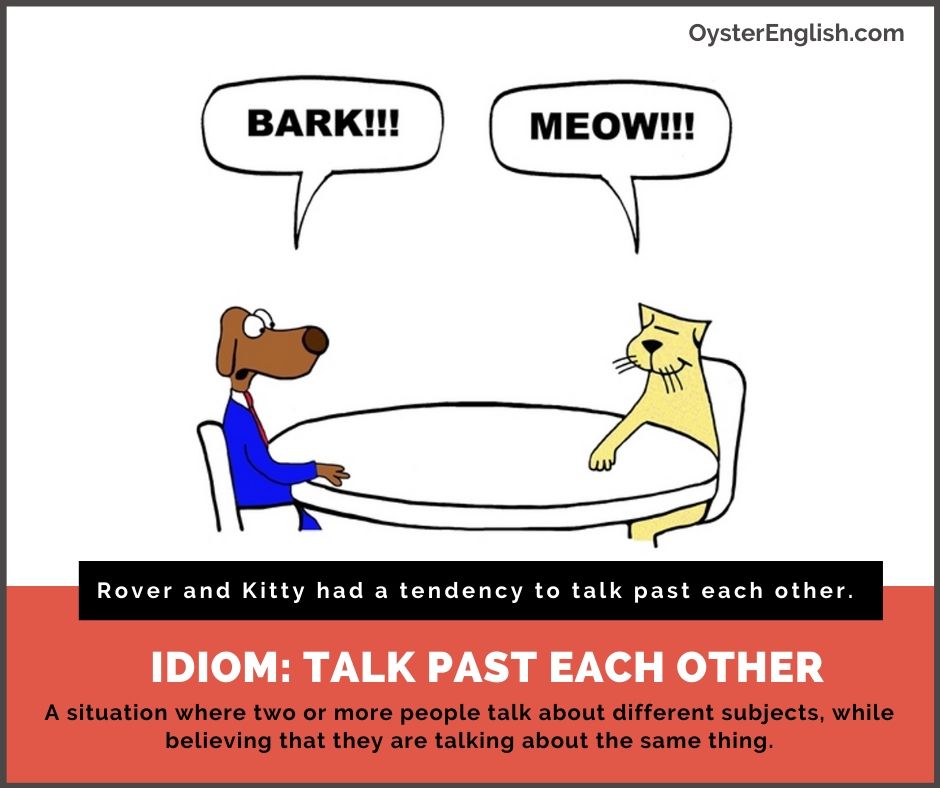
We all have a deep need to tell our story, to be heard, to be understood. Much anger, frustration, and resentment come from a feeling of not being heard, not being understood. It is often difficult to make ourselves understood to someone, and what makes the experience much harder is when we get the feeling that the other person isn’t trying. Sometimes the truth is more complex.

Perhaps we underestimate the depth of the chasm between our minds. In Malcolm Gladwell’s book “Talking to Strangers” he mentions that we tend to underestimate how we can use the same words and gestures and mean different things. Both sides might be trying and failing to connect.

Stephen Covey said, “We judge ourselves by our intentions and others by their behavior.” Consider what that means, that what we experience ourselves can be very different from how others experience us.

In “The Screwtape Letters” C.S. Lewis portrays the devil Screwtape teaching his nephew Wormwood how to lead a soul into hell: “Keep his mind on the inner life. He thinks his conversion is something inside him and his attention is therefore chiefly turned at present to the states of his own mind—or rather the expurgated version of them which is all you should allow him to see. Encourage this. Keep his mind off the most elementary duties by directing it to the most advanced and spiritual ones. Aggravate that most useful human characteristic, the horror and neglect of the obvious. You must bring him to a condition in which he can practice self examination for an hour without discovering any of those facts about himself which are

perfectly clear to anyone who has ever lived in the same house with him or worked in the same office (Letter 3).” And “Your patient must demand that all his own utterances are to be taken at their face value and judged simply on the actual words, while at the same time judging all his mother’s utterances with the fullest and most over-sensitive interpretation of the tone and the context and the suspected intention. She must be encouraged to do the same to him (Letter 3).” I believe this sort of thing is not uncommon. How do we watch for such behavior in ourselves? I suspect we tend to be very aware of how the other person tries our patience, but we might have no idea how much we try the others’ patience. How can we watch for that?

There may be times, and certainly there are abusive relationships, in which we are innocent, and the other person is quite guilty. We want to be careful about getting to that conclusion too quickly and too easily. When it is such a situation, we still have the challenge of how we are going to deal with the situation. Waiting for the other person to change is not going to get us anywhere. When we must play a game that is rigged against us, we must play it well. In Matthew 16:10, Jesus says, “Behold, I send you forth as sheep in the midst of wolves, so be as clever as serpents and innocent as doves.” We must be clever as psychological tricks and traps are thrown at us. Though there is a temptation to use the other’s behavior as an excuse to lower the standards of our own behavior, it is essential to strive to be innocent, first because it is right, and second because others might use any lapse on our part as a reason to attack us and make us the villain (never mind they do worse on a regular basis).

This stuff is hard, at least I find it hard. I suggest that if more people took these things into account, we could get along better. Can you think of anything to practice during Lent for more peace in the world?

Blessings,

Fr. Jim

Loving Those Hard to Love Part I

Dear Folks,

In our Gospel today, Jesus teaches us unconditional love, even our enemies. If people know anything about Christianity, they know we are to love one another. This is wonderfully easy to say. It is much harder to do. The first issue is spiritual. There are some

people it is easy to want to love, while others, who can be so aggravating, are much more difficult. It is hard to empathize with someone who has caused pain, difficulty, or harm, and seems not to care about it.

It helps to pray for such people. It always begins with seeking God’s help. It is good to remember the goal: not to destroy the person but purge the evil from them and rejoice with them in heaven. God says, “Do I find pleasure in the death of the wicked—oracle of the

Lord God? Do I not rejoice when they turn from their evil way and live? (Ezekiel 18:23; Ezekiel 33:11; Luke 15:7).” The more focused we are on the eternal goals the more we can handle worldly problems.

Another problem is practical. In Christianity love is not a feeling but a decision to seek the good of others for their own sake.

In Ann Garrido’s excellent book “Redeeming Conflict” habit #4 is “Undo the knot of intention.” Good intentions don’t necessarily mean good consequences, and bad consequences don’t necessarily mean bad intentions. It is harder. I have learned, again and

again, that I can intend to do good and have it not work well. Now, God will judge our hearts, and if we are doing our best, that is having a loving heart. That said, if we do less than our best to find out if we are really doing good, I don’t think that will go well.

Doing parish work, I’ve found that there are some people who focus their energy and skill in getting resources from helping agencies, and they can refine that to an art. I think about

what they could do if they put that intelligence and energy into doing something constructive. Some people say to just give them money, and if they misuse it, “that’s on them.” Is that really seeking others’ good, or is that about making ourselves feel good?

Someone referred to one such person as “he helps the poor to stay poor, because he needs them to be poor.” I know that sometimes I risk being taken. I’m quite sure I do get taken from time to time, but we can’t close our hearts in an effort to be safe. One thing I’m sure of, we don’t want to be in the position of explaining to God why we didn’t try (Matthew 25:14-46). Sometimes the aggravation is part of the price for loving our neighbor. Direct help in emergencies is great; helping people who cannot help themselves is great; when we can help people move themselves into a better situation where they can flourish, that is wonderful. I love our community dinners and our food pantries; sometimes getting a meal from someone who treats you with courtesy, kindness and respect can make all the difference. I love Habitat for Humanity, because people who participate in their program tend to flourish

more afterward. I love Have Mercy, the program for the homeless in Montcalm and Ionia counties. They give a great deal of immediate help and will regularly move homeless people into permanent homes. I love Alpha Family Center who help people in a uniquely vulnerable time in their lives, giving help they can be grateful for for the rest of their lives. There are some many good things being done, and I hope we can learn more and more ways to help people in need. We don’t ask if they deserve it; we ask what is truly helpful. How to be helpful is something we can spend the rest of our lives learning and practicing.

If we dedicate ourselves to helping people we don’t know and can do nothing for us, maybe that will strengthen our ability to love even the people who harm us.

Blessings,

Fr. Jim

Sharing

Hands Holding Share

Dear Folks,
Jesus calls some fishermen and tells them “From now on you will be catching
men.” Notice that He did not start with a promise of saving from sin, talk of healing, but of being fishers for souls. The Second Vatican Council’s Constitution on the Church teaches that the “obligation of spreading the faith is imposed on every disciple of Christ, according to his ability (LG #17).” The question “are we dedicated to following Jesus?” cannot be answered without asking “are we dedicated to spreading the Gospel to all people (Matthew 28: 18-20; Mark 16:15-16; Luke 24:46-38)?” Our Church has been going through some serious challenges lately. What if God is allowing us to be tested, that we may show if we take Him seriously? What if part of the answer is how we respond to the call to share our faith with the world? The future of our faith communities could very well depend on how we respond to God’s call now.
The problem, of course, is that we were not taught how to do it, and it seems that most
Catholics have not been taught that they should. Even in the seminary, they did not teach us how to share the Gospel with people who did not already accept it.
We shall need to work on this for some time, but I would share some ideas to stimulate
thought and conversation.
United State Conference of Catholic Bishops put out a document “Go and Make
Disciples.” They described three tasks to spreading the Gospel:

  1. Grow in enthusiasm for the Gospel ourselves until it spills out of us. This is essentially a call to continue to be evangelized. As long as our love is imperfect and we do not see things the same way God does, we are incompletely evangelized. That task will not be finished until we are in heaven (1 Corinthians 13:9-12).
  2. Invite everyone, everywhere to share the fullness of the Catholic faith. This suggests if they are outside, invite them inside. If they are inside, invite them further inside.
    Everyone can come closer (see #1). This is evangelizing other people. Note the word
    “invite.” How do we invite people to something wonderful?
  3. Transform the world according to the love of God. Our society should be structured in a way that serves the life, the dignity, the flourishing of all people. This is essentially evangelizing society itself. This should keep us busy for a while.
    I would suggest the best book on evangelization is Acts of the Apostles. It shows the early Church growing like a grease fire despite determined opposition. It seems to me it describes the early Church doing four things: Telling the Gospel story, working together as community, worshipping God, and helping people in need. I say that if we get good enough at those four things, no one on earth can stop us.
    If you want a very simple way to start, I suggest some very basic actions: Tell someone one good thing about your faith community, learn something new about the faith and share it, Introduce yourself to someone you don’t know at church, create a holy moment (a moment in which our actions show the love of Jesus). Anyone can do this. Once we start, who knows where it will lead?
    The second reading for today is 1 Corinthians 15:1-11. St. Paul gives the most basic form of the Christian message, that Jesus died for our sins, rose from the dead and now offers us salvation. This is called the “kerygma,” and everything else follows from it. Part of telling the Gospel story is presenting the kerygma and doing it in a way that is compelling and persuasive. Simply repeating formulas that people have already heard is not going to make much of an impression, or at least not a good one. One might ask how we can talk about salvation to people who don’t think they need saving, and how can we talk about salvation from sin to people who don’t think sin is an issue? That, folks, is the subject of next week’s
    column.
    Blessings,
    Fr. Jim

Resistance

Dear Folks,
Today we talk about resistance. Resistance and negative feedback are essential to life from the beginning. Having boundaries is necessary for survival and learning that some things are good and some things are bad are key to developing the ability to make decisions. When stacking up blocks one way ends with them falling down, one learns to stack them up differently until one has a tower. Learning that one way of talking makes people upset and another way of talking makes people smile is key to learning how to communicate in a human way (I learned the hard way that verbal skills are one thing and communicating to other people in a positive and helpful way is quite another). In monitoring people’s reactions, positive and negative, we learn to connect to people better. If we are not sensitive to people’s feedback, we can fail to learn essential things.
Of course, not all feedback is to be believed. Sometimes we will have people criticize us unfairly and say false and unhelpful things. Some will attack us for doing good, and we have to be careful not to let this deter us. Our Scriptures today talk about Jeremiah and Jesus facing opposition for what they are doing. It is a great frustration to be trying to do good, and getting attacked for it, often by the very people you are trying to help. Jesus warns extensively about persecution in Matthew 10:16-36, Luke 12:2-9; 49-53 and, John 15:18-16:4 In the Parable of the Sower (Matthew 13:1-23; Mark 4:1-20), Jesus talks about when the seed falls on rocky ground and springs up quickly but has no root. When some “tribulation or persecution” happens, the seedling falls away.
The bottom line is that if we seek to follow Christ and serve the kingdom, we will face resistance. This resistance can come from any direction (inside or outside of Church), from those who are confused and from those who are malicious (though I’ve found it is not always easy to tell). It might be active or passive (some people won’t cooperate in the slightest). It might be mental or physical. It might be overt or subtle. It might be an individual, an organization, or a culture. You get the point. We will often feel that we are being treated unfairly. The bad news is we can count on being treated unfairly. It might be frustrating. It might be infuriating. It might be discouraging. It might be overwhelming.
This is an opportunity to deepen our faith, to set down deeper roots. If we are deeply enough rooted in Jesus, there is no storm that can uproot us. We can practice with smaller things. When the practice of our faith, or dealing with the Church, dealing with fellow parishioners, and, yes, dealing with the pastor gets frustrating, difficult, infuriating, or aggravating (yes, I know sometimes I can be all those things), that is part of the challenge of being Church.
Last week I tested positive for Covid. I went into quarantine (as of this writing I’m not quite finished). Our intrepid staff strove mightily to find a substitute for the weekend Masses, but none was to be had (a situation we shall see more of). We are so accustomed to regular schedules and convenient services it can be a shock how fragile the system is becoming. The storm has begun, and the boat is going to rock. Part of the solution will involve resilient Christians, who are ready to adapt to following Jesus while the boat is rocking. He is in the boat. It might feel like He is asleep, but if we stay with Him, He won’t let us sink.
Blessings,
Fr. Jim

The Catholic Understanding of Mary

Dear Folks,

Mary is a key figure for Advent. Brant Pitre’s book “Jesus and the Jewish Roots of Mary” is not only for those who love Mary and love the Bible, but for anyone who wonders if there is Biblical basis for all the Catholic teaching on Mary (spoiler alert: yes). He shows very powerfully how the Old Testament and the New Testament are woven together into one large story of salvation. We have (I hope) all been taught that the New Testament is foreshadowed in the Old and the Old is revealed in the New. The foreshadowing is called a “type” and the reality fore-shadowed is called the “antitype.” We see Noah’s flood and the passage through the Red Sea are types of baptism. We read in the blessing of water in the baptismal rite, “The waters of the great flood you made a sign of the waters of Baptism, that make an end of sin and a new beginning of goodness. Through the waters of the Red Sea, you led Israel out of slavery, to be an image of God’s holy people, set free from sin by Baptism. ”“Therefore, just as through one person sin entered the world, and through sin, death, and thus death came to all, inasmuch as all sinned – for up to the time of the law, sin was in the world, though sin is not accounted when there is no law. But death reigned from Adam to Moses, even over those who did not sin after the pattern of the trespass of Adam, who in the type of the one who was to come (Rom 5:12-14).” St. Paul will go on to contrast the sin of Adam (type) and the gift of Jesus (antitype).We also see that Moses, David and even Joseph were types of Jesus. Eve is a type of Mary. This explains why Jesus called His mother “woman,” which otherwise makes no sense. Eve was called “the woman” in Genesis and didn’t get the name Eve until after the fall. Pitre will explain that Mary is not only the new Eve, but the new ark of the covenant and the new Rachel. He will explain how all this was recognized by the Fathers of the Church in the early centuries. This is not new. He also suggests reading what the Second Vatican Council said about Mary in the Constitution on the Church (See Lumen Gentium 52-68).This, of course, is not just for apologetics or for interesting Bible study. First, it helps us see how God’s big plan of salvation is all woven together. Next, if you read Edward Sri’s “Biblical Walk Through the Mass” you can see that the Bible and the liturgy are woven together in one large reality. Having done that, we will have the practice to be able to see how our story is woven into that very story of salvation history and understand our lives as a journey with God. Second, it helps us appreciate the person of Mary of Nazareth. She is not just a theological football or doctrine of the Church. She is a person, and lives in heaven, enveloped in God’s love. She loves us with a mother’s love and prays for us. This is part of the rich gift that God gives us, drawing us into His family. If there is one thing we should understand in our day and age, it is that family matters. A lot. I remember as an undergraduate talking to someone from the Reformed Bible College about the saints. She said that she didn’t see the need for this because Jesus is enough. I am pleased that even then I thought to say that would be a compelling argument if we believed that God would give us the minimum necessary. I believe He gives us the maximum possible because His love is infinite. This season we see to sharpen our attentiveness to the gifts that God gives. This a place to start. Blessings, Fr. Jim

Dear Folks,As we continue with the season of hope, I need to point out a very special kind of hope that we all need: the hope that we can make a difference in the world. There was a time when it was believed that history is shaped by large forces way beyond us, and the average person can do nothing to affect the outcome. This has been debunked, and we know that history can be changed by the smallest thing. During the 1960’s there was a naïve hope that we could fix the world easily, because it isn’t hard, and the previous generations weren’t trying. “All you need is love,” was the mantra, and there wasa very superficial understanding of what love meant. Alas, it didn’t work, and by the 1970’s there was a cynicism that the system was deeply corrupt, that heroes were not really heroic, and it was never going to get better. Then “Star Wars” and “Raiders of the Lost Ark” burst in on the scene. Whatever critics may have to say about the movies, the feeling of the daring, old-fashioned hero was a breath of fresh air. For our hope to be realistic, I suggest considering these issues: We need focus on being productive. There are some who put a good deal of time into complaining without moving at all toward productive action. As we expel energy, we want to consider the question: how is this helpful? Are we focusing on our own desires or a higher purpose? If we want God to bless our efforts, it is good to be about something larger than ourselves. We see in James 4:1-3 “Where do the wars and where do the conflicts among you come from? Is it not your passions that make war within your members? You covet but do not possess. You kill and envy, but you cannot obtain; you fight andwage war. You do not possess because you do not ask. You ask but do not receive, because you ask wrongly, to spend it on your passions.” In my years of church work, it have heard a lot of conversation about how people want things in the church according to their preferences, but I haven’t heard nearly as much about how we can do church in a way that would be more pleasing to God and more effective in fulfilling our mission. How high are we setting our sights? A big issue is perseverance. If you go through the New Testament looking for how many times it encourages perseverance, you might be surprised how often it comes up. Many start with enthusiasm, but give up when they don’t get results as quickly as they expected. The prize belongs to those who keep going. Critical is learning from our mistakes. In Bill Bennett’s book “Last Best Hope” he describes the decision to make George Washington the head of the continental army. His record was mixed, and there were a number of objections. One of the points mentioned in his favor was that “he was good at learning from his mistakes.” That hit me. I had often thought about the importance of being willing to learn from our mistakes, but this was the first time that I thought about it as a skill that one can get good at. To learn from our mistakes, we need more than a general good intention. Weneed to be able to look at things that go wrong, identify the problems, and strategize a way to do better in the future. This is an art to be acquired. Who me? We read in the Bible many stories of God choosing the most unlikely people. We see Moses asked, “Who am I that I should go to Pharoah and bring the Israelites out of Egypt?(Exodus 3:11).” See also the call of Gideon (Judges 6:15) and Jeremiah (Jeremiah 1:6).”God is calling you to greatness. Yes, you. You might not be able to imagine how, but God has bigger ideas than we do. Blessings, Fr. Jim

Subjects of Christ the King

Dear Folks,
This is the Feast of Christ the King. Jesus reigns over all, and His authority is greater than any nation or any government. What does that mean for us?
We are not in the business of imposing our religion on others, even though some may accuse us of it. We are, however, in the business of helping other people, especially those that are most vulnerable and most hurting. This must sometimes include advocacy when human rights and human dignity are under attack. Some say that when we refuse to participate in things that we think are wrong or refuse to support wrong behavior, we are forcing their beliefs on others.
Some say that when we are speaking up for human rights, we are imposing Catholic beliefs. No, we are being good citizens. The conscience formed by Christianity has as much right to be in the public discussion as any other kind of conscience.
The letter to Titus is advice to a bishop, and says, “Remind them to be under control of
magistrates and authorities, to be obedient, to be open to every good enterprise (Titus 3:1).” Historically, the early Christians were good citizens of the countries in which they lived and were careful to obey the laws until the laws required them to be disobedient to God in the slightest way, and then they would refuse even under threat of death. St. Thomas More, when about to be beheaded, said, “I die the king’s good servant, but God’s first.” He followed the law of England to the letter, until it meant disobeying God, and then he would not budge.
Many point to the bad things done by Church leaders in the present and the past. Most of those are done contrary to the teaching of the faith, and that just calls for holding more closely to the faith now.
There have been times when official Catholic practice has involved bad things. This is often because our understanding of what is good and right has been getting refined over time. There was a time it would have been unheard of to suggest that someone has a right to express wrong ideas on matters of importance. The maxim was, “error has no rights” and it seemed intuitively obvious. Only after centuries of reflection did people start to say that even if error has no rights, people who err have rights, and we should counter bad ideas with more good ideas, not legal sanction or punishment. Ironically, the Catholic Church has gone from being accused of stifling
free thought to people clamoring for censorship of many Catholic beliefs for being “hateful” and “(fill-in-the-blank) phobia.”
Some say that, on balance, the Catholic Church has done more harm than good. I would suggest that narrative has been a prejudice that has led to some slanted history. Now we are starting to see that narrative challenged. I would recommend “How the Catholic Church Built Western Civilization” to get started.
We are very glad to learn about when the Church stood up for human rights and human dignity in the past, and sad for those who did not speak up when there was need. Let us live so that people can say of us that we were good American citizens, and servants of God first.
Blessings,
Fr. Jim

Peacemaking from the inside

Dear Folks,
I’ve been talking about peacemaking, and peacemaking starts in our own hearts. As
Christians, we are commanded to forgive, but often we are not taught how.
I had trouble learning forgiveness because it seemed to me to mean that other people could
torment me without limit and without consequence and I was supposed to accept it
passively and pretend that it was okay. It took a long time to understand that it was
something very different. Forgiveness is a form of healing and involves taking seriously
how we were hurt and how we were wronged.
“Don’t Forgive Too Soon” by Dennis Linn, Sheila Fabricant Linn, and Matthew Linn, gives
a lot of practical thought about what to do and what stages one might go through in the
process of forgiveness. They talk about “denial, anger, bargaining, depression, and
acceptance.” They also talk about taking steps to prevent future hurt from those who have
hurt you.
“No Future Without Forgiveness” by Desmond Tutu talks about the experience of apartheid
and the Truth and Reconciliation committee. I had known that apartheid was bad, but I was
amazed just how horrible things were, the magnitude of the evil and cruelty. Then the new
government came, and the challenge of dealing with the past and all those who had
committed crimes in the previous regime, many of them heinous beyond belief. The
decision was made that the people who had committed crimes in the past could come before
the committee, admit what they had done, and receive immediate amnesty. Obviously, this
was highly controversial, but he explains how they decided it was the better way to go and
would leave them with a better outcome. It is mightily inspiring.
“The Book of Forgiving” by Desmond and Mpho Tutu continues with practical advice on
how to forgive, giving four steps:

  1. Tell your story
  2. Name the pain
  3. Grant forgiveness
  4. Renew or release (end) the relationship.
    They emphasize that it “takes as long as it takes.” Consider that granting forgiveness may
    begin with desire to forgive, and only later comes the ability to forgive from the heart. It
    may not ever start there; we may first have to decide to seek the desire to forgive, being
    currently full of desire to destroy the other person. The process may or may not involve the
    other person, having no guarantee they will even agree they did anything wrong.
    Sometimes forgiveness is not something that happens between people, but within oneself. If
    we have no one else to tell our story to, we can always tell it to God.
    “Remembering God’s Mercy” by Dawn Eden describes her journey from being abused to
    being healed, and how her journey to Catholicism had helped her. She talks a lot about
    memory, and says that we don’t ask God to take away painful memories, but to help us
    remember them in a new way, as part of our journey with him.
    Once again, as we seek to be peacemakers, we start with our own hearts.
    Blessings
    Fr Jim

Breaking Down Barriers

Dear Folks,In our Gospel today (Mark 7:31-37) Jesus heals a man who is deaf and has a speech impediment, thus enabling him to connect to other people. I would suggest that the biggest barrier to people connecting nowadays is not a problem with the ears but a problem between the ears. We have people talking at each other but not making sense to each other, and the more they talk the more alienated they become. This is a huge problem for the world, and it seems to be getting worse.As someone who has spent a large part of his life talking to people without connecting, I have worked very hard on this problem for a long time. While I have a long way to go, I can state confidently that I have made a great deal of progress from where I used to be (trust me, you are lucky you don’t have to deal with who I was in my teens and twenties). Things can get better if we want them to.I started with Dale Carnegie’s book “How to Win Friends and Influence People.” It was eye opening, for the first time introducing me to the idea of focusing on what the other person wants and what the other person is thinking instead of just what I want and what I’m thinking. This alone would be a huge improvement in a lot of conversations we are seeing today.If I could recommend one book for people, I would emphasize “Redeeming Conflict” by Ann Garrido. I have mentioned it before, but it is time to mention it again. It is about twelve habits that can transform conflict and make it a spiritual journey. The twelve habits are 1. Sidestep the triangle (go directly to the person with which you have the problem). 2. Be curious (what is happening with the other person? What is that person thinking? What is that person seeking? What might this person see that I don’t? Is there more to the situation than either of us sees?) That is related to 3. Listen to understand (We usually listen to refute their point of view, but remember their beliefs make sense to them, so how do they fit together in their mind?). 4. Undo the knot of intention (we tend to judge ourselves on our intentions and others on their results, but good intentions don’t guarantee good consequences, and we need to keep that in mind for both parties). 5 Welcome emotion (our emotions give us clues to what is really happening inside us, and what this situation means to us). 6. Speak your voice (while we emphasize hearing and understanding the other, the situation cannot truly be resolved without your side of the story being articulated). 7. Know and steady thyself (some issues trip our triggers, and we can go off and say things we will regret. It is good to know and compensate for such tendencies). 8. Pray to forgive (Forgiveness is essential to dealing with conflict, and the ability to do so is a gift from God, so we need to pray for it). 9. Repent (very often, both sides have contributed to the problem, at least somewhat, and we need to own our part). 10. Problem solve (It really helps to develop creative solutions where both sides win).11. Be trustworthy, not necessarily trusting (not everyone is trustworthy, but we need to be, and Christians are called to do right no matter how much others do wrong). 12. Practice prudence (knowing which of these habits to exercise and when is more art than science). It is a very Catholic book, but I don’t think there is anything there to offend our non-Catholic brothers and sisters.Jesus said, “Blessed are the peacemakers, for they will be called children of God (Matthew 5:9). Jesus took a whole beatitude to emphasize this point (I have a lot to say about how important the beatitudes are in the teaching of Jesus). If we want to follow Jesus’ teaching (we do, don’t we?) and we want to be called “children of God” (we do, don’t we), would we not be intentional about increasing our ability to be peacemakers?Blessings,Fr. Jim

Handing on the Faith

Dear Folks,
Our Gospel talks about the Pharisees who would undermine God’s teaching by replacing it
with their own corrupt traditions. It is a temptation we all have to rewrite the Gospel
according to our preferences.
The Greek word translated “tradition” is “paradosis,” and it means “that which is handed
on.” St. Paul will use it to describe the faith that he has passed on to people in 1
Corinthians 11:2; 2 Thess 2:15, 3:6. The verb form in paradidomi, to hand on, and we see it
in Luke 1:2 and 1 Cor 15:3. Also, he warns about being taken in by “empty, seductive
philosophy according to human tradition (Gal 2:8).” Distinguishing human tradition with
divine tradition is key.
Acts of the Apostles 15 describes the Council of Jerusalem and gives an example of how
the Church is to deal with such questions when they can’t be solved just by dialog. The
Church was being torn apart by the question whether being in right relationship to God
came through works of the law of Moses or by faithfulness to Jesus. The next great
example is the Council of Nicea about the identity of Jesus. There was a group following
Arius that said Jesus is not God, but more of a super angel. The Catholic belief about the
divinity of Christ was upheld. This shows us how the Holy Spirit can work in the
development of doctrine that is faithful to the revelation given in the person of Jesus.
The Second Vatican Council’s Constitution on Divine Revelation (Dei Verbum) talks about
the nature of divine revelation and how the truth of the faith is preserved in the Church.
Chapter 2 (sections 7-10) talks about how Divine Revelation is preserved in the Church. I
haven’t the space to quote it extensively here, but it is worth looking up.
Catholic thought has trouble with the idea that right after the Bible was finished, the Church
as a whole, completely misread it for fifteen hundred years until someone finally figured
out what it really meant. So, part of what we talk about in Sacred Tradition is how the faith
has been understood for centuries and recognizing continuity of thought. We also have
trouble with the idea that God would reveal the fullness of truth in Jesus and allow it to be
lost over the years: if it is worth revealing it is worth preserving.
We also recognize that every era has its own prejudices and biases, and we would be
foolish to think we are unaffected by them. When something has been taught for centuries,
that helps us step back from our own perspective to a broader perspective.
One danger is that many people seem to assume that those who came before us were not as
smart as we are and not as good as we are. This leads to the habit of whenever something is
believed or practiced does not make immediate sense to us, we reject it without much
thought or hesitation. G.K. Chesterton said, “Don’t ever take down a fence until you know
the reason it was put up.” I was never one to do things just because that was the way we
always did them, but often it is worth looking a little deeper before dismissing something.
These days, I think our society could benefit from a bit more reflection and broader
perspective before we react. The Catholic Church is famous for moving slowly. That’s not
always a bad thing.
Blessings,
Fr. Jim