Category Archives: Easter

What Do People See?

Dear Folks,

As we continue to celebrate the Easter season, we read a good deal from Acts of the Apostles, Revelation, and the Gospel resurrection accounts. In this week’s reading from John, there are two key concepts: the forgiveness of sins and believing without seeing.

The reading from Acts shows people not seeing the risen Jesus but seeing the Church.

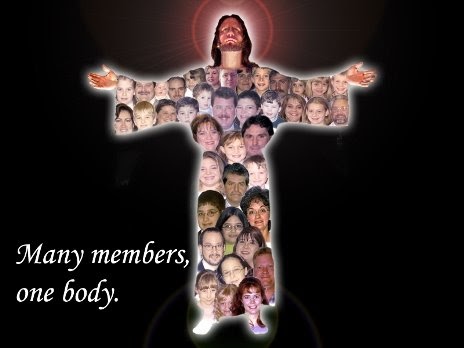
When we look at people, we don’t see their personhood, their personalities, their character, their souls. We see the surfaces of their bodies and their clothes, and our brains put together a sense of who they are. We are the Body of Christ, and many people will encounter Christ in us.

Acts describes a healing Church. There were lots of miraculous healings, and that was good for making an opening to evangelize. I thought that it was unfair that we didn’t have them as often, so we were working at a disadvantage. I realized that we can be a healing

Church in a different way. The world is torn by hatred and division. If we could work on healing the divides, reconciling opponents, and building forgiveness we can be a mighty force for healing.

I won’t suggest that I’m an expert on this, but I will tell you I have grown enormously from where I used to be. If enough people do that, it could make the world a significantly better place. If enough people in the Church do it, it can help people see Jesus in us and

come to faith.

My journey started with “How to Win Friends and Influence People” by Dale Carnegie. It was eye opening. It taught me to focus on what was important to other people, a concept new to me. Now there are many good resources. I would suggest; “No Future Without Forgiveness” by Desmond Tutu, “The Book of Forgiving” by Desmond and Mpho Tutu, “Don’t Forgive Too Soon” by Dennis Linn, Sheila Fabricant Linn and Matthew Linn, “God Help Me! These People are Driving me Nuts! By Gregory Popcak, and “I Never

Thought of it That Way” by Monica Guzman (specifically about bridging the political divide in our country). If you read only one, I recommend it be “Redeeming Conflict” by Ann Garrido. It has twelve habits for transforming conflict into a spiritual journey. If

enough people read and understand it, we can have a common set of principles and a common vocabulary for working together.

“Remembering God’s Mercy” by Dawn Eden is about healing wounds in our own hearts. John Gottman’s “Seven Principles for Making Marriage Work” talks about building relationships that can endure conflict, and it occurred to me that many of these ideas could apply to any human relationship, not just marriages. “How to Know a Person” talks about some general ideas for building better relationships, something not well taught in our society. “The Anxious Generation” by Jonathan Haidt is about how phone based childhoods are seriously hampering (if not destroying) the next generation’s ability to connect in a human way.

Much work to do. I challenge everyone: what are we willing to do it make the Church more effective in witnessing to Jesus, sharing this most wonderful gift of the Gospel?

Might this help? I would ask everyone to pray on this.

Blessings,

Fr. Jim
Easter Changes Everything

Dear Folks,
Happy Easter! Easter changes everything.
Without Easter, Jesus was a total failure. As Bishop Barron said, there was not more certain proof that someone was not the Messiah than getting crucified by his enemies. Without Easter, the apostles were the most lost people ever. Following Jesus was clearly the worst decision they had ever made. Now there would be nothing left to do but try to put together some semblance of a life and put this humiliating business behind them.
But that’s not what happened, is it?
They encountered Jesus, and His body had been glorified. We are only given hints of what His glorified body was like, and it is not surprising it would be beyond description, but encountering him completely changed their lives. Instead of slinking off into obscurity, they moved forward together with incredible boldness. The world was baffled, because their behavior made no sense to them. Indeed, their behavior made no sense at all – unless they had encountered the risen Jesus.
Are we an Easter people? Are we living for eternity? We may not have seen the risen Jesus like the apostles did, but we can still follow their lead. (“Blessed are those who have not seen but believe [John 20:29]).” The more we believe in the Resurrection, the more we see our life on earth is just the beginning and death is a transition; we are looking forward to something greater. The things of the earth are useful for a time, but we will lose them all sooner or later. That which is love lasts forever. Growing in love for God and for one another is building an eternal treasure.
Toddlers want everything immediately and have a very hard time coping with disappointment. I think that is partly because they see the present moment being huge, and don’t see the bigger picture. As we mature, we can cope with failures, setbacks, and disappointments better because we are more aware that this is a small part of a large story, and that perspective helps us take it in stride. The deeper our sense that the big picture is eternity, the more we can deal with temporary setbacks for the sake of permanent treasure. As St. Paul told the Corinthians: “Therefore, we are not discouraged, although our outer self is wasting away, our inner self is being renewed day by day. For this momentary light affliction is producing for us an eternal weight of glory, beyond all comparison, as we look not to what is seen but what is unseen; for what is seen is transitory, but what is unseen is eternal (2 Corinthian 4:16-18).”
If you read the Acts of the Apostles (which I highly recommend) you know that St. Paul did not have an easy journey. The fact that he can call it a light affliction tells us about the depth of his faith. He meant what he said.
We celebrate the Easter season through the feast of Pentecost, which this year is June 8. During this season it is appropriate to have extra festiveness as we look forward to the ultimate celebration that lasts forever.
Alleluia!
Blessings,
Fr. Jim

Telling the Story

Dear Folks,

Story telling is one of the most basic human activities. We take tidbits of experience and weave it into a narrative. We don’t see directly into people’s minds, but we see their actions and hear their words, and put them together like puzzle pieces to get a picture of what they are like. We decide some people are our friends and others are not. Sometimes we can be mistaken, and someone who had acted friendly had been trying to take advantage of us.

In detective movies we see events, details and conversations, and in the end, the detective typically calls everyone together, weaves those tidbits into a narrative describing what happened, and reveals the killer. If the movie is well done, we say to ourselves that we remember those things, why didn’t we put them together?

In the Easter readings, we see people’s experience of the risen Jesus. Jesus explained how the Old Testament led up to the Gospel (Luke 24:27, 45-47). Earlier, Jesus suggested to scholars that the Old Testament pointed to His story, but they didn’t get it (John 5:39).

All creation was made through Jesus and for Jesus (Colossians 1:16), so all stories lead to Jesus. It is a matter of putting together the puzzle pieces. We have to start where people are at. We remember that St. Paul told the Gospel story one way to Greek philosophers in Athens (Acts 17:22-34) and another way to the Jews in Jerusalem (Acts 22).

If we want to tell the Gospel story, or a part of it, to someone, it really helps to hear their story first. It would be useful to know what experiences they’ve had with religion in general and Christianity specifically. Were they taught anything? Were they taught so poorly that they couldn’t recognize any goodness, beauty, or truth in it? Did they find it silly or trivial? Were they hurt or disillusioned? What do they believe strongly? What is important to them?

Sharing our knowledge of the Faith and our personal experience in a way that might be meaningful to others is more art than science. Most of us are not practiced in it, but we can learn, and that will be helpful to fulfill Jesus’ mandate to be his witnesses (Luke 24:48; Matthew 28:19-20). We can start by asking ourselves: Why is the faith precious to us? What strikes our hearts most powerfully? How are our lives different because of it? What have been our good experiences? What have been our bad experiences? What

have they taught us?

We are an Easter people. Let us rejoice!

Blessings,

Fr. Jim

Being an Easter People

Dear Folks,

As we celebrate the second Sunday of Easter, we continue to consider what it is to be an Easter people. We see in our Scriptures today Christian generosity (Acts 4:32-35), forgiveness of sins

(John 20:19-23), and the power of wounds (John 20:24-49).

Generosity is not just giving, but giving from the heart, and finding joy in the giving. It includes not just giving stuff, but also time, patience, empathy, and understanding. We all have responsibilities and limited resources, so there is only so much we can do, but we look for opportunities to be good to others as we would hunt for treasure. Faith includes believing that giving of ourselves for the love of Jesus is a greater source of happiness than the world can give.

Jesus breathed on the apostles and gave them the Holy Spirit for the power to forgive sins. The Catholic Church understands this as the origin of the sacrament of reconciliation, but forgiveness is a key part of being Christian. We remember it is a form of healing, healing our hearts, and, if possible, healing the relationship. Some relationships can’t be healed, and then we have to settle for healing within ourselves. I recommend Desmond Tutu’s book “No Future

Without Forgiveness” and the sequel that he wrote with his daughter Mpho, “The Book of Forgiving.”

Jesus showed Thomas his wounds, and even invited him to touch them. His wounds were now marks of glory and showed that it was really Him and really raised. It moved Thomas to a powerful expression of faith. We remember how early Christians went to their deaths in the arena singing hymns of praise, and this moved people to want to know more about Christianity. Being able to endure suffering, hardship, even mistreatment without becoming mean and bitter makes a statement. In Mark 16:18 when Jesus is talking about believers handling serpents and drinking deadly things without harm, He’s not encouraging us to play with reptiles or drink

poison. He is saying His followers can face the evil in this world without being defeated, without becoming evil. Victor Frankl, in his book “Man’s Search for Meaning” spoke about how he had seen many people who had suffered terribly and became kinder and more generous, while others who suffered relatively less became hard and mean. He suggested the difference had to do with the meaning people found in there suffering. The ultimate meaning of our suffering can be found in taking up our cross and walking with Jesus for the sake of the Kingdom.

“Now I rejoice in my suffering for your sake, and in my flesh I am filling up what is lacking in the afflictions of Christ on behalf of his body, which is the church (Colossians 1:24).” Dawn Eden’s book “Remembering God’s Mercy” talks about healing the wounds of our hearts from a Catholic perspective.

For all of this to happen, of course, the first step is to fall more deeply in love with Jesus. It is His work in our lives that transforms our minds, our hearts, and our lives. If people notice that

difference in us, that may lead them to the Gospel.

Alleluia!

Blessings,

Fr. Jim

From Cain and Abel to a More Peaceful World

Dear Folks,

As we celebrate the Easter season, we remember it is a time of new hope and new possibilities. As we read Acts of the Apostles, we see things happening that the early Christians would not have thought possible at first.

There is so much violence in our world. I sure would like for there to be less. When there is a particularly horrific incident it will often dominate the news for a while. Then different people will repeat their usual talking points. Various groups will talk past each other, and then nothing changes. I think we could do better. Short term, we can harden targets and make them less vulnerable. The deeper solution is not being so good at creating savages.

We have to have a less violent culture, a more peaceful culture, or no law can save us, and civilization itself is in the balance. I think there are some concrete things we can do. We have to decide what kind of people we want to be. It would involve looking at our own behavior (let none of us assume we are guiltless). It will involve what kind of messages that we send, and what kind of messages we encourage (calling out people on our side would likely be more effective than calling out our opponents; the other side is easy to dismiss). It will require considerable thought on how we as a society encourage good behaviors and discourage bad behaviors.

Particular issues would include:

• Support law enforcement, and value law and order.

• Build a strong sense of right and wrong.

• Combat fatherlessness.

• Stop talking past each other.

• Don’t condemn or demean our opponents; make a better case for our position.

• Keep our feelings and thoughts in perspective: just because I’m angry about something important doesn’t give me license to be destructive. Just because my cause is right doesn’t mean I have license to be destructive. We can work toward a better world, but we can’t expect to fix everything in our time. Building a better world is an intergenerational project.

• Build empathy, especially with people who see things differently, and reject objectifying groups or individuals. Avoid ridiculing people we disagree with.

• Reject using others’ behavior as an excuse to misbehave ourselves.

• Have the same standard of behavior for those we agree with and those we don’t; not condemn destruction when we disagree with their cause, and condone or dismiss it when we agree with the cause.

• Value growing in virtue over gratifying desire.

• Have some serious humility about how much we understand and how much we don’t: maybe even people we disagree with have some things to teach us.

In the weeks to come I’ll try to expand on these issues. I hope it may stimulate some thought and some discussion. Civilizations do rise and fall, but when they fall, it causes much suffering. It would be worth a lot to keep ours going.

Blessings,

Fr. Jim

Abandon all Hopelessness

This is Easter!

“Christ’s resurrection was not a return to earthly life, as was the case with the raisings from the dead that he had performed before Easter: Jairus’ daughter, the young man of Naim, and Lazarus. These actions were miraculous events, but the persons miraculously raised returned by Jesus’ power to ordinary earthly life. At some particular moment they would die again. Christ’s resurrection is essentially different. In his risen body he passes from the state of death to another life beyond time and space. At Jesus’ resurrection his body is filled with the power of the Holy Spirit: he shares the divine life in his glorious state, so that St. Paul can say that Christ is “the man from heaven” (1 Corinthians 15:35-50). (Catechism of the Catholic Church #646).”

We humans tend to think that the best we can hope for is more of the same, but a little nicer. Many eastern religions envision an eternal cycle of reincarnation, and the best that you could hope for is being reincarnated in a higher caste, and there was always a chance that you could be reincarnated as a dung beetle. On rare occasions, television and movies would give some vision of heaven, not intending it be serious, of course, but what you’d see is pretty pathetic. In fairness, one could never do justice to heaven in a movie, not only our technology but our minds are far too feeble for such a task.

Part of having faith in God is trusting Him to keep His promises, including the promises we don’t completely understand and that He will not disappoint those who hope in Him.

In my office I have a sign that says, “Abandon all hopelessness, ye who enter here.” The greater our faith, the more we can endure the world disappointing us, because the One in whom we trust will come through. The less we trust the world to make us happy, the more we trust in God, the more we can endure the world failing us, whether in the form of other people, including people in the Church, our government, our society, our families, our health, our money, even our own wills (I continue to be a sinner, and much as the devil would like me to give up, God invites me to keep trying to be faithful). We still have to grieve loss; our faith does not make it easy but does prevent us from giving up. Jesus received the full force of the evil in the world and emerged triumphant. He can conquer the evils that threaten and attack us. During Easter we are called to celebrate. As we fasted and did penance during Lent, so we feast during Easter. Our goal, of course, is not just partying for partying’s sake (though it is a good thing) but witnessing to the world our joy in God’s great victory over evil. We also seek to deepen our confidence in the Jesus’ victory, so we can live as victorious people. We will read a lot of Acts of the Apostles during the Easter season. We think of Acts as the sequel to the Gospel of Luke and the history of the early Church. It is also about how people act when they believe in the power of the resurrection. They were a tiny group, had few resources, and were surrounded by a very hostile culture. No one could stop

them.

Alleluia!

Blessings,

Fr. Jim

Easter People

Dear Folks,

This is Easter! This is actually when we should be singing, “It’s the Most Wonderful Time of the Year.” This is the celebration of Our Lord’s great victory over evil, and that makes all the difference. The Easter season will continue until Pentecost. How should we respond? I suggest:

1. Rejoice! (obviously). Even if you are going through a very hard time, we remember that the hard times come to an end, and the victory of Easter is forever.

According to our capacity at the time, we can look defiantly at what is dragging us down and say, “your days are numbered, and we will get the last laugh.” We read in Scripture, “Go, eat rich foods and drink sweet drinks, and allot portions to those who had nothing prepared; for today is holy to our Lord. Do not be saddened this day, for rejoicing in the Lord is your strength (Nehemiah 8:10).” We can celebrate according to our capacity and show the world that just as we have done penance during Lent, now we party!

2. Get immersed in Acts of the Apostles. During the Easter season, the first reading is from Acts almost every day. It is the story of the Church in its beginnings and shows how to be an Easter people. If we follow those readings and reflect on them, it will give us a sense of what was their response to the Easter event and the Pentecost event. (You know you are allowed to read the daily Mass readings even if you don’t get to Mass that day?). As you go through Acts of the Apostles, I would encourage you to look for four things:

a. Telling the Gospel story

b. Working together as community

c. Worshipping God

d. Helping people in need.

I would suggest that those four things were how they made their mark on the world. Doing these four things, a small band of misfits changed the course of world history forever. I suggest if we grow in doing these four things, we can be as successful as they were. We have everything they had. We have the Gospel story, and we have the Holy Spirit working within us. During the Easter season, I’ll be unpacking more about how we might try to grow in these four things (actually, I plan to be doing that for the rest of my life, but one step at a time).

We remember that after the disciples encountered the Risen Jesus, the world was still a mess, and still very hostile to everything Jesus is about. Acts makes this clear. It also made clear that the Church had problems, and that it had flawed people in them from the beginning (that is made even more clear in the epistles). Despite that, a small band of misfits changed the course of world history forever. If we truly believe in the resurrection the problems in the Church now will not hold us back from doing wonderful things.

When people look back on this moment in history, what will they find? Let’s see how many reasons we can give them to know that we truly believed in the Gospel, that we believed in the power of the New Life that Jesus offers us.

Blessings,

Fr. Jim

Walking with Jesus

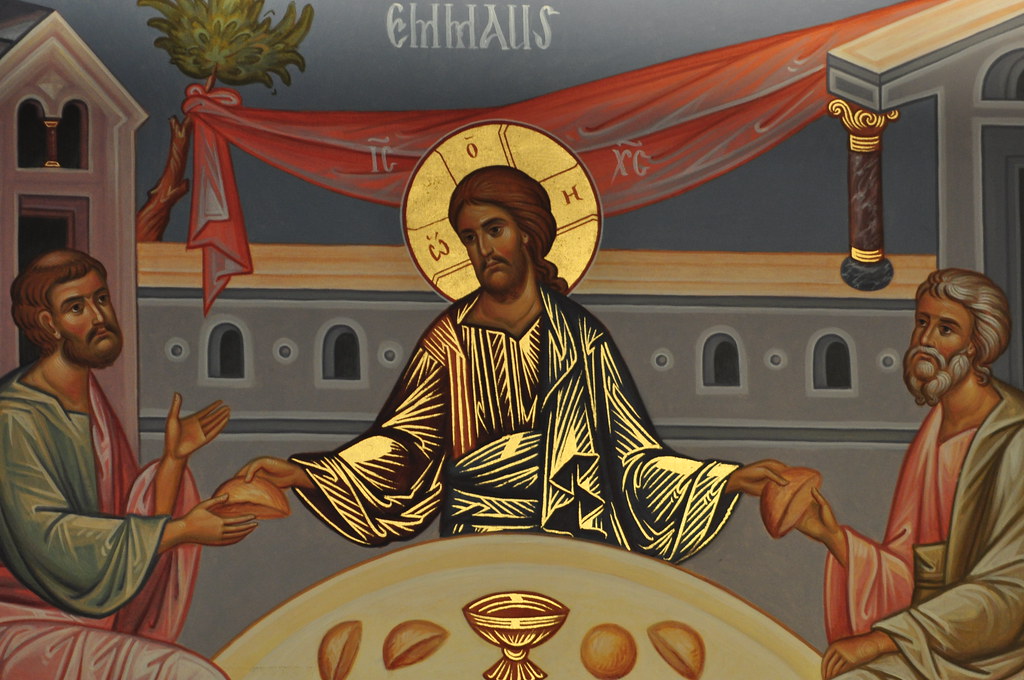
Jesus breaking bread

Dear Folks,
Today we look at the story of the road to Emmaus in Luke 24:13-35.
This is a wonderfully rich story, and it is worth taking some time with it.
Two of Jesus’ followers are walking along. One of the great images of the Christian life is a journey. We are not people who have arrived, but are called to be moving forward toward our goal, “the prize of God’s upward calling, in Christ Jesus (Philippians 3:13-14).” They are talking about their experiences of the weekend. Jesus starts walking along with them, but they don’t recognize Him. This seems common in encounters with the resurrected Jesus, but it is also true for us. Jesus is always with us, but we don’t always recognize Him. He says, “What are you discussing as you walk along?” Jesus is very good at asking the right question. Their response is wonderfully ironic: “Are you the only visitor to Jerusalem who does not know of the things that have taken place there in these days?” This is great, because He is the only one who really does know. The Gospels often do fun things like that. Jesus doesn’t let on. He says, “What things?” He, of course doesn’t ask because He needs to know, but to get them to tell their story. We shall see a lot of this in Luke’s sequel, the Acts of the Apostles. Most Catholics have not had practice in telling their story. If you needed to tell your faith story, what would you say? Then Jesus unpacks the Scriptures for them, and explains what these events really mean. Notice that Jesus asked them to bring forward what they had, but it is He who teaches. This dynamic is familiar. In the accounts of the multiplying of loaves and fishes, Jesus asks the disciples to bring forward what they have, but it is He who feeds. We see this again in a resurrection encounter in John 21:10-13, also with bread and fish. For now, however, Jesus is opening the Scriptures for them. They knew the stories in the Scriptures, but it is only in the light of the risen Jesus that people can see the full significance of what they mean. I would also suggest that the events of our lives can only be fully understood in the light of the story of salvation. Jesus acted like He was going further, but they urged him to stay, showing hospitality. Hospitality is tough during this lockdown, but it is something for Christians to be pondering. “Do not neglect hospitality, for through it some have unknowingly entertained angels (Hebrews 13:2).” We see them entertaining not only angels but Jesus Himself. “Behold, I stand at the door and knock. If anyone hears my voice and opens the door, then I will enter his house and dine with him, and he with me (Revelation 3:20).” We are not only called to be hospitable to Jesus by welcoming other people, but welcome Jesus directly with our prayer and attentiveness to Him, His teaching and His presence in our lives, and our willingness to examine and change our lives in His Light. Pope Benedict was fond of encouraging people to take the time to let Jesus be “our best friend.”
Breaking of the Bread “And it happened that, while he was with them at table, he took bread, said the blessing, broke it, and gave it to them. With that their eyes were opened and they recognized him, but he vanished from their sight (Luke 24:30-31).” The taking, blessing, breaking and giving was, in Jewish practice, how the meal was begun. I haven’t seen any commentary on this, but it seems to me that that action would be the proper function of the host, and Jesus was a guest. When something doesn’t quite fit I want to know why. I suggest this is a larger truth: when we invite Jesus in, He is in charge, He is the Host, and He is the one who feeds. Christians would associate Jesus’ actions with the celebration of the Eucharist, and of course when we gather for the Eucharist, we are not the hosts; Jesus is the host. This would remind us we recognize Jesus in the Eucharist. After He vanishes, they asked each other, “Were not our hearts burning within us while he spoke to us on the way and opened the scriptures for to us (Luke 24:32).” Once again, we don’t often recognize Jesus at work in our lives until we reflect back afterwards, and then it becomes clear.
Then they shared the story with others and got it confirmed, and they learned they were not alone. We remember the Visitation, in which Mary went to Elizabeth, and her experience was affirmed. This is one of the (many) reasons we need Christian community.
Jesus is still walking with us.
Blessings,
Fr. Jim

Believing Thomas

believing thomas

We all know the story of Believing Thomas. He didn’t believe until he saw the risen Jesus and touched His wounds.

“Jesus said to him, ‘Have you come to believe because you have seen me? Blessed are those who have not seen and have believed (John 20:29).’” For years I wondered “Why?” Why is that better?  In days when I was dealing with atheists and wrestling with questions about God’s existence I thought that it would be a lot easier if the risen Jesus would just appear to everyone like He had appeared to Thomas and let is examine His hands and His side. It is certainly not beyond His power.

We see a situation in which John does not see, but believes. He is a model for all of us. “He bent down and saw the burial cloths there, but did not go in. When Simon Peter arrived after him, he went into the tomb and saw the burial clothes there, and the cloth that had covered his head, not with the burial cloths but rolled up in a separate place. Then the other disciple also went in, the one who had arrived at the tomb first, and he saw and believed (John 20:5-8).” It was significant that the cloth for the head was not with the others but rolled up in a separate place, because that suggested this was not the work of grave robbers.  The first thought would be the body had been stolen, but what grave robbers would roll up the cloth and put it aside?  It didn’t add up.  That was enough to convince him, and he believed. This is not the first time the Gospel of John suggests people putting the clues together. “The next day, the crowd that remained across the sea saw that there had only been one boat there, and that Jesus had not gone along with his disciples in the boat, but only his disciples had left (John 6:22).  This made people suspect something was up.  We, of course know that Jesus didn’t need a boat, He just walked.

A very interesting book called The Love Dare by Stephen and Alex Kendrick with Lawrence Kimbrough deals with intentionally building love within a marriage.  It had a section that was eye-opening for me.  “A woman deeply longs for her husband to be thoughtful. It is a key to helping her feel loved. When she speaks, a wise man will listen like a detective to discover the unspoken needs and desires her words imply. If, however, she always has to put the pieces together for him, it steals the opportunity for him to demonstrate that he loves her.”  I had always thought that saying, “If you don’t understand I’m not going to explain it to you” was an exercise in gratuitous cruelty, but this makes sense.  God also calls us to be attentive and thoughtful, to put together the pieces, to “connect the dots,” to discover Him and His will for us. This is not, of course, because He needs us to make Him feel loved (He needs nothing from us), but it is a way we become more engaged and give ourselves more deeply, more completely to Him, which is what we need more than anything else.  Of course, unlike a human spouse, God knows our abilities completely and will never fault us for failing to figure out something that is beyond our ability.  If the risen Jesus were to appear to each one of us and do the “stick your finger in the nail marks” thing, we would not have to engage much of our brains.  We are only complete when we are totally His, and this involves more and more of ourselves responding to the call and seeking. We remember, when we are seeking Him, He has already found us.

In a deep friendship, trust develops, and things are believed without being proven, but with good reason.  There comes a point where we decide it is not absolute, but there is enough reason to believe.  One could always say, “I’m not convinced yet; I need to see more.”  If someone doesn’t want to trust you, there will never be enough to convince them. But imagine being able to take a meter and read the level of friendship someone has for us. That would be less work, wouldn’t it?  But perhaps that is exactly the work that we must do to build friendship.

It also means that we have the ability to decide that no one can be trusted and everyone is out for what they can get and will turn on you the minute it is to their advantage. Then, of course, we will avoid being disappointed, but we shut ourselves out of so much.  We don’t get very far without faith.

When people want proof that does not require them engaging, stressing, taking some risk, then there can never be true friendship.  “The Pharisees came forward and began to argue with him, seeking from him a sign from heaven to test him. He sighed from the depth of his spirit and said, ‘Why does this generation seek a sign? Amen, I say to you, no sign will be given to this generation.’ Then he lift them, got into the boat again, and went off to the other shore (Mark 8:11-13).’”

Although faith is a gift, it is also a choice. “And this is the verdict, that the light came into the world, but people preferred darkness to light, because their works were evil (John 3:29).”

God calls us to give ourselves to Him deeply, fully, and freely.  This means more effort, but it is eternally worth it. So why did Jesus give this special moment to Thomas? God knows what each one of us needs, and knows it better than we do.  He will give us what we need, but not necessarily what we want.


Peter Reconciled

peterdoyoulove

Dear Folks,

As we continue to celebrate Easter, we look at the resurrection accounts in the Gospels. This Sunday we look at the Gospel of John, and Jesus appearing to His disciples. As we join the story (John 20:19-31), Peter and the beloved disciple (generally believed to be John) had seen the empty tomb, and the risen Jesus had a very nice chit chat with Mary Magdalen. The disciples are in a locked room, cowering in fear, but He appears to them and says, “Peace be with you.” Clearly, no lock-down can keep Jesus out now.  His greeting of peace is important for several reasons. Since they didn’t do such a hot job on Good Friday, they would naturally wonder if Jesus was going to be mad at them, and perhaps give them a serious smiting.  Jesus is here to bring peace. This seems very much like what He would do, but we need to consider something He had said earlier, “Do not think that I have come to bring peace upon the earth. I have come to bring not peace but the sword.  For I have come to set a man against his father, a daughter against her mother, and a daughter-in-law against her mother-in-law; and one’s enemies will be those of his household (Matthew 10:34-36).”  So what are we to make of that?

I would suggest that real peace comes from facing division and healing it, rather than covering it over.  That sometimes means that an absence of visible conflict may just mean that there is a problem, but it is kept hidden and not acknowledged. In the Gospels, refusal to recognize one’s sinfulness is a very serious thing.  We remember at the end of the story of the man born blind: “Some of the Pharisees who were with him heard this and said to him, “Surely, we are not also blind, are we?’ Jesus said to them, ‘If you were blind, you would have no sin; but now you are saying, “We see,” so your sin remains.’ (John 9:40-41).” We also remember the parable of the Pharisee and the tax collector (Luke 18:9-14). The Pharisee did lots of good stuff, but because of that, he didn’t see a need to change, or even acknowledge his sinfulness. The tax collector had probably committed a lot more sins, but recognized his sinfulness and was repenting an on the road to doing better.  He came out justified but the Pharisee did not.  It’s okay to be where we are, but it’s not okay to stay where we are.

Looking at John 21, we see Jesus and Peter having an important conversation. They have had breakfast, and are sitting by a charcoal fire.  This reminds us that on Good Friday, Peter was standing next to a charcoal fire to keep warm when he denied Jesus (John 18:18 and 18:25) We are taught that the sense of smell is the most powerful sense for evoking emotional memories, so imagine Peter, his mind right back there to his moment of failure.  Jesus asks three times, “Do you love me?” and counterpoint to Peter’s threefold denial.  We notice Jesus didn’t need to rub his face in it (“Gee, Peter, remember when you said you would lay down your life for me and I told you…”). Peter knows, and Jesus knows he knows.  Jesus is not looking to prolong the hurt, but to bring reconciliation.  He had to recognize where he was, but didn’t need to spend time wallowing in guilt. He would need that energy for doing the work that Jesus was giving him to do.  That was where his focus needed to be.  A surgeon must cut in order to do good, but tries to cut as little as possible and do the most amount of good.

Jesus brings the gift of peace.  We will not know its fullness until the end of our journey (1Peter 1:3-9), but we can get a taste of it when we encounter Jesus. We all are sinners, and we all suffer from others sins.  We can look from that pain and say, “Jesus, you can make me whole; you can bring me to peace.” We can live in hope for the complete peace of heaven, and strive for peace now. “Blessed are the peacemakers, for theirs is the kingdom of heaven (Matthew 5:9).”

Blessings, joy and peace,

Fr. Jim