Category Archives: Faith

True Gift of Self

jm_200_NT1.pd-P24.tiff

Dear Folks,

This is Holy Week, the height of our liturgical year. We try to put everything else aside to focus on this journey. We follow Jesus from the triumphal entry into Jerusalem, His time in Jerusalem, His passion and death, and finally the resurrection.

All four Gospels tell the story of Jesus’ triumphant entry into Jerusalem. This year we look at the Gospel of Luke, who, just before the entry tells the story of a king who returns to his kingdom to hold his servants accountable for their stewardship and destroy his enemies (Luke 19:11-27). This shows us how to view His time in Jerusalem. He will hold them accountable for their stewardship of God’s gifts.

The essence of the Gospel is the gift of self. Our Lord gave Himself completely, and that comes to its fullness in His sacrifice on the cross. We see here a contrast between those who truly give the gift of self with those who give a false gift or who refuse completely.

After His entry into Jerusalem, He weeps for it, saying that they lost their chance for peace and would be destroyed (Luke 19:41-44). This anticipates the talk on the destruction of the temple, coming persecution, and the coming of the kingdom (Luke 21:5-36). This suggests that if they had accepted His teaching, they could have avoided this catastrophe. We know that they tried a futile uprising and were destroyed. Centuries later, Christianity would conquer the Roman empire by evangelizing it. What would have happened if they tried that approach first thing? Unfortunately, so many people threw away the opportunity that God had given them. Their bad stewardship was being judged.

Then Jesus cleansed the temple. God had given them the great gift of temple so they could give themselves to Him in their worship, and they were using it for their own selfish purposes. Their bad stewardship was being judged.

The chief priests, the scribes and the elders attempt to pin Jesus down on His authority, but they won’t take a stand themselves (Luke 20:1-8). This isn’t going to work. We have all dealt with people who want to hold others accountable, but object to being held accountable themselves. We cannot claim to understand Christianity while staying safe. We have to put ourselves on the line, including the possibility that Christ will completely rework our lives,

including being publicly known for our positions. Anonymous criticism gets no respect. Again, that is not a true gift of self.

He tells the story of the tenant farmers who won’t make a return to the vineyard owner (Lk. 20:9-19), even killing his son. He is making clear that the chief priests, the scribes, and the elders of the people have not been good stewards of the great gifts they have been

given. Instead of giving their hearts, their minds, their wills and their strength to God (see Deuteronomy 6:4-5), they kept their hearts for themselves and used God for their own purposes.

We contrast this with two stories just before and near the end of this section. Zacchaeus (Luke 19:1-10) received an unexpected opportunity in the visit of Jesus and used it to turn his life completely around. An unnamed widow (Luke 21:1-4) was given very little to work with, but responded with all her heart and all her self. These are praised for their stewardship.

I recently rewatched the 2019 movie “Midway.” The battle of Midway was one of the most critical battles of World War II, and it is very inspiring to see so many people who made such great and brave sacrifices for the sake of the war effort. They wanted to live, to be safe, and to be with their families, but they knew how much their work mattered. During this holy week, I suggest we reflect on how we have responded to God, how might He be calling us to respond, and how well do we believe that our response to God matters?

Blessings,

Fr. Jim

Flesh and Spirit

Dear Folks,

Looking at the cycle A readings, today we come to the story of the raising of Lazarus, which is about the middle of the Gospel of John, and the last and greatest of His signs (John does not talk about “miracles” but rather “signs”).

There is a big difference from mere physical survival and the fullness of life. “A thief comes only to steal and slaughter and destroy; I came so that they might have life and have it more abundantly (John 10:10).”

Our second reading from Romans 8 says, “Those who are in the flesh cannot please God. But you are not in the flesh; on the contrary, you are in the spirit, if only the spirit of God dwells in you. Whoever does not have the spirit of Christ does not belong to him (Romans 8:8-10).” It is worth reading a bit of what came before: “…so the righteous decree of the law might be fulfilled in us, who live not according to the flesh but according to the spirit. For those who live according to the flesh are concerned with the things of the flesh, but those who live according to the spirit with the things of the spirit. The concern of the flesh is death, but the concern of the spirit is life and peace (Romans 8:4-6).”

It is crucial to understand that when talking about “flesh” and “spirit” the Bible is not saying the body is evil or unimportant. It is talking about an attitude, an approach to life. To live according to the flesh is to be ruled by our lesser desires, and to live according to the spirit is to live according to the truth of God, which can only be done with God’s grace. St. Paul famously taught: “Now the works of the flesh are obvious: immorality, impurity, licentiousness, idolatry, sorcery, hatreds, rivalry, jealousy, outbursts of fury, acts of selfishness, dissensions, factions, occasions of envy, drinking bouts, orgies, and the like. I warn you, as I warned you before, that those who do such things will not inherit the kingdom of God. In contrast the fruit of the Spirit is love, joy, peace, patience, kindness, generosity, faithfulness, gentleness, self-control. Against such there is no law (Galatians 5:19-23).”

To live according to the flesh is to be ruled by our desires as animals are. For animals, of course, it is fitting. They are engaged in a fight for survival that always ends in defeat. We were made for more, and to settle for the desires of the flesh is to make of our lives a grotesque caricature of what God made us to be. A violent rage and desire for revenge are grotesque caricatures of the desire to build peace and justice. Greed is a grotesque caricature of the desire to build things of benefit to others, enjoy the fruits of our labors, and have some security for the future. Lust is a grotesque caricature of the free, total, faithful and fruitful relationships to which God calls us. Pride is a grotesque caricature of the desire to celebrate and rejoice in the person that God has made us. To live according to the flesh is merely survival. To live according to the spirit is the fullness of life.

The raising of Lazarus was a teaching moment, a foreshadowing of the resurrection to come. Lazarus was resuscitated with his body like it was before, not the resurrection body that Jesus would have on Easter. While Jesus could pop into locked rooms with no problem, Lazarus still had to be untied from his wrappings (John 11:44). Today is to sharpen our appetite for Easter. St. Paul said, “If you were raised with Christ, see what is above, where Christ is seated at the right hand of God (Colossians 3:1). Christians are already participating in eternal life, and we are called to live accordingly. In heaven of course, that life reaches its fullness. That will be good. Very, very good.

Blessings,

Fr Jim

Will We See?

Dear Folks,

I remember the Ray Stevens song “Everything is Beautiful” including the line, “There is none so blind as he who will not see.” We know that we do not have to choose to have blind spots just like we don’t have to plant weeds in our gardens. They’re just there, and we have to recognize them and root them out, or they take over.

I would suggest that one very fertile ground for blind spots is the broader consequences of our choices, and the responsibility we bear for them. I’m thinking about how we deal with Church. Over the years, I’ve heard many people concerned about what is happening (or not happening) in the Church, but many are strongly focused on what other people should be doing about it, often the Pope, the bishops, and the priests. This is a formula for helplessness.

As Batman once said, “I don’t do ‘helpless.’”

If we are willing to look, might we find ways in which the faithful can each play a role in turning the Church around?

Fully conscious, active participation. The Second Vatican Council’s Constitution on the Sacred Liturgy (Sacrosanctum Concilium) says, “By way of promoting active participation, the people should be encouraged to take part by means of acclamations, responses, psalmody, antiphons, and songs, as well as actions, gestures, and bodily attitudes. And at the proper times all should observe a reverent silence (SC 30).” Some people are ill, or just working their way through mental blocks, and it is all they can do to be present at all. We need to have a lot of compassion for them. However, the more we are able to participate actively, not only are we more fully engaged (we are called to give our entire selves to God), but also the more we bear witness that this is worth our best effort, and that energy can strengthen their faith and their prayer.

Learn about our faith. Lots and lots of Catholics have left the Catholic faith because someone sat down with them, showed them some Bible verses, and explained why Catholicism is “wrong” and “unbiblical.” Scott Hahn, in his younger days, was in the business of leading Catholics away from their faith and said that it was easy, because they knew so little about their faith. How many Catholics stop learning about their faith when they finish eighth grade or get confirmed? What if we stopped learning about all the important aspects of life when we were in eighth grade? How successful would we be in life? Can we see what would happen if it were the rule, not the exception, that Catholics would be life-long learners about their faith, according to their ability? Obviously, while I use the little slivers of time I have at Mass available to slip some teaching in, that will not answer the need by itself.

How are we talking about the Church as a whole, and about our faith community in particular? Are we bringers of good news? If we talk about what is wrong, is it in the context of how we can make things better? If we catch ourselves complaining for the sake of complaining, how might that time and energy be used to make the situation better?

Can we see other ways each person can make a difference in the future flourishing of the Church? As Jesus said, “One sows, and another reaps (John 4:37).” Every seed sown matters. It starts with how we see the situation.

The Pope, the bishops, and the priests are prominent, but they are a small minority within the Church. What people read about and what they see on a screen are not as powerful as personal contact. How the Church is seen, how it is able to attract people, will depend mostly on the Catholic faithful.

Blessings,

Fr. Jim

Woman at the Well: a Surprise

Dear Folks,

Today, Jesus meets a woman at a well. Brant Pitre’s excellent book “Jesus the Bridegroom” talks about gathering all the people of God to be the bride of the Lamb. The Bible has a couple of powerful images of meeting a bride at a well (Isaac, through a servant, with Rebekah in Genesis 24, Jacob with Rachel in Genesis 29, and Moses with Zipporah in Exodus 2:16:21). Pitre will point out various details in common between these stories and the story of Jesus at the well, which means that a Jewish audience who knew their Torah would instantly make the connection. A man meeting a woman at a well made them think of marriage.

Jesus talks about being the source of living water. We will see again that He will talk about living water in chapter 7 during the feast of tabernacles (the feast of booths): “On the last and greatest day of the feast, Jesus stood up and exclaimed ‘Let anyone who thirsts come to me and drink. Whoever believes in me, as scripture says; “Rivers of living water will flow from within him.”’ He said this in reference to the Spirit that those who came to believe in him were to receive. There was, of course, no Spirit yet, because Jesus had not yet been glorified (John 7:37-39).” According to Gail Yee’s “Jewish Feasts and the Gospel of John”

she talks about the last and greatest day of the feast. “On the seventh day, the priests pass through the Water Gate and encircle the sacred altar seven times with the waters drawn from the pool of Siloam (p.79).” There would be other rituals with water during the feast. It would happen at the time of harvest, which was the beginning of the rainy season (there is no rain in Israel during the summer: rain happens in the winter, so imagine cisterns getting dry). In that context Jesus makes His declaration.

Pitre argues that when Jesus tells the woman at the well about living water, He refers to baptism, seeing how it follows from so much about baptism in Chapter 3 and the beginning of Chapter 4. Baptism gives the Holy Spirit (John 1:32 and 3:5) and the Spirit reminds us of the truth (John 14:26)

Jesus breaks down barriers between people. Jesus is about bringing people together. This woman was a Samarian, and very much an outsider. We don’t know the details of this woman’s story. She has had five husbands and was living a sinful lifestyle with a man with whom she was not married. Was she in her situation because she made some really bad choices, or because she was treated horribly and this was the only way she could find to survive, or maybe a combination of the two? The fact that she is coming to the well at midday suggests other women were shunning her. In Israel, you run errands early in the morning before it gets hot, and at mid-day you work inside. Jesus loves people regardless of their sins, but also takes their sins seriously (nowadays people assume it has to be one or the other). He doesn’t explore the state of her soul, but the basic facts of her situation. The fact that He knew that and didn’t treat her with contempt was probably a new experience for her. He did not berate her, simply told the truth, and she knew what the score was. Nowadays, it has the extra complication that many people, including many practicing Catholics, believe that many sins are not only not sins, but positive goods, and that calling them sins is actually hateful. Still, we are called to lead with love and respect, to trust the power of the Spirit given to us in baptism, and to point to the truth. Jesus offers a more abundant life (John 10:10) and it is for us to point to that life and show it in our behavior.

I suggest getting more and more deeply engaged in the Gospel of John will help us see how His truth all connects and how to point to it with our words and actions.

Blessings

Fr Jim

Loving People Hard to Love Part II

Dear Folks,

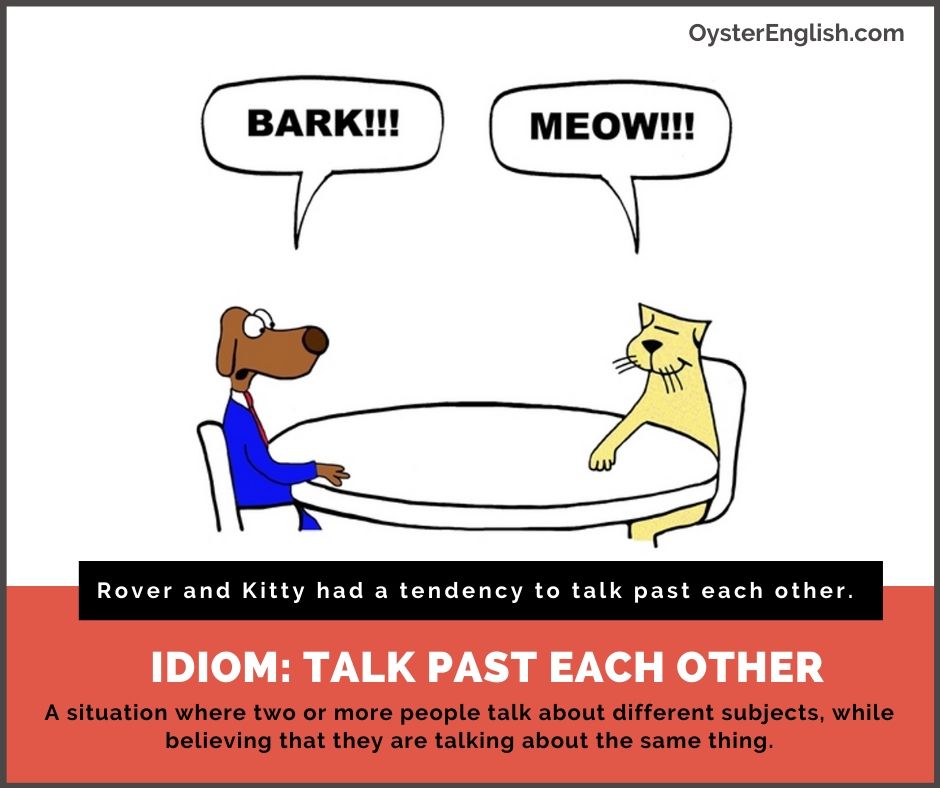
We all have a deep need to tell our story, to be heard, to be understood. Much anger, frustration, and resentment come from a feeling of not being heard, not being understood. It is often difficult to make ourselves understood to someone, and what makes the experience much harder is when we get the feeling that the other person isn’t trying. Sometimes the truth is more complex.

Perhaps we underestimate the depth of the chasm between our minds. In Malcolm Gladwell’s book “Talking to Strangers” he mentions that we tend to underestimate how we can use the same words and gestures and mean different things. Both sides might be trying and failing to connect.

Stephen Covey said, “We judge ourselves by our intentions and others by their behavior.” Consider what that means, that what we experience ourselves can be very different from how others experience us.

In “The Screwtape Letters” C.S. Lewis portrays the devil Screwtape teaching his nephew Wormwood how to lead a soul into hell: “Keep his mind on the inner life. He thinks his conversion is something inside him and his attention is therefore chiefly turned at present to the states of his own mind—or rather the expurgated version of them which is all you should allow him to see. Encourage this. Keep his mind off the most elementary duties by directing it to the most advanced and spiritual ones. Aggravate that most useful human characteristic, the horror and neglect of the obvious. You must bring him to a condition in which he can practice self examination for an hour without discovering any of those facts about himself which are

perfectly clear to anyone who has ever lived in the same house with him or worked in the same office (Letter 3).” And “Your patient must demand that all his own utterances are to be taken at their face value and judged simply on the actual words, while at the same time judging all his mother’s utterances with the fullest and most over-sensitive interpretation of the tone and the context and the suspected intention. She must be encouraged to do the same to him (Letter 3).” I believe this sort of thing is not uncommon. How do we watch for such behavior in ourselves? I suspect we tend to be very aware of how the other person tries our patience, but we might have no idea how much we try the others’ patience. How can we watch for that?

There may be times, and certainly there are abusive relationships, in which we are innocent, and the other person is quite guilty. We want to be careful about getting to that conclusion too quickly and too easily. When it is such a situation, we still have the challenge of how we are going to deal with the situation. Waiting for the other person to change is not going to get us anywhere. When we must play a game that is rigged against us, we must play it well. In Matthew 16:10, Jesus says, “Behold, I send you forth as sheep in the midst of wolves, so be as clever as serpents and innocent as doves.” We must be clever as psychological tricks and traps are thrown at us. Though there is a temptation to use the other’s behavior as an excuse to lower the standards of our own behavior, it is essential to strive to be innocent, first because it is right, and second because others might use any lapse on our part as a reason to attack us and make us the villain (never mind they do worse on a regular basis).

This stuff is hard, at least I find it hard. I suggest that if more people took these things into account, we could get along better. Can you think of anything to practice during Lent for more peace in the world?

Blessings,

Fr. Jim

God has Something Better

Dear Folks,

God, whose generosity has no limit, has made us for the fullness of life, the fullness of freedom, and the fullness of joy. The Enemy is always trying to persuade us to accept an inferior substitute, something that usually seems better at first but then betrays us. If we are going to show people that the Gospel is worth accepting, we have to show that what it offers is better than what the world offers. We read in the Scriptures:

“See, I am teaching you the statutes and ordinance as the Lord, my God has commanded me, that you may observe them in the land you are entering to possess. Observe them carefully, for this is your wisdom and discernment in the sight of the peoples, who will hear all of these statutes and say, ‘This great nation is truly a wise and discerning people (Deuteronomy 4:5-6).”

“If you remain in my word, you will truly be my disciples, and you will know the truth, and the truth will set you free (John 8:31b-32).” “A thief comes only to steal and slaughter and destroy; I came so that they might have life and have it more abundantly (John 10:10).”

“But now I am coming to you. I speak this in the word so that they may share my joy completely (John 17:13).”

One of the great triumphs of the Enemy is convincing so many people that Christianity is a matter of accepting a diminished life in order to get a reward from a miserly God. It is for us to show that following Jesus and His teaching leads to a more abundant, more free, more joyful life.

What do people see when they look at us? Do they see people who disagree with each other and still show love and respect, people with a steady and persistent dedication to helping those in need when it is popular and when it is not, people who work harder at fixing themselves than correcting other people, people more interested in developing virtue than in virtue signaling? Do they see us as light to the world (Matthew 5:14)? Would many not be drawn to this? These things are, of course difficult, and so we need to take advantage of all the help God provides for us to grow in holiness.

Some people suggest that we need to downplay or even modify Catholic teaching on sexuality. I say that is a mistake. What if it is one of the most important gifts we have to offer the world now? Daniel Mattson gave a talk on Courage International to a diocesan gathering for priests (We see him in the documentary “Desire of the Everlasting Hills”, and he wrote a very interesting book “Why I Don’t Call Myself Gay”). He started with the provocative question, “Is chastity a part of the good news?” He talked about living a sinful lifestyle and said, “I was as happy as I knew how to be.” Then he gave up his old lifestyle to follow Jesus according to the Catholic faith and learned a new level of happiness. How many Catholics, even those who try to take the faith seriously, consider Catholic teaching on marriage, sexuality, and chastity to be a bitter pill to swallow, rather than a wonderful gift. I suggest that this is because we have not done enough to show the goodness, beauty, and truth of that teaching. We have the better message; the Enemy has outdone us in marketing (Luke 16:8).

Ralph Martin makes the argument, “One of the main reasons for the growth of the early Church was its emphasis on sexual morality rooted in the believers becoming one body, one spirit with Christ Himself. Call it the theology of the body if you will. The difference between the Church and the world on these issues was a prime reason why those pagans of good will could recognize a ‘higher’ way of life that was being lived by Christians in their respect for sexuality, marriage, and family (Church in Crisis, p. 132).” He presents scholars’ statements (with footnotes) to back that up. People (especially women) who were disillusioned with the exploitative sexual practices of ancient Rome were drawn to a more noble vision of how people should conduct themselves.

Now, with so many experiencing the destructive power of pornography addiction, hook-up culture, human objectification, degradation, exploitation (in so many ways) and many other evils, might a nobler vision be welcomed by many people. As Christopher West said, “if you don’t know about the banquet, you wind up eating from the dumpster.” Let us never be ashamed of any aspect of the Gospel (Romans 1:16). If we don’t see it as Good News, it is a shortcoming on our part. We shall never have an occasion to say that God should have done a better job designing it. If we are about anything, we are about inviting people to the banquet. Every aspect of our faith is part of the banquet, and the better we know the menu, the better we can invite people.

Blessings,

Fr. Jim

Sharing

Hands Holding Share

Dear Folks,
Jesus calls some fishermen and tells them “From now on you will be catching
men.” Notice that He did not start with a promise of saving from sin, talk of healing, but of being fishers for souls. The Second Vatican Council’s Constitution on the Church teaches that the “obligation of spreading the faith is imposed on every disciple of Christ, according to his ability (LG #17).” The question “are we dedicated to following Jesus?” cannot be answered without asking “are we dedicated to spreading the Gospel to all people (Matthew 28: 18-20; Mark 16:15-16; Luke 24:46-38)?” Our Church has been going through some serious challenges lately. What if God is allowing us to be tested, that we may show if we take Him seriously? What if part of the answer is how we respond to the call to share our faith with the world? The future of our faith communities could very well depend on how we respond to God’s call now.
The problem, of course, is that we were not taught how to do it, and it seems that most
Catholics have not been taught that they should. Even in the seminary, they did not teach us how to share the Gospel with people who did not already accept it.
We shall need to work on this for some time, but I would share some ideas to stimulate
thought and conversation.
United State Conference of Catholic Bishops put out a document “Go and Make
Disciples.” They described three tasks to spreading the Gospel:

  1. Grow in enthusiasm for the Gospel ourselves until it spills out of us. This is essentially a call to continue to be evangelized. As long as our love is imperfect and we do not see things the same way God does, we are incompletely evangelized. That task will not be finished until we are in heaven (1 Corinthians 13:9-12).
  2. Invite everyone, everywhere to share the fullness of the Catholic faith. This suggests if they are outside, invite them inside. If they are inside, invite them further inside.
    Everyone can come closer (see #1). This is evangelizing other people. Note the word
    “invite.” How do we invite people to something wonderful?
  3. Transform the world according to the love of God. Our society should be structured in a way that serves the life, the dignity, the flourishing of all people. This is essentially evangelizing society itself. This should keep us busy for a while.
    I would suggest the best book on evangelization is Acts of the Apostles. It shows the early Church growing like a grease fire despite determined opposition. It seems to me it describes the early Church doing four things: Telling the Gospel story, working together as community, worshipping God, and helping people in need. I say that if we get good enough at those four things, no one on earth can stop us.
    If you want a very simple way to start, I suggest some very basic actions: Tell someone one good thing about your faith community, learn something new about the faith and share it, Introduce yourself to someone you don’t know at church, create a holy moment (a moment in which our actions show the love of Jesus). Anyone can do this. Once we start, who knows where it will lead?
    The second reading for today is 1 Corinthians 15:1-11. St. Paul gives the most basic form of the Christian message, that Jesus died for our sins, rose from the dead and now offers us salvation. This is called the “kerygma,” and everything else follows from it. Part of telling the Gospel story is presenting the kerygma and doing it in a way that is compelling and persuasive. Simply repeating formulas that people have already heard is not going to make much of an impression, or at least not a good one. One might ask how we can talk about salvation to people who don’t think they need saving, and how can we talk about salvation from sin to people who don’t think sin is an issue? That, folks, is the subject of next week’s
    column.
    Blessings,
    Fr. Jim

Resistance

Dear Folks,
Today we talk about resistance. Resistance and negative feedback are essential to life from the beginning. Having boundaries is necessary for survival and learning that some things are good and some things are bad are key to developing the ability to make decisions. When stacking up blocks one way ends with them falling down, one learns to stack them up differently until one has a tower. Learning that one way of talking makes people upset and another way of talking makes people smile is key to learning how to communicate in a human way (I learned the hard way that verbal skills are one thing and communicating to other people in a positive and helpful way is quite another). In monitoring people’s reactions, positive and negative, we learn to connect to people better. If we are not sensitive to people’s feedback, we can fail to learn essential things.
Of course, not all feedback is to be believed. Sometimes we will have people criticize us unfairly and say false and unhelpful things. Some will attack us for doing good, and we have to be careful not to let this deter us. Our Scriptures today talk about Jeremiah and Jesus facing opposition for what they are doing. It is a great frustration to be trying to do good, and getting attacked for it, often by the very people you are trying to help. Jesus warns extensively about persecution in Matthew 10:16-36, Luke 12:2-9; 49-53 and, John 15:18-16:4 In the Parable of the Sower (Matthew 13:1-23; Mark 4:1-20), Jesus talks about when the seed falls on rocky ground and springs up quickly but has no root. When some “tribulation or persecution” happens, the seedling falls away.
The bottom line is that if we seek to follow Christ and serve the kingdom, we will face resistance. This resistance can come from any direction (inside or outside of Church), from those who are confused and from those who are malicious (though I’ve found it is not always easy to tell). It might be active or passive (some people won’t cooperate in the slightest). It might be mental or physical. It might be overt or subtle. It might be an individual, an organization, or a culture. You get the point. We will often feel that we are being treated unfairly. The bad news is we can count on being treated unfairly. It might be frustrating. It might be infuriating. It might be discouraging. It might be overwhelming.
This is an opportunity to deepen our faith, to set down deeper roots. If we are deeply enough rooted in Jesus, there is no storm that can uproot us. We can practice with smaller things. When the practice of our faith, or dealing with the Church, dealing with fellow parishioners, and, yes, dealing with the pastor gets frustrating, difficult, infuriating, or aggravating (yes, I know sometimes I can be all those things), that is part of the challenge of being Church.
Last week I tested positive for Covid. I went into quarantine (as of this writing I’m not quite finished). Our intrepid staff strove mightily to find a substitute for the weekend Masses, but none was to be had (a situation we shall see more of). We are so accustomed to regular schedules and convenient services it can be a shock how fragile the system is becoming. The storm has begun, and the boat is going to rock. Part of the solution will involve resilient Christians, who are ready to adapt to following Jesus while the boat is rocking. He is in the boat. It might feel like He is asleep, but if we stay with Him, He won’t let us sink.
Blessings,
Fr. Jim

The Catholic Understanding of Mary

Dear Folks,

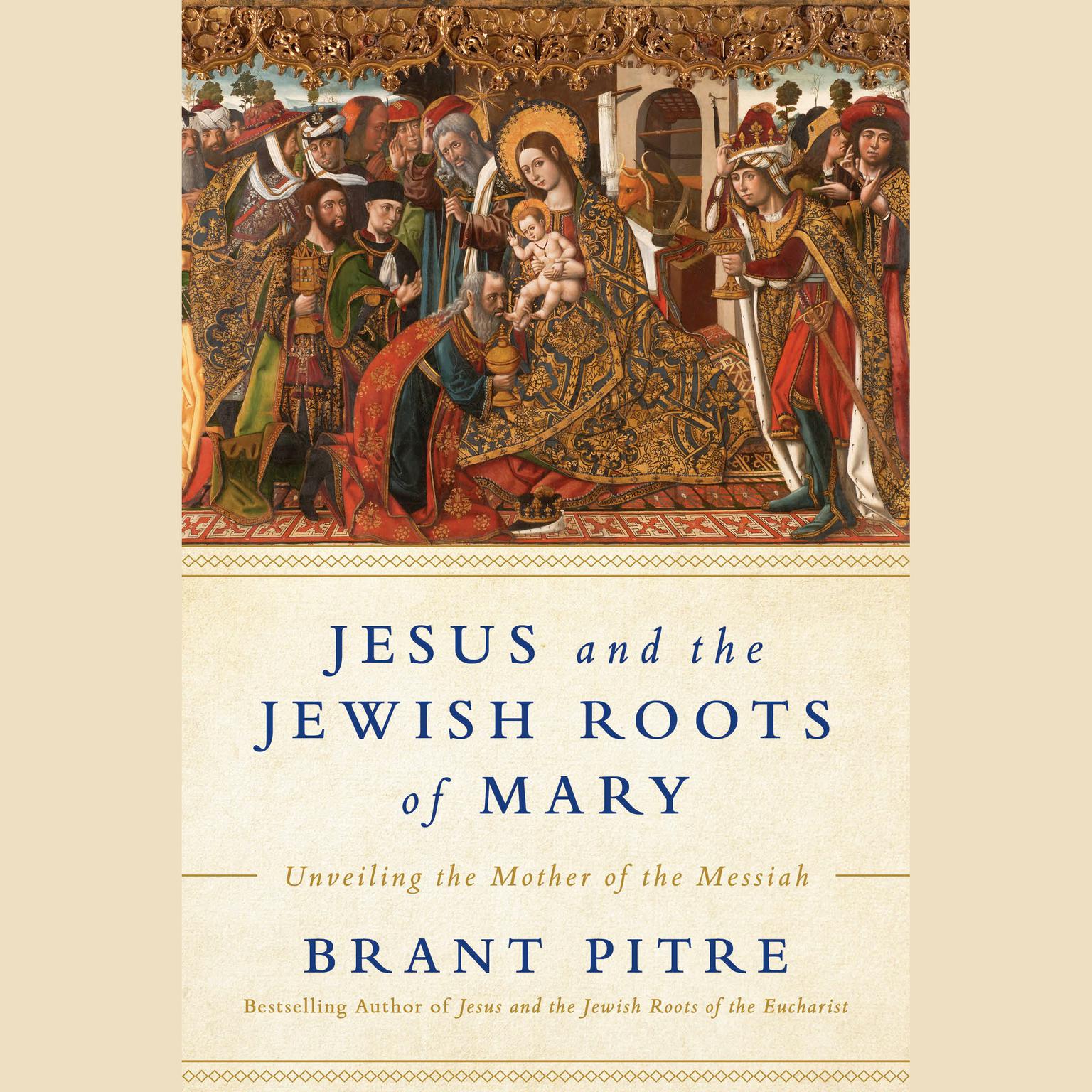
Mary is a key figure for Advent. Brant Pitre’s book “Jesus and the Jewish Roots of Mary” is not only for those who love Mary and love the Bible, but for anyone who wonders if there is Biblical basis for all the Catholic teaching on Mary (spoiler alert: yes). He shows very powerfully how the Old Testament and the New Testament are woven together into one large story of salvation. We have (I hope) all been taught that the New Testament is foreshadowed in the Old and the Old is revealed in the New. The foreshadowing is called a “type” and the reality fore-shadowed is called the “antitype.” We see Noah’s flood and the passage through the Red Sea are types of baptism. We read in the blessing of water in the baptismal rite, “The waters of the great flood you made a sign of the waters of Baptism, that make an end of sin and a new beginning of goodness. Through the waters of the Red Sea, you led Israel out of slavery, to be an image of God’s holy people, set free from sin by Baptism. ”“Therefore, just as through one person sin entered the world, and through sin, death, and thus death came to all, inasmuch as all sinned – for up to the time of the law, sin was in the world, though sin is not accounted when there is no law. But death reigned from Adam to Moses, even over those who did not sin after the pattern of the trespass of Adam, who in the type of the one who was to come (Rom 5:12-14).” St. Paul will go on to contrast the sin of Adam (type) and the gift of Jesus (antitype).We also see that Moses, David and even Joseph were types of Jesus. Eve is a type of Mary. This explains why Jesus called His mother “woman,” which otherwise makes no sense. Eve was called “the woman” in Genesis and didn’t get the name Eve until after the fall. Pitre will explain that Mary is not only the new Eve, but the new ark of the covenant and the new Rachel. He will explain how all this was recognized by the Fathers of the Church in the early centuries. This is not new. He also suggests reading what the Second Vatican Council said about Mary in the Constitution on the Church (See Lumen Gentium 52-68).This, of course, is not just for apologetics or for interesting Bible study. First, it helps us see how God’s big plan of salvation is all woven together. Next, if you read Edward Sri’s “Biblical Walk Through the Mass” you can see that the Bible and the liturgy are woven together in one large reality. Having done that, we will have the practice to be able to see how our story is woven into that very story of salvation history and understand our lives as a journey with God. Second, it helps us appreciate the person of Mary of Nazareth. She is not just a theological football or doctrine of the Church. She is a person, and lives in heaven, enveloped in God’s love. She loves us with a mother’s love and prays for us. This is part of the rich gift that God gives us, drawing us into His family. If there is one thing we should understand in our day and age, it is that family matters. A lot. I remember as an undergraduate talking to someone from the Reformed Bible College about the saints. She said that she didn’t see the need for this because Jesus is enough. I am pleased that even then I thought to say that would be a compelling argument if we believed that God would give us the minimum necessary. I believe He gives us the maximum possible because His love is infinite. This season we see to sharpen our attentiveness to the gifts that God gives. This a place to start. Blessings, Fr. Jim

Rejoice!

Dear Folks,Today is Gaudete Sunday, and Gaudete means “rejoice.” We read from the Letter of St. Paul to the Philippians, “Rejoice in the Lord always. I shall say it again, rejoice (Phil 4:4).”So, what does that mean? Does that mean that faithful Christians will always be in a good mood, and that sadness, anger, discouragement, and grief are permanently banished from our lives? Clearly not. Anticipating His crucifixion, Jesus said that “my soul is sorrowful, even unto death (See Matt 26:38).” When His friend Lazarus died, “Jesus wept (John 11:35).” All of Matthew 23 is a testament to Jesus’ capacity for anger and sorrow.So where does that leave us? Let’s consider that moods and feelings are passing states, and they all have their place. Ecclesiastes 3 tells us there is a time for each of them “a time to weep and a time to laugh; a time to mourn and a time to dance (Ecclesiastes 3:4).” St. Paul tells us, “Rejoice with those who rejoice, weep with those who weep (Romans 12:15).”Christianity does not shield us from the sorrows, angers, and frustrations of life. In fact, we may feel them more keenly, since we have this powerful vision of what Goodness truly is.The story is told of one woman who tearfully told her friend that she never knew her husband drank until one night he came home sober. We do not realize just how bad evil is until we encounter the one who is Goodness Itself. Furthermore, in opening our hearts to the fullness of God’s gifts, we open them to suffering at the same time. Some people protect their hearts by not caring about anything. C. S. Lewis said in “The Four Loves” that “To love at all is to be vulnerable. Love anything, and your heart will certainly be wrung and possibly broken. If you want to make sure of keeping it intact, you must give your heart to no one, not even to an animal. Wrap it carefully round with hobbies and little luxuries; avoid all entanglements; lock it up safe in the casket or coffin of your selfishness. But in that casket- safe, dark, motionless, airless – it will change. It will not be broken; it will become unbreakable, impenetrable, irredeemable.” Jesus said, “Blessed are they who mourn, for they will be comforted (Matt 5:4).”To be a person of joy involves believing that in the midst of sorrows, our life is overall worth doing, and good will conquer evil. Victor Frankl in his book “Man’s Search for Meaning” gives a powerful explanation that when our suffering has meaning, that makes all the difference. (If you haven’t read that book, it is worth taking a look at. I wouldn’t call it fun, but its wisdom is precious.). Our faith puts our suffering in a larger context, in which it has meaning, and cannot destroy our hope. If our hope is based on anything in this world, then we never know if it will be crushed by circumstance. If our faith is in God, then heaven and earth can pass away, but our hope will endure.Our feelings come and go. Even when they seem overwhelming and crushing, we know, we remember, that they will pass. Good and evil are not evenly matched opponents, so when it seems that evil is winning, we know that such a perception comes from only seeing a small part of the picture. As we “rejoice with those who rejoice and weep with those who weep,” we remain grounded in the confidence that weeping will pass away and the victory of joy iseternal.Blessings and joy,Fr. Jim