Category Archives: Faith

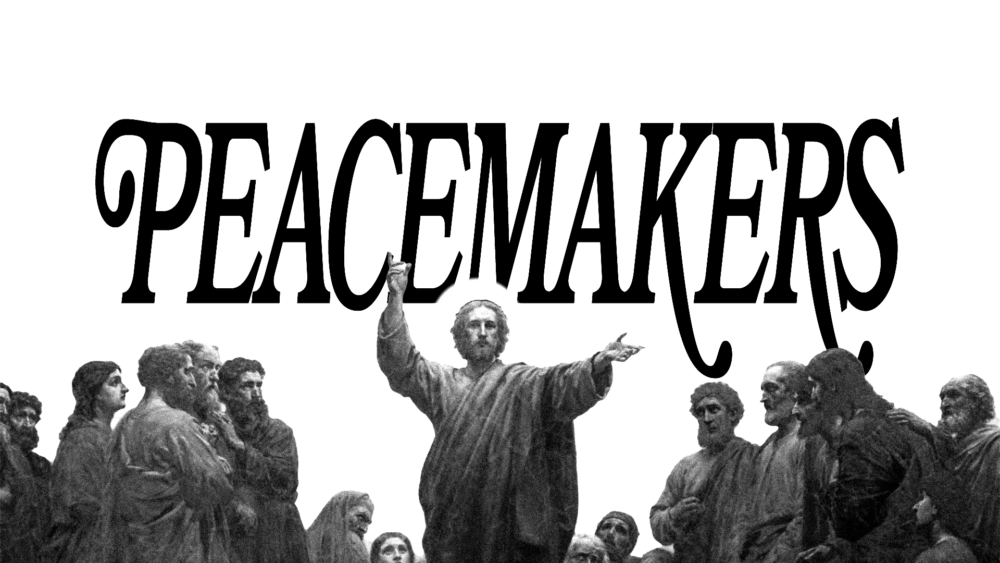
Peacemaking

Dear folks,

Here are some continuing thoughts about how to make the world a more peaceful place.

Intellectual humility: Don’t be too quick to be too certain that we see the whole picture. What if there is more to the story? I learned this the hard way: experiences of feeling very certain and finding out I was very wrong. Things can seem obvious and still be wrong. This will make me more reluctant to go too far to get my agenda.

Humility of Agency: Not be so certain that we are the solution, such that we decide we can violate boundaries rather than fail. If we try honorably and fail, someone might launch a successful attempt from the ashes our failure. Remember that actions done with good intentions may have bad consequences. Sometimes we even cause the opposite of what we intend. This goes with Moral Humility: Not being so certain that we will always do the right thing, lest we trust ourselves with too much power (Think of why Gandalf refused to take the one ring: “I would intend to

use it for good…”). When boundaries, accountability, checks and balances on us get in the way of what we want to do it is frustrating, but not necessarily bad.

People like Lenin, Stalin, Mao, and Robespierre all apparently thought they were fixing things and would make a paradise on earth, and so they thought they could take some serious moral shortcuts to do so. They made hell on earth and brought

untold suffering. We must fight monsters without becoming monsters. (I found if you search for images of “Peacemaker” you get a comic book villain who seeks to bring peace by using extreme violence.) As Jesus said, we must be “clever as serpents and innocent as doves (Matt 10:16).” We must work toward a better world but always remember that we are not the savior (We have a Savior).

Seeing the big picture. I can be okay with losing today so that I could win tomorrow. If I think in terms of years, decades, or even centuries, I can be content to work bit by bit for a better world, and a temporary loss is not a catastrophe. This would give me less temptation to drastic, violent action.

Support Law enforcement. Of course, hold bad actors accountable, but when one is accused, that officer should get the same due process and presumption of innocence that we would want for ourselves if we were accused of a terrible crime.

Those who do their jobs deserve our support and gratitude for the tremendous sacrifices they make for our sake. Let us send clear, consistent messages that we value and admire obeying the law and respecting law enforcement officers, and believe in holding criminals accountable.

Fill ourselves with stories of people who solved problems and accomplished great things without resorting to violence. Sometimes physical force is necessary, especially in war, law enforcement, or self-defense, but let us emphasize our admiration for those who do great things through other means and let us aspire to imitate them.

Tim Scott just released the book “One Nation Always Under God” and it is full of such stories. If there were more people like those depicted in the book, and if we as a society aspired to be like them, perhaps that would help people focus their energies more peacefully (reading the lives of the saints doesn’t hurt either).

Next, the most important part.

Blessings,

Fr. Jim

Immigration Conversation

Dear Folks,
There has been a lot of conversation about immigration and how to deal with immigrants. There has been a lot of criticism, but I’m not seeing things move toward a solution. It’s very easy to attack what others are doing and easy to repeat general principles, but harder to come up with practical solutions that others can criticize. I think if we really want to make the situation better, we would focus on some basic questions:
1. How many people should we let move into the country? (and if the answer is, “as many as want to, even if it’s a billion,” then it is only fair to say that out loud, and then deal with how do we plan to absorb so many people). People dedicated to helping others generally learn to be able to help long term, there must be some boundaries, trying to be generous but recognizing our limitations.
2. If we believe in any limits, how do we prioritize who gets in and how doesn’t?
3. How do we vet them/screen them (especially to screen out terrorists, drug dealers, violent criminals, human traffickers and the like)?
4. How do we care for them while they are going through the process?
5. How do we encourage people to come in according to our laws and discourage people from breaking our immigration laws?
6. How do we deal with those who have violated these laws (wanting to be humane but wanting to disincentivize law breaking).
I think if we start with these questions, we can move the conversation in a more productive direction. I think we should avoid accusing others, but serious ask ourselves, “Am I really interested in improving the situation, or do I just want to attack people I don’t like?” Working together, I think we can accomplish a lot.
Blessings,
Fr. Jim 

Holy Week and the Gift of Self

Dear Folks,
Now, we begin Holy Week.
The essence of the Gospel is the gift of self. During Holy Week we recall two events of infinite power: the Last Supper and the Cross.
In the Last Supper Jesus gives Himself sacramentally, and on the Cross Jesus gives Himself in practice.
Consider a couple getting married. In the wedding celebration, they give themselves to each other sacramentally, and in their living out married life, they give themselves to each other in practice. In the sacramental celebration, the couple consecrates their future together, infusing it with God’s grace so that it will have sacred meaning. Without the sacrament, there is just a couple of people living together. Without the intention of living out their marriage in practice, the wedding is just a party.
When the bread and wine are presented, the priest places them on the altar saying, “Blessed are you, Lord God of all creation, for through your goodness we have received the bread we offer you, fruit of the earth and work of human hands. It will become for us the bread of life.” And “Blessed are you, Lord God of all creation, for through your goodness we have received the wine we offer you, fruit of the vine and work of human hands. It will become our spiritual drink.” This is a symbol of what we have done with what God has given us. When the basket is brought forward, it is a symbol of all that we give to God from what he has given to us, and includes the donations online, donations of time and talent, and anything else we give. (Diocesan best practices call for bringing forward an empty basket because occasionally people have gotten sticky fingers. It does not destroy the symbolic value). In doing this, we place ourselves on the altar to be consecrated along with the bread and wine. We become ever more the Body of Christ, a body offered forever to the Father, incorporated into the one sacrifice offered once for all but eternally effective.
On Palm Sunday, we read the passion from the Gospel of the year, this year being Luke. He emphasizes the mercy Jesus shows even in His agony. Holy Thursday we read the washing of the feet at the Last Supper. This emphasizes that Eucharist is bound to service. The authenticity of our praying the Mass is inextricable from our dedication to giving ourselves in service to others. On Good Friday, we read the passion from the Gospel of John. This Gospel emphasizes that Jesus gave Himself freely, every step of the way. He is in charge from beginning to end. When we hear how completely, lovingly, compassionately, and freely Jesus gave Himself, let us consider how He calls us to give ourselves as gift. That sets our course for the rest of the year.
Blessings,
Fr. Jim

Life Where There Was Only Death

Dear Folks,
Today, the fifth Sunday of Lent, where there was once only death, there is now life.
Those reading the cycle C readings will hear the story of the woman caught in adultery (John 

😎

, and those reading the cycle A readings will hear the raising of Lazarus (John 11). Both are about bringing life where there is only death. Sin brings death, and Jesus brings eternal life. The woman caught in adultery was facing certain death as a result of her own sin. Jesus saves her and challenges her to “go and sin no more.” Jesus tells Martha He is the resurrection, and it is not just in the future.
We see in Romans 6:23: “For the wages of sin is death, but the gift of God is eternal life in Jesus Christ our Lord.” And in John 17:3 “Now this is eternal life, that they should know you, the only true God, and the one whom you sent, Jesus Christ.”
When we talk about knowing Jesus, we remember that in the Bible knowing is a more powerful thing than having a tidbit of knowledge. It is a matter of having a lifegiving relationship. Consider these texts:
Genesis 4:1 “Adam knew his wife Eve and she conceived and bore a son Cain…”
Psalm 1:6 “For the Lord knows the way of the righteous, but the way of the wicked will perish.” Psalm 95:10 “For forty years I abhorred that generation, and I said, ‘Their heart goes astray; this people does not know my ways.’” Matthew 25:12 “But the master will say, ‘Amen, I say to you, I do not know you.’”
To understand “know” as “have a life-giving relationship with” these texts make sense.
To have a life-giving relationship with Jesus is to give ourselves in love as He gave Himself in love. John 15:13 “No one has greater love than this: to lay down one’s life for one’s friends.”
To love is to live for someone beyond ourselves, that puts the focus outside of ourselves. The word “ecstasy” literally means “to stand outside.” The more focused we are on good beyond ourselves, the more we are living the love of God. Our lives are no longer about
us, but about Him. Whatever else happens, that is abundant life (John 10:10).
To live for our own desires is to close in on ourselves, to be dying. Our desires will not satisfy us permanently, and the fight against mortality is always lost if we live according to the wisdom of the world.
When we have a life-giving relationship with God and are living for eternity, we are already living eternal life. The joy that comes with our relationship with Jesus and being about something greater than the world is just the tiniest taste of the reality of heaven.
Blessings,
Fr. Jim

Weaving Together Our Picture of Reality

Dear Folks,

We all take in bits of information and weave them into a story that makes sense to us. Sometimes we can take the same set of information and come up with different narratives, and that

can make all the difference. I notice Democrats and Republicans can look at the same event and come up with wildly different narratives about what happened. It would be funny if it weren’t so serious.

At some of the Masses this Sunday, we are doing the cycle C readings, including the story of the prodigal son (Luke 15). Where we are doing scrutinies, we are using the cycle A readings with

the story of the man born blind (John 9). I suggest it would be a good exercise to look at those stories and ask, at each point what narrative is each character believing about what is happening?

Stepping back, there are different narratives about fundamental reality.

One is the atheist materialist view. The universe is self-existing, though it seems to be made entirely of contingent beings. The ultimate reality is impersonal, and personhood and consciousness are blips in the interplay of matter and energy. Love, in this view, is just a byproduct of the drive for chromosomes to replicate themselves. Moral right and wrong do not exist, and the only value is making me feel good. When I die, I will cease to exist, and it will not matter what I believed or what I did.

The Christian view is that the ultimate reality is love in the deepest sense. The Father is eternally giving Himself in love to the Son, who is eternally receiving and returning that love to the Father, and the Holy Spirit is the love that passes between them. God is not one contingent being among many, but Being Himself, the source of all being. Love is by nature fruitful, and so God, though not needing anyone or anything, created the universe out of pure love. We were made to receive and give ourselves in love, and hence are made in the image and likeness of God. There is goodness, which is what serves giving ourselves in love, and there is evil, which is counterfeiting giving ourselves in love or refusing the invite all together. The things of the world pass away, but that which is love lasts forever.

One might object that that many atheists do much good and many Christians are less than moral. This, I suggest, is because we do not always act consistently with our professed beliefs.

There is one more narrative that I find interesting, and that is the Boltzmann brain theory. Ludwig Boltzmann was a physicist, who proposed that if a universe produced a self-aware brain, it

was more likely to produce one brain that hallucinated experiences than produce many brains that have real experiences. That means I am the only one who really exists, and you are all a figment of my imagination. There was once a Dilbert comic strip about this. I reject this theory, fun though it is, because it makes life trivial, and goes against my deep sense that life, the universe and everything have deep meaning. I reject the atheist, materialist view for similar reasons. We have a deep sense that personhood, consciousness, and love mean more than blips in the motion of matter and energy as the mindless universe unfolds. That’s my story and I’m

sticking to it.

Blessings,

Fr. Jim

Wake Up Call!

Dear Folks,
There was an article in March 4, 2025 “Crisis” magazine, “Catholics are Rapidly Losing Ground.” (Scan QR code to read) It gives nasty, nasty statistics on how we are losing members, such as, “for every 100 people who join the Catholic Church, 840 leave. So when you rejoice seeing folks become Catholic at Easter (which you should), remember that more than 8 people have left by the back door for each one who’s come in the front. No other religion has nearly as bad of a join/leave ratio.”
If this is not a wakeup call, what would a wakeup call look like?
I suggest there is one basic cause: Catholics have believed that the Catholic faith is much less than what it is. For example, Brant Pitre’s book “The Case for Jesus: The Biblical and Historical Evidence for Christ” tells of being in a Catholic college and being taught things about the Bible that undermined its credibility and almost cost him his faith. However, he still (thanks be to God) continued, and when he was studying for his doctorate, he learned that those theories lacked evidence and were just being passed around uncritically. He found there was more basis for trusting the Gospels than he had been led to believe. Our Catholic faith is greater than we think it is.
It will not help to complain about what someone else (the Pope, the bishops, etc.) should be doing or should have done. Correct or not, that won’t move us forward. During this Lent, I challenge everyone to ask God, “How are you calling me to respond to this moment in history?” and then pray for the grace to answer the call.
The early Church started with a tiny group of people, almost no resources, and surrounded by a fiercely hostile culture. They grew like a grease fire. The mightiest empire in the world was helpless to stop them. According to my reading of Acts of the Apostles (a great book), they basically did four things: They told the Gospel story. They worked together as community. They worshipped God. They helped people in need. Does anyone believe we have no room to grow in any of these areas? Can we each ask: How can I learn more about the Christian story? How can I learn better to articulate
it? There are so many resources, everyone can do something.
How can I help connect the faith community? How can I better invite and welcome strangers, and how can I better connect with my fellow parishioners? How can I be better at reconciling conflict in our midst (this alone, I suggest, would greatly enhance the strength of the faith community)?
How can I better worship God? How can I broaden my prayer life? How can I discover that the Mass is so much more than I was taught, and I can worship so much more deeply than I realized?
How can I better help those in need?
If we answer this moment (I think things will get worse before it gets better) the Church can get much better. We serve a mighty, mighty God, who calls us to greatness.
Blessed Lent,
Fr. Jim 

Battle of All Time

Dear Folks,

The First Sunday of Lent we deal with Jesus in the desert getting tempted. It is worth noting that our first reading is about offering one’s gift to God. Let’s look at temptation as interfering with our giving ourselves to God as gift.

The first temptation, “If you are the Son of God command these stones become bread.” He was so hungry. It would have been so easy. No one would have known. The test was being able to say no to basic appetites. If we can’t say no to our appetites, they will rule us. Think of His ministry. How many times would He have been hungry, thirsty, tired, or stressed? Being completely faithful to His

mission, His gift to the Father would mean saying no to those desires. If, every time I feel a bit hungry I immediately grab something to eat. If, every time I eat, to keep eating until I’m full, how do I know this desire doesn’t rule me? Why would I expect that I would be able to refuse my stomach? If I can’t say no to it, what is really my god? Did Jesus experience sexual temptation? Our faith tells us He was fully human, so how could we believe He did not? That would certainly have interfered with the course He was on. Of course, there is meant to be great joy in giving oneself as gift in a full, free, faithful, and fruitful relationship. Things like pornography and hookup culture are ways of seeking the thrill without giving ourselves as gift. How much destruction has the pursuit of these appetites caused in our world? How this Lent should I practice saying no to my appetites?

“I shall give you all this power and glory…if you worship me.” Matthew’s Gospel makes this the last temptation, and I figure that it is to emphasize it because of his emphasis on right worship and Jesus as Davidic King. Luke puts it second. But imagine simply being handed over power and glory without having to work or suffer for it. This is the temptation to have power without giving the gift. Jesus would work incredibly hard and suffer incredibly much so that He could transform people and the world by the power of the Pascal mystery. Imagine Him just saying “Scribes and Pharisees, you’ve done a bad job. I’m putting you in prison.” That would have been so much easier than what He dealt with, but it would have only made superficial change. As a pastor, I know that anything I do with just my formal authority is going to be superficial and can be undone just as easily. If I’m going to make profound and lasting change, It requires informal authority, which cannot be given, only earned. It requires more work, enduring more frustration, and being more patient. I long ago learned that if we want to do good, we will need to work harder than we thought for longer than we expected to achieve less than we hoped. The prize belongs to those who do not then give up. We see those who try to force change by coercion. That does not require them giving themselves as gift. We are called to make change with service, witness and sacrifice. We see in our Gospels that is what Jesus did, and he had to face much frustration, and it required everything from Him. How might we give ourselves as gift for the work of the Kingdom.

“Throw yourself down from here” (the parapet of the temple). Luke portrays this as the final temptation, emphasizing that Jesus was facing the full pain of the human condition. The desire to be protected from harm is primal, and Jesus knew He was going to have to face horrific suffering. How do we avoid pain? Do we shy away from painful conversations that we need to face? Do we use drugs or alcohol to numb ourselves? Do we keep ourselves distracted to hide from the pain in our hearts? Do we refuse to leave our comfort zones for the sake of doing God’s work? How might we be called to face things we don’t want to face, but need to?

Have a fruitful Lent,

Fr. Jim

Self Awareness

Dear Folks,

This Sunday we continue Jesus’ Sermon on the Plain (Luke 6:39-45). Jesus gives His famous “Why do you notice the splinter in your brother’s eye, but do not perceive the wooden beam in your own (6:41)?” Jesus touches on the very human reality that it is easier to see others’ faults than our own, and we tend to underestimate how serious our faults are compared to others. This is a tendency for which we must compensate to avoid constant frustration and anger.

Living alone and living with other people, I noticed that my mess was easier to deal with than other people’s messes. Language that sounds fine to me when it’s coming out of my mouth can sound offensive when someone else says it.

There are some books that can help us reflect. “Thinking Fast and Slow” by Daniel Kahneman tells us we prefer a quicker and easier style of thinking that tends to believe that what I see is all there is. In the book “I Never Thought of It That Way” by Monica Guzman she asks a question worth asking on a regular basis: “What am I missing?” “Think Again” by Adam Grant talks about the need to unlearn and relearn.

In the Gilbert and Sullivan play “Princess Ida” we meet a character, King Gama, who introduces himself singing, “If you give me your attention, I will tell you what I am. I’m a genuine philanthropist all other kinds are sham. Each little fault of temper and each social

defect in my erring fellow creatures I endeavor to correct…” He goes on to explain how he tells everyone just what is wrong with them. Then he goes, “I love my fellow creatures I do all the good I can, and yet everybody says I’m such a disagreeable man, and I can’t think why.” If we want to be an effective voice in the world, we don’t want to be like him.

Our faith has many treasures that would benefit the world, but we must be able to share them in a compelling way. For example, Thomas Jefferson thought it was self-evident that we were all created equal, but in the ancient world that was un-thought of outside the Judeo Christian tradition. Christianity was instrumental in bringing such notions to the western world. There is much more to be done in the areas of care for the poor and the outcast,

human sexuality, the meaning of being human, of being man or woman, of marriage and family, of the sanctity of life and other areas. If we can propose a vision and show by our actions that we mean it, there is hope of shifting the conversation. There will always be those voices that try to silence us by claiming we are trying to force our religion on others, even when we are simply proclaiming our vision as they are proclaiming their vision. We seek to participate in dialog in such a way that reasonable people may reject their narrative and actually hear what we have to say.

It begins with serious, deep, honest, and humble self-examination.

Blessings,

Fr. Jim

What Do You Mean by “Love”?

Dear Folks,

This is hard. If Christianity is easy for you, you’re doing it wrong. We are called to help others, and we do not ask if they are worthy of help, but rather we ask what is the most helpful.

We must never forget that having good intentions does not guarantee good actions. We may intend to do good but ultimately do harm instead. Deciding to love our neighbors, including the people we most dislike, is just the first step.

We need union with God to transform us into people who can overcome our sinfulness to love God and others. We know that in Christianity love is not a feeling, but a decision to seek the good of the other. This means understanding what is truly good. We are not the best measure of what is good for us. An alcoholic may believe that the most loving thing for someone to do is give him an endless supply of liquor, but that would not serve his flourishing. His perception is distorted by his addiction. We, because of our sinfulness, have a distorted notion of good, and so we need God’s teaching to help us understand true human flourishing. This connects everything. The Christian understanding of the human person, marriage, sexuality, family, the meaning of work, the meaning of human dignity and human rights, and other issues all connect to the command to love one another. That is why love requires we continue to learn more about our faith.

A number of issues can make loving one another very difficult and controversial. Forgiveness is not an optional part of Christianity, but in the words of C. S. Lewis, “Everyone thinks forgiveness is a lovely idea until he has something to forgive.” Forgiveness is a form of healing, and that takes time.

We must have boundaries, or we will not be able to help for long. Many learn this the hard way. That will often mean refusing to enable bad behavior, even though that can get us accused of being hateful. Loving enough to tell the truth can have the same response. If people are enjoying regular sin, it is not loving to say that sin is not sin.

Self (and other) defense, just war, and law enforcement sometimes require force and even violence. We surround these issues with strict requirements, but there continues to be challenges.

We have the challenge of stewarding limited resources. If I think of a billion people in need, and I give each one of them a billionth of my resources (if it were even possible), that would not be terribly helpful. How do we best respond?

Liturgy needs to be done in a way that best presents the mysteries at work, and not necessarily the way people prefer or are used to.

We need as much of God’s help as we can get to respond to this call.

Blessings,

Fr. Jim

Temptations of the Desert and the Garden

Dear Folks,
Today Jesus hits us with the beatitudes in the Gospel of Luke.
The Bible portrays God’s people being tested in the garden of Eden, and then in the desert after escaping slavery in Egypt (of course, we failed both times). Jesus was tested in the desert for forty days, then again in the garden of Gethsemane (and, of course, He succeeded). The temptation of the garden and the temptation of the desert each have their dangers.
When we are deprived, hungry, exhausted, and worn down, it is hard to resist temptation, thinking giving in will bring us the relief we desperately crave. In the garden, when we have eaten well and have so many comforts, it is easy to love the pleasures of the earth too much and think too highly of the importance of our desires. There are several stories of people who have won millions in the lottery, and in a few years they’re broke and they say it ruined their lives. The thrill of spending money is addictive, and we can easily lose track of what we are doing. Loving any of the goods of the earth too much We read in Proverbs 30:7-9 “Two things I ask of you, do not deny them to me before I die: Put falsehood and lying far from me, give me neither poverty nor riches; provide me only
with the food I need; Lest, being full, I deny you, saying, “Who is the Lord?” Or, being I want, I steal, and profane the name of my God.” Both abundance and depravation bring challenges.
When Jesus said, “Blessed are the poor,” I suggest He is pointing to those who know that what the earth provides is not enough to make them happy. We are made for more, for eternal values, eternal treasures.
I have listened to the first episode of the podcast “He Leadeth Me” by Walter J. Ciszek S.J. It describes how the Soviets destroyed all they had built and took the prisoner to horrific work camps in Siberia. He later said that God allows such things to happen, and this teaches us that all we need is Him. Given his experience, he spoke with authority. I speak as one very accustomed to (and very fond of) indoor plumbing, central heating, and meals on a regular basis. I would have a very hard time losing those things, and I can’t guarantee you how I would react. I do know, however, that none of the goods of the earth are guaranteed for tomorrow, but the love of God is. If we attend to our relationship with God in good times and bad times (and medium times), if we make prayer and service to God a consistent priority, I think we would be more likely to react to hardship by clinging more tightly to God rather than giving up in despair. Things like fasting and doing penance can help us build our Say-no-to-ourselves muscles so we are better prepared to face hardship.
Both Psalm 1 and Jeremiah 17 talk about people who put their trust in God and love His ways are like trees planted beside flowing waters, whose sustenance was consistent and sure. Let us seek to be rooted ever more deeply in God.
Blessings,
Fr. Jim