Category Archives: jesus

Holy Week and the Gift of Self

Dear Folks,
Now, we begin Holy Week.
The essence of the Gospel is the gift of self. During Holy Week we recall two events of infinite power: the Last Supper and the Cross.
In the Last Supper Jesus gives Himself sacramentally, and on the Cross Jesus gives Himself in practice.
Consider a couple getting married. In the wedding celebration, they give themselves to each other sacramentally, and in their living out married life, they give themselves to each other in practice. In the sacramental celebration, the couple consecrates their future together, infusing it with God’s grace so that it will have sacred meaning. Without the sacrament, there is just a couple of people living together. Without the intention of living out their marriage in practice, the wedding is just a party.
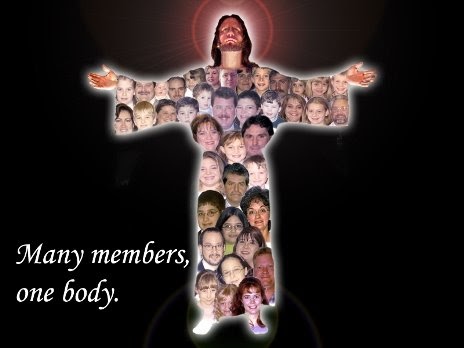
When the bread and wine are presented, the priest places them on the altar saying, “Blessed are you, Lord God of all creation, for through your goodness we have received the bread we offer you, fruit of the earth and work of human hands. It will become for us the bread of life.” And “Blessed are you, Lord God of all creation, for through your goodness we have received the wine we offer you, fruit of the vine and work of human hands. It will become our spiritual drink.” This is a symbol of what we have done with what God has given us. When the basket is brought forward, it is a symbol of all that we give to God from what he has given to us, and includes the donations online, donations of time and talent, and anything else we give. (Diocesan best practices call for bringing forward an empty basket because occasionally people have gotten sticky fingers. It does not destroy the symbolic value). In doing this, we place ourselves on the altar to be consecrated along with the bread and wine. We become ever more the Body of Christ, a body offered forever to the Father, incorporated into the one sacrifice offered once for all but eternally effective.
On Palm Sunday, we read the passion from the Gospel of the year, this year being Luke. He emphasizes the mercy Jesus shows even in His agony. Holy Thursday we read the washing of the feet at the Last Supper. This emphasizes that Eucharist is bound to service. The authenticity of our praying the Mass is inextricable from our dedication to giving ourselves in service to others. On Good Friday, we read the passion from the Gospel of John. This Gospel emphasizes that Jesus gave Himself freely, every step of the way. He is in charge from beginning to end. When we hear how completely, lovingly, compassionately, and freely Jesus gave Himself, let us consider how He calls us to give ourselves as gift. That sets our course for the rest of the year.
Blessings,
Fr. Jim

Life Where There Was Only Death

Dear Folks,
Today, the fifth Sunday of Lent, where there was once only death, there is now life.
Those reading the cycle C readings will hear the story of the woman caught in adultery (John 

😎

, and those reading the cycle A readings will hear the raising of Lazarus (John 11). Both are about bringing life where there is only death. Sin brings death, and Jesus brings eternal life. The woman caught in adultery was facing certain death as a result of her own sin. Jesus saves her and challenges her to “go and sin no more.” Jesus tells Martha He is the resurrection, and it is not just in the future.
We see in Romans 6:23: “For the wages of sin is death, but the gift of God is eternal life in Jesus Christ our Lord.” And in John 17:3 “Now this is eternal life, that they should know you, the only true God, and the one whom you sent, Jesus Christ.”
When we talk about knowing Jesus, we remember that in the Bible knowing is a more powerful thing than having a tidbit of knowledge. It is a matter of having a lifegiving relationship. Consider these texts:
Genesis 4:1 “Adam knew his wife Eve and she conceived and bore a son Cain…”
Psalm 1:6 “For the Lord knows the way of the righteous, but the way of the wicked will perish.” Psalm 95:10 “For forty years I abhorred that generation, and I said, ‘Their heart goes astray; this people does not know my ways.’” Matthew 25:12 “But the master will say, ‘Amen, I say to you, I do not know you.’”
To understand “know” as “have a life-giving relationship with” these texts make sense.
To have a life-giving relationship with Jesus is to give ourselves in love as He gave Himself in love. John 15:13 “No one has greater love than this: to lay down one’s life for one’s friends.”
To love is to live for someone beyond ourselves, that puts the focus outside of ourselves. The word “ecstasy” literally means “to stand outside.” The more focused we are on good beyond ourselves, the more we are living the love of God. Our lives are no longer about
us, but about Him. Whatever else happens, that is abundant life (John 10:10).
To live for our own desires is to close in on ourselves, to be dying. Our desires will not satisfy us permanently, and the fight against mortality is always lost if we live according to the wisdom of the world.
When we have a life-giving relationship with God and are living for eternity, we are already living eternal life. The joy that comes with our relationship with Jesus and being about something greater than the world is just the tiniest taste of the reality of heaven.
Blessings,
Fr. Jim

To Comfort and Afflict

Dear Folks,

For the next three weeks we have a particular challenge: One Mass with scrutinies will have the cycle A readings (which this week includes the story of the woman at the well in John 4), and the other Masses will have the cycle C readings (which this week includes Luke 13:1-9). It is worth comparing the two. The woman at the well was a Samaritan, and Jesus broke barriers just talking to her. He does not shy away from how her life is a mess, but He doesn’t berate her for it. He gives her respect and concern that she wasn’t used to getting, and that gave her space to change, and she would reconnect with the community that had previously shunned her. By contrast, the text in Luke shows Jesus warning some

fellow Israelites that if they don’t repent, they face destruction.

It has been said that a prophet has two tasks: to comfort the afflicted and afflict the comfortable. This is summed up in Luke with the parable of the Pharisee and the Tax Collector (Luke 18:9-14). The two men were a study in contrast. The Pharisee was presented as having objectively better behavior, but he was convinced he was good enough. Other people needed to improve, but he was convinced he didn’t. The tax collector, by contrast, was not

so virtuous, but knew he needed work. That made all the difference. Until we see pearly gate posts passing our shoulders, we are a work in progress.

It’s okay to be where we are at; it’s not okay to stay where we are at.

During this Lent, what if we asked:

What does God want me to learn?

If God could get every response He wants from me, what would that look like?

What if being a member of the Church means more than I thought?

What if praying the Mass means more than I thought?

When someone talks about a crisis in the Church, how quick am I to say what someone else should be doing differently and how quick am I to ask what I should be doing differently?

If Lent is not working out the way I planned, might God have some different plans?

What might they be?

If God is calling me to change my life in some way, small or large, how ready am I to say “yes” to Him?

Can I accept that how I and people like me respond during Lent can make a difference in the kind of future that our Church will have?

For what it’s worth, I recently came to understand something that had been obvious, but I didn’t see it. Now I see things differently (don’t bother to ask; I won’t tell). I suggest that God is always working on teaching us something and leading us somewhere.

Blessed Lent,

Fr. Jim

Battle of All Time

Dear Folks,

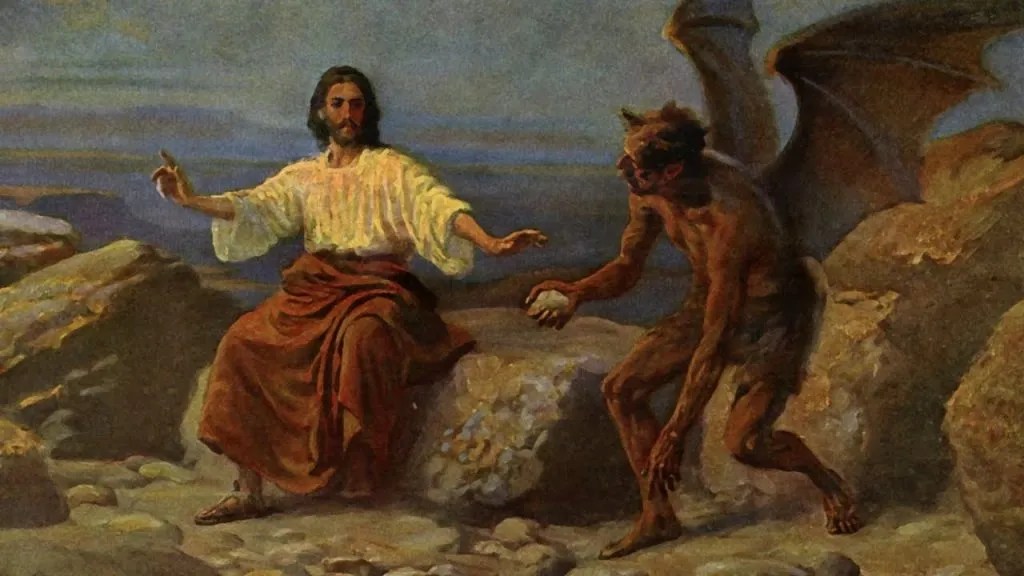
The First Sunday of Lent we deal with Jesus in the desert getting tempted. It is worth noting that our first reading is about offering one’s gift to God. Let’s look at temptation as interfering with our giving ourselves to God as gift.

The first temptation, “If you are the Son of God command these stones become bread.” He was so hungry. It would have been so easy. No one would have known. The test was being able to say no to basic appetites. If we can’t say no to our appetites, they will rule us. Think of His ministry. How many times would He have been hungry, thirsty, tired, or stressed? Being completely faithful to His

mission, His gift to the Father would mean saying no to those desires. If, every time I feel a bit hungry I immediately grab something to eat. If, every time I eat, to keep eating until I’m full, how do I know this desire doesn’t rule me? Why would I expect that I would be able to refuse my stomach? If I can’t say no to it, what is really my god? Did Jesus experience sexual temptation? Our faith tells us He was fully human, so how could we believe He did not? That would certainly have interfered with the course He was on. Of course, there is meant to be great joy in giving oneself as gift in a full, free, faithful, and fruitful relationship. Things like pornography and hookup culture are ways of seeking the thrill without giving ourselves as gift. How much destruction has the pursuit of these appetites caused in our world? How this Lent should I practice saying no to my appetites?

“I shall give you all this power and glory…if you worship me.” Matthew’s Gospel makes this the last temptation, and I figure that it is to emphasize it because of his emphasis on right worship and Jesus as Davidic King. Luke puts it second. But imagine simply being handed over power and glory without having to work or suffer for it. This is the temptation to have power without giving the gift. Jesus would work incredibly hard and suffer incredibly much so that He could transform people and the world by the power of the Pascal mystery. Imagine Him just saying “Scribes and Pharisees, you’ve done a bad job. I’m putting you in prison.” That would have been so much easier than what He dealt with, but it would have only made superficial change. As a pastor, I know that anything I do with just my formal authority is going to be superficial and can be undone just as easily. If I’m going to make profound and lasting change, It requires informal authority, which cannot be given, only earned. It requires more work, enduring more frustration, and being more patient. I long ago learned that if we want to do good, we will need to work harder than we thought for longer than we expected to achieve less than we hoped. The prize belongs to those who do not then give up. We see those who try to force change by coercion. That does not require them giving themselves as gift. We are called to make change with service, witness and sacrifice. We see in our Gospels that is what Jesus did, and he had to face much frustration, and it required everything from Him. How might we give ourselves as gift for the work of the Kingdom.

“Throw yourself down from here” (the parapet of the temple). Luke portrays this as the final temptation, emphasizing that Jesus was facing the full pain of the human condition. The desire to be protected from harm is primal, and Jesus knew He was going to have to face horrific suffering. How do we avoid pain? Do we shy away from painful conversations that we need to face? Do we use drugs or alcohol to numb ourselves? Do we keep ourselves distracted to hide from the pain in our hearts? Do we refuse to leave our comfort zones for the sake of doing God’s work? How might we be called to face things we don’t want to face, but need to?

Have a fruitful Lent,

Fr. Jim

Self Awareness

Dear Folks,

This Sunday we continue Jesus’ Sermon on the Plain (Luke 6:39-45). Jesus gives His famous “Why do you notice the splinter in your brother’s eye, but do not perceive the wooden beam in your own (6:41)?” Jesus touches on the very human reality that it is easier to see others’ faults than our own, and we tend to underestimate how serious our faults are compared to others. This is a tendency for which we must compensate to avoid constant frustration and anger.

Living alone and living with other people, I noticed that my mess was easier to deal with than other people’s messes. Language that sounds fine to me when it’s coming out of my mouth can sound offensive when someone else says it.

There are some books that can help us reflect. “Thinking Fast and Slow” by Daniel Kahneman tells us we prefer a quicker and easier style of thinking that tends to believe that what I see is all there is. In the book “I Never Thought of It That Way” by Monica Guzman she asks a question worth asking on a regular basis: “What am I missing?” “Think Again” by Adam Grant talks about the need to unlearn and relearn.

In the Gilbert and Sullivan play “Princess Ida” we meet a character, King Gama, who introduces himself singing, “If you give me your attention, I will tell you what I am. I’m a genuine philanthropist all other kinds are sham. Each little fault of temper and each social

defect in my erring fellow creatures I endeavor to correct…” He goes on to explain how he tells everyone just what is wrong with them. Then he goes, “I love my fellow creatures I do all the good I can, and yet everybody says I’m such a disagreeable man, and I can’t think why.” If we want to be an effective voice in the world, we don’t want to be like him.

Our faith has many treasures that would benefit the world, but we must be able to share them in a compelling way. For example, Thomas Jefferson thought it was self-evident that we were all created equal, but in the ancient world that was un-thought of outside the Judeo Christian tradition. Christianity was instrumental in bringing such notions to the western world. There is much more to be done in the areas of care for the poor and the outcast,

human sexuality, the meaning of being human, of being man or woman, of marriage and family, of the sanctity of life and other areas. If we can propose a vision and show by our actions that we mean it, there is hope of shifting the conversation. There will always be those voices that try to silence us by claiming we are trying to force our religion on others, even when we are simply proclaiming our vision as they are proclaiming their vision. We seek to participate in dialog in such a way that reasonable people may reject their narrative and actually hear what we have to say.

It begins with serious, deep, honest, and humble self-examination.

Blessings,

Fr. Jim

What Do You Mean by “Love”?

Dear Folks,

This is hard. If Christianity is easy for you, you’re doing it wrong. We are called to help others, and we do not ask if they are worthy of help, but rather we ask what is the most helpful.

We must never forget that having good intentions does not guarantee good actions. We may intend to do good but ultimately do harm instead. Deciding to love our neighbors, including the people we most dislike, is just the first step.

We need union with God to transform us into people who can overcome our sinfulness to love God and others. We know that in Christianity love is not a feeling, but a decision to seek the good of the other. This means understanding what is truly good. We are not the best measure of what is good for us. An alcoholic may believe that the most loving thing for someone to do is give him an endless supply of liquor, but that would not serve his flourishing. His perception is distorted by his addiction. We, because of our sinfulness, have a distorted notion of good, and so we need God’s teaching to help us understand true human flourishing. This connects everything. The Christian understanding of the human person, marriage, sexuality, family, the meaning of work, the meaning of human dignity and human rights, and other issues all connect to the command to love one another. That is why love requires we continue to learn more about our faith.

A number of issues can make loving one another very difficult and controversial. Forgiveness is not an optional part of Christianity, but in the words of C. S. Lewis, “Everyone thinks forgiveness is a lovely idea until he has something to forgive.” Forgiveness is a form of healing, and that takes time.

We must have boundaries, or we will not be able to help for long. Many learn this the hard way. That will often mean refusing to enable bad behavior, even though that can get us accused of being hateful. Loving enough to tell the truth can have the same response. If people are enjoying regular sin, it is not loving to say that sin is not sin.

Self (and other) defense, just war, and law enforcement sometimes require force and even violence. We surround these issues with strict requirements, but there continues to be challenges.

We have the challenge of stewarding limited resources. If I think of a billion people in need, and I give each one of them a billionth of my resources (if it were even possible), that would not be terribly helpful. How do we best respond?

Liturgy needs to be done in a way that best presents the mysteries at work, and not necessarily the way people prefer or are used to.

We need as much of God’s help as we can get to respond to this call.

Blessings,

Fr. Jim

Temptations of the Desert and the Garden

Dear Folks,
Today Jesus hits us with the beatitudes in the Gospel of Luke.
The Bible portrays God’s people being tested in the garden of Eden, and then in the desert after escaping slavery in Egypt (of course, we failed both times). Jesus was tested in the desert for forty days, then again in the garden of Gethsemane (and, of course, He succeeded). The temptation of the garden and the temptation of the desert each have their dangers.
When we are deprived, hungry, exhausted, and worn down, it is hard to resist temptation, thinking giving in will bring us the relief we desperately crave. In the garden, when we have eaten well and have so many comforts, it is easy to love the pleasures of the earth too much and think too highly of the importance of our desires. There are several stories of people who have won millions in the lottery, and in a few years they’re broke and they say it ruined their lives. The thrill of spending money is addictive, and we can easily lose track of what we are doing. Loving any of the goods of the earth too much We read in Proverbs 30:7-9 “Two things I ask of you, do not deny them to me before I die: Put falsehood and lying far from me, give me neither poverty nor riches; provide me only
with the food I need; Lest, being full, I deny you, saying, “Who is the Lord?” Or, being I want, I steal, and profane the name of my God.” Both abundance and depravation bring challenges.
When Jesus said, “Blessed are the poor,” I suggest He is pointing to those who know that what the earth provides is not enough to make them happy. We are made for more, for eternal values, eternal treasures.
I have listened to the first episode of the podcast “He Leadeth Me” by Walter J. Ciszek S.J. It describes how the Soviets destroyed all they had built and took the prisoner to horrific work camps in Siberia. He later said that God allows such things to happen, and this teaches us that all we need is Him. Given his experience, he spoke with authority. I speak as one very accustomed to (and very fond of) indoor plumbing, central heating, and meals on a regular basis. I would have a very hard time losing those things, and I can’t guarantee you how I would react. I do know, however, that none of the goods of the earth are guaranteed for tomorrow, but the love of God is. If we attend to our relationship with God in good times and bad times (and medium times), if we make prayer and service to God a consistent priority, I think we would be more likely to react to hardship by clinging more tightly to God rather than giving up in despair. Things like fasting and doing penance can help us build our Say-no-to-ourselves muscles so we are better prepared to face hardship.
Both Psalm 1 and Jeremiah 17 talk about people who put their trust in God and love His ways are like trees planted beside flowing waters, whose sustenance was consistent and sure. Let us seek to be rooted ever more deeply in God.
Blessings,
Fr. Jim

Calling Sinners to Action

Dear Folks,
Our readings this Sunday show two people getting called by God (see Isaiah 6 and Luke 5). We think Isaiah was a priest, and we know Peter was a fisherman. They encountered God and His call while at work and gets their attention in a way that they would be sensitive to. Both have an experience of the divine, and it makes them powerfully aware of their shortcomings. God reassures them so they can answer the call. Notice especially they are not promised reward but given a task.
In fact, they both suffered much for their service. According to the ancient stories, Isaiah was put in a hollow tree and was sawed in half. St. Peter was crucified upside down. He said that he wasn’t worthy to die the way that Jesus died, and so the soldiers (who I presume thought they were funny) did it that way. They certainly knew that answering God’s call didn’t lead to an easy path, but I suspect they didn’t know how hard it was going to be. God strengthened them on their journeys so that they could be faithful even to their extreme endings.
I would suggest that God is testing our Church now, and our future as Church will pivot around our response to His call. Are we accepting the challenge to be coworkers in mission. We may get frustrated with the Church sometimes (I speak from experience), but rather than focus on what the Pope, various bishops and various priests should be doing (or not doing), we can focus on what we can do to further the mission in our little corner. There will always be things going on that we don’t like, that we think should be done differently. Coworkers in mission focus on how the Church can best respond to Jesus’ command to make disciples of all nations, and how we can help make that happen.
We seek to grow in holiness not just for our sake, but so that God’s light might shine more brightly through us (Mat 5:13-15). If we want a better world, the first step is always to fall more deeply in love with Jesus.
Next, we consider how we tell the Gospel story. If you take a look at this Sunday’s second reading from 1 Corinthians 15 St. Paul relates the basic message of Jesus (called “the kerygma”). How would you sum up the Christian message? Christopher West says it’s “God wants to marry you.” Another way would be, Jesus brought perfect love into the world, and by the power of that love He can conquer evil in us.
How do we work together as community? Are we inviting and welcoming? How well and how lovingly do we resolve conflict in our midst? Does it show that Jesus is at work here?
How do we worship? Do our presence and our participation show that we are doing the most important work of our week? If we are focused on giving ourselves completely to God in worship it will show. How do we help those in need? Do we amaze the surrounding community with our love in action? Jesus invites us to come and fish for His people. How do we answer?
Blessings,
Fr. Jim

Presenting One’s Gift; Presenting One’s Self

Dear Folks,
This is the Feast of the Presentation of the Lord, when Mary and Joseph present Jesus in the Temple, a familiar story. We can easily skip over the text that talks about the Law that says,
“Every male that opens the womb shall be consecrated to the Lord” calling for sacrificing “a pair of turtledoves or two young pigeons (Luke 2:23).” What’s that about? In Exodus 13:2-12 we see the command to ransom the firstborn and connects it to the exodus from Egypt and God’s saving action. The firstborn belongs to him.
We know that in those days, it was common to sacrifice one’s child to the gods, notably Molech. When we look at bad things that were going on in the Old Testament, It’s important to remember that what was going on in the surrounding cultures was worse, much worse.
We all know the story of the testing of Abraham, in which God commands Abraham to sacrifice his son Isaac but stops him at the last minute. This showed first that Abraham was completely dedicated to obeying God, whatever the cost. Second, this was God rejecting the practices of child sacrifice. In the Law of Moses, God commanded, “you shall not offer any of your offspring for immolation to Molech, thus profaning the name of your God. I am the Lord (Lev. 18:21).” In Leviticus 20:1-5, God will use stronger language and fierce sanctions. Ezekiel 16:20-21 and 20:26 tell us that the Israelites sometimes broke that commandment. Being surrounded by larger, stronger adversaries, it was tempting to think that imitating their practices would give them power. God rejected that, and in its place was the practice of redeeming the first born.
That is behind the practice of presenting the child in the temple. This foreshadows the day when Jesus sacrifices Himself for us. God Himself would give His only begotten Son for our sake.
I have already recommended Katy Faust’s book “Pro-Child Politics.” It is a series of essays claiming that many current practices sacrifice the wellbeing of children for the sake of adult desires. Each one is by someone knowledgeable in the particular area, so even if you don’t agree with every position taken, I suggest it would present a powerful challenge. If we have a hard time believing or understanding how the ancients could practice child sacrifice, let us ponder what our society accepts today.
As we reflect on Jesus’ presentation in the temple, how might God be calling for us to care for children today?
Blessings,
Fr. Jim

The Torah and the Gospel

Dear Folks,
Our first reading this Sunday is from Nehemiah and describes when the Israelites came back from exile and had to rebuild the city of Jerusalem and the temple. In the wreckage of the temple, they found a copy of the law. When the Bible talks about the law, it’s talking about the Torah. A rabbi told me that translating “Torah” as “law” does not really convey the meaning. He said that sin is missing the target and Torah is hitting the target. The Torah
is the first five books of the Bible (also called the Pentateuch) and is a central reference point in the Bible. Whenever it speaks of God’s precepts, statutes, and decrees, this is what they mean. When Mary and Joseph bring Jesus to the Temple in obedience to the Law of
the Lord (Luke 2:22-38), it is this law, which Mary and Joseph faithfully followed. When Jesus disputes with the Pharisees over picking grain on the Sabbath, they are arguing about the proper interpretation of the Torah (which is suspect is a longstanding rabbinic tradition). In the Old Testament, one was considered righteous (in right relationship with God) if one followed the Torah.
Psalm 1 (quite short) and Psalm 119 (somewhat longer, the longest chapter in the Bible) are hymns to the Torah. They both teach that the Torah is the way to blessedness in a way that Jesus invokes when He says, “Blessed are the poor in spirit…” This blessedness is the fullness of life to which God calls us.
For Christians, Jesus is the new Torah. He is the Way, the Truth, and the Life (John 14:6). The Sermon on the Mount (Matthew 5-7) is modeled after the presentation of the Law of Moses Compare with Exodus 20: up on a mountain, starting with the Ten Commandment
(pocket sized version) then longer elaboration. Jesus goes up a mountain, gives the Beatitudes (pocket sized version) and then elaborates on them. St. Paul will argue that righteousness comes not from following the Law of Moses, but from faithfulness to Jesus.
We come to the fullness of life and right relationship with God through a love relationship with Jesus. This includes learning Jesus’ teaching, which is not just the four Gospels (John 21:25), but I would claim that the whole of the Catholic faith is the truth about Jesus (explanation and defense of that position is for another day). It would include spending time with Jesus, sharing ourselves. It would include encountering Him in the sacraments. It would include putting our lives into His hands, continually inviting Him to transform us however He wants and sending us to serve Him however He wants. This gives us the fullness of freedom (John 8:32), the fullness of life (John 10:10), and the fullness of joy (John
15:11; 16:22; 17:13).
Blessings,
Fr. Jim