Category Archives: Religion

God has Something Better

Dear Folks,

God, whose generosity has no limit, has made us for the fullness of life, the fullness of freedom, and the fullness of joy. The Enemy is always trying to persuade us to accept an inferior substitute, something that usually seems better at first but then betrays us. If we are going to show people that the Gospel is worth accepting, we have to show that what it offers is better than what the world offers. We read in the Scriptures:

“See, I am teaching you the statutes and ordinance as the Lord, my God has commanded me, that you may observe them in the land you are entering to possess. Observe them carefully, for this is your wisdom and discernment in the sight of the peoples, who will hear all of these statutes and say, ‘This great nation is truly a wise and discerning people (Deuteronomy 4:5-6).”

“If you remain in my word, you will truly be my disciples, and you will know the truth, and the truth will set you free (John 8:31b-32).” “A thief comes only to steal and slaughter and destroy; I came so that they might have life and have it more abundantly (John 10:10).”

“But now I am coming to you. I speak this in the word so that they may share my joy completely (John 17:13).”

One of the great triumphs of the Enemy is convincing so many people that Christianity is a matter of accepting a diminished life in order to get a reward from a miserly God. It is for us to show that following Jesus and His teaching leads to a more abundant, more free, more joyful life.

What do people see when they look at us? Do they see people who disagree with each other and still show love and respect, people with a steady and persistent dedication to helping those in need when it is popular and when it is not, people who work harder at fixing themselves than correcting other people, people more interested in developing virtue than in virtue signaling? Do they see us as light to the world (Matthew 5:14)? Would many not be drawn to this? These things are, of course difficult, and so we need to take advantage of all the help God provides for us to grow in holiness.

Some people suggest that we need to downplay or even modify Catholic teaching on sexuality. I say that is a mistake. What if it is one of the most important gifts we have to offer the world now? Daniel Mattson gave a talk on Courage International to a diocesan gathering for priests (We see him in the documentary “Desire of the Everlasting Hills”, and he wrote a very interesting book “Why I Don’t Call Myself Gay”). He started with the provocative question, “Is chastity a part of the good news?” He talked about living a sinful lifestyle and said, “I was as happy as I knew how to be.” Then he gave up his old lifestyle to follow Jesus according to the Catholic faith and learned a new level of happiness. How many Catholics, even those who try to take the faith seriously, consider Catholic teaching on marriage, sexuality, and chastity to be a bitter pill to swallow, rather than a wonderful gift. I suggest that this is because we have not done enough to show the goodness, beauty, and truth of that teaching. We have the better message; the Enemy has outdone us in marketing (Luke 16:8).

Ralph Martin makes the argument, “One of the main reasons for the growth of the early Church was its emphasis on sexual morality rooted in the believers becoming one body, one spirit with Christ Himself. Call it the theology of the body if you will. The difference between the Church and the world on these issues was a prime reason why those pagans of good will could recognize a ‘higher’ way of life that was being lived by Christians in their respect for sexuality, marriage, and family (Church in Crisis, p. 132).” He presents scholars’ statements (with footnotes) to back that up. People (especially women) who were disillusioned with the exploitative sexual practices of ancient Rome were drawn to a more noble vision of how people should conduct themselves.

Now, with so many experiencing the destructive power of pornography addiction, hook-up culture, human objectification, degradation, exploitation (in so many ways) and many other evils, might a nobler vision be welcomed by many people. As Christopher West said, “if you don’t know about the banquet, you wind up eating from the dumpster.” Let us never be ashamed of any aspect of the Gospel (Romans 1:16). If we don’t see it as Good News, it is a shortcoming on our part. We shall never have an occasion to say that God should have done a better job designing it. If we are about anything, we are about inviting people to the banquet. Every aspect of our faith is part of the banquet, and the better we know the menu, the better we can invite people.

Blessings,

Fr. Jim

Sharing

Hands Holding Share

Dear Folks,
Jesus calls some fishermen and tells them “From now on you will be catching
men.” Notice that He did not start with a promise of saving from sin, talk of healing, but of being fishers for souls. The Second Vatican Council’s Constitution on the Church teaches that the “obligation of spreading the faith is imposed on every disciple of Christ, according to his ability (LG #17).” The question “are we dedicated to following Jesus?” cannot be answered without asking “are we dedicated to spreading the Gospel to all people (Matthew 28: 18-20; Mark 16:15-16; Luke 24:46-38)?” Our Church has been going through some serious challenges lately. What if God is allowing us to be tested, that we may show if we take Him seriously? What if part of the answer is how we respond to the call to share our faith with the world? The future of our faith communities could very well depend on how we respond to God’s call now.
The problem, of course, is that we were not taught how to do it, and it seems that most
Catholics have not been taught that they should. Even in the seminary, they did not teach us how to share the Gospel with people who did not already accept it.
We shall need to work on this for some time, but I would share some ideas to stimulate
thought and conversation.
United State Conference of Catholic Bishops put out a document “Go and Make
Disciples.” They described three tasks to spreading the Gospel:

  1. Grow in enthusiasm for the Gospel ourselves until it spills out of us. This is essentially a call to continue to be evangelized. As long as our love is imperfect and we do not see things the same way God does, we are incompletely evangelized. That task will not be finished until we are in heaven (1 Corinthians 13:9-12).
  2. Invite everyone, everywhere to share the fullness of the Catholic faith. This suggests if they are outside, invite them inside. If they are inside, invite them further inside.
    Everyone can come closer (see #1). This is evangelizing other people. Note the word
    “invite.” How do we invite people to something wonderful?
  3. Transform the world according to the love of God. Our society should be structured in a way that serves the life, the dignity, the flourishing of all people. This is essentially evangelizing society itself. This should keep us busy for a while.
    I would suggest the best book on evangelization is Acts of the Apostles. It shows the early Church growing like a grease fire despite determined opposition. It seems to me it describes the early Church doing four things: Telling the Gospel story, working together as community, worshipping God, and helping people in need. I say that if we get good enough at those four things, no one on earth can stop us.
    If you want a very simple way to start, I suggest some very basic actions: Tell someone one good thing about your faith community, learn something new about the faith and share it, Introduce yourself to someone you don’t know at church, create a holy moment (a moment in which our actions show the love of Jesus). Anyone can do this. Once we start, who knows where it will lead?
    The second reading for today is 1 Corinthians 15:1-11. St. Paul gives the most basic form of the Christian message, that Jesus died for our sins, rose from the dead and now offers us salvation. This is called the “kerygma,” and everything else follows from it. Part of telling the Gospel story is presenting the kerygma and doing it in a way that is compelling and persuasive. Simply repeating formulas that people have already heard is not going to make much of an impression, or at least not a good one. One might ask how we can talk about salvation to people who don’t think they need saving, and how can we talk about salvation from sin to people who don’t think sin is an issue? That, folks, is the subject of next week’s
    column.
    Blessings,
    Fr. Jim

Resistance

Dear Folks,
Today we talk about resistance. Resistance and negative feedback are essential to life from the beginning. Having boundaries is necessary for survival and learning that some things are good and some things are bad are key to developing the ability to make decisions. When stacking up blocks one way ends with them falling down, one learns to stack them up differently until one has a tower. Learning that one way of talking makes people upset and another way of talking makes people smile is key to learning how to communicate in a human way (I learned the hard way that verbal skills are one thing and communicating to other people in a positive and helpful way is quite another). In monitoring people’s reactions, positive and negative, we learn to connect to people better. If we are not sensitive to people’s feedback, we can fail to learn essential things.
Of course, not all feedback is to be believed. Sometimes we will have people criticize us unfairly and say false and unhelpful things. Some will attack us for doing good, and we have to be careful not to let this deter us. Our Scriptures today talk about Jeremiah and Jesus facing opposition for what they are doing. It is a great frustration to be trying to do good, and getting attacked for it, often by the very people you are trying to help. Jesus warns extensively about persecution in Matthew 10:16-36, Luke 12:2-9; 49-53 and, John 15:18-16:4 In the Parable of the Sower (Matthew 13:1-23; Mark 4:1-20), Jesus talks about when the seed falls on rocky ground and springs up quickly but has no root. When some “tribulation or persecution” happens, the seedling falls away.
The bottom line is that if we seek to follow Christ and serve the kingdom, we will face resistance. This resistance can come from any direction (inside or outside of Church), from those who are confused and from those who are malicious (though I’ve found it is not always easy to tell). It might be active or passive (some people won’t cooperate in the slightest). It might be mental or physical. It might be overt or subtle. It might be an individual, an organization, or a culture. You get the point. We will often feel that we are being treated unfairly. The bad news is we can count on being treated unfairly. It might be frustrating. It might be infuriating. It might be discouraging. It might be overwhelming.
This is an opportunity to deepen our faith, to set down deeper roots. If we are deeply enough rooted in Jesus, there is no storm that can uproot us. We can practice with smaller things. When the practice of our faith, or dealing with the Church, dealing with fellow parishioners, and, yes, dealing with the pastor gets frustrating, difficult, infuriating, or aggravating (yes, I know sometimes I can be all those things), that is part of the challenge of being Church.
Last week I tested positive for Covid. I went into quarantine (as of this writing I’m not quite finished). Our intrepid staff strove mightily to find a substitute for the weekend Masses, but none was to be had (a situation we shall see more of). We are so accustomed to regular schedules and convenient services it can be a shock how fragile the system is becoming. The storm has begun, and the boat is going to rock. Part of the solution will involve resilient Christians, who are ready to adapt to following Jesus while the boat is rocking. He is in the boat. It might feel like He is asleep, but if we stay with Him, He won’t let us sink.
Blessings,
Fr. Jim

The Word of God and the Sanctity of Human Life

Dear Folks,

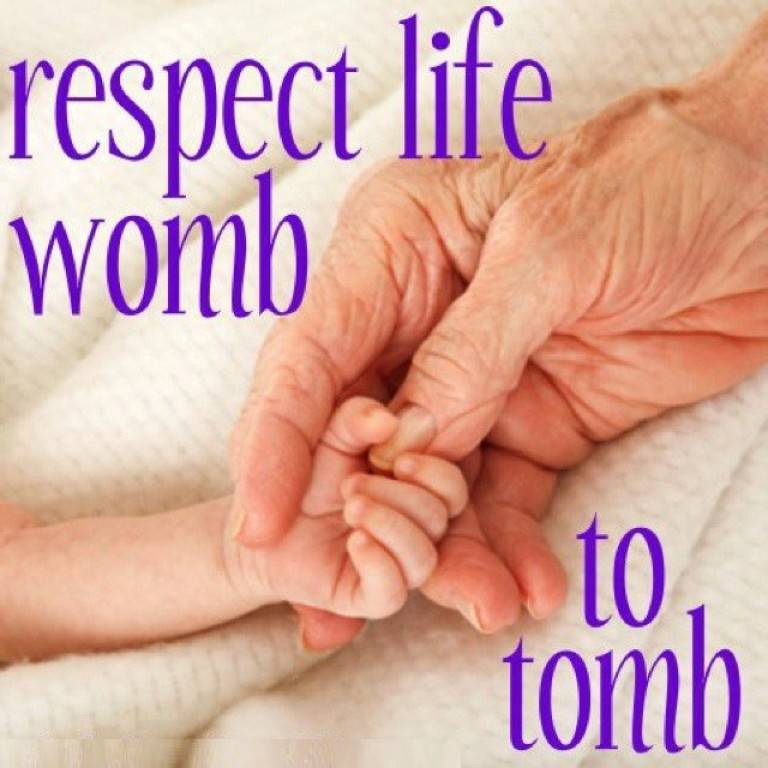
This is Sanctity of Life Sunday, and it is also Word of God Sunday. The first meaning of “Word of God” is Jesus Himself. He not only speaks the truth but is the Truth, the fullness of truth. The totality of what Jesus conveyed has been passed down in the faith of the Church under the guidance of the Holy Spirit. Christians have the tradition of calling the Bible “the Word of God.” There is no text or writing that is as sacred, that is authoritative in the same way as the Scriptures, and it has a unique role in the lives of Christians. Jesus is present to us and teaches us in a unique way when the Scriptures are read, especially at Mass. In Catholicism, we have trouble with the idea that God would reveal the fullness of truth and then let it get lost over the ages. We also have a problem with the idea that the first generations completely misread the Scriptures, and only several centuries later did someone get it right. Catholics look at how the Church has taught over the centuries, with confidence that the Holy Spirit is at work. This is the power of Sacred Tradition. However, there is also advancement of thought. We read in the Second Vatican Council’s Constitution on Divine Revelation (Dei Verbum): “This tradition which comes from the Apostles develops in the Church with the help of the Holy Spirit. For there is a growth in the understanding of the realities and the words which have been handed down. This happens through the contemplation and study made by believers, who treasure these things in their hearts (see Luke, 2:19, 51) through a penetrating understanding of the spiritual realities which they experience, and through the preaching of those who have received through Episcopal succession the sure gift of truth. For as the centuries succeed one another, the Church constantly moves forward toward the fullness of divine truth until the words of God reach their complete fulfillment in her (See Dei Verbum #8).” Sometimes I think Church leaders’ failures in respecting human rights are because the implications of human rights had not been developed yet. Other times, it came from Church leaders being more influenced by the world than by the Word of God. However bad the Church leadership has been, I suggest the world has been worse. God’s message brought something that was considered strange in the ancient world: the notion that every human life was sacred. It was common for people to respect the life of someone from their tribe or clan, people like them, but others’ lives were not seen as sacred. Then, as society got more organized, it became common to value the lives of the powerful, but not the lives of the peasants. The Judeo-Christian tradition, from the beginning, has worked to teach that all human lives are sacred. This, of course, required growth from where they were. It takes a while to integrate new concepts. It is hard to see everyone’s life as sacred, no matter how we dislike them, no matter how inconvenient they are. The human race is always tending away from this, and when disconnected to faith, it can happen very fast. When the French revolution happened, they cast aside Christianity and decided their reasoning ability was superior. It very quickly dissolved into a violent reign of terror. The rights of the individual were subordinated to the perceived good of the state. Without the inherent dignity of the human being created in God’s image, the notions of good and evil become redefined, and often fit the agendas of the powerful. Maximilian Robespierre famously said, “One can’t expect to make an omelet without breaking eggs.” We have the challenge of promoting the sanctity of the life and dignity of every human being. I suggest a good first step is attending more and more to the Word of God.

Blessings,

Fr. Jim

Moving the World

Dear Folks,Today we celebrate the Baptism of the Lord. In the Gospels, Jesus goes from His baptism to the desert to fight His own temptations, and then begins His ministry.As we consider what it takes to make a more peaceful world, I’ve been thinking about how people are drawn to violence, hostility, and destruction. I can’t help but think that part of the root of this is many people feeling helpless to make a difference. I know what it feels like to think that the world can make a mark on me however and whenever it wants, but I’m helpless to make a mark on the world. That is a terrible feeling and can lead to desperation.Desperation is a dangerous thing; it can lead to acting out in destructive and irrational ways.I know that lifeguards are trained to approach a drowning person prepared for that person to try to grab them and drag them down. I can’t think of a less helpful thing to do than grab and drag down the very person who is in here to save you, but that is the power ofdesperation.This leads me to think that making a more peaceful word includes helping channel people’s energy toward that which truly addresses their legitimate concerns. Besides, we Christians are in the business of changing the world by the power of the Gospel, so it is an issue for us, and I have a few thoughts.First, we need a sense of what it is that we are trying to accomplish. When we encounter something that is wrong, it is easy to say what is wrong, but harder to build a different reality to replace it. It is common to find people doing a lot of complaining andcondemning, but not as much trying to build a new reality. If we can build a vision, explain it vividly, and be ready to talk about the pros and cons of the idea, that can be more compelling. Jesus talked against sin, but He talked wonderfully and powerfully about the Kingdom, and about the challenges of discipleship. Focusing primarily on what is negative can make us negative people, but a people of joy and hope in the midst of calamity can bemuch more inspiring. How can we who believe in the resurrection of Christ not be a people of hope regardless of what happens in the world?Second, we need to have a deep enough commitment for the task. It is my observation that if we want to do good, we shall find that we have to work harder than we thought, for longer than expected, to accomplish less than we hoped. The prize belongs to those who do not then give up. Jesus warned about the cost of discipleship a number of times, and in Luke 14:25-33 He warns about family, possessions and even one’s life. He asks, “Which of you wishing to construct a tower does not first sit down and calculate the cost to see if there is enough for its completion? Otherwise, after laying the foundation and finding himself onlookers should laugh at him…(vv.28-29).” We must even be ready to work all our lives for something that might not happen until after we are gone. Jesus said, “one sows, another reaps (John 4:37).” Consider those who started the women’s suffrage movement at Seneca Falls in 1848. How many of them did not live to see the passage of the 19th amendment in 1920? And yet, they did not give up. We Christians are called to think in terms of eternity, so the deeper our faith, the more we can outlast the forces of the world.Third, however great the evil we are fighting, we must not use that as license to become evil ourselves. St. Paul encourages “that you may be blameless and innocent, children of God without blemish in the midst of a crooked generation, among whom you shine likelights in the world… (Phil 2:15).” A text I would encourage you to memorize is, “Behold, I am sending you like sheep in the midst of wolves; so be shrewd [cunning] as serpents and simple [innocent] as doves (Matthew 10:16).”We cannot do this on our own strength. If we want to change the world, the first step is to fall more deeply in love with Jesus. Everything follows from that.

Blessings,

Fr. Jim

Making 2022 a More Peaceful Year

Dear Folks,The Christmas season has just begun, and today we celebrate the feast of the Holy Family, and also St. Stephen (Holy Family takes precedence over St. Stephen, but I’m sure he doesn’t mind). The Story of Christmas includes the story of Herod and all the nastiness that he did, so even our season of joy has a reminder that there is great evil in the world and forces that seek to stamp out the light. The story of St. Stephen, the first martyr, reminds us that the Gospel sometimes faces a harsh response. Family often includes conflict, and it has a special poignancy because these are people so special to us. God made us all to be one family, a family united by His peace and love. I want to start out this year returning to a theme that I have touched on before, but I believe that it is worth reemphasizing.There has been so much violence in the news. I’m so tired of hearing about violence, whether it is with a knife, gun, vehicle, fists, it is horrifying that there is so much. Various things have been proposed, and I do believe that law enforcement is essential, but it won’t solve the ultimate problem. We must become a more peaceful people from the inside out. In John 17:20-23, Jesus prays that all may be one, and says that if we are, that will help people believe in the Gospel. We can’t control others, but we can look at our own behavior, and see how we can get closer to the Christian ideal. We remember what the Scriptures teach. “Bless those who curse you; bless and do not curse them (Romans 12:14).” “Do not return evil for evil, or insult for insult; but, on the contrary, a blessing, because to this you were called, that you might inherit a blessing (1 Peter 3:9).”Does this mean being passive in the face of malice? Doormats to bullies? I say no, emphatically no. It does mean trying to respond in a way that has a chance of making the situation better. My whole life’s experience tells me that good intentions are not enough, that we must learn peacemaking as an art. I have found books to be helpful. “Remembering God’s Mercy” by Dawn Eden is about healing painful memories (especially childhood memories), and we must begin to heal if we are to be healers. “No Future Without Forgiveness” by Desmond Tutu is an inspiring call to forgiveness. “The Book of Forgiving” by Desmond and Mpho Tutu, “Don’t Forgive Too Soon” by Matthew Linn, Sheila Fabricant Linn, and Dennis Linn give practical thoughts on the process of forgiveness. “Verbal Judo” by George Thompson is about de-escalating conflict. “Love Your Enemy” by Arthur C. Brooks is about dialog with those with whom we disagree, and how such people can be gift. “God Help Me, These People are Driving Me Nuts!” By Gregory Popcak talks about seeking win-win solutions rather than working against each other. If you will only read one book from my list, I would encourage “Redeeming Conflict” by Ann Garrido. It is twelve habits (virtues) that transform conflict into a spiritual journey, and I believe would make it more productive. I again emphasize that I don’t speak as one who has mastered this. I have come a long way from where I used to be, but I can see that I have a ways to go.We cannot do it by our own power. We must begin by opening ourselves to Jesus. It is by His transforming power that we became able to love and forgive our enemies and bless those who curse us. If we want a better world, the first step is always falling more deeply in love with Jesus. There’s no better way to start our year.Blessings,Fr. Jim

The Catholic Understanding of Mary

Dear Folks,

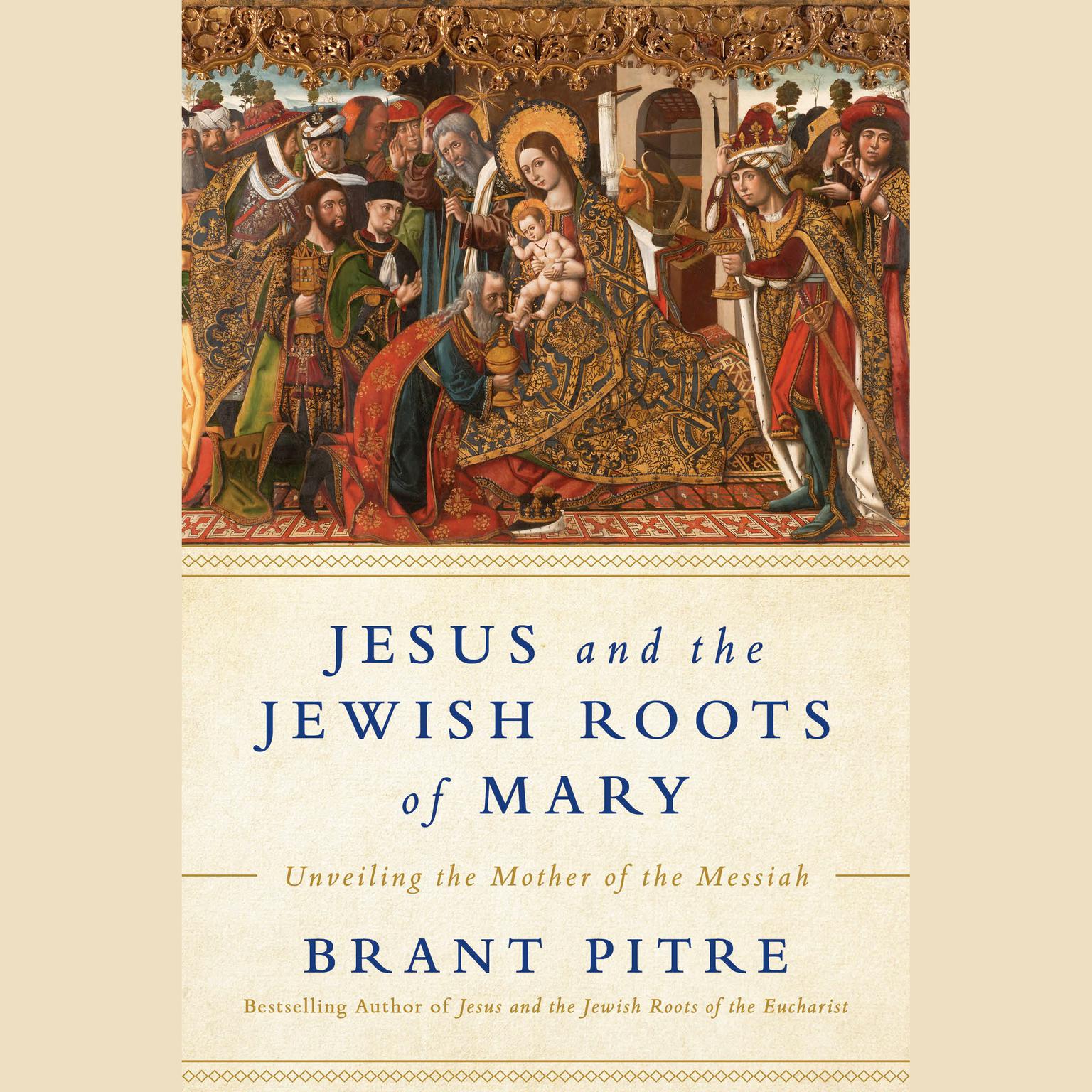
Mary is a key figure for Advent. Brant Pitre’s book “Jesus and the Jewish Roots of Mary” is not only for those who love Mary and love the Bible, but for anyone who wonders if there is Biblical basis for all the Catholic teaching on Mary (spoiler alert: yes). He shows very powerfully how the Old Testament and the New Testament are woven together into one large story of salvation. We have (I hope) all been taught that the New Testament is foreshadowed in the Old and the Old is revealed in the New. The foreshadowing is called a “type” and the reality fore-shadowed is called the “antitype.” We see Noah’s flood and the passage through the Red Sea are types of baptism. We read in the blessing of water in the baptismal rite, “The waters of the great flood you made a sign of the waters of Baptism, that make an end of sin and a new beginning of goodness. Through the waters of the Red Sea, you led Israel out of slavery, to be an image of God’s holy people, set free from sin by Baptism. ”“Therefore, just as through one person sin entered the world, and through sin, death, and thus death came to all, inasmuch as all sinned – for up to the time of the law, sin was in the world, though sin is not accounted when there is no law. But death reigned from Adam to Moses, even over those who did not sin after the pattern of the trespass of Adam, who in the type of the one who was to come (Rom 5:12-14).” St. Paul will go on to contrast the sin of Adam (type) and the gift of Jesus (antitype).We also see that Moses, David and even Joseph were types of Jesus. Eve is a type of Mary. This explains why Jesus called His mother “woman,” which otherwise makes no sense. Eve was called “the woman” in Genesis and didn’t get the name Eve until after the fall. Pitre will explain that Mary is not only the new Eve, but the new ark of the covenant and the new Rachel. He will explain how all this was recognized by the Fathers of the Church in the early centuries. This is not new. He also suggests reading what the Second Vatican Council said about Mary in the Constitution on the Church (See Lumen Gentium 52-68).This, of course, is not just for apologetics or for interesting Bible study. First, it helps us see how God’s big plan of salvation is all woven together. Next, if you read Edward Sri’s “Biblical Walk Through the Mass” you can see that the Bible and the liturgy are woven together in one large reality. Having done that, we will have the practice to be able to see how our story is woven into that very story of salvation history and understand our lives as a journey with God. Second, it helps us appreciate the person of Mary of Nazareth. She is not just a theological football or doctrine of the Church. She is a person, and lives in heaven, enveloped in God’s love. She loves us with a mother’s love and prays for us. This is part of the rich gift that God gives us, drawing us into His family. If there is one thing we should understand in our day and age, it is that family matters. A lot. I remember as an undergraduate talking to someone from the Reformed Bible College about the saints. She said that she didn’t see the need for this because Jesus is enough. I am pleased that even then I thought to say that would be a compelling argument if we believed that God would give us the minimum necessary. I believe He gives us the maximum possible because His love is infinite. This season we see to sharpen our attentiveness to the gifts that God gives. This a place to start. Blessings, Fr. Jim

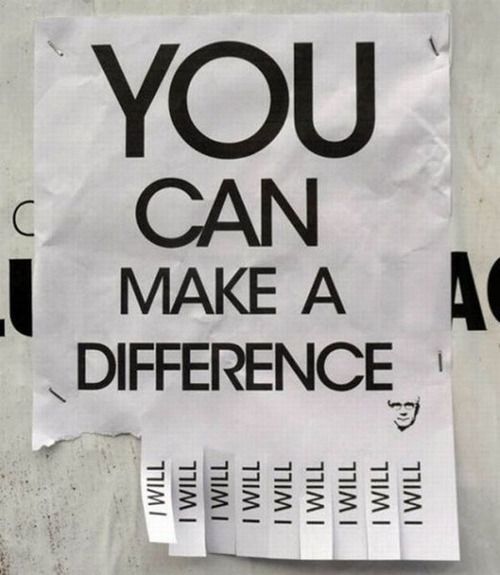
Dear Folks,As we continue with the season of hope, I need to point out a very special kind of hope that we all need: the hope that we can make a difference in the world. There was a time when it was believed that history is shaped by large forces way beyond us, and the average person can do nothing to affect the outcome. This has been debunked, and we know that history can be changed by the smallest thing. During the 1960’s there was a naïve hope that we could fix the world easily, because it isn’t hard, and the previous generations weren’t trying. “All you need is love,” was the mantra, and there wasa very superficial understanding of what love meant. Alas, it didn’t work, and by the 1970’s there was a cynicism that the system was deeply corrupt, that heroes were not really heroic, and it was never going to get better. Then “Star Wars” and “Raiders of the Lost Ark” burst in on the scene. Whatever critics may have to say about the movies, the feeling of the daring, old-fashioned hero was a breath of fresh air. For our hope to be realistic, I suggest considering these issues: We need focus on being productive. There are some who put a good deal of time into complaining without moving at all toward productive action. As we expel energy, we want to consider the question: how is this helpful? Are we focusing on our own desires or a higher purpose? If we want God to bless our efforts, it is good to be about something larger than ourselves. We see in James 4:1-3 “Where do the wars and where do the conflicts among you come from? Is it not your passions that make war within your members? You covet but do not possess. You kill and envy, but you cannot obtain; you fight andwage war. You do not possess because you do not ask. You ask but do not receive, because you ask wrongly, to spend it on your passions.” In my years of church work, it have heard a lot of conversation about how people want things in the church according to their preferences, but I haven’t heard nearly as much about how we can do church in a way that would be more pleasing to God and more effective in fulfilling our mission. How high are we setting our sights? A big issue is perseverance. If you go through the New Testament looking for how many times it encourages perseverance, you might be surprised how often it comes up. Many start with enthusiasm, but give up when they don’t get results as quickly as they expected. The prize belongs to those who keep going. Critical is learning from our mistakes. In Bill Bennett’s book “Last Best Hope” he describes the decision to make George Washington the head of the continental army. His record was mixed, and there were a number of objections. One of the points mentioned in his favor was that “he was good at learning from his mistakes.” That hit me. I had often thought about the importance of being willing to learn from our mistakes, but this was the first time that I thought about it as a skill that one can get good at. To learn from our mistakes, we need more than a general good intention. Weneed to be able to look at things that go wrong, identify the problems, and strategize a way to do better in the future. This is an art to be acquired. Who me? We read in the Bible many stories of God choosing the most unlikely people. We see Moses asked, “Who am I that I should go to Pharoah and bring the Israelites out of Egypt?(Exodus 3:11).” See also the call of Gideon (Judges 6:15) and Jeremiah (Jeremiah 1:6).”God is calling you to greatness. Yes, you. You might not be able to imagine how, but God has bigger ideas than we do. Blessings, Fr. Jim

Subjects of Christ the King

Dear Folks,
This is the Feast of Christ the King. Jesus reigns over all, and His authority is greater than any nation or any government. What does that mean for us?
We are not in the business of imposing our religion on others, even though some may accuse us of it. We are, however, in the business of helping other people, especially those that are most vulnerable and most hurting. This must sometimes include advocacy when human rights and human dignity are under attack. Some say that when we refuse to participate in things that we think are wrong or refuse to support wrong behavior, we are forcing their beliefs on others.
Some say that when we are speaking up for human rights, we are imposing Catholic beliefs. No, we are being good citizens. The conscience formed by Christianity has as much right to be in the public discussion as any other kind of conscience.
The letter to Titus is advice to a bishop, and says, “Remind them to be under control of
magistrates and authorities, to be obedient, to be open to every good enterprise (Titus 3:1).” Historically, the early Christians were good citizens of the countries in which they lived and were careful to obey the laws until the laws required them to be disobedient to God in the slightest way, and then they would refuse even under threat of death. St. Thomas More, when about to be beheaded, said, “I die the king’s good servant, but God’s first.” He followed the law of England to the letter, until it meant disobeying God, and then he would not budge.
Many point to the bad things done by Church leaders in the present and the past. Most of those are done contrary to the teaching of the faith, and that just calls for holding more closely to the faith now.
There have been times when official Catholic practice has involved bad things. This is often because our understanding of what is good and right has been getting refined over time. There was a time it would have been unheard of to suggest that someone has a right to express wrong ideas on matters of importance. The maxim was, “error has no rights” and it seemed intuitively obvious. Only after centuries of reflection did people start to say that even if error has no rights, people who err have rights, and we should counter bad ideas with more good ideas, not legal sanction or punishment. Ironically, the Catholic Church has gone from being accused of stifling
free thought to people clamoring for censorship of many Catholic beliefs for being “hateful” and “(fill-in-the-blank) phobia.”
Some say that, on balance, the Catholic Church has done more harm than good. I would suggest that narrative has been a prejudice that has led to some slanted history. Now we are starting to see that narrative challenged. I would recommend “How the Catholic Church Built Western Civilization” to get started.
We are very glad to learn about when the Church stood up for human rights and human dignity in the past, and sad for those who did not speak up when there was need. Let us live so that people can say of us that we were good American citizens, and servants of God first.
Blessings,
Fr. Jim

The End

Dear Folks,In the movie, “Avengers: Endgame” Tony Stark states a very simple but profound truth that “part of a journey is the end.” Our reading this Sunday is from the apocalyptic chapter of Mark. Quick review: apocalypse is from the Greek for “removal of the veil,” and revelation is from the Latin. That is why in older Catholic Bibles the Book of Revelation is called Apocalypse. Removal of the veil is what happened in ancient weddings, so the image refers to the wedding of the Bride and the Lamb at the end of Revelation. It also points to removing the veil from the meaning of word events: it may look like evil is winning, but God is at work, and this is leading us to a glorious end. Matthew, Mark, and Luke all have apocalyptic chapters (Chapters 24, 13, and 21, respectively). John doesn’t, but he has the Book or Revelation. Mark 13 starts with the prediction of the destruction of the temple (the temple would be destroyed by the Romans in A.D. 70), moves into descriptions of tribulations of various kinds, and leads to “’the Son of Man coming in the clouds’ with great power and glory (Mark 13:26).” This refers to the Second Coming at the end of time.When Jesus refers to “the Son of Man” we must remember it is a reference to Daniel 7. Daniel is having a dream, and there is a succession of beasts that rule great kingdoms, and then “As the visions during the night continued, I saw coming with the clouds of heaven One like a son of man. When he reached the Ancient of Days and was presented before him, He received dominion, splendor, and kingship; all nations, peoples and tongues will serve him. His dominion is an everlasting dominion that shall not pass away, his kingship, on that shall not be destroyed (Daniel 7:13-14).” Whenever Jesus refers to Himself as the Son of Man (Math 9:6; 26:64; Mark 2:10; 8:31; 14:62; Luke 5:24; 9:22; 22;69), He is referencing this text from Daniel, a text that His audience would have known very well. Referring to Himself as the Son of Man was a bold statement from the beginning, and the closer He comes to the cross, the more open He is about His glory. We see at His trial before the Sanhedrin, “the high priest asked him and said to him, ‘Are you the Messiah, the son of the Blessed One?’ Then Jesus answered, ‘I am, and “you will see the Son of Man seated at the right hand of the power and coming with the clouds of heaven (Mark 14:61-62).”’”When Stephen was being martyred, he said that he saw, “the Son of Man standing at the right hand of God (Acts 7:55).” The second coming happens to us personally when we reach the end of our earthly life. The early martyrs would often go to the arena singing hymns of praise to God. When the cross gets more up close and personal in our lives, we can witness in a special way to the glory of Christ the King.Many people over the years have attempted to take the apocalyptic literature of the Bible and crack it like a code to figure out when the end of the world will come. This is especially puzzling given how the Scriptures repeatedly tell us we won’t know when (for example,Matthew 24:36-44; Mark 13:32-36, Luke 12:40). The challenge is to be ready, to hold the things of this earth (including our earthly lives) in a loose grip and be ready to face whatever happens.We do not know what the future will bring, but Jesus calls us to be ready, with our eyes on the goal.Blessings,Fr. Jim