Tag Archives: Faith

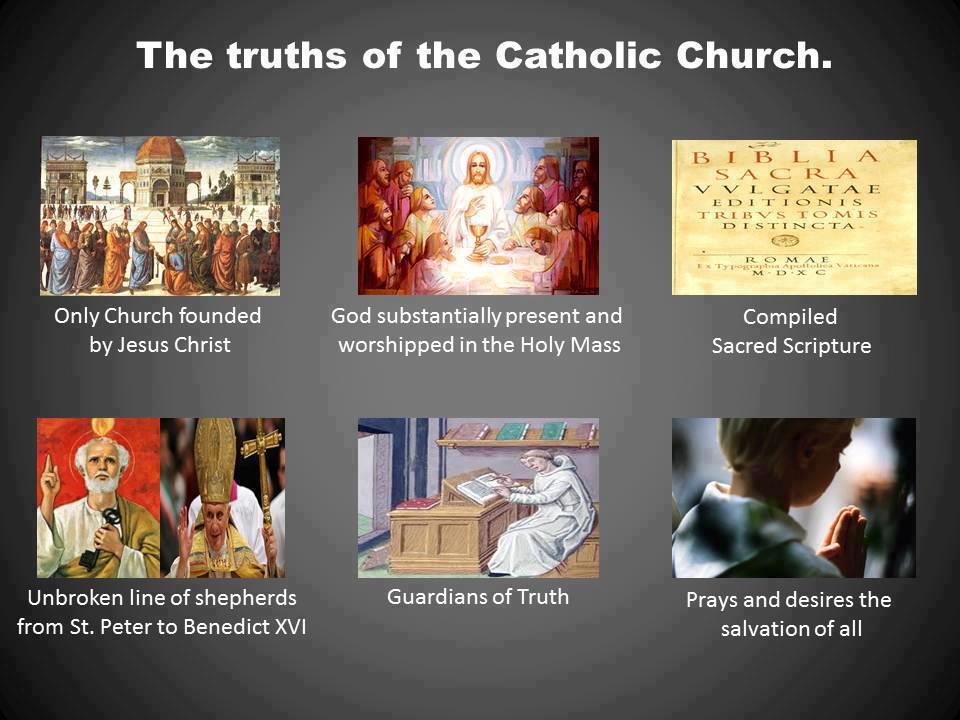
Catholic Truth

Dear Folks,

How to think about people who seek God but are not Catholic? First, there is the question of Christians who are not Catholic, and the Second Vatican Council’s Decree on Ecumenism (Unitatis redintegratio) talks about our relationship with them. Second, there are nonChristian religions and Vatican II deals with that in Declaration on the relations of the Church to non-Christian Religions (Nostra aetate). They are both worth a read.

The Catholic faith is the fullness of truth about Jesus, but there is much that is true that our Protestant brothers and sisters teach, and some things that are true as taught by other religions. God gives everyone the light of natural reason, and so it is not surprising that some true things are taught by groups like Hindus, Buddhists, and Muslims. Christians and Jews have received special revelation in addition, and it is completed by the Jesus event.

All who are saved, all who get to heaven, do so by the power of the Sacrifice of Jesus, whether they understand it explicitly or not. “And this is the verdict, that the light came into the world, but people preferred darkness to light, because their works were evil (John

3:19).” Our salvation is God’s work, not ours. Those who understand who Jesus is and what He is about and choose not to follow Him will be condemned. Those who had not heard about Him, or were taught the Gospel so badly that they could not recognize Him as

the light are another story (and I suggest that latter group is huge). That said, we must not get complacent. We don’t get to sit back and relax. If you read the Gospels (which I highly recommend!) and take them seriously (which I very highly recommend!!) we are warned that we don’t just coast into heaven (See, for example Matt 5:29-30; 7:13-14; 1 Corinthians 9:27).

Jesus wanted His people to be one (John 17:22). I think Satan laughs himself silly every day that Christians are divided and teaching contradictory things. We speak of God’s ordaining will, and God’s permissive will. His ordaining will is that everything and everyone be all good, but He permits us to do evil, and He will bring good from it.

Other religions can be a gift in certain ways: they can help people whom we have not yet reached (though we need to get on that); they provide a challenge for us to better witness to the goodness, beauty and truth of the faith (easy to get complacent when everyone agrees); they can remind us of aspects of our faith that perhaps we have been neglecting.

For example, a few generations back, people told me the Catholic Church did not encourage them to read the Bible. Our Protestant brothers and sisters reminded us of the importance and benefits of reading and being familiar with the Scriptures (and, if you look at

Church documents and history, it is a strong part of the Catholic faith).

Having all of these gifts of the Catholic Church is not a privilege that occasions pride, but a responsibility. “Much will be required of a person entrusted with much, and still more will be demanded of the person entrusted with more (Luke 12:48).” Think of all the gifts

we have been given. What will God expect from us?

Blessings,

Fr. Jim

Our Thinking and God’s Thinking

Dear Folks,

The Synoptic Gospels (Matthew, Mark, and Luke) all relate Jesus giving three predictions of His passion. Today we read in Mark Jesus giving the second prediction of the passion,

and the apostles are clueless. After the first prediction and Peter’s pushback, Jesus says “You are thinking not as God does, but as human beings do (Mark 8:33c).”

After the second prediction, the next concern of the Twelve is which one of them is the greatest. Jesus says, “whoever wishes to be first must be the last of all and the servant of all.” Jesus puts His arms around a child and says, “Whoever receives one such child in

my name receives me; and whoever receives me receives not me but the one who sent me (see Mark 10:35-37).”

After the third prediction, James and John start lobbying for the best spots in the kingdom. Jesus teaches that “whoever wishes to be great among you must be your servant and whoever wishes to be first among you must be the servant of all. For even the Son of Man did not come to be served but to serve and to give his life as a ransom for many (Mark 10:43b-45).

We notice that all the apostles are seen not to understand, but Peter, James, and John are especially highlighted. They were in inner circle, the ones who got to witness the extra special things. They witness the little girl getting raised (Mark 5:47), the Transfiguration (Mark 9:2), and the agony in the garden (Mark 14:33). St. Paul said they were considered “pillars” of the faith community (Galatian 2:9). It appears the closer one gets to Jesus and the higher one gets in the Church the more one gets humbled.

Consider the contrast between God’s way of thinking and human ways of thinking. “For my thoughts are not your thoughts, nor are your ways my ways—oracle of the Lord. For as the heavens are higher than the earth, so are my ways higher than your ways, my

thoughts higher than your thoughts (Isaiah 55:8-9).”

I would connect this to living according to the Spirit and living according to the flesh. “It is the spirit that gives life, while the flesh is of no avail. The words I have spoken to you are spirit and life (John 6:63).” See Romans 8 and Galatians 5 for some expanded treatment. We see that the way of the world is seeking one’s own advantage and centering one’s life on power, pleasure wealth and honor. The way of God is focused on giving oneself in love. A leader is a servant leader. The one’s who should get our greatest concern are the powerless and most helpless. Those trapped in poverty, the disabled, those incapacitated by age and infirmity, children, especially unborn children (whose rights and dignity are

currently under attack), and others like them must never be forgotten.

But what we are talking about is not just a collection of activities, but a completely different way of thinking. As we reflect on these teachings, how do they challenge how we approach life?

Blessings

Fr Jim

Warning: a Cross

Dear Folks,
Saturday, we celebrate the Exaltation of The Cross, and Sunday, we read of Jesus predicting His passion. This section of Mark (8:22-10) is all about the cross, about Jesus preparing to carry it and teaching that His followers will have to follow with a cross as well. People are very slow to get it. Three times He will explain that He will be rejected and put to death, and Mark emphasizes that immediately afterward, the apostles show they don’t get it. We are accustomed to talking about the cross in theory, but it is harder to accept in practice. Jesus had just cured a blind man, but it took two tries. After the first try, the blind man could see, but not clearly (people looked like walking trees). After the second try, he could see clearly. Those who thought Jesus was just a teacher and wonder worker are people who can see, but not clearly. I’ve found some who seem to see themselves as customers in the Church rather than coworkers in mission, and they cooperate (maybe) if they get things the way they want them. They can see, but not clearly. I’ve asked practicing Catholics, “why is it a good thing to be a practicing Catholic Christian?” and would get some answers like, “I get a good feeling on Sunday morning,” or “It is good to get together with the people,” or “it gives moral guidance.” These are people who see, but not clearly.
In 1776, Thomas Paine wrote an essay called “The Crisis.” It began, “THESE are the times that try men’s souls. The summer soldier and the sunshine patriot will, in this crisis, shrink from the service of their country; but he that stands by it now, deserves the love and thanks of man and woman. Tyranny, like hell, is not easily conquered; yet we have this consolation with us, that the harder the conflict, the more glorious the triumph. What we obtain too cheap, we esteem too lightly: it is dearness only that gives every thing its value.”
Given what is happening in the world and what is happening in the Church, I think it is a safe bet that being Church is not going to get easier any time soon. It fact, it will likely get less convenient, more challenging, and require more people to step up beyond what they are accustomed to. Those whose faith is shallow shall very possibly wander away, as have so many before. Those who remain, however, will be more prepared than ever to rise to the level of heroism to which God calls His saints. I see my job as preparing people so that more will endure, and then they will be more prepared for the rebuild.
If following Jesus becomes harder, will you still follow? If it becomes a lot harder?
If being Church becomes harder, will you still do it? If it becomes much harder?
God is calling us to greatness.
Blessings,
Fr. Jim

Out on Mission

Persecution of the Christians at Rome by Nero. Illustration for The Pathway of Life by T Dewitt Talmage (Johnson, 1890).

Dear Folks,
Jesus sends the disciples out on mission, and they are minimally equipped. Sandwiched into the story of the mission of the twelve, between their being sent out (Mark 6:6-16) and
the return (Mark 6:30-33), is the death of John the Baptist. As with the two healings a couple weeks ago (Mark 5:21-43), when one story is sandwiched into another, it is a hint to look at them together.
The mission of the disciples: depending on whatever people would give them, they would heal the sick and drive out demons. That is a pretty challenging assignment, but one that would not make them enemies (except for the demons). However, they would later be sent out when they would encounter persecution of all kinds, even though they were only doing good. The death of John the Baptist is a foreshadowing of what lies ahead.
John had been imprisoned for calling out Herod on his behavior, and Herod’s wife Herodias saw him as a threat, so she conspired to get him killed. Throughout Christian history, standing by the truth can get one in trouble. In the early Church, there were persecutions
in which Christians would be given a choice: either worship the emperor and be set free, or refuse and face horrible, agonizing death. Many faced death. Worshipping the emperor did not require anything elaborate, just putting a pinch of incense on hot coals and saying, “Caesar is Lord.” They didn’t have to mean it, and they could tell all their friends they didn’t mean it. Still, they refused. Why make such a fuss about such a little thing? First, it was witnessing to a lie. Witnessing to the truth is central to being a Christian. Second, and more sinister, it is a form of grooming. Tyrants and predators know that shifting people’s behaviors, their consciousness in tiny, incremental steps, can lead people to all sorts of terrible places before they realize what is happening. We remember the enemy is very clever (Gen 3:1).
These days, if someone refuses to participate in same sex union ceremonies, or uses the pronouns that we were taught in school, there will be people who will try to destroy him. Some say that not going along with certain theories about marriage and gender does great harm to some people. I say, let’s have that conversation. Let’s talk about what the truth really is, and how we can best help people. Many are not willing. Many would shout you down, assault or harass you, destroy your livelihood, in general try to destroy you instead.
I recommend Matt Walsh’s documentary, “What is a Woman.” It shows people acting like the question itself is out of bounds, inappropriate, somehow mean. People cut off the conversation when he pushes the question. When I got my rudimentary studies in science, math, and philosophy in preparation to study theology, I learned the importance of rigorously define key terms. If we are going to help people, it sure would be good to know what
we are talking about.
Jesus sends us forth to be healers, not usually with miraculous powers, but with “love, joy, peace, patience, kindness, generosity, faithfulness, and self-control (Galatians 5:22). We must remember that we are being “sent forth as sheep in the midst of wolves. Be as clever as serpents and innocent as doves (Mat 10:16).
Blessings,
Fr. Jim 

Do We Really Know?

Dear Folks,
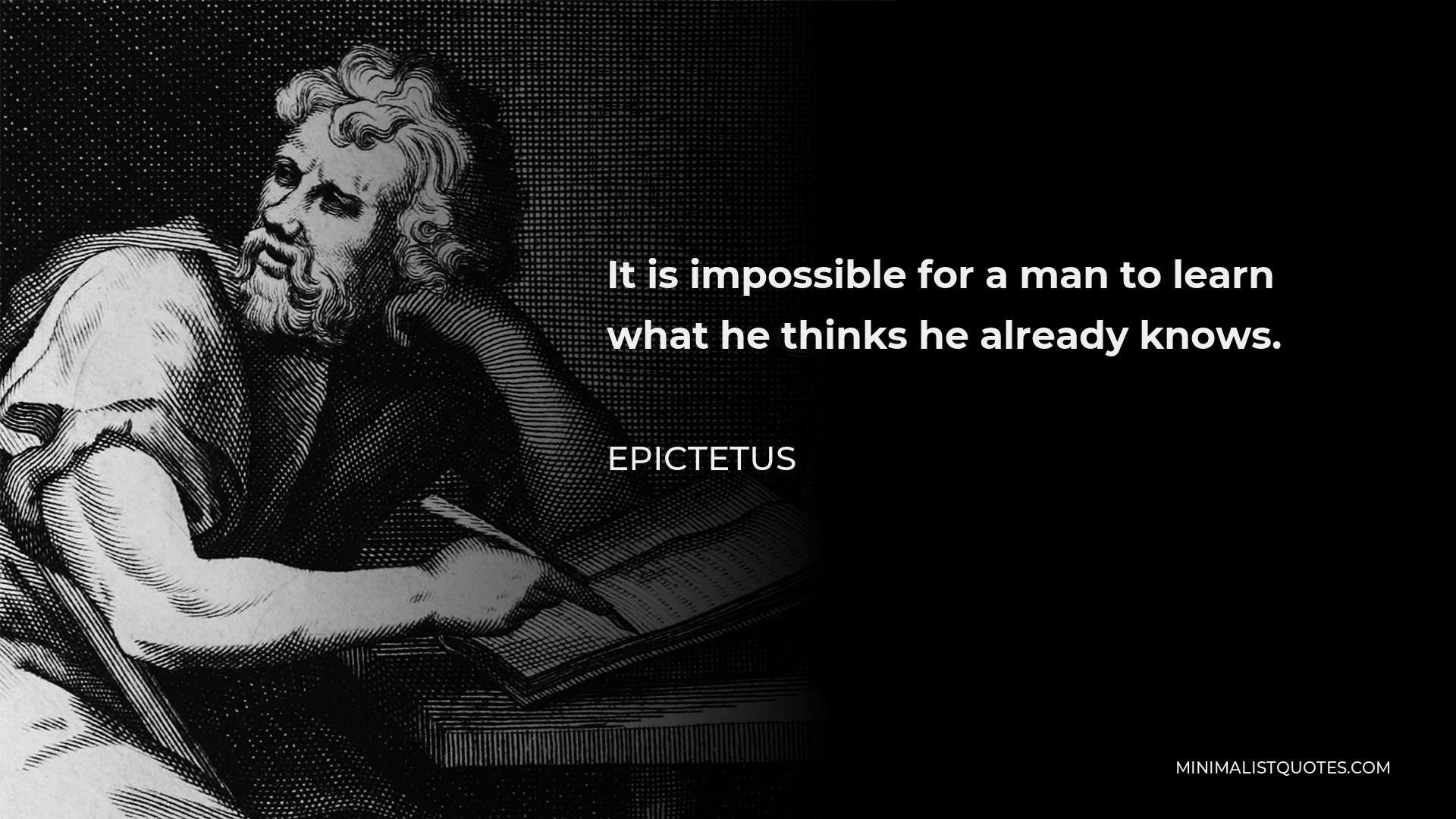
Today in our Gospel (Mark 6:1-6) we see people who don’t learn who Jesus is because they think they already know. They apparently figured that since He grew up there, they knew all there was to be known about Him, and so their minds were closed. I find one of the great obstacles to learning is the assumption that we already know. Have you ever started to talk, and before you were done, someone assumes (incorrectly) that they know what you are going to say and so starts responding to this imagined point of view? Isn’t it frustrating? Have you ever been caught doing that to someone else? Sometimes we can say what we wanted to say, but their voices are so loud in their heads that they hear what they expected and not what you said.
What some people say about what Christianity is shows a terrible lack of understanding, but they are sure they understand. Several have said that Christianity is just a matter of being good to others. I start to react, and they say, “That’s what it boils down to.” No, No,
No. I heard people say that Christianity and Hinduism teach essentially the same thing, just use different words, so they do both. In the words of Buffy the Vampire Slayer, “No. A thousand gallons of ‘No.’” Christianity is a love relationship, a deep friendship, with a God who loves us deeply, tenderly, and faithfully, and has been willing to pay the ultimate price for us. There is not, nor could there ever be a love story equal to that.
Many people are walking around with the notion that what they learned about the faith as children is all they need to know. I think this has a lot to do with why the Church is having so much trouble now. Even if your faith formation as a child was super-excellent (and for many, many people it was not), what would your life be like if you stopped learning about things in general after eighth grade? Many have left the faith, and many remain in a superficial manner, but get their perspectives more from the world than from the faith. If they have adult questions and only a child’s answers, how could that not happen?
I think many were taught the faith in such a way they didn’t get the sense that it made much difference, so why learn more? I suggest there are several reasons:
1. It enriches our encounters with God. In any love relationship, learning about our beloved helps us connect.
2. It helps us understand how to please God.
3. It pushes us out of our comfort zone. No relationship develops if we are not willing to get out of our comfort zone.
4. It helps us function as members of the Church. Church will still be frustrating because it is so full of us sinful people, but how it works will make more sense.
5. It enables us to witness to the faith better, so more people will want to come and fewer will want to leave.
6. It is just so fascinating! The more I learn, the more amazing it seems and the hungrier I get to learn even more. A thousand lifetimes would not be enough.
7. I suggest our strength as a church in the future will depend a lot on how much people keep learning about the faith.
Blessings,
Fr. Jim

The Fullness of Life

Dear Folks,
Our Scriptures today deal with the forces of life and the forces of death. “Because God did not make death, nor does he rejoice in the destruction of the living (Wisdom 1:13; see also Ezekiel
1:23).”
In our Gospel, the story of the woman with the hemorrhage is sandwiched between two halves of the story of raising the daughter of Jairus. In Leviticus 17:11 we see that, “the life of the
flesh is in the blood.” For the Israelites, the blood was the life, so her life was draining away. She was ritually impure, so she could not enter the temple, and no one wanted to touch her because they would become ritually impure themselves. Imagine being isolated from life like that for 12 years. The little girl was 12 years old (another hint that the stories are connected). She had had so little chance to experience life, and now it seemed that she never would. The heartbreak of her family would be incalculable. Jesus brings hope when hope is gone.
Of course, there would be many sick and dying people at that time that did not get cured. Jesus of course, had great concern for all who suffered, but His primary task was not to increase people’s lifespan, but give us eternal life. When He does miracles, He is teaching us something.
In one sense, we are either alive or we are not. A human life is immeasurably sacred and precious, worthy of unique respect. It would be appalling for a society to say that the life of an adult was more sacred than the life of a teenager, that the life of a teenager was more sacred than the life of a toddler, or that the life of a toddler was more sacred than the life of a fetus.
In another sense, we can become more fully alive by how we exercise our humanity. To give in to the forces of chaos, to be enslaved to our primal desires, to think only of ourselves, to let life
happen to us is to be less alive. To give ourselves in love to others, to devote our energies to something greater than ourselves, to be intentional about growing and developing as a person is to be more fully alive.
Living things can grow, organize, often connect with others to form communities that are somewhat like a live organism (1 Corinthians 12). Dead things decompose, return to the earth, and their material disperses. W. C. Fields is quoted as saying, “Remember, a dead fish can float downstream, but it takes a live one to swim upstream.” Being alive enables us to resist the forces of chaos.
The great obstacle to being fully alive is sin. Remember that “The devil was a murderer from the beginning (John 8:44).” And in Romans 6:23, “the wages of sin is death but the gift of God
is eternal life.” Jesus came that we “might have life and have it more abundantly (John 10:10).”
If we are to spread the Gospel, it is for us to show that we are leading an abundant life, one that, while challenging, is joyful, even in difficult times. How do you see your life as more abundant because it belongs to Jesus?
Blessings,
Fr. Jim

A More Peaceful World

Dear Folks,

This Sunday’s Gospel deals with people that Jesus could not convince.

Mark 3:20-35 Jesus is casting out demons, and His opponents claimed that He was possessed and that he drove out demons “by the power of the prince of demons.” Jesus shows how illogical that is and warned against blasphemy against the Holy Spirit. It seems from the context that blasphemy against the Holy Spirit is refusing to see. Helen Keller said, “The only thing worse than being blind is having sight but no vision.”

Some will not see because they don’t want to and will say or do anything to defend against a new idea. Those who refuse to see cannot be forced to see. If even Jesus couldn’t convince them, we are not going to do better than Jesus.

I continue to be concerned about the state of conversation in society today. There is a lot of interaction, but not a lot of understanding. The chasm between sides seems to be growing

wider, and the hostility between them growing fiercer. I chose not to include examples but ask you to think of some from your experience. I bet you can. I’ve noticed that what we say sounds more convincing to us than it does to the people who

disagree with us. There seem to be many occasions when someone presents his argument and ends with the triumphant equivalent of “checkmate. Case closed” and the other person says, “No, not even close.” Some are not convinced because we didn’t make a case that spoke to their point of view, and if we learn more about their point of view we can try again and maybe succeed. Usually there are some bits of information that support one point of view, and other

bits of information that support the other point of view. We tend to put more weight on what supports our narrative. Some people, it seems hammer the details in their favor and ignore the details against. I can’t tell if they are doing it on purpose.

At some point, we need to realize we aren’t going to make progress and need to give up. Jesus spoke of shaking the dust from our feet and moving on (Matt 10:12; Mark 6:11; Luke 9:5

and 10:11). Sometimes it takes a while for a new idea to take root, to mature, and to grow. We can’t generally change the basic architecture of our thinking in a minute; sometimes it takes

years. I’ve caught myself getting angry when I think someone is not trying to understand. I need to check myself. First of all, they may be trying. Second, getting angry is a futile waste of energy at best, and destructive at worst. I just need to accept that I can do what I can do.

I think it is critical to be realistic about what the situation is and how much we can do about it. There is a lot of bad thinking, bad logic, and bad ideas, and it’s going to be that way for the

foreseeable future. We need to resign ourselves to the fact that we can’t fix it, but maybe we can make it a smidge better. If we can get someone to think something they’ve never thought before, ask a question that they’ve never asked before, look at things from a different angle, that moves us forward. If others hurl abuse, call people names, and get nasty while we respond calmly, respectfully,

and persistently, over time those who are open will see where wisdom lies.

One final thought: let us all be carefully on guard against our own human tendency to refuse to see the truth. None of us are immune.

Blessings,

Fr. Jim

The Core Meaning of All Reality

Dear Folks,
Today is the Solemnity of the Holy Trinity, a feast day that should get more acclaim than it does. Fasten your seatbelts; we’re going deep.
Catholics should, at a minimum, know that there is one God who is three divine, coeternal persons, Father, Son, and Holy Spirit. Unfortunately, almost all just stop there and never give it another thought.
Folks, this is the core of all reality and makes all the difference.
As we look at the basic questions of existence and consider what to believe, there are some primal questions. Is the ultimate reality personal or impersonal? If we accept the atheist materialist view, then it is impersonal, and personhood is just a blip in the dance of matter- energy in the universe. I experience consciousness, but don’t know why (there is vague talk about a byproduct of electrical activity of the brain, but I don’t think that explains much). I experience good and bad feelings, and I want to maximize good feelings, and that’s about it. In this scenario, when I die, nothing of me is left, and the race will die, and it won’t matter that we existed at all. I don’t find this very inspiring.
If the Christian point of view is correct (and, in case you are wondering, I believe it is), Then personhood is the foundation of all reality. Beyond even the universe. Furthermore, God is the perfect community of love all by Himself. The Father is eternally giving Him- self in love to the Son, who is eternally receiving and returning that love, and the love that passes between them is the Holy Spirit. Though God does not need anything, love by nature is fruitful, and so God created the universe, including us. We are meant to receive His love and give ourselves as gift to Him, and that is the fullness of the meaning of being human and the fullness of joy. Unfortunately, sin inhibits this gift, and we become centered on our own desires (classically: power, pleasure, wealth, and honor). Only by be- coming one with Jesus in His perfect gift of self, which culminated on the cross, can we be saved from it. In Him, we can learn how to give ourselves as gift, and receive the strength to do it. The more we grow in Christ, the more we receive His love and the more we give ourselves in love. In heaven, that flow of love becomes perfect and complete. See John.16:20-24 and John 17: 20-26.
We must be careful about self-deception. In our sinful condition, it can be easy to tell our- selves we are loving God and others when we are actually at our center serving our de- sires. Matthew 6 (the middle chapter of the Sermon on the Mount) is all about that danger. Our scribe and Pharisee friends are the poster children for this.
The big question in life is: are we at our center about serving our own desires, or about giving ourselves in love with our own desires as a side dish? Everything starts from this.
May Almighty God bless you, the Father, the Son, and the Holy Spirit. Fr. Jim 

What is Love?

Dear Folks,

Our first reading this Sunday from Acts 10 shows St. Peter dealing with a major issue in the first century Church: whether righteousness (being in right relationship with God) comes through works of the Law of Moses or through faithfulness to Jesus (spoiler alert: faithfulness).

In our Gospel from John 15, we see a major emphasis on how to be faithful is to love one another. A temptation is to respond with “now I know what I need to know; this is simple.”

Not so fast. In theology, I read a book called “Situation Ethics” by Joseph Fletcher. He insisted that there should be only one law, the law of love, because any other law, any other ethical principle would sooner or later conflict with the law of love. As I kept reading, I realized that he was presuming that anyone who looked at a given situation would know what was the loving thing to do. Studying history and philosophy should show us that what seems obvious to us now was unthinkable in ancient times. Looking at modern discourse we can see that many people have opposite positions and are sure that their position is true, right, and obvious.

“Love” is a word we use so much it is easy to overestimate how well we understand the challenge. There are some major issues we must tackle:

1. What is love? Christianity teaches that it is not a feeling, but a decision to seek the good of others, even at a cost to oneself (the greatest act of love is “to lay down one’s life for one’s friends [John 15:13]).”

2. What is the good? Is it getting what we desire when we desire and how we desire? Or is there a good that is more profound, and that is to be discovered and that we are to grow into seeking? Such a good involve virtues being encouraged and incentivized by a healthy society.

3. How do we achieve it? Lenin, Stalin and Mao murdered tens of millions of people insisting that this would serve the greater good, but they brought about enormous misery instead. If we agree that we want an end to gun violence, we must still ask if a given gun control legislation will make people safer or less safe? Are there other things we can do? If we agree we want to help the environment, we are left with questions: does switching to electric cars help or hurt the environment? Does less drilling for oil in the U.S. help ore hurt? Does the benefit outweigh the harm? In Ann Garrido’s wonderful book “Redeeming Conflict” talks of “undoing the knot of intention.” Good intentions don’t necessarily produce good results.

4. How can we, a sinful people, do better? Christians know that we cannot overcome temptation by our own strength. It is only in our union with Jesus that it becomes possible. With His grace, however, we can do great things. With prayer, sacraments, and penance, we can open ourselves more and more to His presence so we can have

the humility to see where we fall short, and the wisdom and strength to move forward.

Blessings,

Fr. Jim

When God Calls

Dear Folks,

I saw the movie “Irena’s Vow.” It is beyond amazing. It is about Irena Gut Opdyke who sheltered a group of Jews during World War II, and one would never have believed how she did it. The movie showed the terrible evil of the Nazis who were seeking to make Germany “free of Jews.” We remember how the Nazis accused the Jews of all sorts of crimes in an attempt to justify their actions.

This Sunday the Gospel is about Jesus the Good Shepherd (John 10:11-18). The Good Shepherd “lays down his life for the sheep.” This is the essence of the Gospel: the Lord, with nothing to gain for Himself, paid the ultimate price for our salvation, and calls us to

receive His gift and give ourselves in love. This is not only the greatest story ever told, but the greatest story that could ever be told. It will never be repeated but has echoed in the lives of many Christians who suffered, sacrificed, and put their lives on the line for the love of God and neighbor.

There are many true stories about people who make heroic, selfless sacrifice to help others. Irena Gut Opdyke is one. Irena Sendler is another (see the movie “The Courageous Heart of Irena Sendler.”) I’m also fond of the story of Monsignor Hugh O’Flaherty, whose

work is detailed in the movie “The Scarlet and the Black” and was subject of the book “Hugh O’Flaherty: The Irish Priest Who Resisted the Nazis” by Fiorella De Maria.

We remember the terror attack in Israel on October 7 and the horrible cruelty that was committed. We see how Hamas is still holding hostages while trying to maximize civilian casualties. We see people accusing Israel of crimes while dismissing the crimes of the terrorists. There have been rallies in the United States, including Michigan, in which people have shouted “Death to Israel” and “Death to America.” At a time when hate crimes against Jews is on the rise, at a time when people are getting more and more casual about destroying human lives, we would do well to pay attention.

I notice that at the worst times in history, God raises up great heroes. True stories of heroes remind us what one person can do, and that often these people are the ones you would least expect. We don’t know what God will call us to before we are done. Not all Christians are called to die for the faith, but all Christians are called to be ready to die for the faith, and all are called to service. What would we be willing to do to answer God’s call?

Blessings,

Fr. Jim