Tag Archives: Faith

A More Peaceful World

Dear Folks,

This Sunday’s Gospel deals with people that Jesus could not convince.

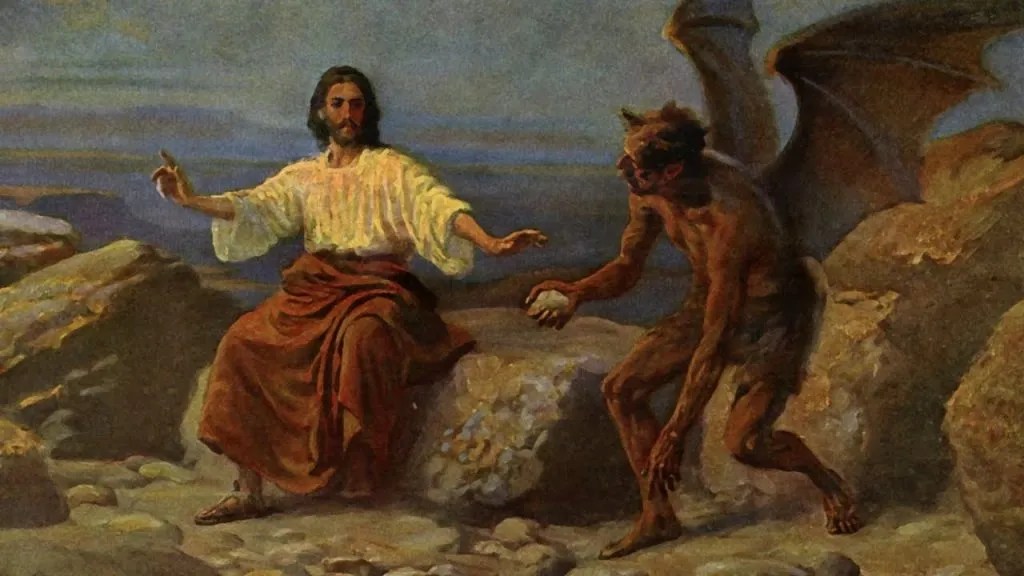
Mark 3:20-35 Jesus is casting out demons, and His opponents claimed that He was possessed and that he drove out demons “by the power of the prince of demons.” Jesus shows how illogical that is and warned against blasphemy against the Holy Spirit. It seems from the context that blasphemy against the Holy Spirit is refusing to see. Helen Keller said, “The only thing worse than being blind is having sight but no vision.”

Some will not see because they don’t want to and will say or do anything to defend against a new idea. Those who refuse to see cannot be forced to see. If even Jesus couldn’t convince them, we are not going to do better than Jesus.

I continue to be concerned about the state of conversation in society today. There is a lot of interaction, but not a lot of understanding. The chasm between sides seems to be growing

wider, and the hostility between them growing fiercer. I chose not to include examples but ask you to think of some from your experience. I bet you can. I’ve noticed that what we say sounds more convincing to us than it does to the people who

disagree with us. There seem to be many occasions when someone presents his argument and ends with the triumphant equivalent of “checkmate. Case closed” and the other person says, “No, not even close.” Some are not convinced because we didn’t make a case that spoke to their point of view, and if we learn more about their point of view we can try again and maybe succeed. Usually there are some bits of information that support one point of view, and other

bits of information that support the other point of view. We tend to put more weight on what supports our narrative. Some people, it seems hammer the details in their favor and ignore the details against. I can’t tell if they are doing it on purpose.

At some point, we need to realize we aren’t going to make progress and need to give up. Jesus spoke of shaking the dust from our feet and moving on (Matt 10:12; Mark 6:11; Luke 9:5

and 10:11). Sometimes it takes a while for a new idea to take root, to mature, and to grow. We can’t generally change the basic architecture of our thinking in a minute; sometimes it takes

years. I’ve caught myself getting angry when I think someone is not trying to understand. I need to check myself. First of all, they may be trying. Second, getting angry is a futile waste of energy at best, and destructive at worst. I just need to accept that I can do what I can do.

I think it is critical to be realistic about what the situation is and how much we can do about it. There is a lot of bad thinking, bad logic, and bad ideas, and it’s going to be that way for the

foreseeable future. We need to resign ourselves to the fact that we can’t fix it, but maybe we can make it a smidge better. If we can get someone to think something they’ve never thought before, ask a question that they’ve never asked before, look at things from a different angle, that moves us forward. If others hurl abuse, call people names, and get nasty while we respond calmly, respectfully,

and persistently, over time those who are open will see where wisdom lies.

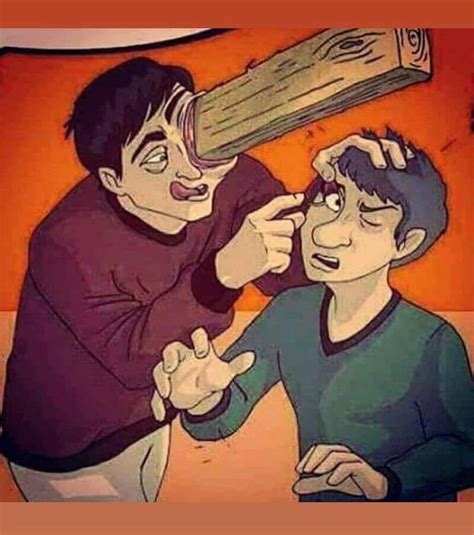
One final thought: let us all be carefully on guard against our own human tendency to refuse to see the truth. None of us are immune.

Blessings,

Fr. Jim

The Core Meaning of All Reality

Dear Folks,
Today is the Solemnity of the Holy Trinity, a feast day that should get more acclaim than it does. Fasten your seatbelts; we’re going deep.
Catholics should, at a minimum, know that there is one God who is three divine, coeternal persons, Father, Son, and Holy Spirit. Unfortunately, almost all just stop there and never give it another thought.
Folks, this is the core of all reality and makes all the difference.
As we look at the basic questions of existence and consider what to believe, there are some primal questions. Is the ultimate reality personal or impersonal? If we accept the atheist materialist view, then it is impersonal, and personhood is just a blip in the dance of matter- energy in the universe. I experience consciousness, but don’t know why (there is vague talk about a byproduct of electrical activity of the brain, but I don’t think that explains much). I experience good and bad feelings, and I want to maximize good feelings, and that’s about it. In this scenario, when I die, nothing of me is left, and the race will die, and it won’t matter that we existed at all. I don’t find this very inspiring.
If the Christian point of view is correct (and, in case you are wondering, I believe it is), Then personhood is the foundation of all reality. Beyond even the universe. Furthermore, God is the perfect community of love all by Himself. The Father is eternally giving Him- self in love to the Son, who is eternally receiving and returning that love, and the love that passes between them is the Holy Spirit. Though God does not need anything, love by nature is fruitful, and so God created the universe, including us. We are meant to receive His love and give ourselves as gift to Him, and that is the fullness of the meaning of being human and the fullness of joy. Unfortunately, sin inhibits this gift, and we become centered on our own desires (classically: power, pleasure, wealth, and honor). Only by be- coming one with Jesus in His perfect gift of self, which culminated on the cross, can we be saved from it. In Him, we can learn how to give ourselves as gift, and receive the strength to do it. The more we grow in Christ, the more we receive His love and the more we give ourselves in love. In heaven, that flow of love becomes perfect and complete. See John.16:20-24 and John 17: 20-26.
We must be careful about self-deception. In our sinful condition, it can be easy to tell our- selves we are loving God and others when we are actually at our center serving our de- sires. Matthew 6 (the middle chapter of the Sermon on the Mount) is all about that danger. Our scribe and Pharisee friends are the poster children for this.
The big question in life is: are we at our center about serving our own desires, or about giving ourselves in love with our own desires as a side dish? Everything starts from this.
May Almighty God bless you, the Father, the Son, and the Holy Spirit. Fr. Jim 

What is Love?

Dear Folks,

Our first reading this Sunday from Acts 10 shows St. Peter dealing with a major issue in the first century Church: whether righteousness (being in right relationship with God) comes through works of the Law of Moses or through faithfulness to Jesus (spoiler alert: faithfulness).

In our Gospel from John 15, we see a major emphasis on how to be faithful is to love one another. A temptation is to respond with “now I know what I need to know; this is simple.”

Not so fast. In theology, I read a book called “Situation Ethics” by Joseph Fletcher. He insisted that there should be only one law, the law of love, because any other law, any other ethical principle would sooner or later conflict with the law of love. As I kept reading, I realized that he was presuming that anyone who looked at a given situation would know what was the loving thing to do. Studying history and philosophy should show us that what seems obvious to us now was unthinkable in ancient times. Looking at modern discourse we can see that many people have opposite positions and are sure that their position is true, right, and obvious.

“Love” is a word we use so much it is easy to overestimate how well we understand the challenge. There are some major issues we must tackle:

1. What is love? Christianity teaches that it is not a feeling, but a decision to seek the good of others, even at a cost to oneself (the greatest act of love is “to lay down one’s life for one’s friends [John 15:13]).”

2. What is the good? Is it getting what we desire when we desire and how we desire? Or is there a good that is more profound, and that is to be discovered and that we are to grow into seeking? Such a good involve virtues being encouraged and incentivized by a healthy society.

3. How do we achieve it? Lenin, Stalin and Mao murdered tens of millions of people insisting that this would serve the greater good, but they brought about enormous misery instead. If we agree that we want an end to gun violence, we must still ask if a given gun control legislation will make people safer or less safe? Are there other things we can do? If we agree we want to help the environment, we are left with questions: does switching to electric cars help or hurt the environment? Does less drilling for oil in the U.S. help ore hurt? Does the benefit outweigh the harm? In Ann Garrido’s wonderful book “Redeeming Conflict” talks of “undoing the knot of intention.” Good intentions don’t necessarily produce good results.

4. How can we, a sinful people, do better? Christians know that we cannot overcome temptation by our own strength. It is only in our union with Jesus that it becomes possible. With His grace, however, we can do great things. With prayer, sacraments, and penance, we can open ourselves more and more to His presence so we can have

the humility to see where we fall short, and the wisdom and strength to move forward.

Blessings,

Fr. Jim

When God Calls

Dear Folks,

I saw the movie “Irena’s Vow.” It is beyond amazing. It is about Irena Gut Opdyke who sheltered a group of Jews during World War II, and one would never have believed how she did it. The movie showed the terrible evil of the Nazis who were seeking to make Germany “free of Jews.” We remember how the Nazis accused the Jews of all sorts of crimes in an attempt to justify their actions.

This Sunday the Gospel is about Jesus the Good Shepherd (John 10:11-18). The Good Shepherd “lays down his life for the sheep.” This is the essence of the Gospel: the Lord, with nothing to gain for Himself, paid the ultimate price for our salvation, and calls us to

receive His gift and give ourselves in love. This is not only the greatest story ever told, but the greatest story that could ever be told. It will never be repeated but has echoed in the lives of many Christians who suffered, sacrificed, and put their lives on the line for the love of God and neighbor.

There are many true stories about people who make heroic, selfless sacrifice to help others. Irena Gut Opdyke is one. Irena Sendler is another (see the movie “The Courageous Heart of Irena Sendler.”) I’m also fond of the story of Monsignor Hugh O’Flaherty, whose

work is detailed in the movie “The Scarlet and the Black” and was subject of the book “Hugh O’Flaherty: The Irish Priest Who Resisted the Nazis” by Fiorella De Maria.

We remember the terror attack in Israel on October 7 and the horrible cruelty that was committed. We see how Hamas is still holding hostages while trying to maximize civilian casualties. We see people accusing Israel of crimes while dismissing the crimes of the terrorists. There have been rallies in the United States, including Michigan, in which people have shouted “Death to Israel” and “Death to America.” At a time when hate crimes against Jews is on the rise, at a time when people are getting more and more casual about destroying human lives, we would do well to pay attention.

I notice that at the worst times in history, God raises up great heroes. True stories of heroes remind us what one person can do, and that often these people are the ones you would least expect. We don’t know what God will call us to before we are done. Not all Christians are called to die for the faith, but all Christians are called to be ready to die for the faith, and all are called to service. What would we be willing to do to answer God’s call?

Blessings,

Fr. Jim

Telling the Story

Dear Folks,

Story telling is one of the most basic human activities. We take tidbits of experience and weave it into a narrative. We don’t see directly into people’s minds, but we see their actions and hear their words, and put them together like puzzle pieces to get a picture of what they are like. We decide some people are our friends and others are not. Sometimes we can be mistaken, and someone who had acted friendly had been trying to take advantage of us.

In detective movies we see events, details and conversations, and in the end, the detective typically calls everyone together, weaves those tidbits into a narrative describing what happened, and reveals the killer. If the movie is well done, we say to ourselves that we remember those things, why didn’t we put them together?

In the Easter readings, we see people’s experience of the risen Jesus. Jesus explained how the Old Testament led up to the Gospel (Luke 24:27, 45-47). Earlier, Jesus suggested to scholars that the Old Testament pointed to His story, but they didn’t get it (John 5:39).

All creation was made through Jesus and for Jesus (Colossians 1:16), so all stories lead to Jesus. It is a matter of putting together the puzzle pieces. We have to start where people are at. We remember that St. Paul told the Gospel story one way to Greek philosophers in Athens (Acts 17:22-34) and another way to the Jews in Jerusalem (Acts 22).

If we want to tell the Gospel story, or a part of it, to someone, it really helps to hear their story first. It would be useful to know what experiences they’ve had with religion in general and Christianity specifically. Were they taught anything? Were they taught so poorly that they couldn’t recognize any goodness, beauty, or truth in it? Did they find it silly or trivial? Were they hurt or disillusioned? What do they believe strongly? What is important to them?

Sharing our knowledge of the Faith and our personal experience in a way that might be meaningful to others is more art than science. Most of us are not practiced in it, but we can learn, and that will be helpful to fulfill Jesus’ mandate to be his witnesses (Luke 24:48; Matthew 28:19-20). We can start by asking ourselves: Why is the faith precious to us? What strikes our hearts most powerfully? How are our lives different because of it? What have been our good experiences? What have been our bad experiences? What

have they taught us?

We are an Easter people. Let us rejoice!

Blessings,

Fr. Jim