Tag Archives: prayer

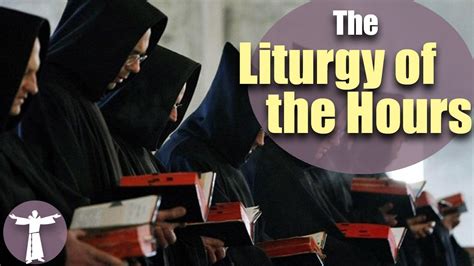
More on the Liturgy of the Hours

Dear Folks,

A new edition of The Liturgy of the Hours is coming out. It is being put out by Ascensionpress.com and Wordonfire.org. I am so fond of both organizations so I can’t really tell you which one to choose. The full set is four volumes, but I’m told that there will be some shorter versions for those who want to get their feet wet. You can pre-order the four volume set now, but you can’t see any of it until January.  

The older (current) edition used the Grail Psalms, but tweaked the translation a bit, so there were small differences. The new edition uses the Revised Grail Psalms and also tweaks the translation a bit.  “The Abbey Psalms and Canticle” put out by Ascension press has (I’m told) the version that will be used. 

Word on Fire has come out with a monthly paperback subscription of the Liturgy of the Hours.  If you want to start now, and have no one to teach you, it is a good tool. 

The most pivotal “hours” are morning prayer and evening prayer.  Their basic structure (the wording might change with the new edition, but the structure shouldn’t):

Opening: God, come to my assistance. Lord make haste to help me. Glory to the Father, to the Son, and to the Holy Spirit: as it was in the beginning, is now, and will be forever, Amen. Alleluia. 

There will be a hymn.

Then comes the Psalmody: an antiphon, the Psalm itself, Glory to the Father, to the Son, and to the Holy Spirit, as it was in the beginning, is now, and will be forever, Amen. Then the antiphon is repeated. There come two Psalms or portions of Psalms, then a canticle prayed the same way. 

Then there is a short Scripture reading, then a responsory.

There is a Gospel Canticle (Canticle of Zechariah in morning prayer, Canticle of Mary in evening prayer). 

Then there will be intercessions, the Our Father, and a closing prayer. 

There will be exceptions, but that can come later. 

I’m currently going through the book “The Psalms: Songs of Faith and Praise” which gives each Psalm with commentary and a short prayer after.  If you want to know more about the Psalms, this is a good tool. (It uses the Revised Grail Psalter, but doesn’t have the final changes, so it won’t match the new Breviary exactly, but I is close). 

Blessings,

Fr. Jim
Continuing Discussion of the Liturgy of the Hours

Dear Folks,

I have talked about the Liturgy of the Hours. The new edition will come out in January of next year. 

There are five “hours.”  There is morning prayer, daytime prayer, evening prayer, office of readings, and night prayer. They don’t take an hour to do, but are called hours because they are geared toward certain times of day. There is morning prayer (lauds), mid-day prayer (terce, sext, or none, depending on whether you pray it mid-morning, mid-day, mid-afternoon), evening prayer (vespers), night prayer (compline), and the office of readings (whatever time works best). 

Before Vatican II, the breviary would get through all the Psalms every week. It was pretty much exclusively the work of priests and religious. The Second Vatican council called for it to be more widely available and to make it less burdensome. It was revised to do almost all the Psalms in four weeks (Psalms 58, 83, and 109 have been completely omitted, as well as several verses that were seen as doing more harm than good, like Psalm 137:7-9). There was a call then and by popes since that it be prayed more by lay people. 

Because this is liturgy, not a devotion, it is a way in which we are united all around the world and speaking with the voice of Christ giving worship to the Father. The liturgical year has a certain rhythm, with various seasons and feasts. Every Friday should have a little bit of Good Friday, and every Sunday should have a little bit of Easter Sunday. The Liturgy of the Hours puts us more in contact with that rhythm and helps each day have more of that rhythm throughout the day. 

There was a mini-series that came out in 2015 called A.D. (a remake of an earlier version). In episode 5 there is an example of Roman cruelty in the temple courtyard. Peter was there and spontaneously started reciting Psalm 69. Caiaphas was there and joined him.  I’m pretty sure they weren’t friends, but they could recite the Psalm together. I don’t know if that actually happened (probably not), but it could have. Imagine people from all over the diocese being able to do that.

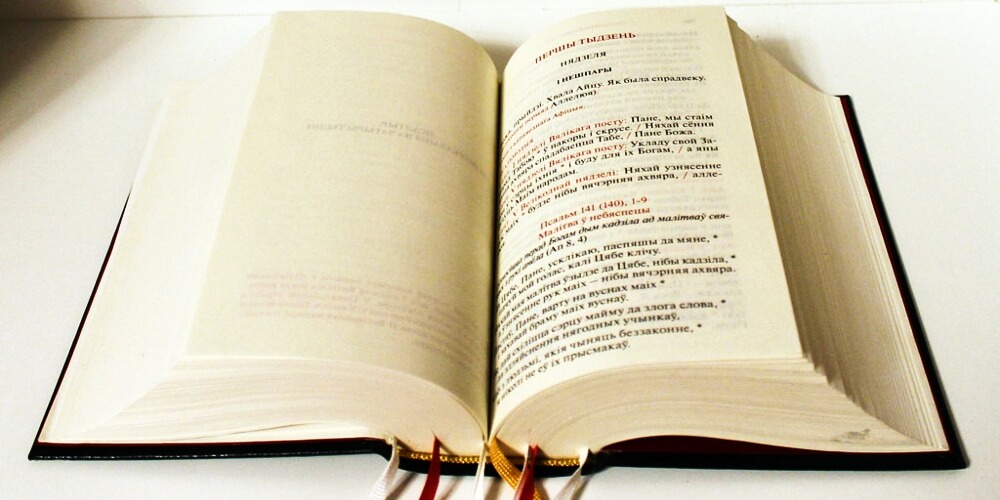
The book that is used is called the Breviary, and the Liturgy of the Hours is also called the Divine Office. The full breviary has four volumes, but there is a one volume that gives less to the office of readings, and a Shorter Christian Prayer that is basically morning and evening prayer and night prayer.  The are also internet options. I have used iBreviary and some use divineoffice.org. This uses your phone, tablet or computer and it works but is not ideal. There is something powerful in having a sacred book set aside for a holy purpose. This is why the Missal in used as a book, but we are called not to use a tablet.

This is a way that Catholics can get together and pray as Catholics without a priest present. It is one way we can be a stronger Church with fewer priests. It is a part of opening the treasury of Catholic prayer more widely for more people. 

More Later.

Blessings,

Fr. Jim

Prayer for Wayward Politicians

I have never thought it proper for me to use my position to endorse a particular politician. I have focused on teaching principles of Catholic social teaching, and thought that was not only more correct, but more effective. However, I do not believe that any faithful Catholic could object to this, and I think we all agree, there are many politicians who need prayer. Some people might get together and pray regularly for certain public officials who especially need it. Who knows what might happen. God clearly loves to take terrible sinners and make them great saints. https://www.catholic365.com/article/9502/6-sinnersturnedsaints-and-what-we-can-learn-from-them.html

Day 13 in Rome

Day 13, Last day to wander around Rome

Piazza dei Populi

Piazza della Republica

Piazza1.jpg[1]           Piazza2.jpg[1]

Via di Quattro Fontani

Rome is thick with history and art.
The Church of Santa Maria della Concezione dei Capuchini

The Capuchins, of course, have a lot of history in Rome. After all, they got a drink named after them (what kind of drink do you want named after you?). This church is most famous for its crypt with its arrangements of the bones of deceased Franciscans.   These bones have been stacked and arranged artistically requiring the bones of thousands of hours of work. (They didn’t want pictures taken. More info at:  http://www.atlasobscura.com/places/santa-maria-della-concezione.)

I am reminded of the St. Katherine’s monastery at the base of Mount Sinai. They had a building with bins of skulls, bins of leg bones, etc. The idea was to have no personal monument on earth. We remember that on one (on earth) knows where the body of Moses is buried. Here we have no lasting city (Hebrews 13:14). Nathaniel Hawthorne visited this crypt in Rome and found that it dragged down his faith, and he needed blue skies to recharge it.

I’m surprised he would react that way given that his most famous work “The House of Seven Gables” is not the cheeriest text.

One can also question of that is a proper way to treat human remains. However, it speaks of people who were comfortable with their own mortality, and with mortality in general. The museum shows a painting of St. Francis holding a human skull. We remember the admonition of St. Benedict to keep our mortality daily before our face, and the old adage, “Time flies, remember death.” Longfellow wrote, “Art is long, and time is fleeting, and our hearts, though stout and brave, still like muffled drums are beating funeral marches to the grave.”

Perhaps that is to teach us to take ourselves less seriously, for our stay here is so brief while at the same time take our work more seriously, because history is so much larger than we are, and marks that we leave (recognized as ours or not) can affect people for a long time.

When they were laying the first bricks on the Palatine hill, what were they envisioning? It is hard to believe they were planning on an Empire that would last a thousand years, and then leave tools that would help the building of what followed.

Of course, it took the work of countless people, whose bones have long turned to dust, to make that happen. On the one hand, the large number of people involved makes the contribution of each a smaller part of the whole; on the other hand, the gathering of so many contributions made the effect of each last longer and reach farther. I was given to understand that one of the early symbols of Rome was a bundle of sticks, suggesting that bound together they were so much stronger than each individually.

I would also suggest that the effect of our contributions is not merely cumulative, like the value of pennies in a jar, but one can build on another, like supports on a bridge. St. Ambrose encouraged St. Augustine, and both were influenced by St. Paul. Was there a teacher, a parent, or an uncle that gave St. Paul critical encouragement or support that moved him to the path of being zealous for God or strong in learning?  How do you weigh the total effect of that unknown person?

The Church of Santa Maria della Vittoria was even more beautiful than most. My first reaction was, “I want one!” There were some excellent sculptures including the famous Ecstasy of St. Teresa of Avila.

Vittoria1.jpg[1]         Vittoria2[1]        Avila.jpg[1]

The Church of Mary of the Angels and Martyrs was large with many large works of art. One wing was dedicated to prayer (the rest to tourism).

While I was there, Mass happened and a small group participated.

Of course, that brings me back to the central point. The greatest treasures are not the buildings, the sculptures or the paintings, but the faith and devotion of the people.

This is the end of my Rome trip.  Next post will take this blog in a new direction.