Monthly Archives: July 2026

Wheat and Weeds: No Escape

Dear Folks,

We continue on Matthew 13 and have more parables. We have the parable of the wheat and the weeds, then a pair of parables (the mustard seed and the woman who mixes yeast with dough). 

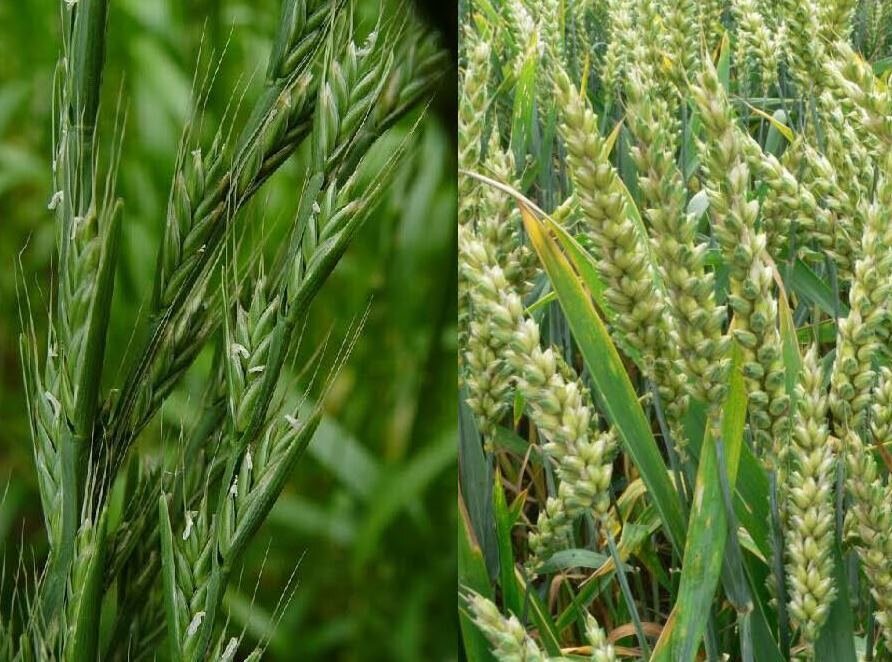
The parable of the wheat and weeds warns us that the Church is going to be messy. The particular kind of weeds they are mentioned here are called “tares” and young tares can easily be mistaken for young wheat. We continue to be surprised that we see bad behavior in church, and some people leave because of it. But Jesus warned us in the beginning that it would happen. We keep being surprised that Jesus was right. We don’t get to say that this person is not worthy to be in the Church. This, by the way, includes us. We don’t get to say, “I am too bad a person; I’m not worthy to go to church.”  We might not be ready to receive communion, but if we are feeling weedy, we need God and Church more that ever. 

Unlike with literal weeds, in Church a weed can become a stalk of wheat, and a stalk of wheat can become a weed. I think one of God’s favorite things to do is take great sinners and make them great saints. You never know when this is going to happen, including to you.

Does this mean we should do nothing about all the bad in the Church? Just accept it and hold on to things getting fixed in the end?

No. Not at all. In fact, the parable of the mustard seed and the parable of the yeast take away our biggest excuse. We don’t get to say that we have no power so it’s someone else’s problem. The parable of the mustard seed and the parable of the yeast tell us that little things matter. The smallest act can make a huge difference in the Kingdom. The smallest act of kindness, the smallest act of faithfulness, the smallest act of respect might make all the difference in someone’s life, and we won’t know until the last day what all difference it made. We might get some feedback that will help keep us going, but we know that much more is happening than we can see. A tiny mustard seed can make a huge plant. A small amount of yeast can transform a great quantity of dough. (Those who know me know I don’t like mustard, so this is not one of my favorite parables. However, I understand why Jesus did not use ketchup seeds.)

Yeast is somethings in the Bible a negative image (Matthew 16:5-12; Mark 8:14-21; Luke 12:1-3; 1 Corinthians 5:6-8). This reminds us that the Bible is not a code book and will use different images in different ways. We will not, in this life, say that we have figured it all out. Our understanding is tiny compared to the truth that is. And yet, we can make a difference. 

How are you dealing with weeds in your life? How are you feeling weedy yourself?  

Don’t worry, God is at work. 

Blessings,

Fr. Jim

Saying No to God

Dear Folks,

The Gospel reading is from Matthew 13, and we’ll be seeking Matthew 13 for the rest of this month. It is full of parables, and Jesus makes an important statement that a “scribe who is learned in the Kingdom of heaven is like the owner of a house that brings from his storeroom both the new and the old (Matt 13:51-52).” There is also the sad description of Jesus not being accepted at Nazareth (Matthew 13:53-58; compare with Mark 6:1-6 and especially Luke 4:16-30 which is the fullest version).

When one says, “Nothing is impossible for God (Luke 1:37)” we must understand it correctly. God can do what is practically impossible (I cannot jump to the moon, but if God wanted me to, he could make it happen. I trust He would also do something about my habit of breathing). He cannot do what is logically impossible, that which contains a contradiction. He cannot make a four cornered circle, which would be a contradiction.  He cannot give us free will and keep us from misusing it. He cannot force us to love Him freely. That would contain a contradiction. 

We see in “The Screwtape Letters” “But you see that the Irresistible and the Indisputable are the two weapons which the very nature of His scheme forbids Him to use. Merely to over-ride a human will (as His felt presence in any but the faintest and most mitigated degree would certainly do) would be for Him useless. He cannot ravish. He can only woo (Letter #8).”

This week we see the parable of the sower, and people’s ability to reject God’s grace. The parable of the sower shows three different kinds or rejecting God. One is dismissing the truth out of hand. One is being taken intimidated by “trouble or persecution.” One is being lured away by the pleasures of the world. 

We remember that the human race was tested first in a garden (Genesis 3) and then a desert (Exodus) and failed both times. Jesus was tested in the desert (Matthew 4:1-7) and then a garden (Matthew 26:36-46) and passed both tests. Sometimes we are tested through hardship, and sometimes we are tested through abundance. In either case, we are asked do we trust the promises of God more that the promises of the world?

The enemy is good at making the promises of God seem arbitrary and impossible.  Of course they are arbitrary apart from God’s plan for us, and of course they are impossible without His grace, but that is not how He calls us to do His will. 

God is calling. How will we respond?

Blessings,

Fr. Jim

Yolk is Easy???

Dear Folks,

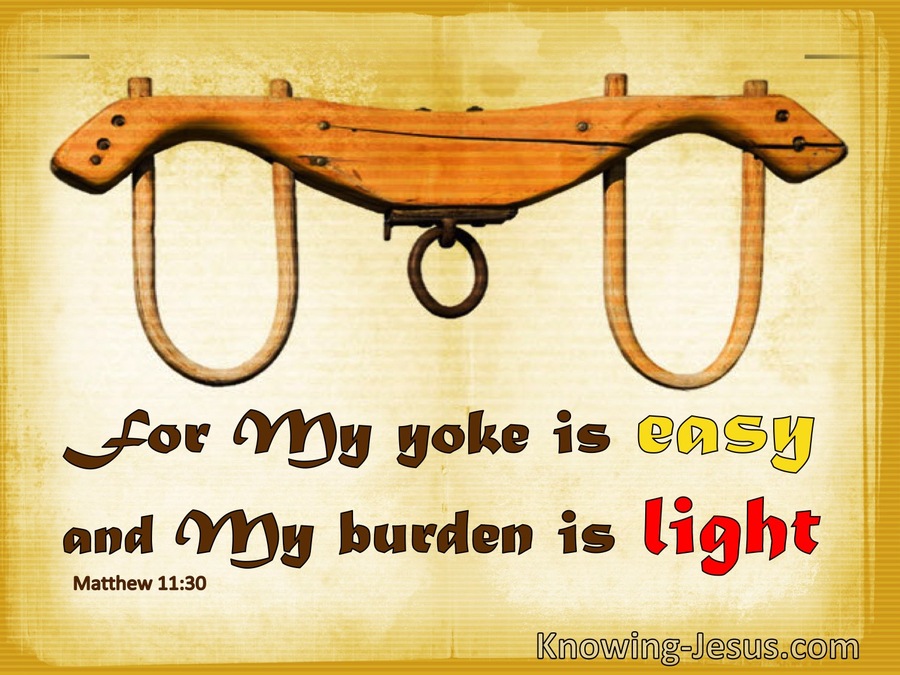
Jesus teaches that “My yolk is easy and my burden is light (Matthew 11:30).” We think of the terrible burden that he carried on the cross and called us to do the same (Matthew 10:38). We think of the Christians through the centuries who did incredible things in following Jesus wonder how this matches.

I suggest we look at our second reading as it makes reference to the flesh and the spirit and calls us to live according to the spirit. To get this critical Biblical concept down it would be good to read Romans 8:1-13 and Galatians 5:13 through 6:10. We see that “according to the flesh” is a bad thing and “according to the spirit” is a good thing. This does not, of course mean our bodies are evil. God made our bodies and called them good (Genesis 1 and 2), and that “the Word became flesh and dwelt among us (John 1:14). St. Paul is talking about a way of thinking.

As he told the Colossians, “If then you were raised with Christ, seek what is above, where Christis is seated at the right hand of God. Think of what is above, not of what is on earth. For you have died, and your life is hidden with Christ in God. When Christ your life appears, then you too will appear with him in glory. Put to death, then the parts of you that are earthly: immorality, impurity, passion, evil desire, and the greed that is idolatry (Colossians 3:1-5).”

“I say, then: live by the spirit and you will certainly not gratify the desires of the flesh. For the flesh. For the flesh has desires against the Spirit, and the Spirit against the flesh; these are opposed to each other; so that you may not do what you want. But if you are guided by the Spirit, you are not under the law. Now the works of the flesh are obvious: immorality, impurity, licentiousness, idolatry, sorcery, hatreds, rivalry jealousy, outbursts of fury, acts of selfishness, dissensions, factions, occasions of envy, drinking bouts, orgies, and the like. I warn you as I warned you before, that those who do such things will net inherit the kingdom of God. In contrast, the fruit of the Spirit is love, joy peace, patience, kindness, generosity, faithfulness, gentleness, self-control. Against such there is no law (Galatians 6:16-23).”

If we stay in our sinful state and rules of morality get imposed upon us, they will be painful and incredibly difficult. The more we are transformed by our union with Christ, the more that living according to the Spirit follows from that relationship. We remember that Jesus calls us, not just to compliance with rules, but to be transformed by Him (“Do not conform yourselves to this age but be transformed by the renewal of your mind, that you may discern what is the will of God, what is good, and pleasing and perfect (Romans 12:2).” The Christian Journey is gradually being transformed according by His presence in our lives. At any point we are imperfectly transformed but called to greater perfection. “So be perfect, just as you heavenly Father is perfect (Matthew 5:48).”

It is then we can begin to understand what Jesus meant by His teaching that “My yolk is easy and my burden is light (Matthew 11:30).”

Blessings,

Fr. Jim