Monthly Archives: June 2026

Making Hard Choices

Dear Folks,

Our Gospel this Sunday is, once again, from Matthew chapter 10, Jesus giving instructions to His disciples as he sends them forth to preach and heal (Mattew 10:37-42). He is giving some hard sayings about what it’s going to be like sometimes. This calls to mind Matthew 5:10, “Blessed are those who are persecuted for the sake of righteousness, for theirs is the kingdom of heaven (I suggest as one goes through the Gospel of Matthew, it is good to look for echoes of the Sermon on the Mount).”

There is a constant temptation to do religion as one thing among many, our work life, our social life, our hobbies, our Christianity, etc. and do it when it fits what we want to do. Jesus said that to be His followers we must be ready to lose everything for His sake. If we aren’t we are not really doing Christianity.  

C. S. Lewis famously said, “Christianity, if false, is of no importance, and if true, of infinite importance, the only thing it cannot be is moderately important.” And  we see in the Scriptures “Since you are lukewarm, neither hot nor cold, I will vomit you out of my mouth (Rev 3:16).”

Jesus speaks of carrying one’s cross. We are used to that. The Apostles are not. The cross was the ultimate humiliation and agonizing death. They would learn how serious he was, and what it would cost them to be His followers. If we are truly rooted in Christ, there will be times the world will be opposed to us.

And yet, even as they went to horrible deaths, if you had asked them if it was worth it, I bet they all would have told you yes. I also think that the reasons why it was worth it would not have made sense to them when they started. 

We learn as we go what being Christian will cost us, and we will learn what benefits there are. In the early Church, people often had to choose between their faith and their family. In those days, family was also social contacts, business contacts, and safety net. Losing the family was losing everything in the world. What has our Christianity cost us?  

Not all Christians are called to die for the faith, but all Christians are called to be ready to die for the faith. If we are ready to lose everything, we are truly following Jesus. 

Blessings,

Fr. Jim
Being Sent: Be Warned

Dear Folks,

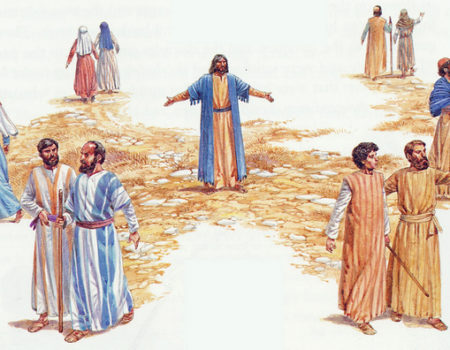
Our Gospel this Sunday is from Matthew chapter 10. In this chapter Jesus gives instruction to the apostles as He sends them forth to preach and heal. I challenge you that these instructions are for all us for we have all been sent, and it’s worth reading all of Matthew chapter 10 this week. 

We are warned that trying to do good will often be met we opposition, sometimes mean opposition, and we are going to have to face that. Clare Boothe Luce famously said, “No good deed goes unpunished.”  

I would especially point out: “Behold, I am sending you like sheep in the midst of wolves; so be shrewd as serpents and simple as doves. (Matthew 10:16).” The Greek word for shrewd (phronimos) is used in the Septuagint (the Greek translation of the Old Testament that was popular at Jesus’ time) in Genesis 3:1 “The serpent was the most phronimos of the animals that the Lord God has made.” Matthew’s readers would have immediately made the connection. Being sent by Jesus will take everything we have, including our cleverness, but we must never allow ourselves to become mean and hateful. 

The first letter of Peter repeatedly hammers home the idea that we need to be careful that we are being persecuted for doing God’s work and not for being jerks. “For whenever anyone bears the pain of unjust suffering because of consciousness of God, that is a grace. But what credit is there if you are patient when beaten for doing wrong? But if you are patient when you suffer for doing what is good, this is a grace before God (1 Peter 2:19-20).” “For it is better to suffer for doing good, if that be the will of God, than for doing evil (1 Peter 3:17).” “Beloved, do not be surprised that a trial by fire in occurring among you, as if something strange were happening to you. But rejoice to the extent that you share in the suffering of Christ, so that when his glory is revealed you may also rejoice exultantly. If you are insulted for the name of Christ, blessed are you, for the Spirit of glory and of God rests upon you. But let on one among you be made to suffer as a murder, a thief, an evildoer, or as an intriguer. But whoever is made to suffer as a Christian should not be ashamed but glorify God because of the name (1 Peter 4:12-17).”

To be God’s witnesses, we will need to be well grounded in our relationship with Jesus (John 15:1-8).  Only in union with Him will we be able to face the reality of the world and not be made according to its image. Clever as serpents, clever as The Serpent, but remain innocent as doves. The world can get nasty; we are to remain faithful, not just for our sake, but for the sake of those people to whom God sends us.

Blessings,

Fr. Jim 

Being Called

Dear Folks,

In our Gospel this week we see Jesus selecting and calling his apostles

God calls each one of us to play a role in His gigantic plan. We may figure that we are not important enough, not powerful enough, or not situated right to be major parts of His plan. This is missing the point. We see in Pope Leo’s encyclical Magnifica Humanitas:

“212. At this point, however, a subtle temptation may emerge, namely the thought that the problems are too big and we are too small, and that our choices, therefore, cannot make a difference. This is a polite form of resignation, often disguised as realism. Certainly, not everyone has the same power to make a difference. There are those who govern, make investment decisions, lead institutions, conduct research, educate, produce or provide information, and then there are those who only seem to live their daily lives. Yet, no one is without responsibility. We all have our own areas for action, and it is precisely there — and nowhere else — that we must choose whether to fuel the mentality of force (even if only through indifference, cynicism, lies or hatred), or to preserve the mindset of peace (with truth, moderation, closeness and care).

213. The twentieth-century Catholic author J.R.R. Tolkien, in the words of a protagonist in one of his novels, described our responsibility in this way: “It is not our part to master all the tides of the world, but to do what is in us for the succour of those years wherein we are set, uprooting the evil in the fields that we know, so that those who live after may have clean earth to till.” The civilization of love will not arise from a single or spectacular gesture, but from the sum total of small and steadfast acts of fidelity that serve as a bulwark against dehumanization. For this reason, it is worthwhile pausing to reflect on some aspects of how we, each in our own way, can cooperate in building the civilization of love. Without presuming to exhaust this theme, I would like to propose five paths toward daily and public responsibility: the need to disarm words, building peace through justice, adopting the perspective of victims, cultivating a healthy realism and reviving dialogue and multilateralism.”

We only see a part of God’s work, so we cannot see all the ways we will fit in it. John 15:16a says “You did not choose me. Rather, I chose you. And I appointed you to go out and bear fruit that will remain…”

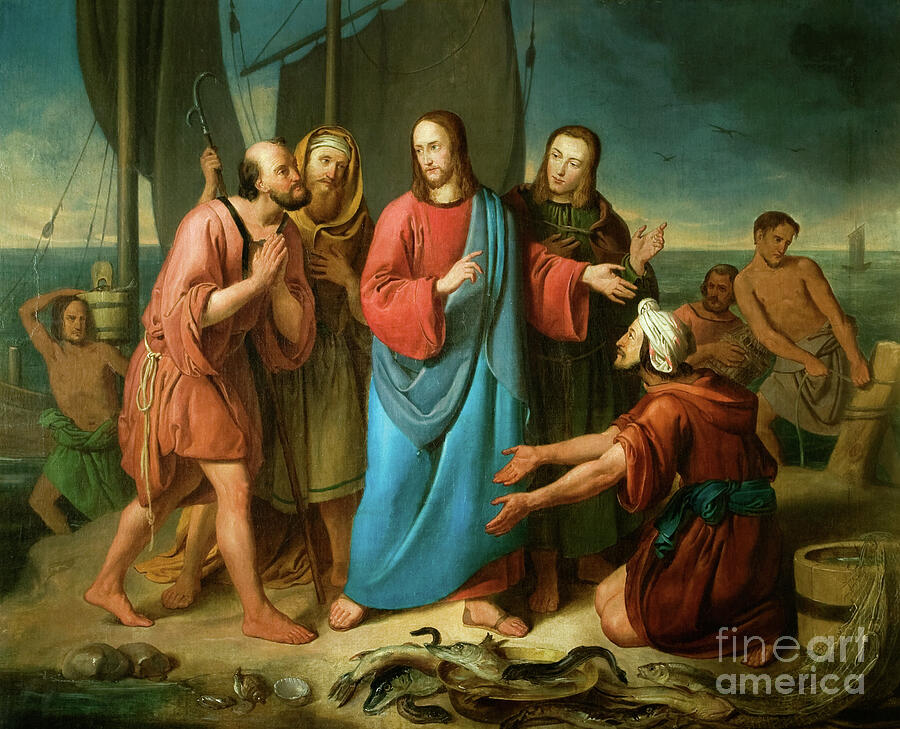
Looking through the Bible and the lives of the saints one can see that God is constantly calling people to be a part of His plan.  It is often the person you’d least suspect.  We don’t know much about the twelve before they were called. We know four were fishermen, that one was a tax collector and that one was from the zealot party, but that’s pretty much it. The New Testament is not very cooperative in getting us the answers we sometimes want. Very often, God called people when they are busy doing something else.  He often asks people to do something that makes no sense to them at the time. 

We sometimes ask why God allows there to be so much evil in the world. I suggest that part of the answer is that God gives us some responsibility for making the world better. Now if you consider all the people who were called to do good and didn’t do it, and then all all the evil that people have done since the beginning, that is a lot. I suggest that is the gap between the world that God wanted and the one we have.  If we have been paying attention, I bet that we’ve noticed how the actions of those who went before us have left us better or worse off.  As we respond to God’s call, I suggest we are will be affecting people in the future until the end of time.

How has God called you? How might he be calling you now? How would you respond if he calls you in the future? It matters.

Blessings,

Fr. Jim

Participating in the Ultimate Sacrifice

Dear Folks,

The Bible is paradoxical about many things. A paradox is an apparent contradiction, but on closer inspection, we see how it fits together and shows a deeper truth than a simple statement would have made.

One paradox is about sacrifice. The sacrifices of the Old Testament lead up to the one sacrifice of Jesus, offered once for all (Romans 6:10; Hebrews 10:10, 1Peter 3:18, etc.).

But we find some interesting stuff in the New Testament. Romans 12:1 “Therefore, brethren, I implore you by the mercies of God to offer your bodies as a living sacrifice hat is holy and acceptable to God – a spiritual act of worship.” We see Colossians 1:24 “I find great joy at present in suffering for you, and in my own body I am completing the suffering that still must by undergone by Christ for the sake of his body, the Church.” 1 Peter 2:4-5.“Come to him, a living stone, rejected by men but chose by God and precious. You too, are like living stones, being built up into a spiritual temple and a holy priesthood to offer sacrifices acceptable to God through Jesus Christ.” I would also understand Ephesians 5:1-2 as a fulfillment of Ezekiel 20:41.

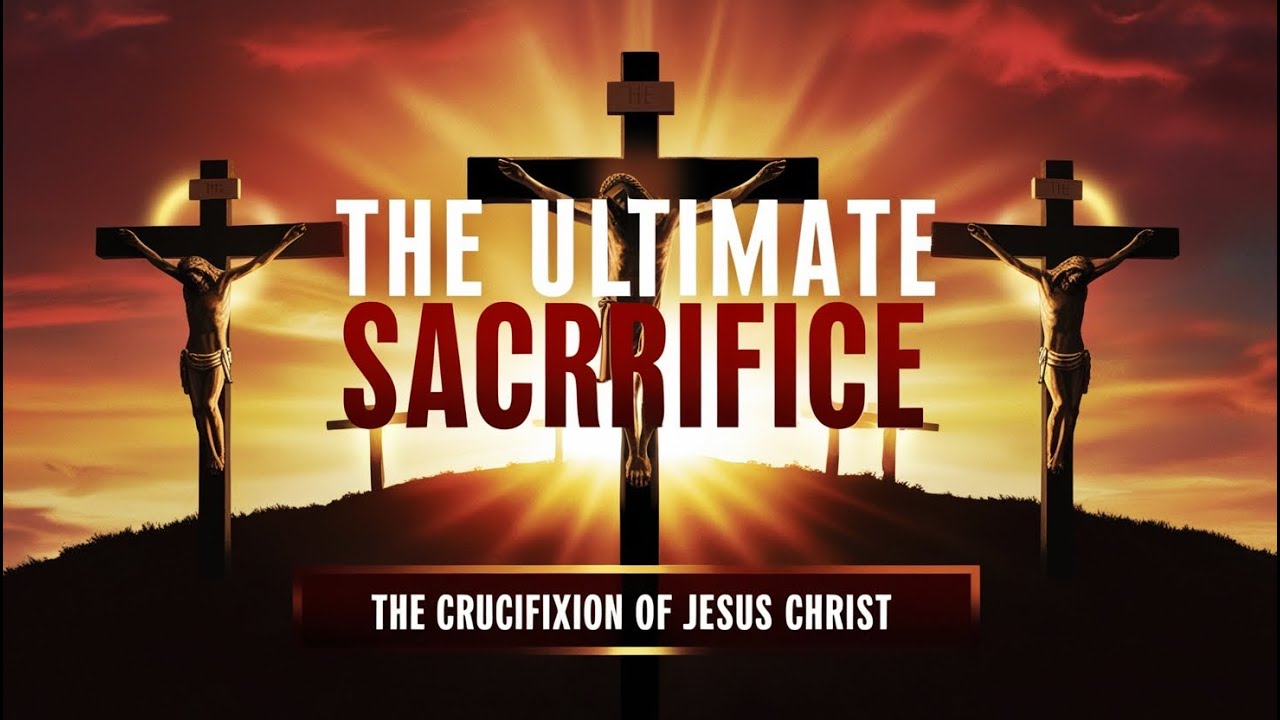
There is only one sacrifice now: the Jesus offering once in history Himself on the cross, and that sacrifice is always before the Father (see Revelation 5:6), while the Scriptures say that we are to offer sacrifice.  Therefore, the sacrifice we are to offer is that one.  It is already perfect and perfectly holy, but it makes us a part of that sacrifice. We don’t add anything to it, but once again it is gift from God to make us connected to Jesus. We are the body of Christ, (remember 1 Corinthians 12, Ephesians 4:11-13, and Romans 12) and this is a body that is offered to the Father (see 1 Corinthians 15:28). Jesus gave Himself sacramentally at the Last Supper, and then on the Cross. Without the cross, the Last Supper is just dinner and without the Last Supper, the Cross is just an execution. 

We look at Paul being fierce about the way people behave at Eucharist in 1Corinthians 11:17-34, especially “Therefore, anyone who eats the bread and drinks the cup of the Lord in an unworthy manner is guilty of an offense against the body and blood of the Lord. 

“Taking part in the Eucharistic sacrifice, which is the fount and apex of the whole Christian life, they offer the Divine Victim to God, and offer themselves along with It. (Lumen Gentium #11. See also Sacrosanctum Concilium 48).”

As a bride and groom give themselves to each other sacrimentally at their wedding, and then in practice living out their vows, so Jesus gives Himself to us sacramentally as Mass, and then gave Himself in practice on the cross. So we are called to give ourselves sacramentally at Mass and in practice as we go live the Christian life. “For all their works, prayers, and apostolic endeavors, their ordinary married and family life, their daily labor, their mental and physical relaxation, if carried out in the spirit, and ever the hardships of life, if patiently borne – all these become spiritual sacrifices acceptable to God through Jesus Christ (c.f. 1 Peter 2:5) Lumen Gentium 34.” 

This explains why St. Paul is so fierce about really meaning it “Everyone should examine himself about eating the bread and drinking the cup. For a person who eats and drinks without discerning the body of the Lord is eating and drinking judgement on himself (vv. 27-29).”

The essence of the Gospel is the gift of self. The Lord gives Himself completely to us, not even withholding the last drop of His blood, and He calls us to give ourselves completely to him. 

Blessings,

Fr. Jim