Category Archives: Catholic
Rocky Truth
An Uncomfortable Gospel

Dear Folks,
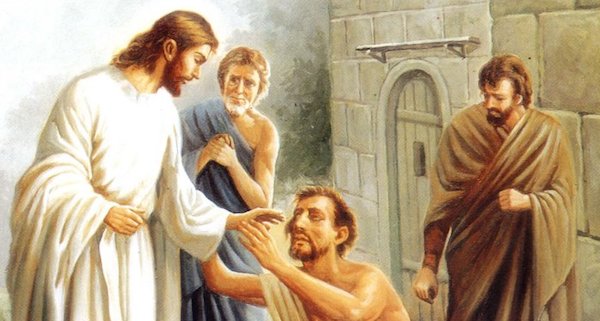
The Gospel for this Sunday (Matt 15:21-28) is one of the most uncomfortable readings in the Bible. This is not how we like to think about Jesus. It almost (almost?) looks like He is being mean to a woman who is desperate. If I didn’t know this story was in the Gospels, and someone told me Jesus had done this, I’m sure I would have said no, it is not possible.
And yet, here it is.
I haven’t gotten completely comfortable with it (and maybe that’s not the goal), but I do have some thoughts. I think it is helpful to see the larger context of the Gospel first being offered to the Israelites (Jews), and then to Gentile (non-Jews, in this case Greeks/Hellenists). One of the themes in the Gospels is those who should be the most open were closed tight, and some of the Gentiles were very open (like the story of the centurion’s servant Mat 8:5-:13). This lead to some tension in the early Church (see Acts 6:1 and Romans 10 and 11). Romans goes into detail about how they fit in, and neither side should be looking down on the other. The parable of the workers in the vineyard (Matthew 20: 1-16) talks about those who came late being made equal to those who have been serving since the beginning, and I suggest this is about the relationship between Jews and Greeks.
Let’s look at the larger narrative. Matthew 13: 54-58 shows Jesus being rejected by His home town of Nazareth. Chapter 14 we meet Herod (son of the guy who caused so much trouble in chapter 2, a story that echoed Pharaoh’s slaughter of the innocent in Exodus 1. The death of John the Baptist foreshadows the death of Jesus, the new Passover Lamb. Jesus feeds the 5000 in Jewish territory, and there are 12 baskets of fragments gathered, a symbol of the gathering of the 12 tribes of Israel. (Echo of the Passover and foreshadowing of the Last Supper). Then Jesus walks on water (doing Moses and the Red Sea one better). Then, we see the Scribes and Pharisees who insist on doing things their way rather than God’s way. Notice this section starts and ends with those who should be the most open are the most closed.
Jesus goes to Gentile territory. Now we meet the Canaanite woman and she demonstrates her faith. Those who demand things their way don’t do well. Those who recognize they are not entitled to anything do very well.
Jesus now feeds 4000 in Gentile territory, and there are seven baskets left over. This reflects the gathering of the seven Gentile nations: Hittites, Girgashites, Amorites, Canaanites, Perizzites, Hivites, and Jebusites (Deuteronomy 7:1).
Chapter 16 shows the Pharisees demanding a sign (once again, they want things done their way. They don’t get it. Jesus tells the disciples to beware of the leaven of the Pharisees and Sadducees, which is their teaching (See also Mark 8:14-21 ad Luke 12:1)). Leaven as a sign of sinfulness is also in 1 Corinthians 5:6-8, and he says, “Clear out the old yeast, so that you may become a fresh batch of dough, inasmuch as you are unleavened, for our Pascal Lamb, Christ, has been sacrificed (v. 7).” In Jewish practice, there is a ritual for clearing all the leaven out of the house in preparation for Passover.
This brings me to John. In the Gospel of John we see three Passover times (2:13; 6:4; and 13:1). In the first there is the cleaning of the temple and miraculous wine. In the second there is miraculous bread and walking on water. In the third Jesus becomes the Passover Lamb. To fit this pattern, it suggests that the cleaning of the temple reflects the clearing out of the old leaven.
Perhaps Jesus testing the Canaanite woman was clearing out of spiritual leaven to draw her into the Pascal mystery. I don’t know if this makes sense, but I hope you enjoyed the ride.
Blessings, Fr. Jim
Into the Breach: a Call to Catholic Men
This is a call “Into the Breach.”
This is a call to all Catholic men. Our families need you. Our Church needs you. Our country needs you. This is a call to accept and exercise our manhood in the fullest and best sense. This is a call to the rising up of men for all that is dear to us, for this is a time of crisis.
The phrase “into the breach” is from Shakespeare, but first I want to mention a very important man who “stood in the breach” and saved a nation.
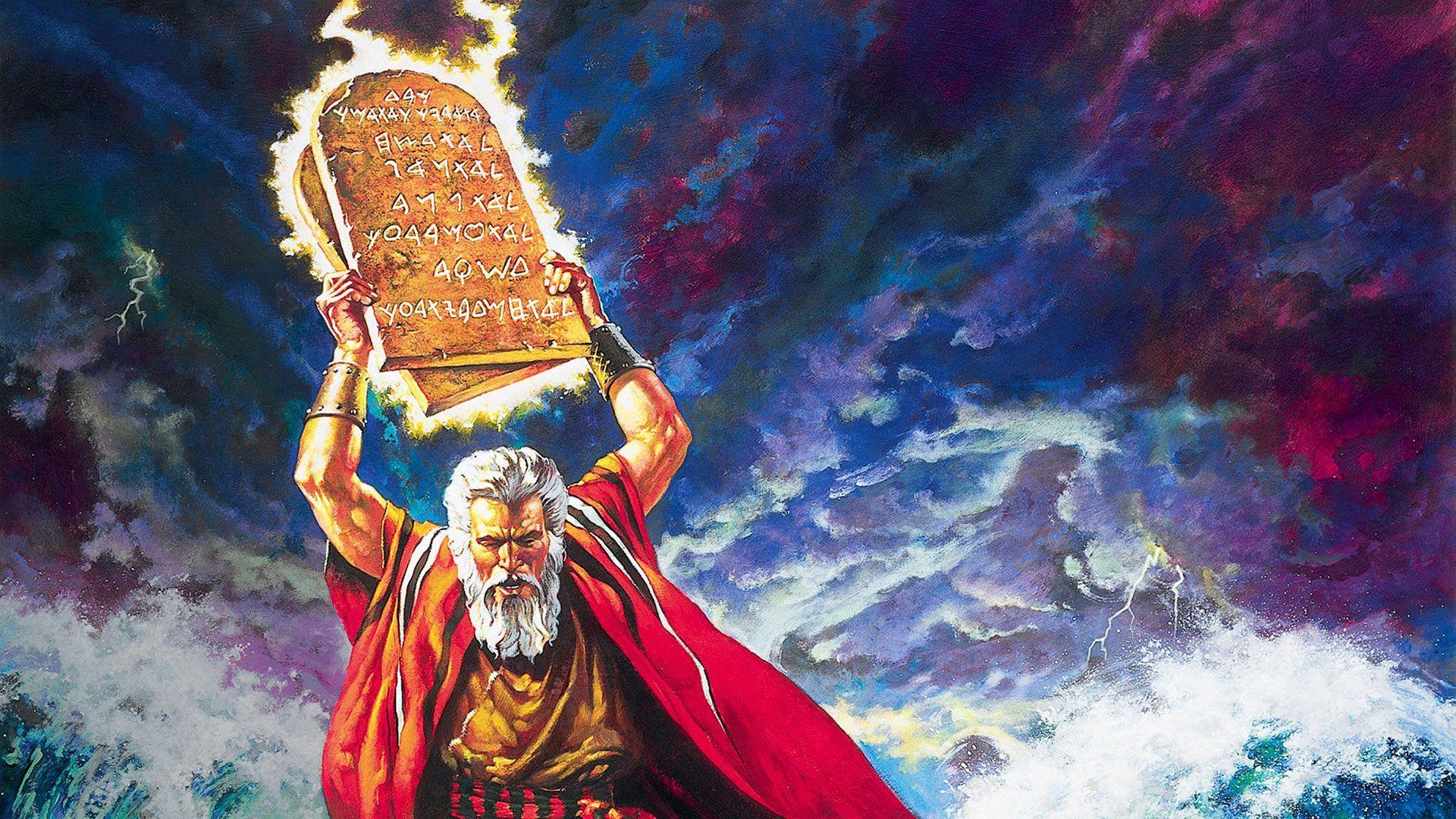
“They forgot the God who was their savior, who had done such great things in Egypt, such wonders in the land of Ham, such awesome deeds at the Red Sea. For this he said he would destroy them, but Moses, the man he had chosen, stood in the breach before him, to turn back his anger from destruction (Psalm 106:21-23).” See Exodus 32:11-14
And now, Shakespeare:
“King Henry: Once more unto the breach, dear friends, once more; Or close the wall up with our English dead. In peace there’s nothing so becomes a man as modest stillness and humility; but when the blast of war blows in our ears, then imitate the action of the tiger; stiffen the sinews, summon up the blood…” Henry the Fifth Act 3, scene 1.
This is a call to battle, and we are being called to battle, but we must understand we are not now talking about guns or bombs.
“For, although we are in the flesh, we do not battle according to the flesh, for the weapons of our battle are not of flesh bet are enormously powerful, capable of destroying fortresses. We destroy arguments and every pretension raising itself against the knowledge of God, and take every thought captive in obedience to Christ… (2Corinthian 10:3-6).”
“Finally, draw your strength from the Lord and from his mighty power. Put on the armor of God so that you may be able to stand firm against the tactics of the devil. For our struggle is not with flesh and blood but with the principalities, with the powers, with the world rulers of this present darkness, with the evil spirits in the heavens. Therefore, put on the armor of God, that you may be able to resist on the evil day and, having done everything to hold your ground. So stand fast with your loins girded in truth, clothed with righteousness as a breastplate, and your feet shod in readiness for the gospel of peace. In all circumstances, hold faith as a shield, to quench all the flaming arrows of the evil one. And take the helmet of salvation and the sword of the Spirit, which is the word of God (Ephesians 6:10-17).”
These are calls to battle, but not with physical weapons. There might be times we would have to use physical force to defend against unjust aggressors, but that is not how the big battle will be won. These short videos are about what it means to be a Catholic man, the kind of man that our loved ones need to go into the breach.
https://www.kofc.org/en/campaigns/into-the-breach.html
I challenge you to watch these, think about them. Think of one new thought they made you think. If you can, think of one new action they inspire you to do. Now share that with five other men?
Will you accept that challenge?
Loaves and Fishes

Wisdom to Find the Treasure

All Sorts of Folks

Benedict (not the eggs)

St. Benedict was born about 1500 years ago, just after the fall of the Roman Empire. Bishop Robert Barron recently streamed the story of St. Benedict in his “Pivotal Players” series and calls him “the most pivotal of all the pivotal players.” We remember St. Anthony of the Desert as the one who pioneered desert spirituality. St. Benedict made monasticism a workable system so that it would be strong enough to hold together civilization when civilization was literally collapsed around them. He wrote a rule that is still in use today, and that enabled monasteries to be great centers of learning, evangelization and service for centuries to come.
There were some characteristics of the rule that I think made it so successful:
Prayer: most important thing they did and nothing interfered
Work: not just a practical necessity, but a way of glorifying God Colossians 1:23 “Whatever you do, do from the heart, as for the Lord and not for others…”
Hospitality: kept them from becoming self-absorbed
Learning: preserved books, non-Christian and Christian
Stability: temptation always to be looking for something preferable, and whenever things get uncomfortable, run away.
Practical: though dedicated to eternal realities, must not neglect day to day issues. Though they dedicated themselves to eternal realities, they had to deal with practical problems.
While civilization fell down around them, they kept it going, and enabled human knowledge that would be preserved in the midst of the upheaval. They copied books that would otherwise be lost. They became innovators in agriculture, health care, and other areas. I would recommend “How the Catholic Church Built Western Civilization” for a fuller description of their contributions. This would not happen without the work of St. Benedict.
He is often portrayed with a cup that has a demon in it, and a raven with bread in his beak. This is from two stories about him. Once, monks who didn’t like his discipline put poison in his wine, but when he said the blessing, the cup shattered, and the Holy Spirit made him know what happened. Another time a wicked priest gave him some poisoned bread. He realized it, so he commanded his pet raven to take the bread and put it where no one would find it (sort of an inverse of 1 Kings 17:6). Whether these stories are true or not, they convey that he had to deal, not only with barbarians outside, but dysfunction in the Church inside.
As we look at the challenges we face today, outside and within the Church, I think we can draw some inspiration from St. Benedict.
We celebrate his feast day July 11.
Refusing to Hear

July 4th and Tug of War
As we celebrate the forming of our nation, I’ve been reflecting over the principles upon which we were founded. One of the underlying ideas is the limited wisdom and trustworthiness of any one person. This is why we were set up with checks and balances, and freedom to express ourselves, even if our ideas are unpopular. This allows there to be a free exchange of ideas, and if we are wrong, there are countervoices to help bring us, or perhaps the community, closer to the truth. It is hard work. It requires patience and persistence. It require enough humility to accept that we do not see all truth ourselves, and some people we can’t stand might even have something to teach us. These virtues are key to the American way of life. This tug of war of ideas can lead to deeper truth and understanding than we can achieve on our own.
In 1924 the Ku Klux Klan burned a cross on the lawn of St. Charles’ church. They couldn’t be bothered going through the process of sharing their concerns and debating ideas, seeking to shift thought in their direction. They sought to terrorize and intimidate. I think of that when I think of mobs destroying statues of the saints and of Jesus. I think of people getting fired, doxed, harassed, and attacked for having opinions that others disapprove of. This is fundamentally un-American, and fundamentally contrary to what it means to be human.
I watched a documentary on the American Revolution and it mentioned the Boston Massacre. The British soldiers who shot the American protestors were put on trial. John Adams was their defense attorney. He, of course, was one of the strongest voices for rebellion, but he believed it was critical that they uphold the principle of due process for the accused. He didn’t do a half-hearted job, either.
I think of the old quote (attributed to Voltaire, but some say was written by Beatrice Evelyn Hall): “I disapprove of what you say but will defend to the death your right to say it.”
How we debate, deliberate, share ideas and handle disagreements will say a lot about how we honor what is best about America.