
Dear Folks,
This Sunday we consider that God is God over all the earth, not just those who believe in Him. We see King Cyrus (no relation to Billy Ray Cyrus) who was king of Persia and allowed the Israelites to go back to their homeland and rebuild Jerusalem, healing their achy-breaky hearts.
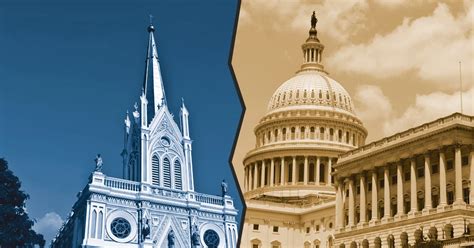
The Second Vatican Council produced sixteen documents, the most important of those being the four constitutions. One of them is about the Church in the Modern world (known to its friends as Gaudium et Spes). It talks about the relationship between the Church and the world. It is said that before Vatican II we had more of a fortress mentality, and the less we dealt with it the better. Now there is more of a sense of engaging the world. The challenge is to be faithful to the truth while we do that and not compromise with the world.
In the early Church, Christians were good citizens. They obeyed civil law, unless following the law meant doing something contrary to the faith. Then they would stand fast, even if it was over something as small as putting a pinch of incense on the charcoal and saying “Kaiser Kurios.” They would accept torture and death rather than do that.
Bishop Barron has said that every culture is “evangelically ambiguous,” meaning that there are some values in society that are in keeping with Christian principles, and some values that are contrary to those principles. We are called to affirm what is good and challenge what is wrong. We are called to be leaven in society (Matthew 13:33), to be light to the world and salt of the earth (Matthew 5:13-16).
We are called to participate in our society, using our Chrisitan consciences, but never hitching our star to a particular politician or party. I have been given to understand that a great many Catholics believe in the principles of the world more than the teaching of the Catholic Church. We do not seek a theocrasy, in which the Catholic faith would be mandatory for everyone, and Catholic teaching would be mandatory. As Pope Paul VI said, “We are to propose, not impose.” But we are called to hold fast to the truths of our faith, with sometimes mandates us being active in society. We need to be careful that our ideas are shaped more by our Catholic faith than by the world.
In America that means participating as good citizens and standing up for the sanctity and dignity of life from conception to natural death. It means being concerned for everyone, and right now (I expect always) there is disagreement about how to best do that. That is part of the challenge. Of we bring Christian love to the conversation, and treat everyone with dignity, that will often be as important as the position we take. I must say that my own experience has, much of the time, been unhelpful in developing the skill of having dialog with those with other points of view. I’ve been working on it steadily, however, and I believe I have come a long way. May we as Church, continue to develop the skill of dialog.
Blessings,
Fr. Jim

