Monthly Archives: November 2026

Who’s in Charge?

Dear Folks,

Today we begin the season of Advent, and we begin the year of Grace 2027. This year is cycle B in the lectionary, which focuses on the Gospel of Mark. And July 25 to Aug 27 we shall read the multiplication of the loaves and fishes and bread of life discourse from the Gospel of John (They omit the walking on water, sigh).

This first Sunday we are reminded that God is the potter and we are the clay. He is going to form each of us into a unique work of art, and it is our job to cooperate. We also are told to be ready at any time for the coming of Jesus. He will come at the end of time, and we don’t know when that is, and He comes to us in various ways, including at the end of our lives. We might live many more years, but tomorrow is not promised to any of us. Some people have tried to figure out when Jesus is coming again, but this is an effort to gain control over the situation rather than putting ourselves into God’s hands. Throughout the Scripture, people get in trouble because they don’t want to do what God teaches them to do but want to do it their own way. We encounter God less through our strength and more through our weakness (2 Corinthians 12:9)

Some questions to ask ourselves this advent:

Am I letting God form me, or am I trying to set the agenda?

If God could get anything He wanted from me, what would that be?

If I died today, how would I feel about explaining to Jesus how I had used my time? My attention? My energy? If I lived for several more years, how would I feel explaining today as part of my journey?

What has happened in my life that I couldn’t control? How can I encounter God in my helplessness?

Blessed Advent,

Fr. Jim
Jesus Reigns. Does He Reign in Our Hearts?

Dear Folks,

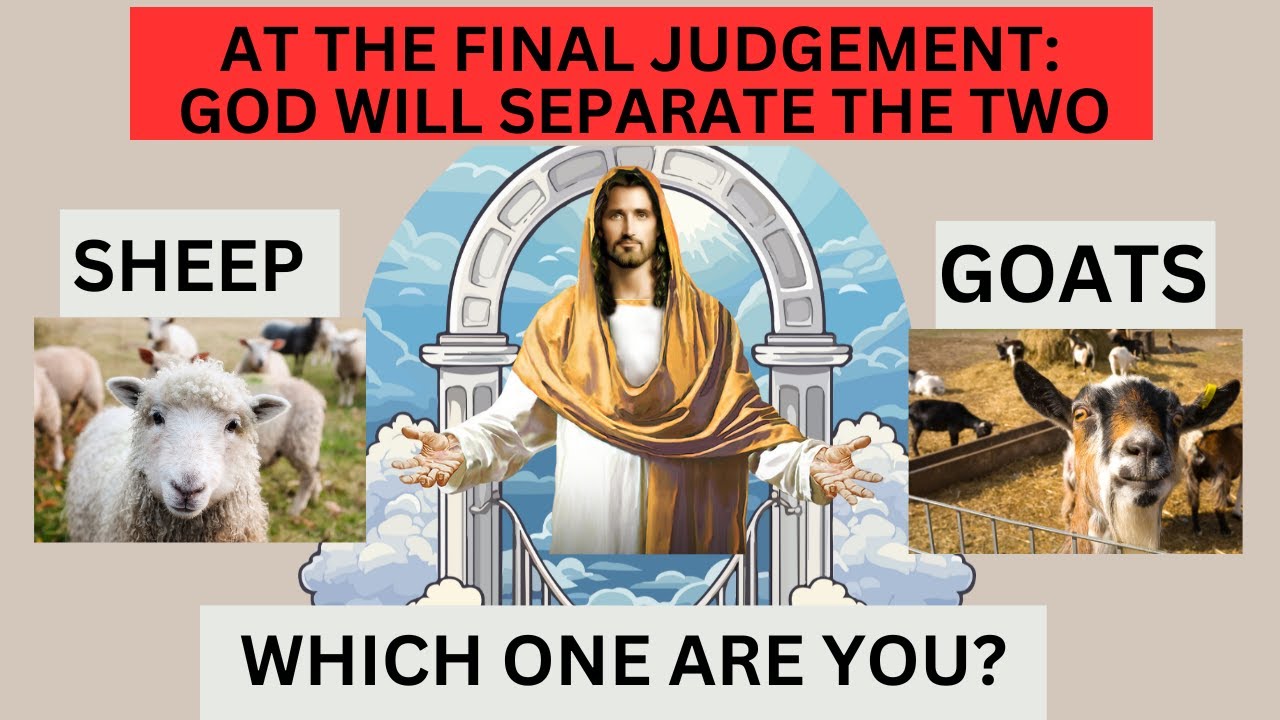
Today we read the parable of the sheep and the goats. This is the last of the three parables about the last judgment in Matthew 25 and the final word of Jesus’ public teaching in the Gospel of Matthew. I suggest that gives it special emphasis, so we want to be paying our best attention.

In Christianity, it is impossible to separate love of God from love of neighbor.

There are many non-Christian groups that do good, and hooray for all of them. What Christians do in different. First, our actions flow from our relationship with God, second, we encounter Jesus in those we serve, those we help, and third we are proclaiming the Gospel by our actions. The Catholic Church does a lot of good in this area, but does anyone think we don’t have room to grow? Maybe in growing we will strengthen the Church that right now needs strengthening.

The essence of the Gospel is the gift of self. Our Lord gave himself to us completely, not even withholding the last drop of His blood. We are called to accept that gift and give ourselves to Him. With His grace we can do great things.

Every loving relationship involves “Being with and doing for.” We seek to be with our beloved for its own sake, and we seek to do things to please our beloved. These two dimensions are not in competition, but each gives deeper meaning to the other. Buying chocolate chip cookies is all well and good, but your grandmother making chocolate chip cookies for you in so much more precious, even if the cookies are objectively the same (though how any commercially produced cookies could match my grandmother’s I don’t know).

There is a disagreement about how much should be done by the government. I have opinions, but I will not bore you with them. There is still on YouTube a talk by Bishop Barron that he did a number years ago called “Bishop Barron on Paul Ryan and Catholic Social Teaching” with lays out the issues rather well. We want to avoid any kind of “You don’t want to solve the problem the way that I want to solve the problem therefore you don’t care about the problem.” I see so much of that on social media, and it gets in the way of true dialog. We notice in the parable there is no credit given to complaing how others do things. Do others, including those we disagree with, see love in us?

We do not ask, “Do they deserve it?” but we ask, “What is truly helpful. The documentary “Poverty Inc.” and it’s longer cousin “Povertycure” will tell of many efforts that ostensibley are about serving the poor actually make things worse. We cannot let that stop us from doing the best we know how, but it should make us open to learning, and maybe give us some patience with those with whom we disagree.

This is the Feast of Christ the King. Does the King reign in our hearts? We are called to serve Him in worship and helping others. He does not nead our service; He is perfect as He is, and He could just go Poof, everyone has food and shelter. But He calls us to love, to love Him and to love our neighbor, because that is the fullness of life for us.

The King calls us. How will we respond?

Blessings,

Fr. Jim

You Have Talent. Now What?

Dear Folks,

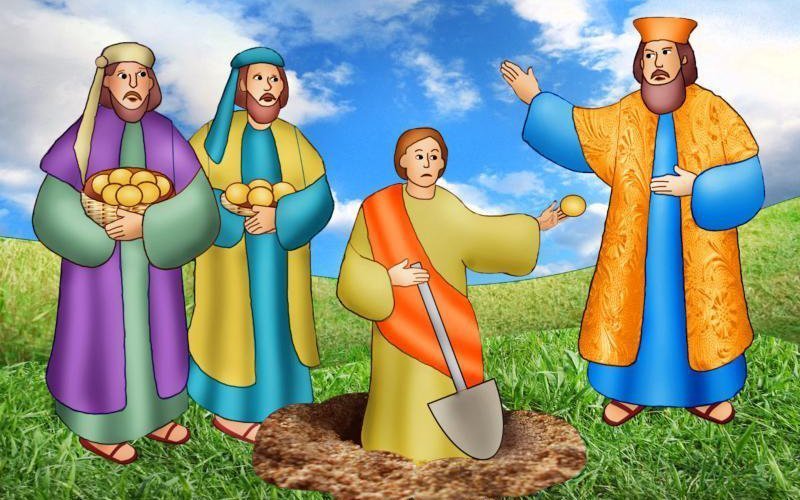
This weekend we get the parable of the talents, the second of the three parables about the last judgment in Matthew 25. Compare with Luke 19:11-27).

We notice what is not condemned here. There is no condemnation of those who try and fail. There is no condemnation of those who make mistakes. I once saw posted: “Remember that when God made his plan, he factored in your stupidity.” I find that wonderfully comforting.

It is said there are three surprises in heaven. First is all the people there you didn’t expect to see. Then there is all the people you don’t see that you expected to see. The third is the look on the people’s faces that didn’t expect to see you there. We might find in heaven some people whom you thought was an enemy. Maybe we thought that they were acting selfishly, possibly even evil, but God knew that they were doing the best they knew to do from sincere motives.

How do we work for the kingdom? I have said before we get some idea from Acts of the Apostles, and my reading is that they basically did four things: told the Gospel story, worked together as community, worshipped God and helped people in need. I think doing those four things will use our gifts well, and we all have a role to play.

How well could we tell the Gospel story (or a portion of it) that would make sense to someone who didn’t already believe it? Even if someone were raised Catholic, they might not understand religious language. Sometimes we think we understand but we are just repeating without seeing how it connects to our life. We are simply repeating what is familiar. I had heard the term “swaddling clothes” my whole life, and I never actually considered that I didn’t know what it meant. Only when I went to Bethlehem did I get it explained and understood. How well can we explain the faith without just repeating the terms that we were taught?

When we talk about working together as community, I suggest focus on two things: welcoming and dealing with conflict. How many of the people at the church do you know? If a visitor comes, does someone get to know them? Do we just say hi to the people we know?

How do we deal with conflict? I’ve seen a lot of handling it badly. I’ve repeatedly recommended Ann Garrido’s “Redeeming Conflict.” If we could get better at dealing with conflict it would go a long way toward making us a stronger Church.

We are called to worship God. He doesn’t need our worship, but we need to worship Him. If we focus on Him and not ourselves not our experience or our feelings, if we serve the mystery, that will make a difference.

We can get better at helping people in need. More on that next week.

We can only do this in union with Jesus (John 15:4-5). If you want to accomplish great things, if you think the world needs changing, the first step is to fall more deeply in love with Jesus. He’s right there, where you are. Take some time.

Blessings,

Fr. Jim

Christianity: Preparing for a Marathon

Dear Folks,

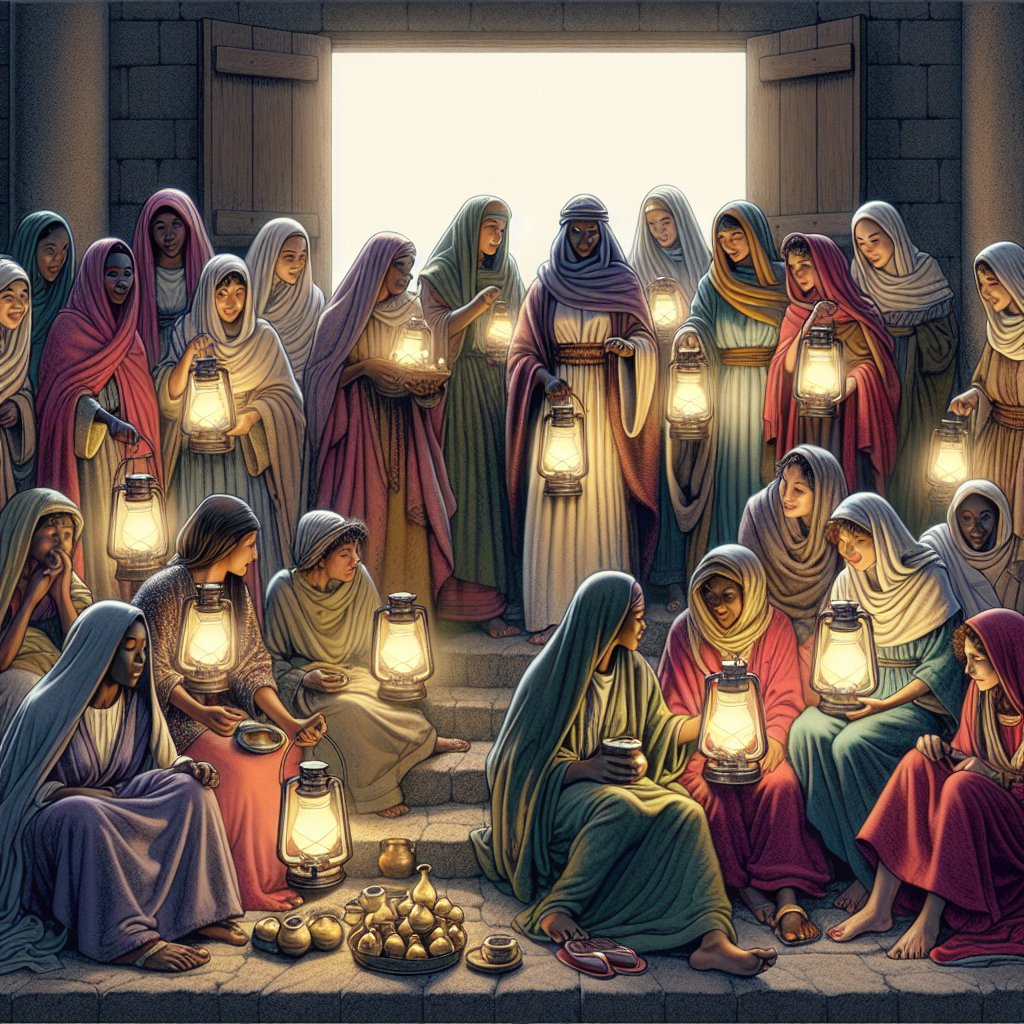
This Sunday we hear of bridesmaids with their lamps.

Matthew does something interesting. He bookends Jesus’ public teaching with the Sermon on the Mount (Matthew 5-7) in the beginning and three parables about the Last Judgment (Matthew 25) at the end. It says that He taught in synagogues before this but doesn’t give us content. Now we get serious.

The Sermon on the Mount gives a summary of how to live as a Christian, more about what we are to become rather that do’s and don’t’s. I have talked before how this is presented as a new Torah, but we would not consider the sermon to be the new Torah, but Jesus Himself is the new Torah. It ends with a story of building a house. Jesus contrasts wise men (phronimos: wise, shrewd, prudent, clever, cunning crafty) and foolish men (moros, from with we get the word “moron”). It is not enough to hear it. We must decide that it is the way to live and seek to live it.

The three parables, which are our Gospel readings for the next three weeks, finishing off the liturgical year, form the end. The first is this Sunday’s Gospel and contrasts wise bridesmaids who bring extra oil for their oil lamps (though now they would bring extra batteries for their smart phones) and foolish ones who do not, and are not prepared for a long wait. It is not enough to begin. We must be prepared to endure.

It is good to look in between for development of those ideas. See when Jesus says that he who holds out to the end will be saved (Matthew 10:22; 24:14). We don’t know if we will die today or live for many years. Jesus calls us to be ready in either case. If we died today, are we ready? What would we wish we had done? If we live for several more years, how will we live? C. S. Lewis, in his book “The Screwtape Letters,” Screwtape (senior devil) says to his nephew Wormwood, “You see, it is so hard for these creatures to persevere (see letter 28).” Being serious about a sprint is one thing. Being serious for a marathon is another. Are we prepared?

One of the things we can think about is what kind of habits are we developing? Whatever we do repeatedly is forming a habit. Emerson said, “Sow a thought and you reap an action; sow an act and you reap a habit; sow a habit and you reap a character; sow a character and you reap a destiny.” Whetever our age, we are called to have our lamp burning.

Blessings,

Fr. Jim