Tag Archives: God

The Fullness of Life

Dear Folks,
Our Scriptures today deal with the forces of life and the forces of death. “Because God did not make death, nor does he rejoice in the destruction of the living (Wisdom 1:13; see also Ezekiel
1:23).”
In our Gospel, the story of the woman with the hemorrhage is sandwiched between two halves of the story of raising the daughter of Jairus. In Leviticus 17:11 we see that, “the life of the
flesh is in the blood.” For the Israelites, the blood was the life, so her life was draining away. She was ritually impure, so she could not enter the temple, and no one wanted to touch her because they would become ritually impure themselves. Imagine being isolated from life like that for 12 years. The little girl was 12 years old (another hint that the stories are connected). She had had so little chance to experience life, and now it seemed that she never would. The heartbreak of her family would be incalculable. Jesus brings hope when hope is gone.
Of course, there would be many sick and dying people at that time that did not get cured. Jesus of course, had great concern for all who suffered, but His primary task was not to increase people’s lifespan, but give us eternal life. When He does miracles, He is teaching us something.
In one sense, we are either alive or we are not. A human life is immeasurably sacred and precious, worthy of unique respect. It would be appalling for a society to say that the life of an adult was more sacred than the life of a teenager, that the life of a teenager was more sacred than the life of a toddler, or that the life of a toddler was more sacred than the life of a fetus.
In another sense, we can become more fully alive by how we exercise our humanity. To give in to the forces of chaos, to be enslaved to our primal desires, to think only of ourselves, to let life
happen to us is to be less alive. To give ourselves in love to others, to devote our energies to something greater than ourselves, to be intentional about growing and developing as a person is to be more fully alive.
Living things can grow, organize, often connect with others to form communities that are somewhat like a live organism (1 Corinthians 12). Dead things decompose, return to the earth, and their material disperses. W. C. Fields is quoted as saying, “Remember, a dead fish can float downstream, but it takes a live one to swim upstream.” Being alive enables us to resist the forces of chaos.
The great obstacle to being fully alive is sin. Remember that “The devil was a murderer from the beginning (John 8:44).” And in Romans 6:23, “the wages of sin is death but the gift of God
is eternal life.” Jesus came that we “might have life and have it more abundantly (John 10:10).”
If we are to spread the Gospel, it is for us to show that we are leading an abundant life, one that, while challenging, is joyful, even in difficult times. How do you see your life as more abundant because it belongs to Jesus?
Blessings,
Fr. Jim

Seeds of Change

Dear Folks,

Today in Mark 4:26-34 we hear the parable of the seed that grows mysteriously without us knowing how (unique to the Gospel of Mark). This points to a major paradox in Christianity: We are called to effort, but it is God who accomplishes things.

We do not bring about the kingdom of God. We are called to work for a better world but God is the One who makes the kingdom happen.

People like Hitler, Stalin, and Mao thought they could build an ideal society by their own wisdom and skill. They wound up doing horribly evil things because they were sure it served this great vision, but they failed to produce the result. Instead, they left the people in misery. If God brings about the kingdom, we know our part is smaller, so we are not important enough to think we can decide that killing millions of innocent people is within our scope. We know if we obey God, great things will happen, even if we don’t live to see them (John 4:37-38).

This also means that in spite of how much of a mess the world is in, and how small our abilities are in comparison, we can face the world boldly We can be bolder in our aspirations and at the same time more humble in how we seek them.

Perhaps the two most influential people I can think of in the last thousand years were St. Francis of Assisi and St. Theresa of Calcutta (Mother Theresa). They dedicated themselves to service, sacrifice, caring for the sick and proclaiming the truth. They had no political

power. They were willing to do the humblest jobs. They both suffered from great inner darkness but saw much joy and beauty in God’s creation. They focused more on their own sins than the sins of others (Matthew 7:4-5). St. Francis saw his order change his rule, and he couldn’t stop them. His order has thousands of people all over the world, and his example has inspired and influenced countless people, including non-Catholics, including nonChristians. Does anyone doubt that the same will be said of Mother Theresa a thousand years from now?

We are called to action, but God will make things happen. We can do small things, but if they are done with love, they can, over time, have great effects. Do not get discouraged by anything.

Blessings,

Fr. Jim

A More Peaceful World

Dear Folks,

This Sunday’s Gospel deals with people that Jesus could not convince.

Mark 3:20-35 Jesus is casting out demons, and His opponents claimed that He was possessed and that he drove out demons “by the power of the prince of demons.” Jesus shows how illogical that is and warned against blasphemy against the Holy Spirit. It seems from the context that blasphemy against the Holy Spirit is refusing to see. Helen Keller said, “The only thing worse than being blind is having sight but no vision.”

Some will not see because they don’t want to and will say or do anything to defend against a new idea. Those who refuse to see cannot be forced to see. If even Jesus couldn’t convince them, we are not going to do better than Jesus.

I continue to be concerned about the state of conversation in society today. There is a lot of interaction, but not a lot of understanding. The chasm between sides seems to be growing

wider, and the hostility between them growing fiercer. I chose not to include examples but ask you to think of some from your experience. I bet you can. I’ve noticed that what we say sounds more convincing to us than it does to the people who

disagree with us. There seem to be many occasions when someone presents his argument and ends with the triumphant equivalent of “checkmate. Case closed” and the other person says, “No, not even close.” Some are not convinced because we didn’t make a case that spoke to their point of view, and if we learn more about their point of view we can try again and maybe succeed. Usually there are some bits of information that support one point of view, and other

bits of information that support the other point of view. We tend to put more weight on what supports our narrative. Some people, it seems hammer the details in their favor and ignore the details against. I can’t tell if they are doing it on purpose.

At some point, we need to realize we aren’t going to make progress and need to give up. Jesus spoke of shaking the dust from our feet and moving on (Matt 10:12; Mark 6:11; Luke 9:5

and 10:11). Sometimes it takes a while for a new idea to take root, to mature, and to grow. We can’t generally change the basic architecture of our thinking in a minute; sometimes it takes

years. I’ve caught myself getting angry when I think someone is not trying to understand. I need to check myself. First of all, they may be trying. Second, getting angry is a futile waste of energy at best, and destructive at worst. I just need to accept that I can do what I can do.

I think it is critical to be realistic about what the situation is and how much we can do about it. There is a lot of bad thinking, bad logic, and bad ideas, and it’s going to be that way for the

foreseeable future. We need to resign ourselves to the fact that we can’t fix it, but maybe we can make it a smidge better. If we can get someone to think something they’ve never thought before, ask a question that they’ve never asked before, look at things from a different angle, that moves us forward. If others hurl abuse, call people names, and get nasty while we respond calmly, respectfully,

and persistently, over time those who are open will see where wisdom lies.

One final thought: let us all be carefully on guard against our own human tendency to refuse to see the truth. None of us are immune.

Blessings,

Fr. Jim

The Core Meaning of All Reality

Dear Folks,
Today is the Solemnity of the Holy Trinity, a feast day that should get more acclaim than it does. Fasten your seatbelts; we’re going deep.
Catholics should, at a minimum, know that there is one God who is three divine, coeternal persons, Father, Son, and Holy Spirit. Unfortunately, almost all just stop there and never give it another thought.
Folks, this is the core of all reality and makes all the difference.
As we look at the basic questions of existence and consider what to believe, there are some primal questions. Is the ultimate reality personal or impersonal? If we accept the atheist materialist view, then it is impersonal, and personhood is just a blip in the dance of matter- energy in the universe. I experience consciousness, but don’t know why (there is vague talk about a byproduct of electrical activity of the brain, but I don’t think that explains much). I experience good and bad feelings, and I want to maximize good feelings, and that’s about it. In this scenario, when I die, nothing of me is left, and the race will die, and it won’t matter that we existed at all. I don’t find this very inspiring.
If the Christian point of view is correct (and, in case you are wondering, I believe it is), Then personhood is the foundation of all reality. Beyond even the universe. Furthermore, God is the perfect community of love all by Himself. The Father is eternally giving Him- self in love to the Son, who is eternally receiving and returning that love, and the love that passes between them is the Holy Spirit. Though God does not need anything, love by nature is fruitful, and so God created the universe, including us. We are meant to receive His love and give ourselves as gift to Him, and that is the fullness of the meaning of being human and the fullness of joy. Unfortunately, sin inhibits this gift, and we become centered on our own desires (classically: power, pleasure, wealth, and honor). Only by be- coming one with Jesus in His perfect gift of self, which culminated on the cross, can we be saved from it. In Him, we can learn how to give ourselves as gift, and receive the strength to do it. The more we grow in Christ, the more we receive His love and the more we give ourselves in love. In heaven, that flow of love becomes perfect and complete. See John.16:20-24 and John 17: 20-26.
We must be careful about self-deception. In our sinful condition, it can be easy to tell our- selves we are loving God and others when we are actually at our center serving our de- sires. Matthew 6 (the middle chapter of the Sermon on the Mount) is all about that danger. Our scribe and Pharisee friends are the poster children for this.
The big question in life is: are we at our center about serving our own desires, or about giving ourselves in love with our own desires as a side dish? Everything starts from this.
May Almighty God bless you, the Father, the Son, and the Holy Spirit. Fr. Jim 

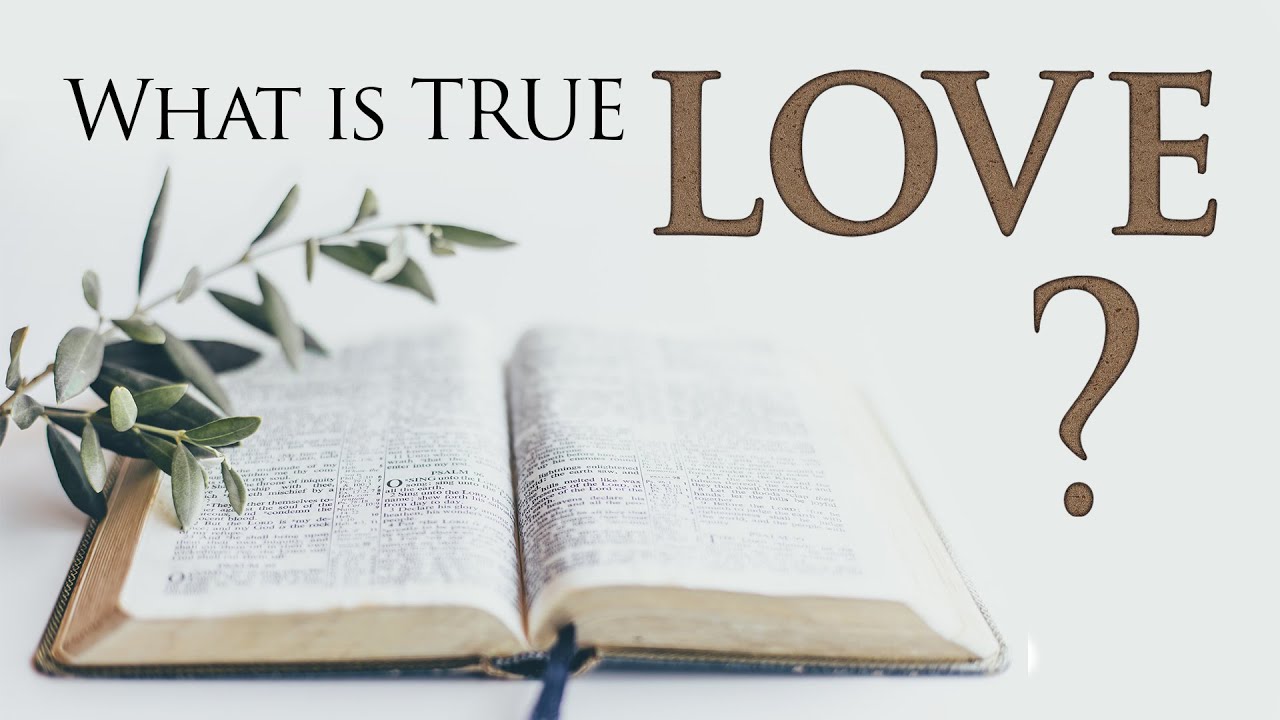
What is Love?

Dear Folks,

Our first reading this Sunday from Acts 10 shows St. Peter dealing with a major issue in the first century Church: whether righteousness (being in right relationship with God) comes through works of the Law of Moses or through faithfulness to Jesus (spoiler alert: faithfulness).

In our Gospel from John 15, we see a major emphasis on how to be faithful is to love one another. A temptation is to respond with “now I know what I need to know; this is simple.”

Not so fast. In theology, I read a book called “Situation Ethics” by Joseph Fletcher. He insisted that there should be only one law, the law of love, because any other law, any other ethical principle would sooner or later conflict with the law of love. As I kept reading, I realized that he was presuming that anyone who looked at a given situation would know what was the loving thing to do. Studying history and philosophy should show us that what seems obvious to us now was unthinkable in ancient times. Looking at modern discourse we can see that many people have opposite positions and are sure that their position is true, right, and obvious.

“Love” is a word we use so much it is easy to overestimate how well we understand the challenge. There are some major issues we must tackle:

1. What is love? Christianity teaches that it is not a feeling, but a decision to seek the good of others, even at a cost to oneself (the greatest act of love is “to lay down one’s life for one’s friends [John 15:13]).”

2. What is the good? Is it getting what we desire when we desire and how we desire? Or is there a good that is more profound, and that is to be discovered and that we are to grow into seeking? Such a good involve virtues being encouraged and incentivized by a healthy society.

3. How do we achieve it? Lenin, Stalin and Mao murdered tens of millions of people insisting that this would serve the greater good, but they brought about enormous misery instead. If we agree that we want an end to gun violence, we must still ask if a given gun control legislation will make people safer or less safe? Are there other things we can do? If we agree we want to help the environment, we are left with questions: does switching to electric cars help or hurt the environment? Does less drilling for oil in the U.S. help ore hurt? Does the benefit outweigh the harm? In Ann Garrido’s wonderful book “Redeeming Conflict” talks of “undoing the knot of intention.” Good intentions don’t necessarily produce good results.

4. How can we, a sinful people, do better? Christians know that we cannot overcome temptation by our own strength. It is only in our union with Jesus that it becomes possible. With His grace, however, we can do great things. With prayer, sacraments, and penance, we can open ourselves more and more to His presence so we can have

the humility to see where we fall short, and the wisdom and strength to move forward.

Blessings,

Fr. Jim

Love and Baloney

Baloney.jpg[1]

Love and Baloney

Imagine a young man and a young woman.  They have very little money, but he goes out into the fields and collects some flowers.  He makes them baloney sandwiches and puts them in a paper bag.  He spreads out the picnic on newspaper, and says to her, “I love you more than the sun, the moon, the stars, brook trout and the Green Bay Packers. Will you be with me for the rest of our lives?”  She melts.

Now, it is their fiftieth anniversary.  Even though they live in an upscale condo in the center of a large city, he drives to the country and picks wild flowers.  He makes baloney sandwiches, and puts them in a paper bag.  He spreads newspaper on the table, and says to her, “I love you more than the sun, the moon, the stars, brook trout and the Green Bay Packers. Will you be with me for the rest of our lives?”  She melts.

Someone who didn’t know the history might say to him, “Are you crazy? Your fiftieth anniversary, you could easily afford roses and catering, and you do this?”  It is the connection to the history of the relationship that gives it meaning that it would not otherwyse have. In relationships, rituals, signs and symbols can have a power beyond what they are because of what they mean. (I suspect he also took her out to a nice restaurant, but that is another story.)

In religion, there are a lot of signs, symbols and rituals. Many who don’t know their meaning will disparage them and say they have nothing to do with God.  Many times they are practiced by those who don’t know or don’t care about their meaning, and then they fail in their purpose, and can even do harm (see I Corinthians 11).

There are many who say that a personal relationship with God is something separate from religion, and that they love God but have no use for religion.  I suggest that they either do not understand how ritual, structure, sign and symbol can be a key part of a relationship, have never been taught the meaning of these activities, or experienced people who went through the motions without attending to what they meant.  A kiss is meant to be a sign of affection and caring.  If someone gives you a kiss and then treats you like garbage, that sign is worse than useless.  It even does harm.

Many have left the Catholic Church or are minimally connected because they have not experienced it as a powerful encounter with the love of God. However, if they could only understand that every aspect of the Catholic faith is about encountering, walking with, and loving God.

A next step is with the book A Biblical Walk through the Mass by Dr. Edward Sri, or even his video study program:

http://ascensionpress.com/t/category/study-programs/the-mass/biblical-walk-through-the-mass

And that’s no baloney.

Day 9 in Rome

Saturday Oct 12

Day 9 in Rome

Perhaps I have been too worried about finding the right place to eat. There seems to be a formula for finding a good restaurant in Rome:

Step 1: Find a restaurant.

Step 2: Eat there.

At least, this has worked for me.

When I get back, I will be facing brown rice, tofu and chicken breasts.

People trying to sell tours of the Vatican museum paint such horror stories of waiting in line trying to get a ticket. The wait was just about an hour, and then 16 Euros and I’m in and free to wander.

There is so much art here. I’m not focusing so much on information as taking in the beauty.

Many, many picture and carvings focused on telling the story, mostly Biblical stories, though some of later saints. Beauty was put in the service of impressing the Christian story on people’s minds and hearts.

I’m very glad I took the tour of the Vatican Museum, and I’m very glad I came back by myself.

Such an investment in the telling of stories.
Relationships are communicated in stories. A large part of knowing people is knowing their stories.

How well do we know the stories of our faith?

Sarcophagus1.jpg[1]        Sarcophagus3.jpg[1]

Those who know the stories will recognize the images:

The sacrifice of Isaac

The bronze serpent in the desert

The Annunciation

St. Lawrence (with grill)

St. Peter (keys)

St. Paul (book and sword)

Bartholomew (knife and empty skin)

Coronation of Mary.

There are some pictures of contemporary Church figures with Biblical Saints and some pictures of Bible stories with the characters wearing contemporary clothing surrounded by contemporary architecture (contemporary with the artists, not the Biblical figures). This shows that the Bible stories are timeless, as well as rooted in a specific historical time, and we are a part of the story.

Why does the Vatican Museum have ancient Egyptian art, so many Greek and Roman statues including Emperors and pagan gods?

To share the Gospel story we must be lovers of the human story, for the story of the universe is the story of salvation, and if we are to share the human story with the human race, we must know the human story. There are some things, however, that work against the project.

Hundreds of the Greek and Roman statues have inscribed in bold red letters “Munificent Pio VI PM” or something like that. It is either someone seeking to butter up the pope or the pope himself feeding his own voracious ego. Either way, it is not good.

There seem to be two basic errors when encountering the Gospel story:

  1. I am not part of the story, or
  2. The story is about me.

In St. Peter’s square there are so many references to Alexander VII. Of course, when you are pope in the middle ages or renaissance, the temptation to think “It’s all about me” must be enormous.

Raphael did some good stuff. I especially liked his transfiguration and coronation of Mary,

Transfig.jpg[1]            Coronation.jpg[1]

but best of all was one room, on one side The School of Athens, and on the other, Disputation on the Holy Sacrament, actually about the triumph of the belief in the Real Presence. My response is: “I want one.” Ah, well.

Schoolathens.jpg[1]    Disputation.jpg[1]

Could never take enough pictures here. Thank heavens for the internet.

Psalm for today: 115

Day 7 in Rome

Thursday 10-10

Day 7 in Rome

Church of St. Phillip Oratory (Chiesa Nuova).

Image

I’m getting addicted to these marvelous churches. What am I going to do when I get home?  The ones in Michigan are beautiful in their own way, but not like this. There’s a little chapel with the body of St. Phillip Neri. In a glass case. We don’t have things like this in Michigan.

Image

The Church of St. Andreas della Valle

Image

St. Andrew is the patron of the diocese of Grand Rapids.

I came just as Mass began in a side chapel.

I wish I had learned my Latin responses better.

During the consecration, the priest held up the host and I was aware that simple white host was infinitely holier than all the buildings combined. The true power of the churches is as vessels of the work of Jesus.

Church of Gesu again.

It is not as breath – taking as the first time, perhaps because the sun is not shining the same way through the windows, or perhaps because I have seen it before and am getting accustomed to it. Ah, well, nothing that is of the earth can be a permanent thrill. When I got to the second glorious mystery of the rosary it occurred to me that earth the glories appear briefly, and then leave us to tell the story.

Church of St. John Lateran.

Image

Oh, my.

The Cathedral, the mother church of the whole Catholic world. The literal Chair of the Pope, the Cathedral of the Bishop of Rome.

Twelve foot high statues of the apostles.

Image

So much history here.

Image

Unlike St. Peter’s the original was not replaced, but when it was broken was repaired. Modification were made, so it bears the stamp of many hands and many eras, sort of like Catholic culture.

There are many pictures and sculptures, some of stories of popes and the Church, most of Bible stories. Ultimately, the beauty is at the service of the Gospel Story.

St. Mary Major.

Image

Oh, yes, more of the same.

Image

It is good.

Image

Octopus salad. Why can’t we get octopus salad in the Grand Rapids area?

Wearing a dark shirt: this calls for spaghetti.

There are a lot of beggars on the street. I feel bad, but I have learned to question whether giving them money is the best way to help the poor. This, of course, means that I had better do something to help (no, I’m not going to tell you what, at least not today).

Psalm for today: 90.