
Dear Folks,
I have talked about the Liturgy of the Hours. The new edition will come out in January of next year.
There are five “hours.” There is morning prayer, daytime prayer, evening prayer, office of readings, and night prayer. They don’t take an hour to do, but are called hours because they are geared toward certain times of day. There is morning prayer (lauds), mid-day prayer (terce, sext, or none, depending on whether you pray it mid-morning, mid-day, mid-afternoon), evening prayer (vespers), night prayer (compline), and the office of readings (whatever time works best).
Before Vatican II, the breviary would get through all the Psalms every week. It was pretty much exclusively the work of priests and religious. The Second Vatican council called for it to be more widely available and to make it less burdensome. It was revised to do almost all the Psalms in four weeks (Psalms 58, 83, and 109 have been completely omitted, as well as several verses that were seen as doing more harm than good, like Psalm 137:7-9). There was a call then and by popes since that it be prayed more by lay people.
Because this is liturgy, not a devotion, it is a way in which we are united all around the world and speaking with the voice of Christ giving worship to the Father. The liturgical year has a certain rhythm, with various seasons and feasts. Every Friday should have a little bit of Good Friday, and every Sunday should have a little bit of Easter Sunday. The Liturgy of the Hours puts us more in contact with that rhythm and helps each day have more of that rhythm throughout the day.
There was a mini-series that came out in 2015 called A.D. (a remake of an earlier version). In episode 5 there is an example of Roman cruelty in the temple courtyard. Peter was there and spontaneously started reciting Psalm 69. Caiaphas was there and joined him. I’m pretty sure they weren’t friends, but they could recite the Psalm together. I don’t know if that actually happened (probably not), but it could have. Imagine people from all over the diocese being able to do that.
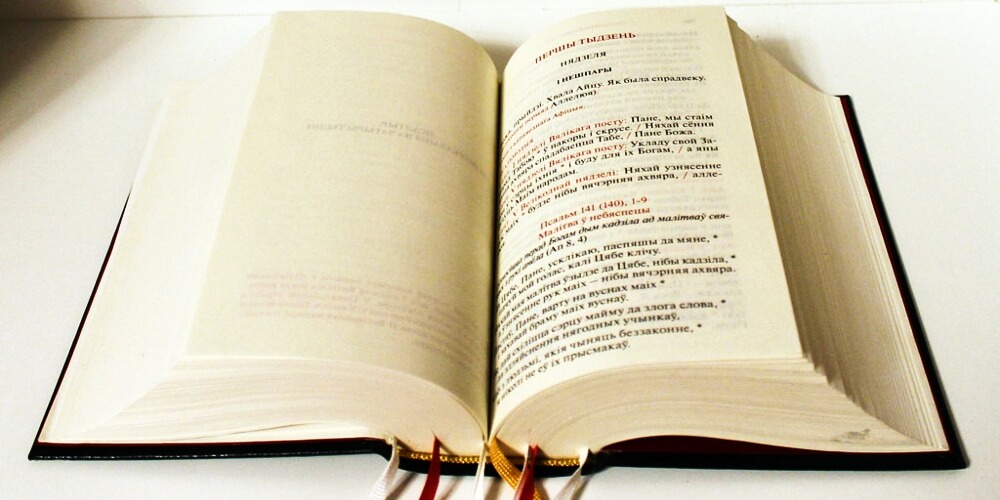
The book that is used is called the Breviary, and the Liturgy of the Hours is also called the Divine Office. The full breviary has four volumes, but there is a one volume that gives less to the office of readings, and a Shorter Christian Prayer that is basically morning and evening prayer and night prayer. The are also internet options. I have used iBreviary and some use divineoffice.org. This uses your phone, tablet or computer and it works but is not ideal. There is something powerful in having a sacred book set aside for a holy purpose. This is why the Missal in used as a book, but we are called not to use a tablet.
This is a way that Catholics can get together and pray as Catholics without a priest present. It is one way we can be a stronger Church with fewer priests. It is a part of opening the treasury of Catholic prayer more widely for more people.
More Later.
Blessings,
Fr. Jim

